Tag Archives: ISIS

Working On Weapons of Mass Destruction For the Iranian Axis Is A Dangerous Job

By Kyle Orton (@KyleWOrton) on November 11, 2014

1

On Sunday night, five “nuclear energy engineers who worked in the scientific research centre near … Barzeh,” Damascus, were killed when their bus was ambushed, according to the Syrian Observatory for Human Rights. One of the engineers is believed to be Iranian technician. Whether they were killed by gun-fire or by a bomb is unclear.

The research centre referred to is the Scientific Studies and Research Centre (SSRC), and this event has an analogue in Syria: At the end of July 2013, a rebel mortar shell hit a bus carrying staff from the SSRC in Barzeh, killing six and injuring nineteen.

The SSRC is located in Jamraya in Mount Qassioun, five miles above Barzeh. The SSRC is entwined with Syria’s military-intelligence apparatus—which is to say the people running Syria before the war—and is responsible for research and production of “nuclear, biological, chemical, and missile-related technology.” Continue reading
How Dictators Manipulate Jihadists To Defeat The Opposition

By Kyle Orton (@KyleWOrton) on November 9, 2014

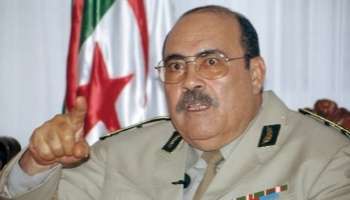
Smain Lamari (1941-2007)

Smain Lamari (1941-2007)

This Arab regime claims to be a one-party system but in reality a small Mafia-like cabal of military and intelligence officers have dispensed power for decades. Finally a democratic challenge erupts; people take to the streets demanding first reforms and, when the regime responds with pseudo-reforms and lethal violence, the fall of the government. Eventually the people fight back and an armed struggle breaks out. The regime builds its strategy around provocation, arresting and killing the liberals and democrats, infiltrating the insurgent groups and having the extremists attack the moderates, directing infiltrated groups to commit atrocities that discredit the whole insurgency, and using Iran’s international terrorist networks to lure Salafi-jihadists into the country who can help discredit the opposition’s cause in the eyes of the world. By presenting a binary picture—the regime or a terrorist takeover—the state tries to secure at least tacit support, if not direct intervention, from the West to defeat the insurgency.

No I’m not talking about Syria. This is Algeria. Continue reading

Islamic State Biography of the Spokesman: Abu Muhammad al-Adnani

By Kyle Orton (@KyleWOrton) on November 8, 2014

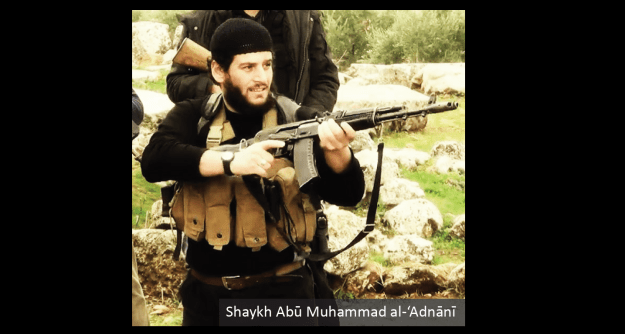
Picture of Abu Muhammad al-Adnani from the second edition of Dabiq magazine (July 27, 2014)

A Bahraini jihadist ideologue, Turki al-Binali, who has become a cleric in the Islamic State, put out a profile of the Islamic State’s official spokesman, Abu Muhammad al-Adnani, on November 1. By this account, al-Adnani took up jihadism in 2000 and was among a small cadre of people who joined the Islamic State’s founder, Ahmad al-Khalayleh, the infamous Abu Musab al-Zarqawi, when he journeyed through Syria on a recruitment-drive in 2002. Learned in Islamic jurisprudence and rigid in doctrinal literalness, al-Adnani was associated with some of the titans of the Islamic State’s legend like Abu Muhammad al-Lubnani and Abu Anas al-Shami. Appointed as emir of a small town in Anbar, Haditha, the first leader after the declaration of “the State” in 2006, Hamid al-Zawi (Abu Umar al-Baghdadi), worked under al-Adnani’s command. Al-Adnani then moved on to be an ideological instructor. Such was al-Adnani’s status, he did not have to consult al-Zarqawi before ordering operations; he only had to brief al-Zarqawi afterwards. Al-Adnani was arrested by the Americans in Iraq in May 2005, thereafter spending six years behind the wire, though never giving up his missionary activity. Indeed, the profile says al-Adnani developed the first full training program, academic and physical, for jihadi inmates. Upon release, al-Adnani took the post of official spokesman and has maintained it ever since. This profile is reproduced below with some minor editions for transliteration, syntax, and spelling. Continue reading

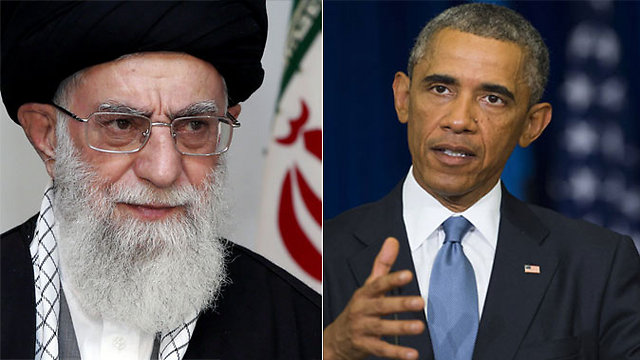
Is There Anyone Who Still Denies Obama’s Iran Strategy Is Détente?

By Kyle Orton (@KyleWOrton) on November 7, 2014

1

I’ve set out the evidence at length that President Obama’s apparently haphazard and hesitant policy in the Middle East is in fact driven by one, conscious, overriding intention: rapprochement with Clerical Iran. Yesterday, I pointed out that the Syrian rebellion was being left to fight alone in its struggle with al-Qaeda because the administration never had any intention of seriously supporting a moderate opposition that could be a credible alternative to the Assad regime (Iran) and the Salafi-jihadists; in Obama’s New Middle East, Syria would be an Iranian sphere of influence.

Those points rather sharpened a few hours after yesterday’s post went up. Continue reading

Are Syria’s Rebels Being Sacrificed To Al-Qaeda For Obama’s Détente With Iran?

By Kyle Orton (@KyleWOrton) on November 6, 2014

SRF leader Jamal Marouf

SRF leader Jamal Marouf

What a disaster. With American and coalition jets in the air overhead, ostensibly to do battle with Salafi-jihadists, al-Qaeda has been allowed to push rebel brigades the United States purports to support out of almost all of Idlib Province. Continue reading

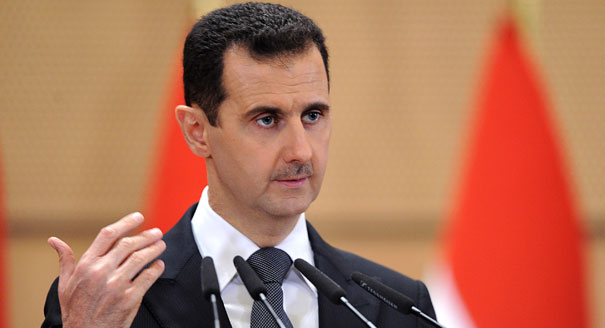
Beware of Tyrants Bearing Gifts: Assad and Intelligence on the Islamic State

By Kyle Orton (@KyleWOrton) on November 2, 2014

An ally against the Islamic State? Not quite.

An ally against the Islamic State? Not quite.

The United States signals intelligence (SIGINT) apparatus in Syria, which monitors the communications of Bashar al-Assad’s regime, has “yield[ed] unexpected intelligence over the Sunni jihadists that has helped guide American military operations in Syria and Iraq,” the Wall Street Journal print edition reported yesterday, based on high-level leaks. Continue reading

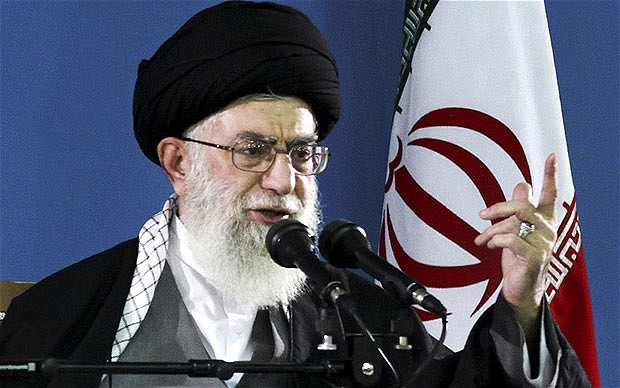
The Nuclear Negotiations Are Only Part Of Iran’s Regional Ambitions—And Obama’s

By Kyle Orton (@KyleWOrton) on October 27, 2014

Ali Khamenei

Ali Khamenei

When the next—and supposedly final—round of negotiations over Iran’s nuclear program end next month, there are three possible outcomes:

  1. The “interim” deal, the Joint Plan of Action (JPA), will be rolled over for another six months after it was rolled over in July, and will, like so much else in the Middle East billed as temporary, begin to look permanent.
  2. A final deal is signed that is an Iranian victory in all-but name, putting them on the threshold of a nuclear weapon with only the regime’s goodwill stopping them crossing the finishing line to a bomb.
  3. Iran’s dictator, Ali Khamenei, refuses President Obama both of the above fig leaves and breaks off negotiations.

How did we get here? Continue reading

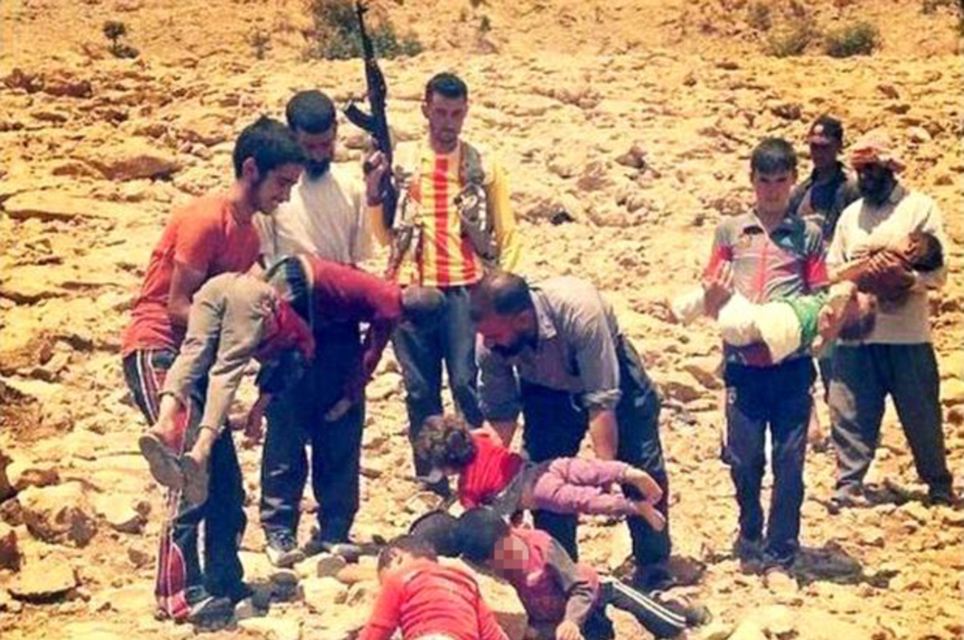
Religion’s Moral Guidance: The Islamic State, the Yazidis, and Mass-Rape

By Kyle Orton (@KyleWOrton) on October 24, 2014

Yazidis fleeing from the Islamic State to Mount Sinjar, carrying their children

Yazidis fleeing from the Islamic State to Mount Sinjar, carrying their children

When the United States finally intervened against the Islamic State (I.S.) in early August the timing, if not exactly the strategic imperative, was determined at least in part by the scenes of Yazidis being starved to death on the side of Mount Sinjar. The Yazidis were forced to choose between descending the mountain and being murdered by the takfiris or remaining and dying of dehydration. As it turns out they were the lucky ones. Continue reading

Russian Intelligence and the War In Syria

By Kyle Orton (@KyleWOrton) on October 21, 2014

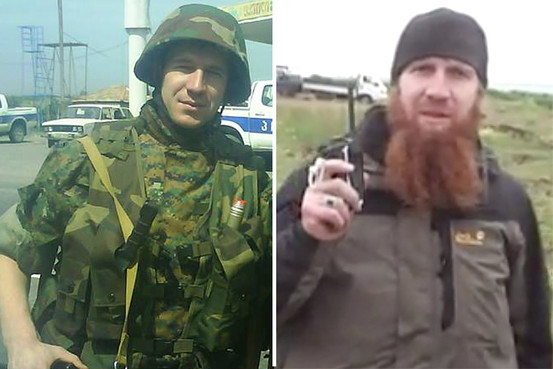
Abu Omar a-Shishani, while in Georgian military, now as I.S. leader in Syria/Iraq

Abu Omar a-Shishani, while in Georgian military, now as I.S. leader in Syria/Iraq

The Syrian rebellion, on Oct. 5, took over areas of Tel al-Hara, near Nawa, a major town twenty miles north of Deraa City, which is a strategic gateway to the road networks that keep the Assad regime alive in Deraa Province. The videos (1/2/3) showed FSA-branded rebels like Liwa al-Furqan and Jabhat Thuwar as-Suriya (the Syrian Revolutionaries’ Front) in control. Jabhat an-Nusra, the Syrian branch of al-Qaeda, had an important presence, but it was not dominant. So this seemed like good news on its own terms.

Two days later the plot thickened when a further video was uploaded to YouTube, showing the rebels touring a captured regime intelligence station in Tel al-Hara: Continue reading

Al-Qaeda in Syria Condemns Al-Qaeda in Yemen’s Softness on the Islamic State

By Kyle Orton (@KyleWOrton) on October 20, 2014

Maysar al-Jiburi (Abu Mariya al-Qahtani) [source]

Al-Qaeda broke relations with the then-Islamic State of Iraq and Syria (ISIS) in February. In June, ISIS declared that it had restored the caliphate and changed its name to simply the Islamic State (IS). Since then, some jihadist groups, including some affiliated with al-Qaeda, have declared their allegiance to IS. With the beginning of American airstrikes against IS, in Iraq on 7 August and extended to Syria on 23 September, the question of where jihadi-salafists stand with regard to IS has become more acute. It was in this predicament that a statement was released today from a leader of al-Qaeda in Syria condemning al-Qaeda’s branch in Yemen for its statement of solidarity with IS in the face of these U.S.-led attacks. By the lights of al-Qaeda in Syria, the Yemeni branch’s statement was too lenient toward IS and will be misinterpreted as support for an organization that has struck down senior officials of al-Qaeda in Syria and remains actively at war with al-Qaeda in that theatre to this hour. Continue reading