Tag Archives: Islamic State

The Syrian Regime’s Funding of the Islamic State

By Kyle Orton (@KyleWOrton) on 28 October 2017
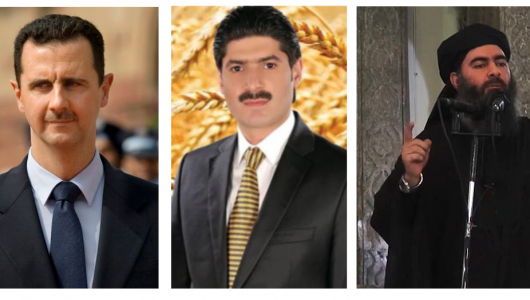
Bashar al-Assad, Hussam al-Katerji, Ibrahim al-Badri (Abu Bakr al-Baghdadi)

Reuters reported on 11 October that Hussam al-Katerji, a member of Bashar al-Asad’s Syrian regime, has been engaged in trading wheat with the Islamic State (IS), helping supply the terrorists with resources to run their statelet and threaten the security of Syria’s neighbours and the wider world. This pattern of behaviour from the Asad regime—holding itself out as a counterterrorism partner, while it bolsters terrorist organizations—is well-established, and has its origins in the regime’s survival strategy: to destroy all acceptable opposition forces and make the Syrian war a binary contest between the dictatorship and terrorists. Continue reading
Further Evidence of Trade Between Assad and the Islamic State

By Kyle Orton (@KyleWOrton) on 28 October 2017

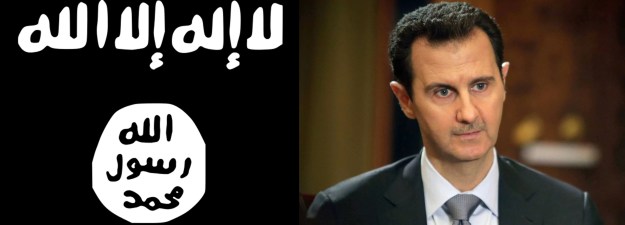
Watan FM, one of the free media outlets that sprang up in the early days of the Syrian uprising in 2011 and which has since migrated to Turkey, reported on 17 March 2017 about the trade between the regime of Bashar al-Assad and the Islamic State. The article is reproduced below. Continue reading

Don’t Celebrate the Fall of Raqqa Just Yet

By Kyle Orton (@KyleWOrton) on 24 October 2017

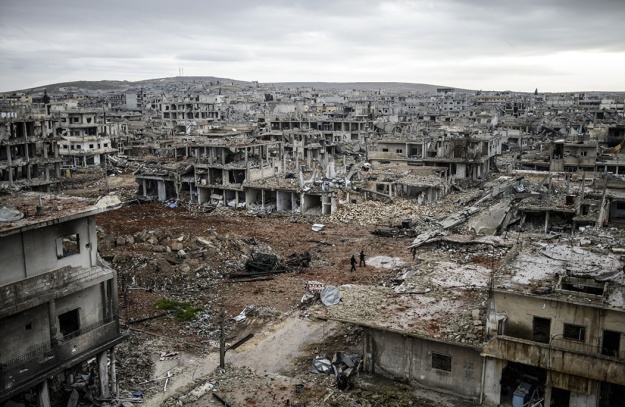
Raqqa city has been destroyed (image source)

The Islamic State (IS) captured Raqqa city, its first provincial capital, in January 2014. Six months later, IS declared its caliphate and Raqqa became its de facto capital. Last Tuesday, the partner force of the US-led anti-IS Coalition, the “Syrian Democratic Forces” (SDF), entered the city centre in Raqqa. A deal had evacuated most of the remaining jihadists over the prior weekend, though a determined core remained and still held about 10 per cent of the city. The caliphate is crumbling and the Coalition says IS has 6,500 fighters left. According to the Coalition, this puts IS “on the verge of a devastating defeat”. Unfortunately, there is no reason to believe this is true. To the contrary, IS is more powerful at this point, in theatre, even after the military reverses inflicted on it by the Coalition, than in the period after the “defeat” of 2008, and the outlook is more favourable now to IS. Moreover, IS now has an international reach, physically and ideologically, it did not previously possess. Continue reading

The Islamic State Planned For Sectarian War in Iraq From the Beginning

By Kyle Orton (@KyleWOrton) on 13 October 2017

The Iraqi Kurdish authorities arrested Mustafa Haji Muhammad Khan (Hassan Ghul) on 23 January 2004. Khan had been dispatched to Iraq by Nashwan Abd al-Baqi (Abd al-Hadi al-Iraqi), one of the key military officials of al-Qaeda “central” (AQC), to function as AQC’s intermediary with Ahmad al-Khalayleh (Abu Musab al-Zarqawi), the founder of the Islamic State movement. Khan replaced Abdallah al-Kurdi, the first envoy sent by Abd al-Baqi. Al-Kurdi had failed to establish any footing to do his job effectively, but Khan, a battle-hardened jihadist from Baluchistan, earned a measure of respect from al-Khalayleh and facilitated a productive conversation between AQC and al-Khalayleh. Al-Khalayleh, possessed of a pathological anti-Shi’ism, wrote a seventeen-page memo to Usama bin Laden explaining his strategy to defeat the Americans by starting a total war between the sects in Iraq. That memo, in digital form, was given to Khan, and Khan had it in his possession when he was captured. A translation of the letter is given below with some interesting sections highlighted in bold.[1] Continue reading

Islamic State Newsletter Adds to Claim of Las Vegas Massacre

By Kyle Orton (@KyleWOrton) on 8 October 2017

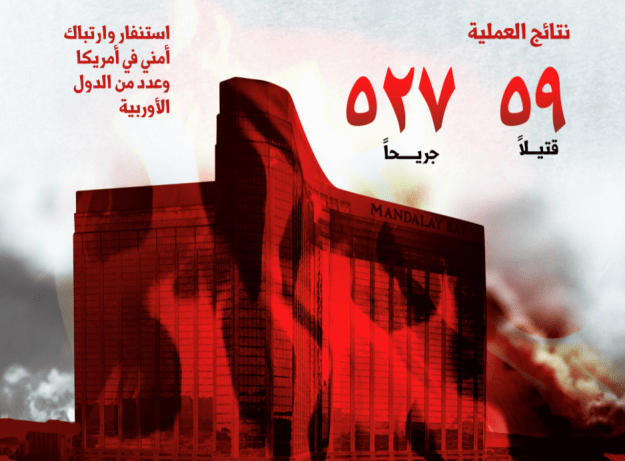
Al-Naba 100, page 2

In Las Vegas, just after 22:00 Pacific Time on 1 October [6:00 on 2 October, British time], 64-year-old Stephen Paddock fired about 1,100 rounds over a ten-minute period from the thirty-second floor of the Mandalay Bay Hotel at the crowd gathered on the Las Vegas Strip for the Route 91 Harvest music festival (the country singer, Jason Aldean, was playing at the time). When the shooting stopped, fifty-eight people had been murdered—making this the deadliest mass-shooting in American history—and 546 people had been injured. Paddock was found dead in the hotel room, having apparently shot himself.

The Islamic State claimed the Las Vegas attack via Amaq on 2 October, and soon released a fuller statement naming the killer as “Abu Abd al-Bir al-Amriki”. This followed the previous pattern laid down by IS when it claims its foreign terrorist attacks. There is as yet no definitive evidence of Paddock being motivated by jihadist ideology, nor of contact between Paddock and IS, and U.S. intelligence and law-enforcement have been quick to claim that such links do not exist.

In the 100th edition of Al-Naba, IS’s weekly newsletter, IS added details to its claims, page three contained a brief article adding details to IS’s claims about Las Vegas. A rough translation of the Naba article is reproduced below. Continue reading

By Strengthening Iran, the Coalition Has Ensured the Islamic State’s Survival

Published at The Telegraph

By Kyle Orton (@KyleWOrton) on 6 October 2017

The “defeat” of the Islamic State (ISIL), signified by its eviction from Mosul in July, its impending loss of Raqqa, and an apparent resurgence of Bashar al-Assad’s regime in Syria, seemed to augur a new era of stability for the Middle East. The jihadists would be gone and Iranian-backed governments in Syria and Iraq consolidated.

True, Assad murdering those who resisted him with poison gas and concentration camps, and hiding the evidence by installing crematoria, would nag at our conscience. But foreign policy is a cold-blooded business and it has been decreed that ISIL is the greatest—really the only—threat emanating from the region.

It would not be justice, but it would be peace. Or something like that. Continue reading

The Islamic State Adapts to the Coalition Campaign

By Kyle Orton (@KyleWOrton) on 3 October 2017

Hassan Hassan wrote in The National on 20 September 2017 about the Islamic State (IS) having issued a public statement on its adaptions to the U.S.-led Coalition air campaign against it in Iraq and Syria. This statement appeared on pages eight and nine of the ninety-seventh issue of Al-Naba, IS’s newsletter, on 14 September. A rough translation is republished below. Continue reading

Russia’s Unreliable Claims About the Islamic State

By Kyle Orton (@KyleWOrton) on 1 October 2017

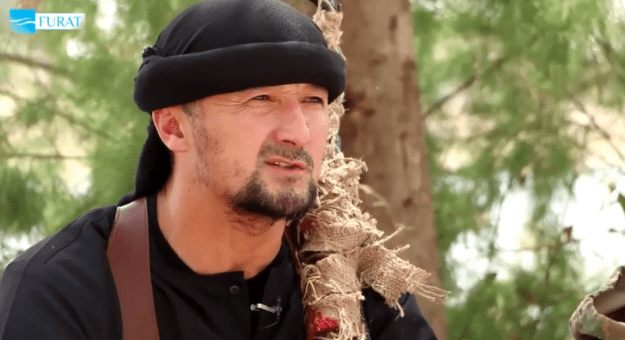
Gulmurod Khalimov

The Islamic State’s (IS) caliph, Ibrahim al-Badri (Abu Bakr al-Baghdadi), appeared on Thursday to deliver his first speech in nearly a year. Other than the contents of the speech, al-Badri’s re-appearance was confirmation that the claim by the Russian government, on 16 June, to have killed al-Badri and 330 other IS jihadists in a 28 May airstrike in Syria, was false.[1] This is far from the first mendacious claim Moscow has made on this topic.

On 8 September, the Russian Ministry of Defence claimed it had killed “four influential field commanders”, one of whom was Tarad al-Jarba (Abu Muhammad al-Shimali), and forty other IS jihadists, in an airstrike near Deir Ezzor city. Later in the day, the Russians claimed day that another of the four commanders was Gulmurod Khalimov (Abu Umar al-Tajiki), named by the U.S.-led coalition as IS’s War Minister. In fact, it is likely that Khalimov was already dead and that al-Jarba is still alive. Continue reading

The Islamic State’s Profile of Manaf al-Rawi

By Kyle Orton (@KyleWOrton) on 1 October 2017

Manaf al-Rawi

The Islamic State and its supporters release short biographies of their slain leaders. One such profile was released by Manaf Abdul Rahim al-Rawi and is reproduced below. (A fuller profile of al-Rawi is available here.) Continue reading

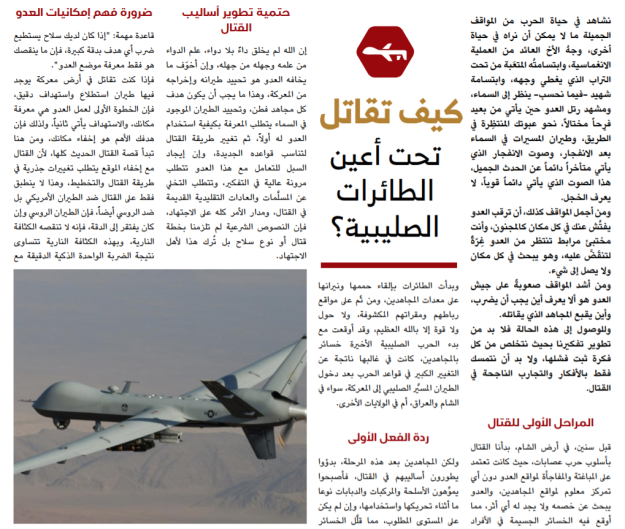
The Coalition Kills Three Islamic State Drone Developers

By Kyle Orton (@KyleWOrton) on 29 September 2017

The international coalition against the Islamic State (IS) announced that it has killed “three senior and highly skilled ISIS officials” near Mayadeen in eastern Syria between 12 and 14 September. Continue reading