By Kyle Orton (@KyleWOrton) on 26 June 2025

By Kyle Orton (@KyleWOrton) on 4 June 2025
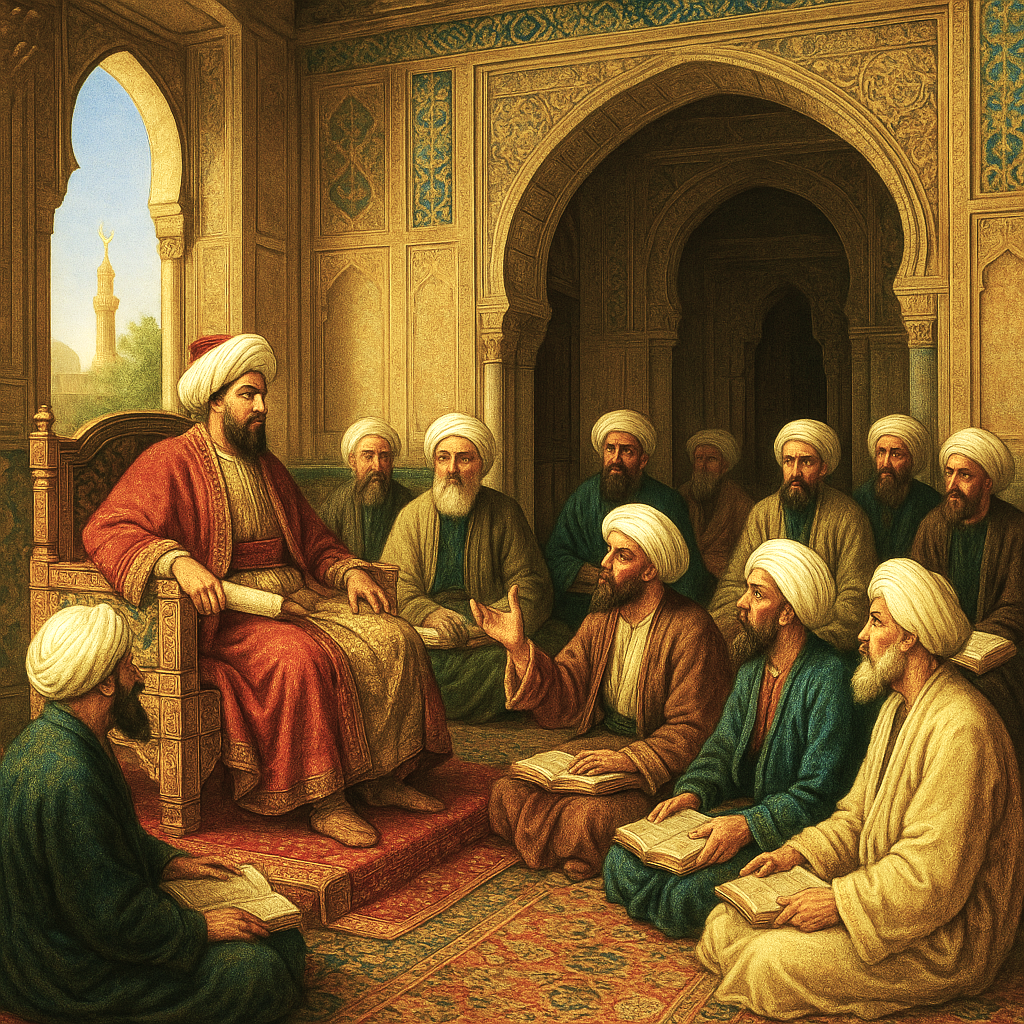
Muslim belief is that the Qur’an is “uncreated” (ghayr makhluq). While the Qur’an was revealed to Muhammad over twenty-three years (610-32 AD), the “speech of God” (kalam Allah) in these revelations had existed co-eternally with God. This was once a point of serious dispute in Islamic theology, and the outcome of that debate was an important waymarker in the development of Islam.
By Kyle Orton (@KyleWOrton) on 28 February 2019
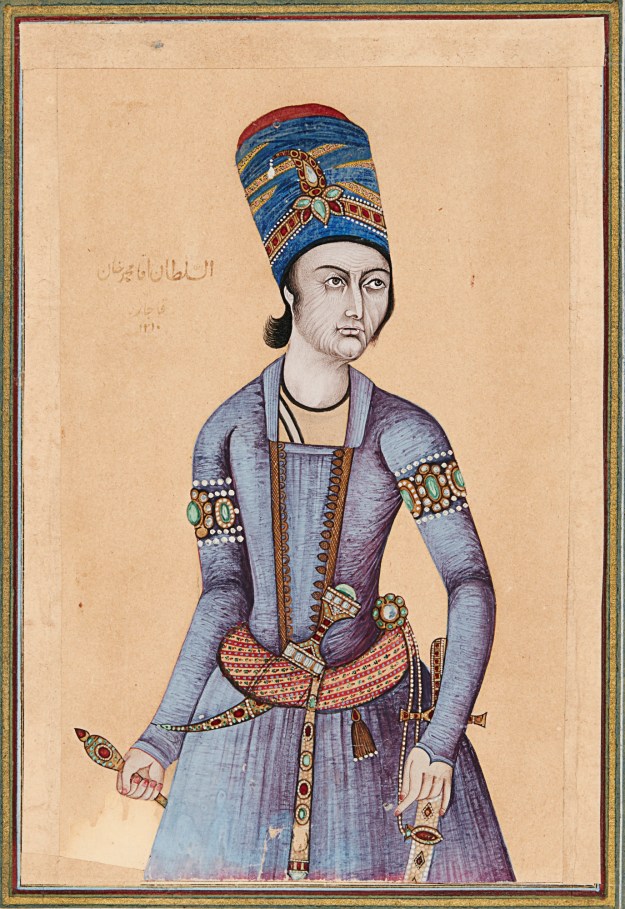
Agha Mohammad Khan Qajar, founder of the Qajar dynasty (1794-1925) in Iran [source]
By Kyle Orton (@KyleWOrton) on 23 November 2017

The Office of Foreign Assets Control (OFAC) in the U.S. Department of Treasury, on 20 November, sanctioned “a network of individuals and entities involved in a large-scale scheme to help Iran’s Islamic Revolutionary Guard Corps-Quds Force (IRGC-QF) counterfeit currency to support its destabilizing activities” in Yemen. Continue reading
By Kyle Orton (@KyleWOrton) on August 24, 2015
Book Review: The Assassins: A Radical Sect in Islam (1967) by Bernard Lewis
This review can be read in six parts: one, two, three, four, five, and six.
Abstract
The fourth Caliph, Ali, was assassinated during a civil war that his supporters, Shi’atu Ali (Followers of Ali), lost to the Umayyads, who thereafter moved the capital to Damascus. The Shi’a maintained that the Caliphate should have been kept in the Prophet’s family; over time this faction evolved into a sect unto themselves, which largely functioned as an official opposition, maintaining its claim to the Caliphate, but doing little about it. Several ghulat (extremist) Shi’a movements emerged that did challenge the Caliphate. One of them was the Ismailis. Calling themselves the Fatimids, the Ismailis managed to set up a rival Caliphate in Cairo from the mid-tenth century until the early twelfth century that covered most of North Africa and western Syria. A radical splinter of the Ismailis, the Nizaris, broke with the Fatimids in the late eleventh century and for the next century-and-a-half waged a campaign of terror against the Sunni order from bases in Persia and then Syria. In the late thirteenth century the Nizaris were overwhelmed by the Mongols in Persia and by the Egyptian Mameluke dynasty which halted the Mongol invasion in Syria. The Syrian-based branch of the Nizaris became known as the Assassins, and attained legendary status in the West after they murdered several Crusader officials in the Levant. Attention has often turned back to the Assassins in the West when terrorist groups from the Middle East are in the news, but in the contemporary case of the Islamic State (ISIS) the lessons the Nizaris can provide are limited. Continue reading
By Kyle Orton (@KyleWOrton) on August 22, 2015
This is the final part of a six-part series. Read parts one, two, three, four, and five, or read the whole essay.

Masyaf fortress, the headquarters of the Nizari Ismailis (The Assassins) in Syria
Conclusion
The Nizari Ismailis did not invent assassination, of course; only lent it their name. The Ismailis were “part of a long tradition that goes back to the beginnings of Islam … of popular and emotional cults in sharp contrast with the learned and legal religion of the established order.” Still, the Nizaris did rely on the Holy Law. The ideal of Islamic governance might be authoritarian, but it is not arbitrary; if a ruler crosses the shari’a it becomes a duty to resist. This element became gradually more marginal as the religion formed into a State and Empire, but it was there and many other sects had called on it in their opposition to the prevailing regimes. The Nizaris were the first to call up this tradition of righteous rebellion and combine it with an effective opposition organization.
In their use of conspiracy, assassination, and even the ceremonial nature of the murders and the weapon-cult, the Assassins were hardly unique. But they might well be the first terrorists: those who, at an overwhelming disadvantage in conventional terms, used unconventional means in a planned, long-term campaign of targeted violence as a political weapon with the intention of overturning the established order. Continue reading
By Kyle Orton (@KyleWOrton) on August 21, 2015
This is the fifth of a six-part series. Read parts one, two, three, and four.
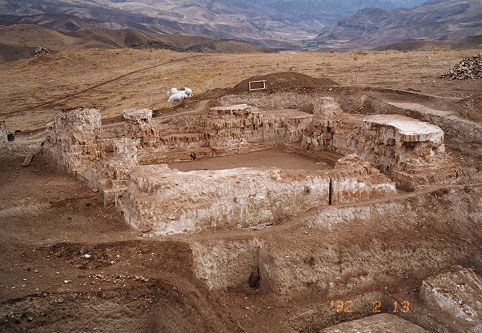
Lamsar fortress, the Nizaris’ second castle near their Alamut headquarters in northern Iran
The End of the Nizaris
In 1218, the Mongols reached the Jaxartes River, becoming immediate neighbours of the Khorazmshah. By 1219, Genghis Khan had crossed the river and entered the Islamic world. By 1240 the Mongols had overrun Iran and were invading Georgia, Armenia, and northern Mesopotamia.
In this period, the Nizaris—who never forgot their mission—had dispatched envoys from Alamut to convert the Ismailis of the Gujerati coast from the “old preaching” to the “new preaching”. In time, India would become a main centre of Ismailism.
There is one final documented episode—albeit hazily—from the Nizaris in Syria around this time. The stories of the Assassins’ attempts to kill France’s King (now Saint) Louis IX as an infant can, like all stories of the Assassins operating on European soil, be dismissed as invention. But after King Louis arrived in Palestine in June 1249, there is every indication that he reached a compact with the Assassins, which involved paying them tribute. Continue reading
By Kyle Orton (@KyleWOrton) on August 20, 2015
This is the fourth of a six-part series. Read parts one, two, and three.

Girdkuh fortress, northern Iran
The Nizaris’ Turn to Sunnism
In Persia, a new power was rising in the east: Tekish, the Shah of Khorazm. In 1194, the Caliph, al-Nasir, was hard-pressed by the Seljuk Sultan of Isfahan, Tughrul II, and appealed to Khorazmshah Tekish for help, providing the excuse for the Khorazmshah to extend into western Iran. Tughrul II was soon killed, taking the Seljuk Empire with him.
The Seljuks had been the major power in Islam for 150 years, and while their rule had ended, the pattern of rule they brought—Turkish colonization, Turkish annexation of local ruling systems, and a stern orthodoxy—remained and was expanded. The Khorazmshah himself was a product of this: the office was descended from a Turkish slave soldier sent to Khorazm as a governor by the Seljuk Great Sultan Malik-Shah. Continue reading
By Kyle Orton (@KyleWOrton) on August 19, 2015
This is the third of a six-part series. Read parts one and two.

Masyaf fortress, eastern Hama, the headquarters of the Assassins (1141-1270)
The death of Hassan-i Sabbah and The Resurrection

Rashid ad-Din Sinan
Hassan-i Sabbah, the Nizaris’ first and most successful leader, died in May 1124. Hassan-i Sabbah was a fanatic who sternly imposed the Holy Law—even executing one of his own sons for drinking wine and another son (mistakenly) for an unauthorized assassination. An extreme ascetic and recluse, Hassan-i Sabbah left his house twice in the thirty-five years after taking Alamut. Hassan-i Sabbah’s great skill was in weaponizing the discontents of the dispossessed and refining the doctrine of al-dawa jadida (the new preaching).
Hassan-i Sabbah never claimed to be the Imam, merely the only one who knew what the Imam wanted. Hassan-i Sabbah confirmed the Ismaili doctrine as essentially authoritarian, where the believer must follow an Imam, the only source of truth, who has been appointed by god (unlike the Sunni view where the believer can choose an Imam).
The Nizaris’ history divides into essentially four parts after this: Continue reading
 Kyle Orton's Blog
