By Kyle Orton (@KyleWOrton) on 19 November 2019

President Barack Obama meeting President-elect Donald Trump, 10 November 2016 [image source]
By Kyle Orton (@KyleWOrton) on 19 November 2019

President Barack Obama meeting President-elect Donald Trump, 10 November 2016 [image source]
By Kyle Orton (@KyleWOrton) on 18 November 2019

“SDF commander “General Mazlum Kobani” (the PKK executive official Ferhat Abdi Shahin) being interviewed by AFP in Hasaka city, 24 January 2019 [image source]
By Oved Lobel on 18 November 2019

PKK at a terrorist training camp in the Asad regime-held Bekaa Valley of Lebanon, 1991 [source]
The broad outline of the PKK’s relationship with the Soviet Union—and then the Russian Federation—is fairly clear. After the PKK was founded in Turkey in the late 1970s by Ocalan, it was evicted from the country during the 1980 military coup. The PKK moved to Syria, where Ocalan was already based, having fled Turkey in June 1979. From there, the PKK moved into the Bekaa area of Lebanon, at that time controlled by the Syrian regime of Hafez al-Asad, and the Soviets acted through Asad, as they so often did in dealing with terrorist groups, to build the PKK into a fighting force that was then unleashed in 1984 on Turkey, a frontline NATO state in the Cold War. Continue reading
By Kyle Orton (@KyleWOrton) on 12 September 2019

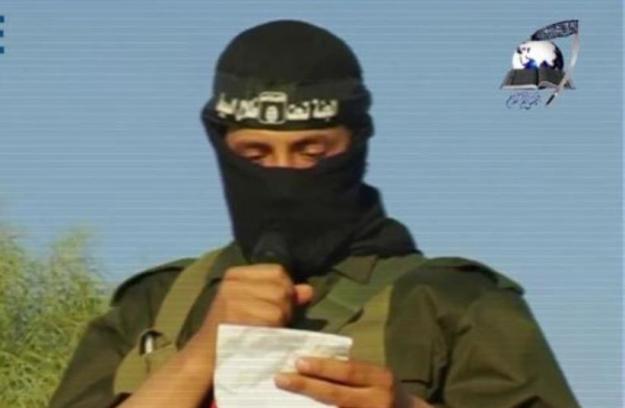
To mark the eighteenth anniversary of the 9/11 massacre, Al-Qaeda’s Al-Sahab media department released a video, “And They Shall Continue to Fight You”. The video, which ran over a half-hour, featured a speech by the group’s emir, Ayman al-Zawahiri, interspersed with other leadership figures.
Much attention has been given to Dr. Al-Zawahiri encouraging attacks on America, his contention that the U.S. has enabled the spread of Iranian power by providing its vicious sectarian militias in Iraq, Syria, and beyond with direct support as part of the war against the Islamic State (ISIS), and his use of the issue of Palestine. There are some indications Al-Qaeda is looking abroad again with its terrorism campaign, but the primary purpose of re-emphasising the justice of attacks on the West seems to be to meet the ideological challenge from ISIS. Behind the veneer of the “far enemy” rhetoric in this speech, Al-Zawahiri was in fact very defensive—particularly about 9/11, Al-Qaeda’s greatest “success”, where he seems stung by the accusation Al-Qaeda murdered innocents—and “near enemy” (regionally) focused. Even the call to attack America suggested attacks on military installations in the Middle East, rather than in America itself. Such attacks would also avoid the issue of civilian casualties, Al-Zawahiri noted.
An English translation was put out of the video of Al-Zawahiri’s speech and a transcript is reproduced below.
Continue reading
By Kyle Orton (@KyleWOrton) on 22 July 2019

U.S. President Donald Trump and Turkey’s President Recep Tayyip Erdogan meeting during the G20 leaders summit in Osaka, Japan, 29 June 2019 [image source]
By Kyle Orton (@KyleWOrton) on 10 May 2019

President Donald Trump speaks as John Bolton stands by in the Oval Office, 22 May 2018. OLIVER CONTRERAS-POOL/GETTY IMAGES
As tensions flared between the United States and Iran over the last ten days, a number of Washington’s Western allies have signalled their distance from the U.S. view, most dramatically in the case of Major-General Chris Ghika, Britain’s top commander in the coalition against the Islamic State (ISIS), who dismissed the U.S. intelligence assessment of an increased threat from Iran. This has since been walked back, but the fissures in the Western alliance over how to deal with Iran are real, and this has been compounded by differences within the U.S. government and the highly irregular nature of the Donald Trump administration, particularly its decision-making processes and public messaging. Continue reading
By Kyle Orton (@KyleWOrton) on 29 April 2019
This article was originally published at European Eye on Radicalization

In the wake of the horrific bombings by the Islamic State (ISIS) in Sri Lanka on Eastern Sunday, which killed 250 people, an image has circulated purporting to show a terrorist connected to the attack in the company of the Qatar-based cleric of the Muslim Brotherhood, Yusuf al-Qaradawi. In fact, the image shows no such thing. But Al-Qaradawi’s influence in creating the ideology that motivates Islamist terrorists cannot be doubted. Continue reading
Published at The Arab Weekly
By Kyle Orton (@KyleWOrton) on 28 April 2019

A young boy rides his bicycle in Deraa // AFP
In military terms, the fall of Daraa, in south-western Syria, to Iranian and regime forces last July eliminated the last insurgent-held pocket not dominated by jihadists. Politically, it had profound effects, demonstrating American disengagement and Israel’s misperceptions of the Syrian landscape, particularly Russia’s role in it.
Recent signs of renewed insurgency in Daraa, however, underline how far from over Syria’s war is and how badly the West has mishandled the crisis. Continue reading
By Kyle Orton (@KyleWOrton) on 18 April 2019

Israeli opinion generally regards the country’s efforts to contain Iran, especially in Syria, as having been successful. In fact, the trendline runs the other way: Iran is constraining Israel, entrenching all around the Jewish state. Continue reading
By Kyle Orton (@KyleWOrton) on 9 April 2019

As the regime of Bashar Assad appears to be consolidating in Syria, many Israelis have concluded that their government’s handling of the crisis was generally laudable.
The most comprehensive statement of this view was given recently in Haaretz by Anshel Pfeffer (Netanyahu Outfoxed Russia, Iran and ISIS With His Cynical, Ruthless Syria Policy.) Every aspect of this is open to question. Continue reading