Tag Archives: media

The CIA and Iraq: Intelligence Failures, Media Successes

By Kyle Orton (@KyleWOrton) on 28 December 2019

In a long article last week, I looked at why the U.S. ran a formal occupation of Iraq for fourteen months after the fall of Saddam Husayn in April 2003, given that there had been an explicit pre-invasion decision not to have an occupation government. The short answer is that the occupation was installed through deception by the State Department, supported by the Central Intelligence Agency (CIA). State and CIA had argued for a protracted occupation in the Situation Room debates in 2002, but President George W. Bush had sided with the Pentagon, which advocated a rapid transfer of power to Iraqis. Having lost in the formal inter-agency process, the State Department succeeded by subversion in getting its way on the ground in Iraq. The disaster this caused in the mismanagement of post-Saddam Iraq was, as the article explained in detail, only the most serious impact of the toxic schism between State/CIA and the Pentagon, a factor whose import is difficult to overstate when examining how the Bush administration functioned. (This feud also at times drew in the Vice President’s Office, which tended to support the Pentagon.)
Continue reading

Why Was There Ever An American Occupation of Iraq?

By Kyle Orton (@KyleWOrton) on 22 December 2019

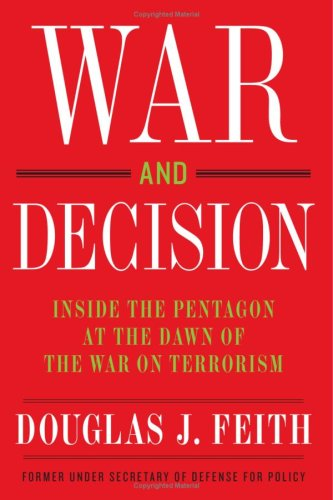
Douglas Feith was the U.S. Under Secretary of Defense for Policy from 2001 to 2005, one of the most senior positions at the Pentagon during one of the most consequential periods in recent history, covering the 11 September 2001 atrocities and early phase of the U.S.-led response. Feith later wrote a highly illuminating memoir, War and Decision: Inside the Pentagon at the Dawn of the War on Terrorism, which tried to drain some of the hysteria out of the public “debate” about the Iraq dimension of the U.S. policy in particular by explaining the internal arguments in the Bush administration leading up to the decision to finish with Saddam Husayn in 2003, and trying to set those arguments in their proper historical context, both in relation to Iraq—where “the war” had begun twelve years earlier—and the altered American threat perceptions in the shadow of 9/11. Unlike a lot of the gossipy tomes that emerged from former officials, Feith’s book is notably light on opinion and contains reams of declassified documents so readers can check his analysis against the source material. One of Feith’s key judgments is that “the chief mistake was maintaining an occupation government in Iraq for over a year”.[1] As Feith explains in great detail in the book, this was never supposed to happen. So how did it?

Continue reading

The Darker Side of the Western Enthusiasm for “The Kurds”

A version of this article was published in The Arab Weekly

By Kyle Orton (@KyleWOrton) on 24 November 2019

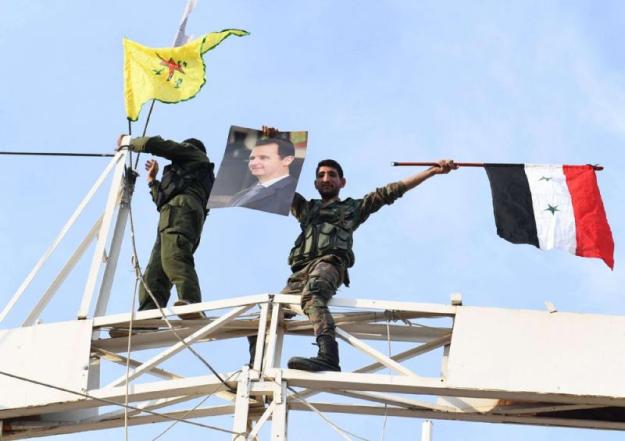
Solider from the Syrian regime holds up a portrait of Bashar al-Asad and a Syrian national flag, another stands by the Kurdish YPG/PKK flag, in Kobani, 18 October 2019. (AFP)

Mustafa Bali, head of the press office for the Syrian Democratic Forces (SDF), the coalition partner against the Islamic State (ISIS) in Syria, sent a tweet on November 14 showing Turkey’s Arab proxies engaged in “ISIS chants.” By this, he meant the takbir, “God is Great,” an expression used by Muslims every day. When criticised, Bali doubled down and blocked many critics. This was a microcosm of one of the darker threads in an SDF messaging strategy that is among the most effective propaganda campaigns on record. Continue reading

Trump’s Middle East Failure Was Made By Obama

By Kyle Orton (@KyleWOrton) on 19 November 2019

President Barack Obama meeting President-elect Donald Trump, 10 November 2016 [image source]

October 2019 may well remain in the popular memory as the inflection point marking the collapse of America’s — and by extension, the West’s — position in at least the northern Middle East. Having been thwarted twice before in efforts to leave Syria, in March and December 2018, President Donald Trump made one more try. For many, ‘Trump betrayed the Kurds’ will be the summary of the events that followed as Turkey made a swift move into the vacuum. The reality is a lot more complicated, and in truth the amount of blame that Trump can take for the events of the last month is rather limited. This catastrophe was baked into the policy of Barack Obama, and Trump’s main fault is to have followed the policy track laid down by his predecessor. Continue reading

The Reappearance of the Caliph

By Kyle Orton (@KyleWOrton) on 10 May 2019

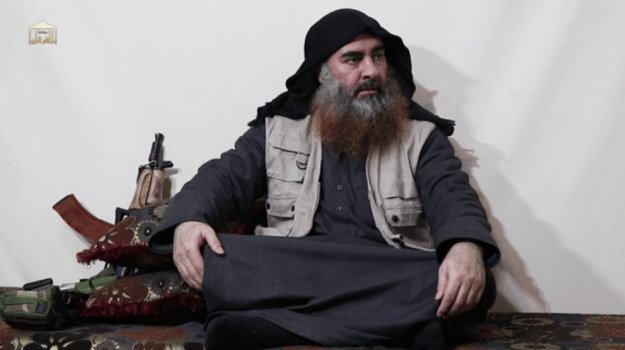
The leader of the Islamic State, Ibrahim al-Badri (Abu Bakr al-Baghdadi) appearing in an Islamic State propaganda video, “In the Hospitality of Amir al-Mu’mineen, 29 April 2019

The leader of the Islamic State (IS), Ibrahim al-Badri (Abu Bakr al-Baghdadi), appeared in an eighteen-minute video on 29 April, the first time Al-Ibrahim has appeared since 4 July 2014 when he gave the Friday prayer at the Nuri Mosque in Mosul, days after IS had announced the restoration of the caliphate. Al-Ibrahim has given semi-regular speeches over the years, but with these two exceptions they have been audio addresses. The video was released by IS’s premier media outlet, Al-Furqan Media Foundation, which is also the group’s oldest media platform. An English translation was released by IS’s Halummu outlet and is republished below with some interesting and/or important sections, plus names of IS operatives, highlighted in bold. Continue reading

Islamic State Profiles the Leadership

By Kyle Orton (@KyleWOrton) on 6 April 2019

Islamic State flag in front of the main gate of Saddam Husayn’s palace in Tikrit, 5 April 2015 // AFP PHOTO / MOHAMMED SAWAF

A lengthy document—roughly sixty pages and 12,000 words—was published online on 21 February 2019 containing biographies of twenty-seven senior Islamic State (IS) officials, past and more recent. Those bios that are dated were written between October 2018 and the time of publication, with one exception that was written in the summer of 2018. The author claims to be an IS veteran. While longevity is difficult to prove, the fact that the author provides heretofore unseen images of some of the IS leaders suggests that at a minimum he is an IS operative. Continue reading

Why The Obama Doctrine Failed

Film review of The Final Year (2018)

By Kyle Orton (@KyleWOrton) on 31 January 2018

The Final Year, a new documentary film directed by Greg Barker, tracks the closing stages of the administration of President Barack Obama in 2016. Senior officials are followed and interviewed, and the White House is watched as it tries to react to daily events. Much of the substance contained in the film was knowable in real time, but it is very useful to have these officials on record—on video, no less—explaining the assumptions and thought processes they were operating with as they made decisions that led to a series of such intense disasters around the world. This is especially interesting since the ripple effects from these catastrophes ultimately set the conditions for the election of Donald Trump and dismantling of much of the Obama legacy. Continue reading

The Coalition Targets Islamic State Propagandists and External Terrorists

By Kyle Orton (@KyleWOrton) on 29 July 2017

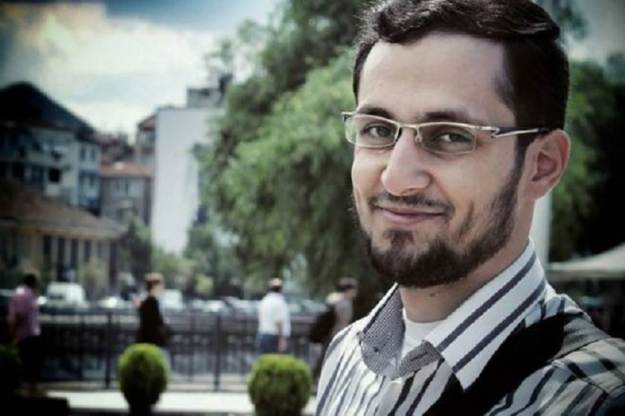
Baraa Kadek (Riyan Meshal) [image source]

The United States announced on 27 July that it had killed seven “senior ISIS propagandists and facilitators in Iraq and Syria” since late March. The removal of these terrorists takes from the Islamic State “extensive experience and training, and degrades ISIS’s ability to plan and conduct attacks on civilian targets in Iraq and Syria, as well throughout the region and in the West,” U.S. Central Command (CENTCOM) said. The geographical pattern of the strikes that killed these men allow some conclusions about IS’s current situation on the ground, and the information provided by CENTCOM underlines IS’s will and capacity, even as it loses its caliphate, to conduct external operations. Continue reading

Book Review: The Muslim Discovery of Europe (1982) by Bernard Lewis

By Kyle Orton (@KyleWOrton) on May 7, 2015

1

With the triumph of relativism and the current economic woes of the West, the sense that Western civilization is unique and in some respects—to use an old-fashioned word—better than the alternatives, and worth defending and exporting, is waning. But Bernard Lewis’ The Muslim Discovery of Europe suggests a longer view in which Europe, while containing all the faults of previous civilizations, has been one of the few to begin the process of correcting those faults, and has corrected many more than any other civilization.

One feature of European civilization that stands out as unique is curiosity. Continue reading

From Kessab to Cannibals: Syria’s Media War

By Kyle Orton (@KyleWOrton) on January 5, 2015

Mother Agnes Mariam on RT. An agent of the regime, she dismissed Syria's rebels as a foreign conspiracy.

Mother Agnes Mariam on RT. An agent of the regime, she dismissed Syria’s rebels as a foreign conspiracy.

Fouad Ajami once said Syria was the “first YouTube war“. An academic study called Syria “the most socially mediated civil conflict in history“. From the start of the Syrian war, the media and propaganda dimension has been of immense importance, impacting the course of the war on the ground and affecting the policy of foreign States who could make a decisive difference in the conflict. Continue reading