Tag Archives: Muslim Brotherhood

The Gulf States Push Back Against Obama’s Iran Policy

By Kyle Orton (@KyleWOrton) on May 12, 2015

1

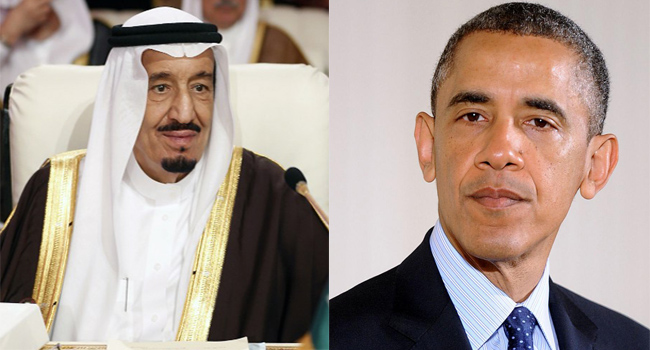
President Obama invited the leaders of the Gulf Cooperation Council (GCC) to a meeting at Camp David on Thursday to clear the air as the President looks to finalize his nuclear deal with Iran. But on Sunday, Saudi King Salman said he was not attending, and soon after the Bahraini monarch followed. The only Gulf leaders in attendance will be the Emirs of Qatar and Kuwait. Since leaders do not just have other things to do when they are scheduled for a private meeting with the President of the United States, this can be taken as a pointed snub to President Obama, and no amount of administration spin about Salman’s absence having nothing to do with political substance will change that. Continue reading

Turkey and Saudi Arabia Move Against Assad

By Kyle Orton (@KyleWOrton) on May 5, 2015

1

Zahran Alloush, Abu Issa, Hashem al-Sheikh

An effort is underway, led by Saudi Arabia and Turkey, mediated by Qatar, to unify the largest Syrian Islamist rebel brigades. With these regional powers now seemingly reading from the same script after years of internecine competition that has fractured the Syrian rebellion, there is also talk of a direct Saudi-Turkish intervention in Syria to overthrow Bashar al-Assad. While increased support to the Syrian insurgency from the Gulf and Turkey is already arriving, a direct intervention seems unlikely, though not, in the current context after the Saudi-led coalition went it alone in Yemen, impossible.  Continue reading

How Saddam Hussein Islamized Iraq

By Kyle Orton (@KyleWOrton) on April 20, 2015
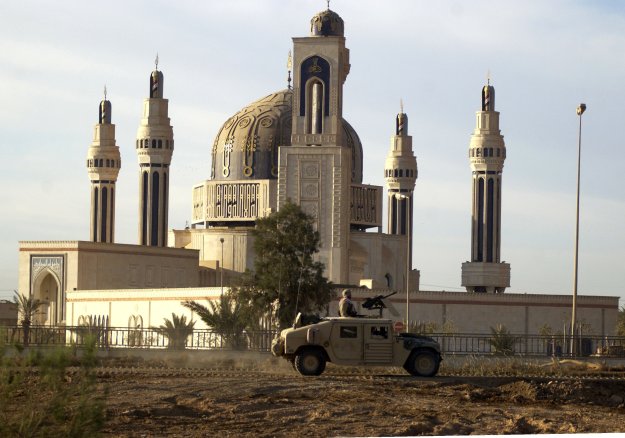
Umm al-Qura (Mother of All Cities) Mosque, built by Saddam to commemorate his

Umm al-Qura (Mother of All Cities) Mosque, built by Saddam to commemorate his “victory” in the 1991 Gulf War

In December, I wrote a post, “Iraq Is Still Suffering The Effects Of Saddam Hussein’s Islamist Regime,” which was a review/analysis of an academic paper by Samuel Helfont that pointed out that the Saddam Hussein regime had, since the 1980s, used Islamists, including al-Qaeda, as part of its foreign policy. I critiqued the paper a little for having said it would not comment on Saddam’s internal policy with the Islamists, while in fact the paper hinted that Saddam remained hostile to mixing religion and politics. I noted that the evidence does not support this: Saddam’s regime adopted overt theocratic trappings before the end.

There were two kinds of pushback to the idea that Saddam’s regime was Islamist. Predictably, one critique was related to the controversy over the way the Gulf War that Saddam started in 1990 was ended; opponents of the 2003 invasion of Iraq are heavily invested in the Saddam-as-secularist narrative, often coupled with the “Bush lied” hysteria—in this case about a connection between the Saddam regime and al-Qaeda—to say that the invasion empowered a previously, officially-repressed Islamism in Iraq. This simply is not borne out by the evidence. There was also pushback from some Iraqis. But this too was predictable: as I outlined in that post, drawing on Ali Allawi’s book on post-Saddam Iraq, one of the reasons so many people with no agenda get the Islamist aspect of the Saddam regime wrong is that when they turn to what they believe is the best primary source—namely the Iraqis in the West—they encounter a source that for various reasons is actually several decades out-of-date.

Buttressing my initial argument is a 2011 paper, “From Militant Secularism to Islamism: The Iraqi Ba’th Regime 1968-2003,” in which Amatzia Baram provides evidence from Iraqi internal documents and tapes of Cabinet meetings captured after the fall of Baghdad to show that Saddam’s regime had formed an alliance with Islamists in the mid-1980s for use in its foreign policy, and from a bit later in the 1980s had begun steps toward Islamizing Iraq internally. Continue reading

An Update On The Anti-Assad Imam Killed In London

By Kyle Orton (@KyleWOrton) on April 13, 2015

Abdul Hadi Arwani

Abdul Hadi Arwani

In Brent, northwest London, in the evening of April 12, a 46-year-old man was arrested as part of the ongoing investigation into the April 7 murder of the Syrian-born imam, Abdul Hadi Arwani, a long-time opponent of the Syrian regime of Bashar al-Assad.

Writing about the murder of Arwani last week, I noted that the available evidence suggested the motivations of the murderer(s) could be:

  • Financial: related to Arwani’s business dealings as the owner of his construction company
  • Other local or personal
  • Far-Right anti-Muslim
  • Intra-Islamist: Arwani had been the director at the Salafist An-Noor Mosque and was himself clearly an Islamist, but Arwani was against the Islamic State (ISIS), for example, which might have made him enemies among some congregants
  • Agents of the Assad regime, conceivably with the complicity of Iran and Russia

Those options still stand, but some important updates over the weekend have helped alter the relative likelihood of each. Continue reading

Why The West Should Support The Saudi-Led Intervention In Yemen

By Kyle Orton (@KyleWOrton) on April 11, 2015

1

In The Independent of April 10, Daniel Wickham wrote in opposition to the campaign of airstrikes, led by Saudi Arabia, against the Iran-backed Houthi militia in Yemen, which has overthrown the government in that country and is now marching on the port city of Aden where the remnants of the fallen regime reside. Wickham notes that the Houthis have behaved abominably since they took the capital, Sanaa, including the “use of torture and extreme violence to suppress dissent,” still “two wrongs do not make a right” and the Saudi-led Operation DECISIVE STORM is “very clearly wrong.” I think this is mistaken. Continue reading

Who Killed The Anti-Assad Imam In London?

By Kyle Orton (@KyleWOrton) on April 9, 2015

Abdul Hadi Arwani

Abdul Hadi Arwani

Abdul Hadi Arwani, a Syrian-born imam, was found shot dead in his car on Tuesday in Wembley, northwest London. The British police are still refusing to officially name Arwani, but his friends and supporters have done so. Arwani leaves behind six children.

There are many possibilities for who killed Arwani. As the manager of a construction firm, it could be a deal gone wrong. The involvement of anti-terrorism police in the investigation into Arwani’s murder could indicate a far-Right anti-Muslim assailant. However, a source close to the investigation said that Arwani was struck down in an operation that had all the hallmarks of a “State-sponsored assassination“. To find that the long arm of Bashar al-Assad’s mukhabarat had caught up with Arwani would hardly be a surprise. Continue reading

A Red Line For Iran’s Imperialism In Yemen

By Kyle Orton (@KyleWOrton) on March 27, 2015

1

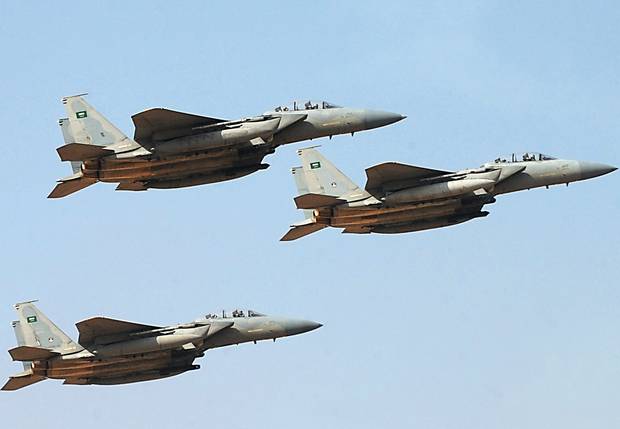
Late in the day on March 25, a Saudi-led coalition intervened in Yemen with airstrikes against the Houthis.

The Iranian-backed Houthis (a.k.a. Ansar Allah) took over Yemen’s capital, Sanaa, in September, and forced the resignation of the Saudi-backed Yemeni ruler, Abed Rabbo Mansour Hadi, in January. Hadi escaped house arrested in Sanaa and retreated to Aden with the remnants of his regime. On March 21, the Houthis had called for a “general mobilisation” and by the next day had pushed south toward Aden. The Houthis said they were combatting “terrorist forces”. As in Syria, Iran’s allied forces cast a narrative where there were no Sunni moderates, nobody with whom a deal might be struck.

Hadi’s predecessor, Ali Abdullah Saleh, whose resignation was compelled in early 2012 after the “Arab Spring,” stands accused not only by Hadi but by the United States of supporting the Houthis. Continue reading

Al-Qaeda Issues Strategic Guidelines for Jihadist Warfare

By Kyle Orton (@KyleWOrton) on January 7, 2015

Al-Qaeda’s emir, Ayman al-Zawahiri, released a document on 14 September 2013, entitled, Tawjihat ‘Amma lil-Amal al-Jihadi (توجيهات عامة للعمل الجهادي), variously translated as: “General Guidelines for the Work of Jihad” or “General Guidelines for Jihadist Action”. Al-Zawahiri’s document is reproduced below. Continue reading

Iraq Is Still Suffering The Effects Of Saddam Hussein’s Islamist Regime

By Kyle Orton (@KyleWOrton) on December 17, 2014

Throughout his entire trial, Saddam Hussein was never without a Qur'an

Throughout his entire trial, Saddam Hussein was never without a Qur’an

In June, Samuel Helfont published a paper for the Middle East Institute entitled, ‘Saddam and the Islamists: The Ba’thist Regime’s Instrumentalization of Religion in Foreign Affairs’. Relying on “newly released Iraqi state and Ba’th Party archives,” Helfont’s central argument is:

Saddam maintained deep reservations about Islamism until the end. However, this did not prevent his regime from working extensively with Islamists and Islamic activists outside Iraq. Indeed, religion played a leading role in the country’s foreign policy throughout the 1990s.”

Continue reading

Has Hillary Clinton Become A Hawk?

By Kyle Orton (@KyleWOrton) on September 21, 2014

The next American President?

The next American President?

Last month, Jeffrey Goldberg at The Atlantic published an interview with Hillary Clinton. At 8,000 words it can be off-putting to plough through, but I have now finally got around to it, and it is rather interesting. The interview focusses on the three areas where President Obama’s foreign policy has so conspicuously failed—Syria, Iran, and Israel—and also includes sections on Egypt and Libya, where the administration’s failure has been somewhat less in the news. Continue reading