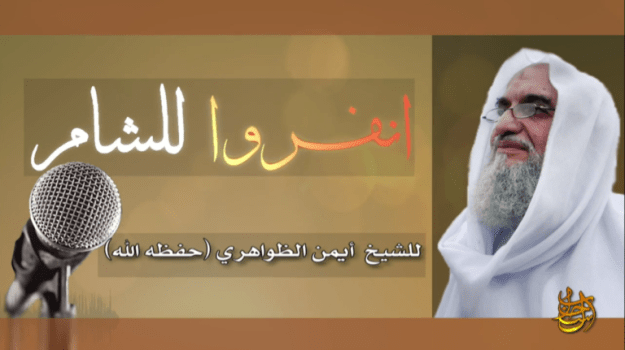
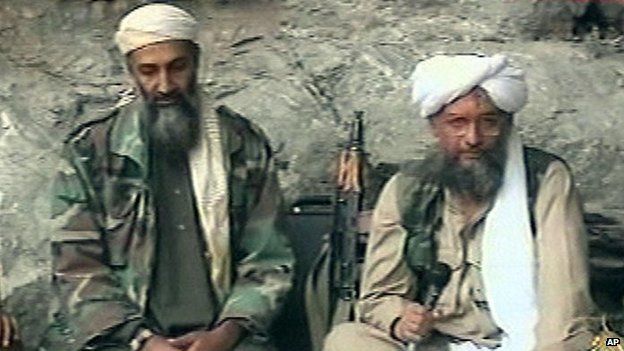
The leader of al-Qaeda, Ayman al-Zawahiri, released an audio statement on 8 May 2016. The speech was entitled, “Hasten to Syria,” “Go Forth to Syria,” or “March Forth to Syria,” depending on translation.[1] An English-language translation has been made available and is reproduced below, with some editions in transliteration and some important sections highlighted in bold.Continue reading →
This essay, written to tie together my work on the relationship between the Saddam Hussein regime and the Islamic State, was completed last summer and submitted to an outlet, where it entered a form of development hell. After giving up on that option late last year, the opportunity arose to get a shorter version published in The New York Times in December. But I procrastinated too long over what to do with the full essay and a recent change in my work situation means I no longer have the bandwidth to go through the process of finding it a new home, so here it is.
“Abu-Bakr al Baghdadi is a product of the last decade of Saddam’s reign,” argues Amatzia Baram, a scholar of Iraq. He is correct in at least three ways. First, in its last decade in power, the Iraqi Ba’ath regime transformed into an Islamist government, cultivating a more religious, sectarian population on which the Islamic State (ISIS) could draw. Part of Saddam Hussein’s “Faith Campaign” also involved outreach to Islamist terrorists, including al-Qaeda, which meant that the synthesis of Ba’athism and Salafism that fused into the Iraqi insurgency after the fall of Saddam was already well advanced by the time the Anglo-American forces arrived in Baghdad in 2003. Second, the ISIS leadership and military planning and logistics is substantially reliant on the intellectual capital grown in the military and intelligence services of the Saddam regime. And finally, the smuggling networks on which ISIS relies, among the tribes and across the borders of Iraq’s neighbours, for the movement of men and materiel, are directly inherited from the networks erected by the Saddam regime in its closing decade to evade the sanctions. The advantages of being the successor to the Saddam regime make ISIS a more formidable challenge than previous Salafi-jihadist groups, and one that is likely to be with us for some time.
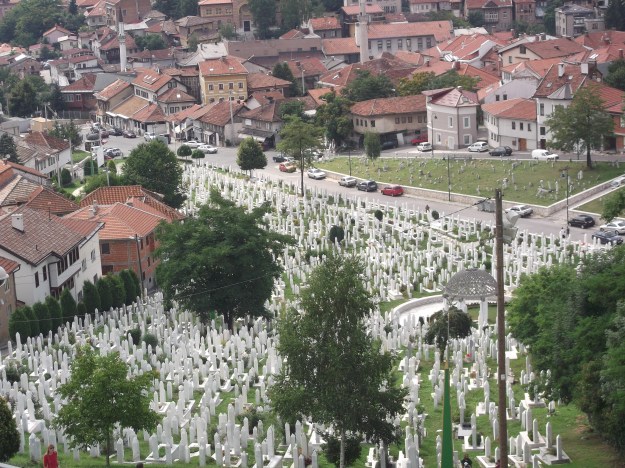
War cemetery in Sarajevo (personal photograph, July 2011)
It was announced on Thursday that Guantanamo inmates Tariq Mahmoud Ahmed as-Sawah and Abd al-Aziz Abduh Abdallah Ali as-Suwaydi had been transferred to Bosnia and Montenegro respectively. Sawah’s path to jihadi-Salafism allows a window into the Bosnian jihad, a much-underestimated factor in shaping al-Qaeda, its offshoots, and the wider jihadist movement. In that story is an examination of the role certain States have played in funding and otherwise helping the jihadists. It also leaves some questions about whether emptying Guantanamo of its dangerous inhabitants is the correct policy. Continue reading →
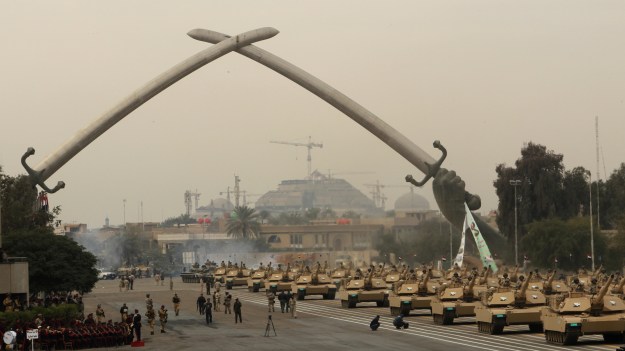
The “Victory Arch,” which Saddam built after the war with Iran. (January 2012)
About three weeks ago I wrote a piece for The New York Times explaining the evolution of Saddam Hussein’s regime away from the hard-secularism of its Ba’athist origins, and how this had prepared the ground for the Islamic State (IS). I received much positive feedback, but the social media reaction was inevitable: little thought and much anger, particularly from people who view Iraqi history through a political prism and felt I was trying to exculpate George W. Bush. With rare exceptions, the critique could hardly be called thoughtful. So it is nice to finally have such a critique to deal with, from Samuel Helfont and Michael Brill in today’s Foreign Affairs. Continue reading →
Whom should we blame for the Islamic State? In the debate about its origins, many have concluded that it arose from the American-led coalition’s errors after the 2003 invasion of Iraq. In fact, the groundwork for the emergence of the militant jihadist group was laid many years earlier by the government of Saddam Hussein.
The Arab nationalist Baath Party, which seized power in 1968 in a coup in which Mr. Hussein played a key role, had a firmly secular outlook. This held through the 1970s, even as religiosity rose among the Iraqi people. But soon after Mr. Hussein invaded Iran in 1980, it began to change.
So the Syrian opposition can unite. Foreign powers have been the major cause of rebel discord. Previous rebel unity initiatives like the Joint Command were pulled apart by the competition between the insurgency’s sponsors—Saudi Arabia and Qatar primarily—and the last rebel umbrella group, the Supreme Military Council, which was identified with Western power, collapsed after President Barack Obama decided not to punish Bashar al-Assad for the massive chemical weapons attack on the population of Ghouta. But under Saudi auspices, an opposition “team” was announced on December 10 after a three-day conference in Riyadh, which includes the political and military opposition and groups with varying ideologies and patrons. This is an achievement. Unfortunately, this team’s task is an impossible one: intended to partake in the Vienna process begun in October, ostensibly to negotiate an end to the war, Syria is not, at present, in a condition where a political agreement can be made and implemented, not least because the Assad regime and its supporters in Iran and Russia have doubled down, and the opposition continues to receive insufficient support to pressure the regime enough to force an agreement. Continue reading →
A rebel fighter from the Free Syrian Army’s “First Battalion” takes part in military training on May 4, 2015, in rebel-held northern Rif Aleppo. (AFP, Baraa al-Halabi)
The Syrian opposition is meeting in Saudi Arabia between December 8 and 10 in an attempt to create a unified structure that can credibly sit across the table from the Bashar al-Assad regime in the internationally-organised peace talks in Vienna, and make a binding commitment on the path forward for Syria. Continue reading →
A couple of days ago, a leader Jabhat an-Nusra issued a statement condemning Ahrar a-Sham. The statement is actually rather milder than initial reports suggested. Nusra is mostly annoyed at Ahrar for working with Turkey and Qatar to acquire money and weapons. Nusra is also displeased that Ahrar, at the instigation of Ankara and Doha, asked Nusra to publicly break its al-Qaeda link. Nusra also felt Ahrar was too willing to publicly distance itself from Salafi-jihadism to gain war materiel. This will no doubt help intensify the debate about Ahrar’s ostentatious “moderation” over the last eighteen months, and what the West should do about Ahrar.
In this post, however, I’d like to focus on the statement’s author, Abu Firas as-Suri, or more precisely on what he represents. Abu Firas is part of a group of (known) agents of al-Qaeda Central (AQC) who were sent into Syria in mid-2013 to mediate the dispute between Nusra and then-ISIS (now the Islamic State, I.S.), and when that failed the AQC veterans stayed, erected a veritable bureaucracy, and sought to forestall Nusra “going local”. Below are mini-profiles of these AQC veterans. Continue reading →
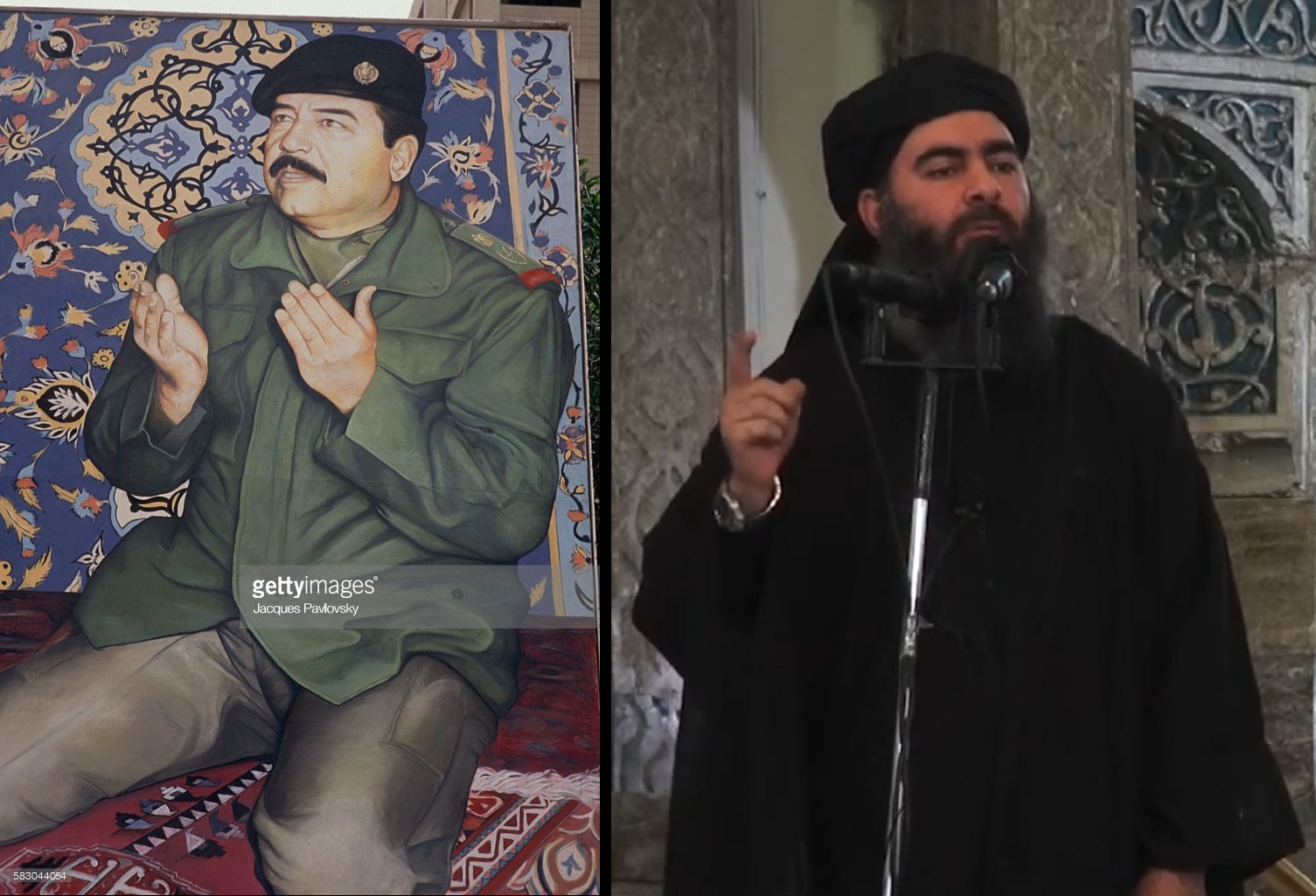
Saddam Hussein prays at a mosque in Samarra, March 12, 1998 (AP Photo)
It should be stated up front that the question posed in the headline is, strictly speaking, unanswerable: only Saddam Hussein could ever answer that question, and even then any out-loud answer given by Saddam could be untrue in any number of directions, for any number of reasons. Still, from the available evidence it does seem Saddam had some kind of “born-again” experience.
Of crucial importance, however, is that while Saddam’s actual beliefs had a significant impact in providing some of the colour and shape to the Faith Campaign, even if one believes Saddam remained a secularist and Islamized his regime as a wholly cynical means of shoring-up support, this is completely irrelevant to the effect this Islamization had. Saddam put in place a governmental administration that created a religious movement, which brought men to a faith they otherwise would not have had, and in combination with the increased sectarianism fostered by Saddam’s regime, this prepared the ground for al-Qaeda and its offshoots like the Islamic State (ISIS) in the aftermath of the regime. Continue reading →
The Saudi-led Operation DECISIVE STORM began in Yemen on March 25 as a campaign of airstrikes against the Iran-backed Houthis, to weaken them and re-install the president, Abd Rabbo Mansour Hadi, who was overthrown by the Houthis last September.
In April, I wrote in support of the Saudi-led operation for: (1) having drawn a line against Iran’s imperialism after Lebanon, Syria, and Iraq; (2) potentially decreasing the growth of the Islamic State (ISIS) by providing Sunnis, in Yemen and beyond, with an alternative form of resistance to Iran’s encroachments; and (3) offering a chance for more stability in Yemen, which was then in free fall with Iran, al-Qaeda, and ISIS capitalizing on the chaos. Continue reading →