Tag Archives: Ruhollah Khomeini

America Pushes Back Against Iranian Subversion on the Gulf

Originally posted at The Henry Jackson Society

By Kyle Orton (@KyleWOrton) on 17 March 2017

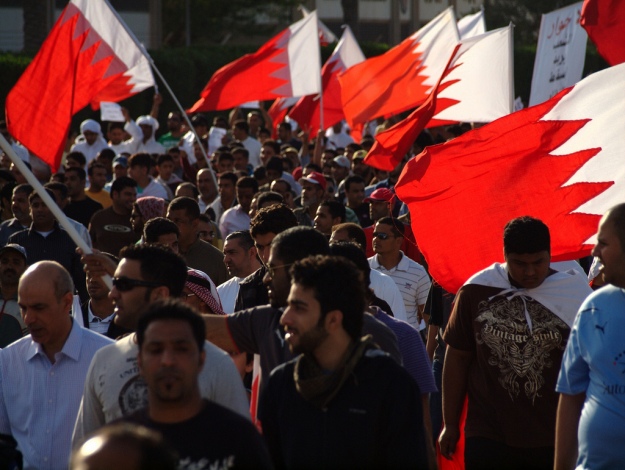
Protesters march through Manama, Bahrain in March 2011 (Photo from Al-Jazeera)

The U.S. State Department today imposed sanctions on two men, Ahmad Hasan Yusuf (Abu Maryam, Sajjad Hassan Nasir al-Zubaydi) and Alsayed Murtadha Majeed Ramadhan Alawi (Murtadha Majeed Ramadan al-Sindi), labelling them Specially Designated Global Terrorists (SDGT). Both men are members of a group, Saraya al-Ashtar or al-Ashtar Brigades (AAB) that has conducted terrorism in Bahrain and is part of the Iranian revolution’s long reach in the region. Continue reading

The Price of the Iran Deal

Originally published at The Henry Jackson Society

By Kyle Orton (@KyleWOrton) on October 26, 2016

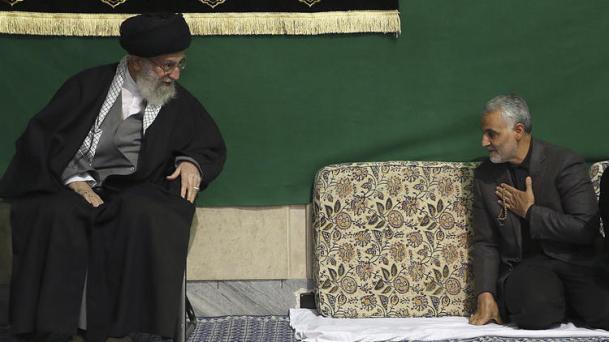
Maj. Gen. Qassem Suleimani, with Supreme Leader Ali Khamenei at a mosque in Tehran, Iran, (March 2015)

Earlier this week, The New York Times reported on the “free fall” of President Barack Obama’s Middle East policy. While the President had “inherited a messy situation in the region with the war in Iraq … by the time he took office, [President George W.] Bush’s troop surge and Gen. David H. Petraeus’s strategy change had helped turn the war around”. This relative stability has given way:

Today there is no single overarching issue but multiple ones. Syria, Iraq and Yemen are caught up in war. Turkey and Jordan are inundated by refugees. Russia has reasserted itself as a major player in the region. Libya is searching for stability after the fall of its longtime dictator. The Kurds are on the march. Egypt is fighting off a terrorist threat at home. And Saudi Arabia and Iran are waging a profound struggle for the future of the region.

Many of America’s allies disagreed with Bush’s focus on Iraq, considering Iran to be the larger threat, but if they had considered Bush too assertive, they find Obama too timorous, stepping back as the situation spins out of control. Continue reading

Saddam Hussein Prepared the Ground for the Islamic State

By Kyle Orton (@KyleWOrton) on April 26, 2016

This essay, written to tie together my work on the relationship between the Saddam Hussein regime and the Islamic State, was completed last summer and submitted to an outlet, where it entered a form of development hell. After giving up on that option late last year, the opportunity arose to get a shorter version published in The New York Times in December. But I procrastinated too long over what to do with the full essay and a recent change in my work situation means I no longer have the bandwidth to go through the process of finding it a new home, so here it is.

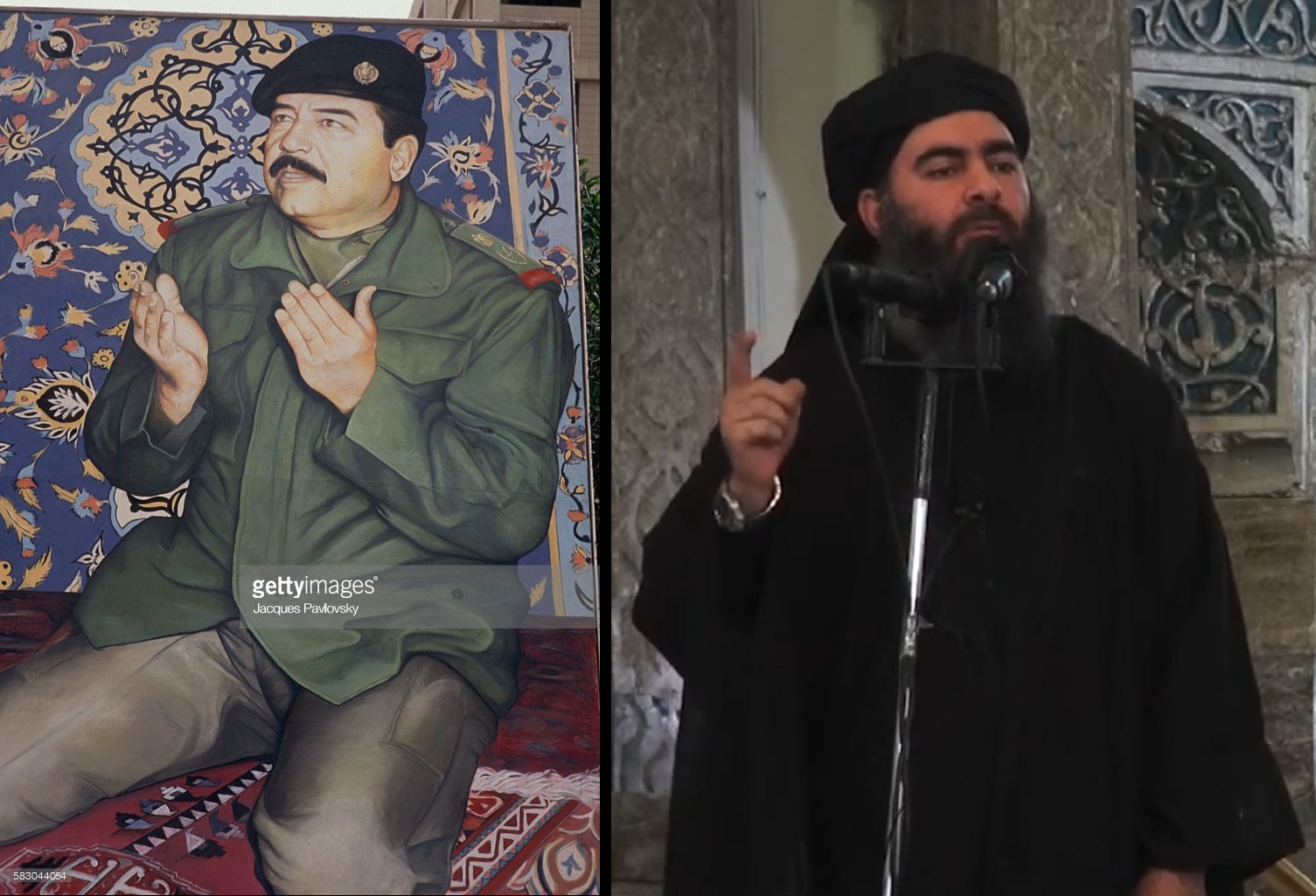
“Abu-Bakr al Baghdadi is a product of the last decade of Saddam’s reign,” argues Amatzia Baram, a scholar of Iraq. He is correct in at least three ways. First, in its last decade in power, the Iraqi Ba’ath regime transformed into an Islamist government, cultivating a more religious, sectarian population on which the Islamic State (ISIS) could draw. Part of Saddam Hussein’s “Faith Campaign” also involved outreach to Islamist terrorists, including al-Qaeda, which meant that the synthesis of Ba’athism and Salafism that fused into the Iraqi insurgency after the fall of Saddam was already well advanced by the time the Anglo-American forces arrived in Baghdad in 2003. Second, the ISIS leadership and military planning and logistics is substantially reliant on the intellectual capital grown in the military and intelligence services of the Saddam regime. And finally, the smuggling networks on which ISIS relies, among the tribes and across the borders of Iraq’s neighbours, for the movement of men and materiel, are directly inherited from the networks erected by the Saddam regime in its closing decade to evade the sanctions. The advantages of being the successor to the Saddam regime make ISIS a more formidable challenge than previous Salafi-jihadist groups, and one that is likely to be with us for some time.

Continue reading

Saddam’s Faith Campaign and the Islamic State

By Kyle Orton (@KyleWOrton) on September 28, 2015

A version of this article was published at NOW Lebanon and syndicated at Business Insider

1

American intelligence analysts have been pressured into giving a more positive assessment of the progress of the war against the Islamic State (ISIS), it has been reported, confirming what was obvious to everyone not subject to influence from the White House: the anti-ISIS campaign is failing. To devise an effective strategy involves understanding where ISIS came from, and that involves examining the Saddam Hussein regime.

Saddam is commonly regarded as the quintessential secularist, and he was initially. But over its last fifteen years the Saddam regime Islamized, effectively creating a religious movement under Saddam’s leadership, giving additional space and power to the non-governmental Salafi Trend, and hardening the sectarian differences in Iraq—paving the way for something like ISIS in its aftermath. Continue reading

Did Saddam Hussein Become A Religious Believer?

By Kyle Orton (@KyleWOrton) on September 12, 2015

Saddam Hussein prays at a mosque in Samarra, March 12, 1998 (AP Photo)

Saddam Hussein prays at a mosque in Samarra, March 12, 1998 (AP Photo)

It should be stated up front that the question posed in the headline is, strictly speaking, unanswerable: only Saddam Hussein could ever answer that question, and even then any out-loud answer given by Saddam could be untrue in any number of directions, for any number of reasons. Still, from the available evidence it does seem Saddam had some kind of “born-again” experience.

Of crucial importance, however, is that while Saddam’s actual beliefs had a significant impact in providing some of the colour and shape to the Faith Campaign, even if one believes Saddam remained a secularist and Islamized his regime as a wholly cynical means of shoring-up support, this is completely irrelevant to the effect this Islamization had. Saddam put in place a governmental administration that created a religious movement, which brought men to a faith they otherwise would not have had, and in combination with the increased sectarianism fostered by Saddam’s regime, this prepared the ground for al-Qaeda and its offshoots like the Islamic State (ISIS) in the aftermath of the regime. Continue reading

How Saddam Hussein Islamized Iraq

By Kyle Orton (@KyleWOrton) on April 20, 2015
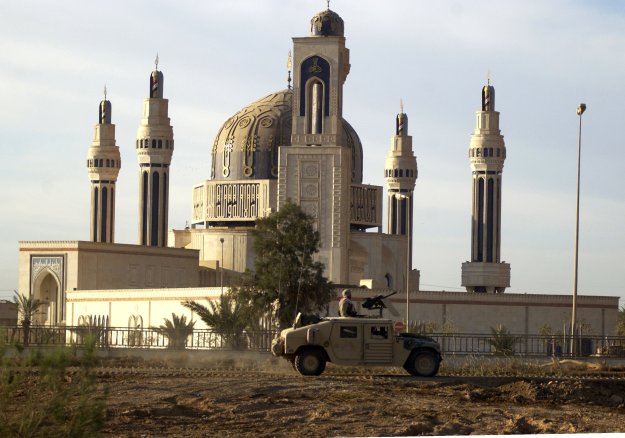
Umm al-Qura (Mother of All Cities) Mosque, built by Saddam to commemorate his

Umm al-Qura (Mother of All Cities) Mosque, built by Saddam to commemorate his “victory” in the 1991 Gulf War

In December, I wrote a post, “Iraq Is Still Suffering The Effects Of Saddam Hussein’s Islamist Regime,” which was a review/analysis of an academic paper by Samuel Helfont that pointed out that the Saddam Hussein regime had, since the 1980s, used Islamists, including al-Qaeda, as part of its foreign policy. I critiqued the paper a little for having said it would not comment on Saddam’s internal policy with the Islamists, while in fact the paper hinted that Saddam remained hostile to mixing religion and politics. I noted that the evidence does not support this: Saddam’s regime adopted overt theocratic trappings before the end.

There were two kinds of pushback to the idea that Saddam’s regime was Islamist. Predictably, one critique was related to the controversy over the way the Gulf War that Saddam started in 1990 was ended; opponents of the 2003 invasion of Iraq are heavily invested in the Saddam-as-secularist narrative, often coupled with the “Bush lied” hysteria—in this case about a connection between the Saddam regime and al-Qaeda—to say that the invasion empowered a previously, officially-repressed Islamism in Iraq. This simply is not borne out by the evidence. There was also pushback from some Iraqis. But this too was predictable: as I outlined in that post, drawing on Ali Allawi’s book on post-Saddam Iraq, one of the reasons so many people with no agenda get the Islamist aspect of the Saddam regime wrong is that when they turn to what they believe is the best primary source—namely the Iraqis in the West—they encounter a source that for various reasons is actually several decades out-of-date.

Buttressing my initial argument is a 2011 paper, “From Militant Secularism to Islamism: The Iraqi Ba’th Regime 1968-2003,” in which Amatzia Baram provides evidence from Iraqi internal documents and tapes of Cabinet meetings captured after the fall of Baghdad to show that Saddam’s regime had formed an alliance with Islamists in the mid-1980s for use in its foreign policy, and from a bit later in the 1980s had begun steps toward Islamizing Iraq internally. Continue reading

Shi’a Holy War and Iran’s Jihadist Empire

By Kyle Orton (@KyleWOrton) on February 12, 2015

1

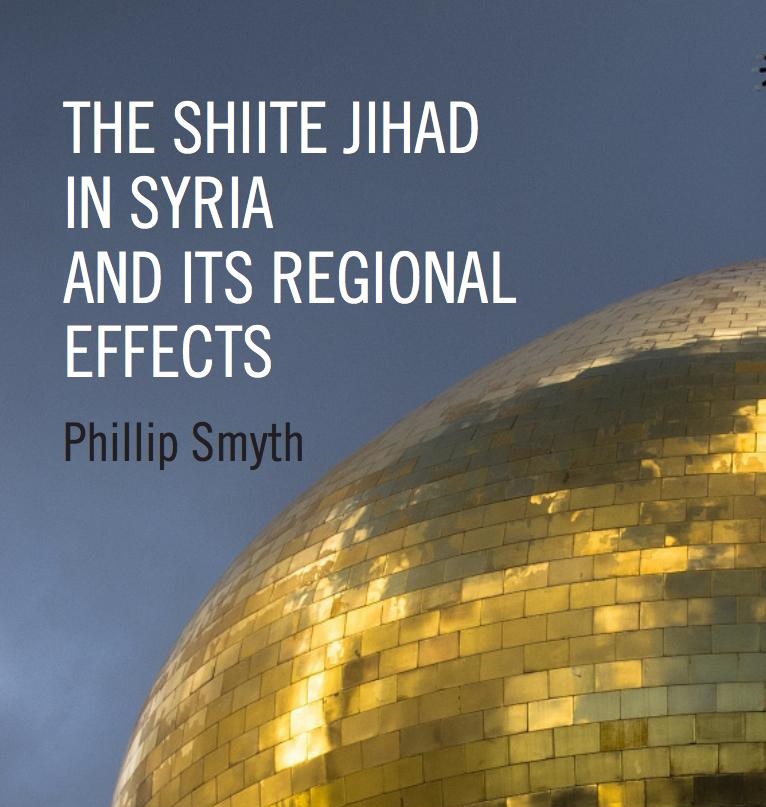
In watching the Syrian conflict, one of the most extraordinary tendencies of the reporting is the way “foreign fighter” and “jihadist” have become synonymous with the Sunni militants who have descended on that tormented country. This is one among many illusions that will hopefully be ended by Phillip Smyth’s monograph, “The Shiite Jihad in Syria and its Regional Effects“. You should read the whole thing but below are the salient points I took away. Continue reading

The Long History of Middle Eastern State-Terrorism In Paris

By Kyle Orton (@KyleWOrton) on January 19, 2015

Said Kouachi and Cherif Kouachi

Last week, Lee Smith wrote of the reasons that it was likely that there was a foreign hand, quite probably that of a State, in the attack on Charlie Hebdo and the Jewish deli in Paris. Smith noted that the French believe that the funding and weapons for the attacks came from abroad. Smith pointed to the historical record, in which terrorism in Paris is typically not carried out because of religion—or not directly: it might come from States that see themselves as god’s representatives on earth—or community grievances, but “because you’re getting paid to stage an operation on behalf of a particular cause or regime.” Smith gave three cases, and they seemed worth expanding on. Continue reading

Snatching Defeat From the Jaws of Victory

By Kyle Orton (@KyleWOrton) on August 9, 2014

Released on December 21, 2007, twenty-eight years to the month after the Soviet Union launched Operation STORM 333, decapitating the Afghan government and plunging the country into a decade-long war, Charlie Wilson’s War tells a story centred on Representative Charles Wilson of Texas (Tom Hanks), a conservative Democrat, Joanne Herring (Julia Roberts), a Right-wing Christian socialite in Houston who has taken the Afghans to her bosom because of her hatred for communism, and Gust Avrakotos (Philip Seymour Hoffman), a blue-collar case officer at the CIA who is the epitome of the adage that one can get anything done in Washington so long as one does not care who gets the credit. Between them they cajole Congress into moving its appropriations from $5 million to $500 million, which will be matched dollar-for-dollar by the Saudis, to help the Afghan resistance combat the Red Army’s occupation of their country. Continue reading