Tag Archives: Salafism

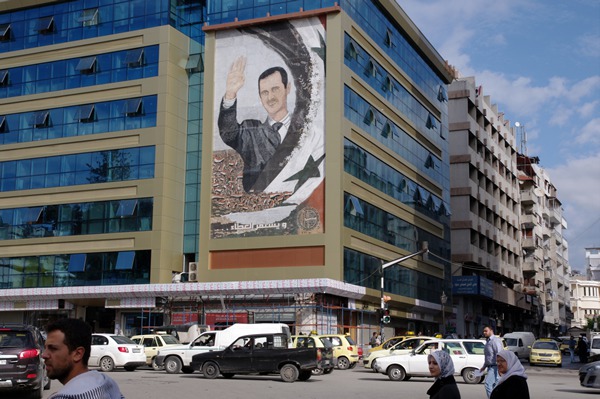
To Defeat The Islamic State, Get Rid Of Assad First

By Kyle Orton (@KyleWOrton) on July 3, 2015

1

The British government is considering beginning airstrikes into Syria against the Islamic State (ISIS). London is currently engaged in airstrikes against ISIS in Iraq and has troops in the Kurdish areas of northern Iraq training and advising the Peshmerga.

Since ISIS’ territory in Syria is its “most valuable and sustainable,” the case for ignoring a border that ISIS has erased would seem to be a good one.

But no less a figure than the Conservative chair of the defence select committee, Julian Lewis, thinks otherwise:

In 2010 the government wanted to remove Assad without helping al-Qaeda or similar groups that subsequently became Daesh. Now we apparently want to remove Daesh but without helping Assad. These two things are incompatible. It is a choice of evils.

The view that Syria is divided between the Assad dictatorship and ISIS has become commonplace. It is mistaken. Continue reading

Book Review: The Muslim Discovery of Europe (1982) by Bernard Lewis

By Kyle Orton (@KyleWOrton) on May 7, 2015

1

With the triumph of relativism and the current economic woes of the West, the sense that Western civilization is unique and in some respects—to use an old-fashioned word—better than the alternatives, and worth defending and exporting, is waning. But Bernard Lewis’ The Muslim Discovery of Europe suggests a longer view in which Europe, while containing all the faults of previous civilizations, has been one of the few to begin the process of correcting those faults, and has corrected many more than any other civilization.

One feature of European civilization that stands out as unique is curiosity. Continue reading

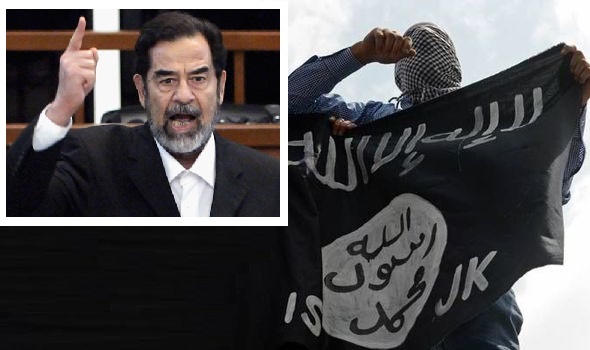
Saddam Hussein’s Regime Produced The Islamic State

By Kyle Orton (@KyleWOrton) on April 21, 2015

1

Having presented the evidence that Saddam Hussein Islamized his foreign policy and then Islamized his regime, above all with the Islamic Faith Campaign, beginning in June 1993 that tried to fuse Ba’athism with Salafism, encouraging (and keeping under surveillance) a religious revival in Iraq that redounded to the benefit of the regime’s legitimacy and support, I wanted to look at what this history means for Iraq and the wider region now.

I pointed out in October that the “military strength” of the Islamic State (ISIS) “comes from the remnants of Saddam Hussein’s military-intelligence apparatus and the Caucasus’ Salafi-jihadists.” Continue reading

How Saddam Hussein Islamized Iraq

By Kyle Orton (@KyleWOrton) on April 20, 2015
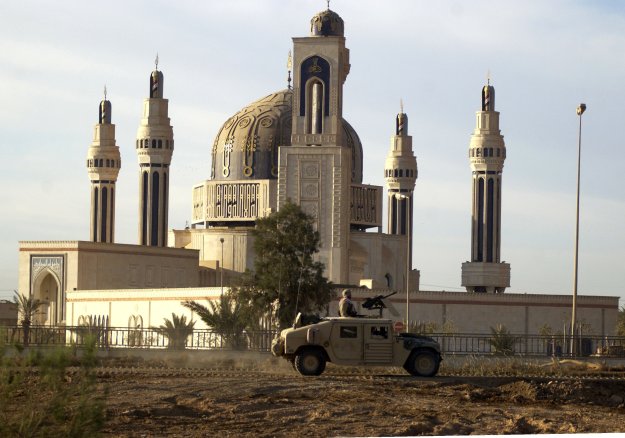
Umm al-Qura (Mother of All Cities) Mosque, built by Saddam to commemorate his

Umm al-Qura (Mother of All Cities) Mosque, built by Saddam to commemorate his “victory” in the 1991 Gulf War

In December, I wrote a post, “Iraq Is Still Suffering The Effects Of Saddam Hussein’s Islamist Regime,” which was a review/analysis of an academic paper by Samuel Helfont that pointed out that the Saddam Hussein regime had, since the 1980s, used Islamists, including al-Qaeda, as part of its foreign policy. I critiqued the paper a little for having said it would not comment on Saddam’s internal policy with the Islamists, while in fact the paper hinted that Saddam remained hostile to mixing religion and politics. I noted that the evidence does not support this: Saddam’s regime adopted overt theocratic trappings before the end.

There were two kinds of pushback to the idea that Saddam’s regime was Islamist. Predictably, one critique was related to the controversy over the way the Gulf War that Saddam started in 1990 was ended; opponents of the 2003 invasion of Iraq are heavily invested in the Saddam-as-secularist narrative, often coupled with the “Bush lied” hysteria—in this case about a connection between the Saddam regime and al-Qaeda—to say that the invasion empowered a previously, officially-repressed Islamism in Iraq. This simply is not borne out by the evidence. There was also pushback from some Iraqis. But this too was predictable: as I outlined in that post, drawing on Ali Allawi’s book on post-Saddam Iraq, one of the reasons so many people with no agenda get the Islamist aspect of the Saddam regime wrong is that when they turn to what they believe is the best primary source—namely the Iraqis in the West—they encounter a source that for various reasons is actually several decades out-of-date.

Buttressing my initial argument is a 2011 paper, “From Militant Secularism to Islamism: The Iraqi Ba’th Regime 1968-2003,” in which Amatzia Baram provides evidence from Iraqi internal documents and tapes of Cabinet meetings captured after the fall of Baghdad to show that Saddam’s regime had formed an alliance with Islamists in the mid-1980s for use in its foreign policy, and from a bit later in the 1980s had begun steps toward Islamizing Iraq internally. Continue reading

An Update On The Anti-Assad Imam Killed In London

By Kyle Orton (@KyleWOrton) on April 13, 2015

Abdul Hadi Arwani

Abdul Hadi Arwani

In Brent, northwest London, in the evening of April 12, a 46-year-old man was arrested as part of the ongoing investigation into the April 7 murder of the Syrian-born imam, Abdul Hadi Arwani, a long-time opponent of the Syrian regime of Bashar al-Assad.

Writing about the murder of Arwani last week, I noted that the available evidence suggested the motivations of the murderer(s) could be:

  • Financial: related to Arwani’s business dealings as the owner of his construction company
  • Other local or personal
  • Far-Right anti-Muslim
  • Intra-Islamist: Arwani had been the director at the Salafist An-Noor Mosque and was himself clearly an Islamist, but Arwani was against the Islamic State (ISIS), for example, which might have made him enemies among some congregants
  • Agents of the Assad regime, conceivably with the complicity of Iran and Russia

Those options still stand, but some important updates over the weekend have helped alter the relative likelihood of each. Continue reading

ISIS: America’s Alliance with Iran is Hampering the Fight Against Terror

By Kyle Orton (@KyleWOrton) on February 7, 20151

Published at Left Foot Forward

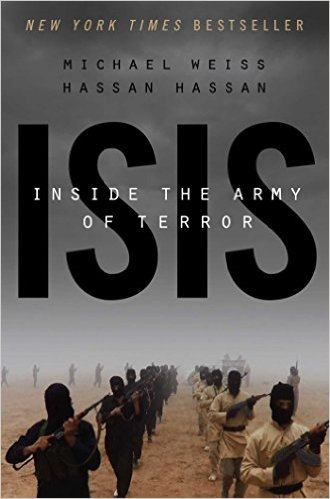
Book Review: ISIS: Inside the Army of Terror (2015) Michael Weiss and Hassan Hassan

ISIS: Inside the Army of Terror, by Michael Weiss and Hassan Hassan, is brilliantly easy to read. Concise yet thorough the book charts the history of a group, “[a]t once sensationalized and underestimated,” that is simultaneously a terrorist organisation, mafia, conventional army, sophisticated intelligence-gathering apparatus, propaganda machine and the remnants of the Saddam Hussein regime which controls an area the size of Britain in the heart of the Middle East. Continue reading

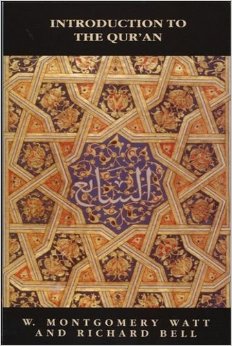
Book Review: Introduction to the Qur’an (1953) by Richard Bell

By Kyle Orton (@KyleWOrton) on January 13, 2015

4

Richard Bell’s Introduction to the Qur’an is, at less than 200 pages, a brief and easily-digestible explanation of the context in which Islam’s “holy” book arose, and the problems of reconciling theological orthodoxy with historical accuracy. More than six decades after publication, the book remains influential in scholarship of the Qur’an. Continue reading

Iraq Is Still Suffering The Effects Of Saddam Hussein’s Islamist Regime

By Kyle Orton (@KyleWOrton) on December 17, 2014

Throughout his entire trial, Saddam Hussein was never without a Qur'an

Throughout his entire trial, Saddam Hussein was never without a Qur’an

In June, Samuel Helfont published a paper for the Middle East Institute entitled, ‘Saddam and the Islamists: The Ba’thist Regime’s Instrumentalization of Religion in Foreign Affairs’. Relying on “newly released Iraqi state and Ba’th Party archives,” Helfont’s central argument is:

Saddam maintained deep reservations about Islamism until the end. However, this did not prevent his regime from working extensively with Islamists and Islamic activists outside Iraq. Indeed, religion played a leading role in the country’s foreign policy throughout the 1990s.”

Continue reading

What Now For Ahrar a-Sham?

By Kyle Orton (@KyleWOrton) on September 10, 2014

Ahrar a-Sham's leader, Hassan Abboud

Ahrar a-Sham’s leader, Hassan Abboud

A mysterious explosion decapitated the Syrian rebel group Ahrar a-Sham on September 9. This could have major implications for the rebellion as a whole.
Continue reading

Provocation and the Islamic State: Why Assad Strengthened the Jihadists

By Kyle Orton (@KyleWOrton) on September 3, 2014

An opposition poster showing Assad and the Islamic State as two sides of the same coin

An opposition poster showing Assad and the Islamic State as two sides of the same coin

On August 25, Bashar al-Assad’s Foreign Minister, Walid al-Muallem, said: “Syria is ready for co-operation … to fight terrorism.” The week before Assad’s PR guru, Bouthaina Shaaban, told CNN that an “international coalition,” including Russia, China, America, and Europe, should intervene to defeat the “terrorists,” whom she says make up the rebellion in Syria.

Back in March I wrote a long post laying out the evidence that the Assad regime was deliberately empowering then-ISIS, now the Islamic State (IS), helping it destroy moderate rebels and even Salafist and Salafi-jihadist forces, with the intention of making-good on its propaganda line that the only opposition to the regime came from takfiris, which would frighten the population into taking shelter behind the State, seeing this madness as the only alternative, and would at the very least keep the West from intervening to support the uprising and might even draw the West in to help defeat the insurgency. These statements represent the culmination of that strategy. Continue reading