By Kyle Orton (@KyleWOrton) on 9 February 2026

By Kyle Orton (@KyleWOrton) on 22 November 2021
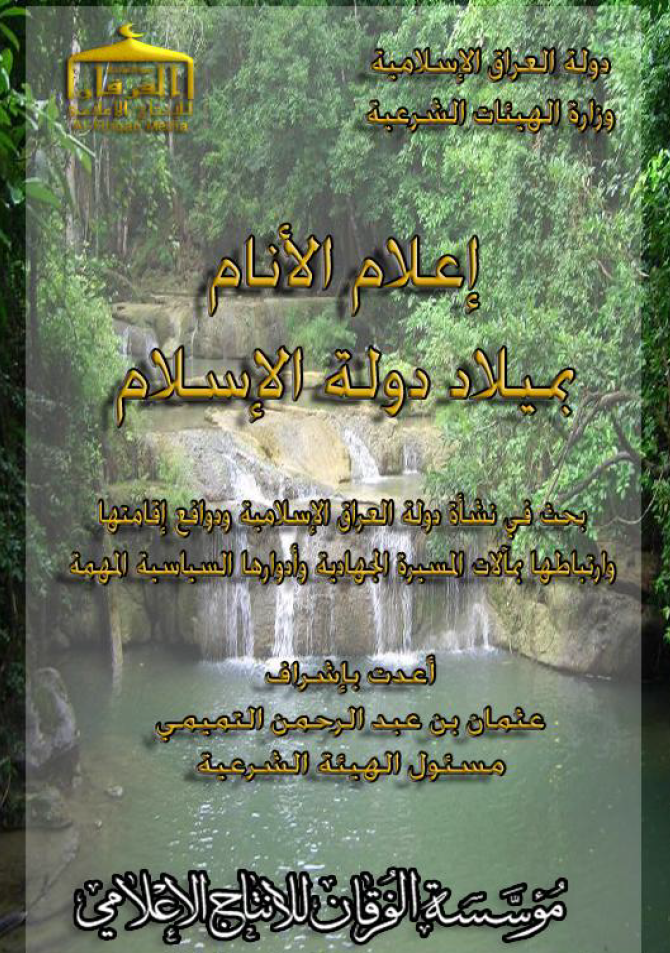
The Islamic State movement published an 87-page book, “Informing Mankind of the Birth of the Islamic State” or “Informing the People of the Birth of the Islamic State” (I’lam al-Anam bi-Milad Dawlat al-Islam), on 7 January 2007. The document was released by Al-Furqan Media Foundation, the central Islamic State propaganda institution, and first appeared on the World News Network website. A rough translation of the book appears below.
This article was originally published at European Eye on Radicalisation
By Kyle Orton (@KyleWOrton) on 16 April 2019
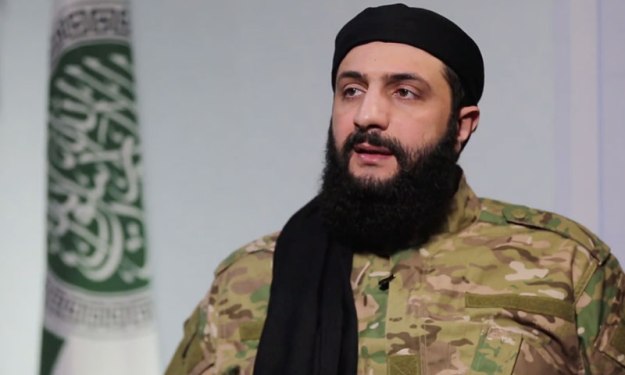
Ahmad al-Shara (Abu Muhammad al-Jolani) [image source]
Several years ago, Al-Qaeda made a strategic decision to refrain from foreign terrorist operations, refocusing away from these global spectaculars towards integrating more closely into local conflicts. The 2014 rampage across Iraq and Syria by Al-Qaeda’s rebellious former Iraqi branch, the Islamic State (ISIS), provided both the opportunity and additional incentive for a long-mediated rebranding effort. However, there have recently been signs of a shift back towards external terror operations, just as ISIS undergoes a setback and Al-Qaeda has a chance to reassert its dominance over the jihadi scene. Continue reading
By Kyle Orton (@KyleWOrton) on April 2, 2016
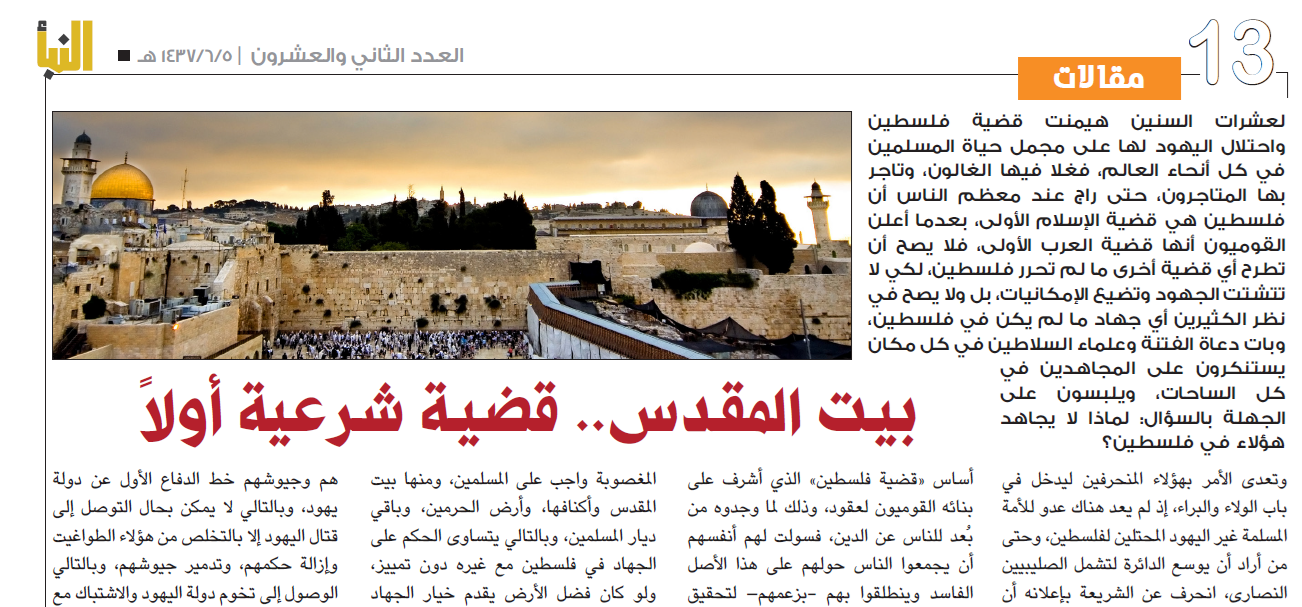
An article in the twenty-second edition of al-Naba, the Islamic State’s (IS) newsletter, released on 15 March 2016, explained why the group has not made fighting Israel a priority.
By Kyle Orton (@KyleWOrton) on November 5, 2015
Published at NOW Lebanon.

William McCants’ The ISIS Apocalypse: The History, Strategy, and Doomsday Vision of the Islamic State is an immensely readable addition to the literature on the most powerful terrorist-insurgent group in the world. McCants covers the Islamic State, often referred to as ISIS, from its inception in Taliban Afghanistan in 1999 to its migration to Iraq in 2002, and through its various stages before its blitzkrieg from Syria across central Iraq in June 2014, which brought ISIS to global attention. McCants shows that ISIS’s evolution is not just a religio-socio-political and military phenomenon, but an intellectual one. ISIS has built the foundations of its statelet on the lessons learned by Salafi-jihadists from their previous battlefronts, such as Afghanistan, Chechnya, and Algeria, and their various mistakes, many of them ISIS’s own. Continue reading
By Kyle Orton (@KyleWOrton) on May 23, 2015
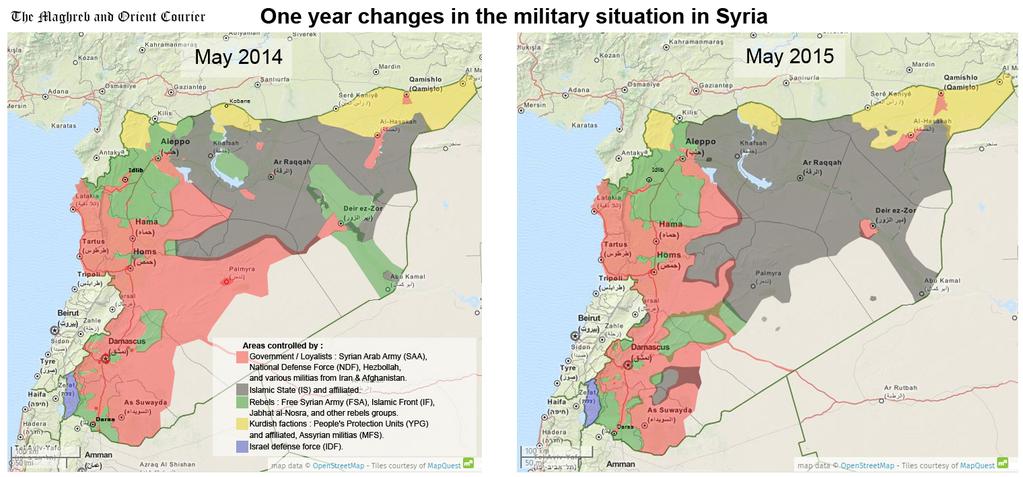
To hear President Obama tell it, his announced program to defeat the Islamic State (ISIS), which began with airstrikes into Iraq last August that were extended into Syria in September, is working, albeit with some tactical setbacks. The implication is that the setbacks of the U.S.-led anti-ISIS campaign are not strategic.
As J.M. Berger phrased it:
In the Washington vernacular, the act of Being Strategic implies a near mystical quality of superior thinking possessed by some, and clearly lacking amongst the vulgarians of the world—heedless brutes such as ISIL. Tactics are short-term ploys, easy to dismiss. Strategy is for winners.
Unfortunately, this soothing view is almost exactly wrong: it is the United States that is relying on various short-term methods—commando raids into the Syrian desert, for example—while ISIS has a long-term goal fixed in mind and is working assiduously to achieve it. The U.S.-led Coalition is losing, in short, and ISIS is winning. Continue reading
By Kyle Orton (@KyleWOrton) on January 7, 2015

Al-Qaeda’s emir, Ayman al-Zawahiri, released a document on 14 September 2013, entitled, Tawjihat ‘Amma lil-Amal al-Jihadi (توجيهات عامة للعمل الجهادي), variously translated as: “General Guidelines for the Work of Jihad” or “General Guidelines for Jihadist Action”. Al-Zawahiri’s document is reproduced below. Continue reading

 Kyle Orton's Blog