By Kyle Orton (@KyleWOrton) on November 25, 2015
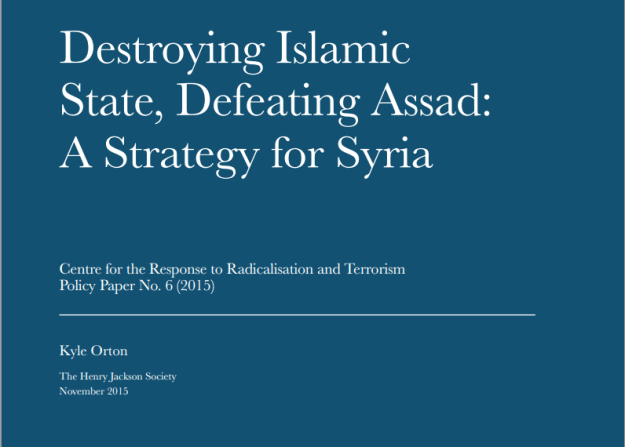
Today, my first report with The Henry Jackson Society was published: “Destroying Islamic State, Defeating Assad: A Strategy for Syria“. Continue reading
By Kyle Orton (@KyleWOrton) on November 25, 2015
Today, my first report with The Henry Jackson Society was published: “Destroying Islamic State, Defeating Assad: A Strategy for Syria“. Continue reading
By Kyle Orton (@KyleWOrton) on July 1, 2015
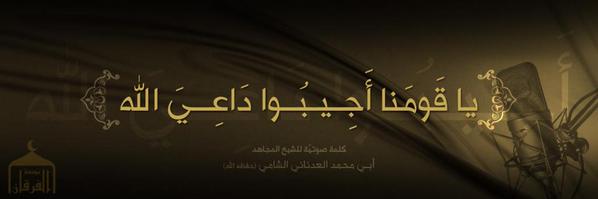
On June 23, 2015, the Islamic State (IS) spokesman Abu Muhammad al-Adnani gave a speech, “O Our People, Respond to the Caller of Allah”. Al-Adnani, noting the coming of Ramadan, called on Muslims to journey to the caliphate, saying that hijra (emigration) in this month—and martyrdom—is the most blessed. Al-Adnani called on Muslims—specifically Iraqi Sunnis and Syrian rebel and Islamist insurgent groups—to unite around IS, which had no theological factions or ethnic distinctions among its membership, being the only pure expression of Islam, ruling by god’s law. Iraqi Sunni militias and Syrian rebels had betrayed the religion by seeking favour from, and even seeking alliance with, Western states. Al-Adnani threatened the town of Haditha, specifically the Jaghayfa clan, that if it surrendered now its repentance would be accepted, but if the town was overrun first then they would be slaughtered. Al-Adnani played heavily on the interlinked themes of anti-Shi’a sectarianism and the spreading influence of Iran and its proxies, repressing Sunnis. The old guard of the jihadi movement—clerics like Abu Muhammad al-Maqdisi and al-Qaeda’s leader Ayman al-Zawahiri (though neither are mentioned by name)—are attacked for not being on the battlefields. Al-Adnani also accepted the allegiance of the Russian-based faction that declared itself under the caliph’s authority, naming the group Wilayat al-Kavkaz. An English transcript of the speech was posted by IS and is reproduced below with some minor editions in transliteration and some interesting sections highlighted in bold. Continue reading
By Kyle Orton (@KyleWOrton) on May 12, 2015
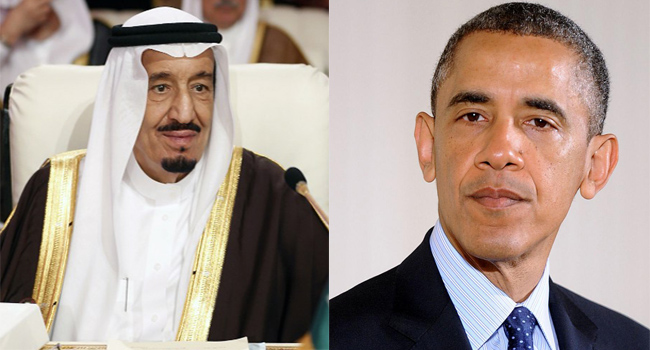
President Obama invited the leaders of the Gulf Cooperation Council (GCC) to a meeting at Camp David on Thursday to clear the air as the President looks to finalize his nuclear deal with Iran. But on Sunday, Saudi King Salman said he was not attending, and soon after the Bahraini monarch followed. The only Gulf leaders in attendance will be the Emirs of Qatar and Kuwait. Since leaders do not just have other things to do when they are scheduled for a private meeting with the President of the United States, this can be taken as a pointed snub to President Obama, and no amount of administration spin about Salman’s absence having nothing to do with political substance will change that. Continue reading
By Kyle Orton (@KyleWOrton) on February 10, 2015

This is the fourth of a four-part series looking at the United States’ increasingly-evident de facto alliance with Iran in the region. The first part looked at the way this policy has developed since President Obama took office and how it has been applied in Iraq; the second part looked at the policy’s application in Syria; the third part looked at its application in Lebanon, Afghanistan, and Yemen; and this part is a conclusion. Continue reading
By Kyle Orton (@KyleWOrton) on December 29, 2014
The current leader of the Islamic State (IS), Ibrahim al-Badri (Abu Bakr al-Baghdadi), released his first “proper” speech on July 21, 2012. But this was, in fact, his second public statement: Al-Badri had mourned Usama bin Laden in an audio message released on 9 May 2011 and vowed “blood for blood and destruction for destruction”. The 2012 speech, entitled, “Allah Will Not Allow Except That His Light Should Be Perfected”, was released by Al-Furqan Media and an English transcript—reproduced below—was issued by Fursan al-Balagh Media. Some key parts are highlighted in bold.
Continue reading
By Kyle Orton (@KyleWOrton) on July 2, 2014

In an audio message released on 1 July 2014, two days after the Islamic State announced the restoration of the caliphate, the Islamic State’s leader, Abu Bakr al-Baghdadi, laid out the Islamic State’s vision. The Islamic State put out an English version of the speech, which is reproduced below with some minor editions and some interesting sections highlighted in bold. Continue reading
 Kyle Orton's Blog