By Kyle Orton (@KyleWOrton) on 9 December 2024
By Kyle Orton (@KyleWOrton) on 20 June 2023
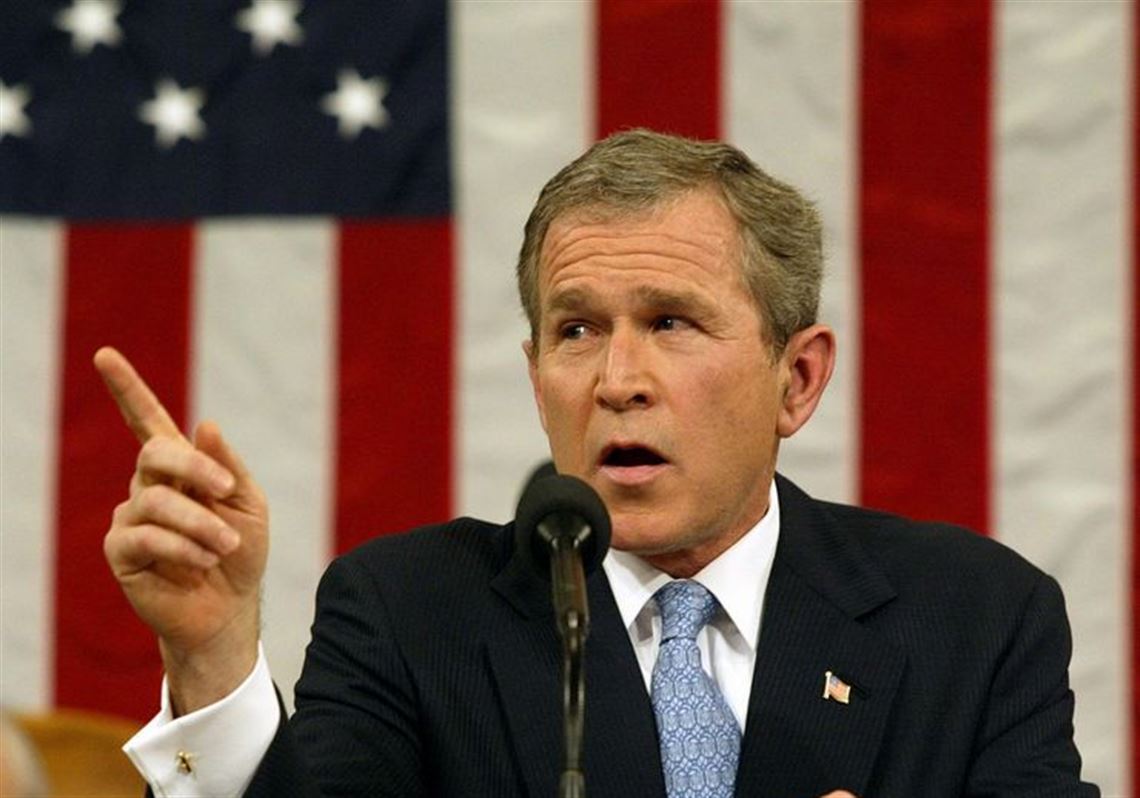
President George W. Bush said in his first State of the Union speech after 9/11, on 29 January 2002:
Our nation will continue to be steadfast, and patient and persistent in the pursuit of two great objectives. First, we will shut down terrorist camps, disrupt terrorist plans and bring terrorists to justice. … Our second goal is to prevent regimes that sponsor terror from threatening America or our friends and allies with weapons of mass destruction. …
North Korea is a regime arming with missiles and weapons of mass destruction, while starving its citizens. Iran aggressively pursues these weapons and exports terror, while an unelected few repress the Iranian people’s hope for freedom. Iraq continues to flaunt its hostility toward America and to support terror. … This is a regime that has already used poison gas to murder thousands of its own citizens …
States like these, and their terrorist allies, constitute an axis of evil, arming to threaten the peace of the world.
By Kyle Orton (@KyleWOrton) on 18 June 2022

A U.S. helicopter above the American Embassy in Kabul, 15 August 2021 | AP
By Kyle Orton (@KyleWOrton) on 28 December 2019

In a long article last week, I looked at why the U.S. ran a formal occupation of Iraq for fourteen months after the fall of Saddam Husayn in April 2003, given that there had been an explicit pre-invasion decision not to have an occupation government. The short answer is that the occupation was installed through deception by the State Department, supported by the Central Intelligence Agency (CIA). State and CIA had argued for a protracted occupation in the Situation Room debates in 2002, but President George W. Bush had sided with the Pentagon, which advocated a rapid transfer of power to Iraqis. Having lost in the formal inter-agency process, the State Department succeeded by subversion in getting its way on the ground in Iraq. The disaster this caused in the mismanagement of post-Saddam Iraq was, as the article explained in detail, only the most serious impact of the toxic schism between State/CIA and the Pentagon, a factor whose import is difficult to overstate when examining how the Bush administration functioned. (This feud also at times drew in the Vice President’s Office, which tended to support the Pentagon.)
By Kyle Orton (@KyleWOrton) on 27 December 2019

The Iraqi National Congress (INC), the umbrella group for the Iraqi opposition to Saddam Husayn from the 1990s up to 2003, has been immensely controversial, mostly because of its leader, Ahmad Chalabi, against whom the Central Intelligence Agency (CIA) and State Department waged a bitter bureaucratic war, a lot of it in the press, getting into circulation stories of INC trickery—possibly on behalf of Iran—being behind the Bush administration’s decision to invade Iraq.


 Kyle Orton's Blog