By Kyle Orton (@KyleWOrton) on 17 July 2017

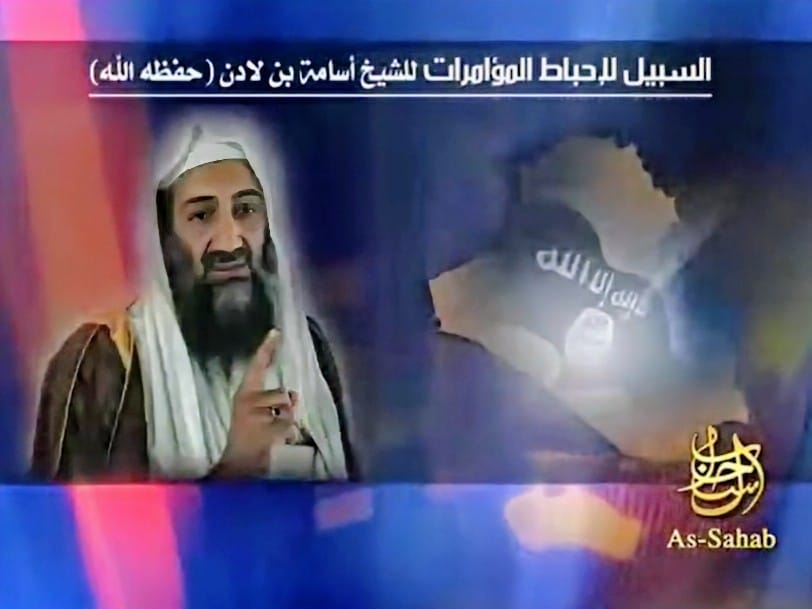
Usama bin Laden gave a speech lasting nearly an hour on 29 December 2007, entitled, “The Way to Foil the Conspiracies”. A translation of the speech is published below.
By Kyle Orton (@KyleWOrton) on 17 July 2017

Usama bin Laden gave a speech lasting nearly an hour on 29 December 2007, entitled, “The Way to Foil the Conspiracies”. A translation of the speech is published below.
By Kyle Orton (@KyleWOrton) on 29 June 2017

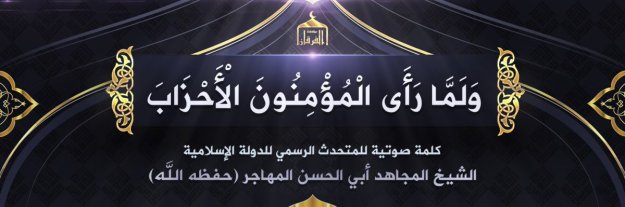
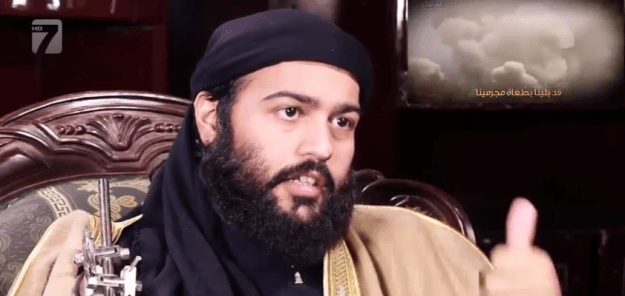
The spokesman of the Islamic State (IS), Abu Hassan al-Muhajir, made his third speech on 12 June 2017, entitled, “And When The Believers Saw The Companies”. Abu Hassan’s first speech was in December 2016 and his second was in April 2017. The primary message of Abu Hassan’s speech was for IS’s troops to resist to the end in what is left of the caliphate’s grip on its Iraqi capital Mosul as that offensive, begun last October, draws to a close, and to hold similarly firm as the operation to evict IS from its Syrian capital Raqqa, launched on 6 June, gets underway. The main editorial of Al-Naba 84 a few days before Abu Hassan spoke laid out IS’s intention, somewhat contrary to its general practice, to resist fiercely in Raqqa. Abu Hassan continues the messaging, consistent since the U.S.-led coalition began its countermeasures against IS, that “patience” will lead to victory. IS has not wavered from this strategy in more than ten years, and it is showing signs of bearing fruit already, a trendline likely to continue unless there is a change of Coalition strategy. In crude, practical terms, Abu Hassan means to say that the terrorism and guerrilla campaign will continue after IS is uprooted from the urban areas.
Continue reading
By Kyle Orton (@KyleWOrton) on 24 June 2017

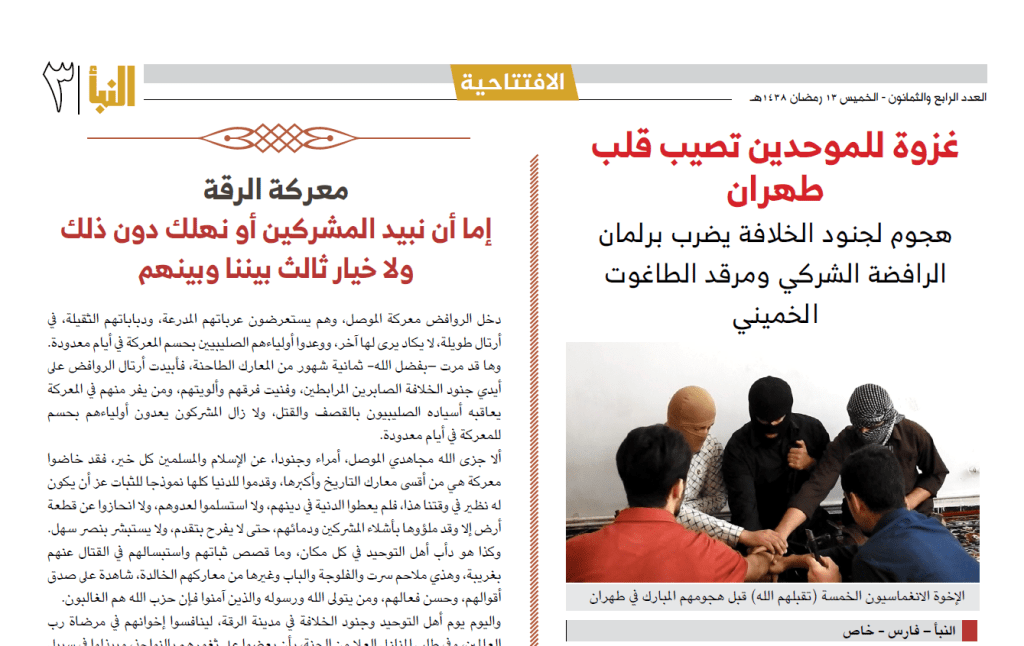
Al-Naba 84, page 3
The Islamic State (IS) has a standard strategy of withdrawing from urban areas and conserving its forces when faced with an overwhelming enemy. This strategy has been publicly spelled out by IS, more recently and a decade ago when “the State” was new. The notable exceptions to this rule, Fallujah (2004) and Kobani (2014), were driven by political considerations, and it appears that such considerations apply to Raqqa, IS’s Syrian “capital”, which came under attack from the U.S.-led Coalition’s “partner force”, the PKK front-group that calls itself the Syrian Democratic Forces (SDF), on 6 June. In the 84th edition of IS’s weekly newsletter, Al-Naba, released on 8 June, the main editorial was about the Raqqa battle and encouraged IS’s jihadists to fight to the very last, ostensibly to inflict such heavy casualties over such a protracted period that the SDF/PKK would not be able to sustain itself. Continue reading
By Kyle Orton (@KyleWOrton) on 9 June 2017

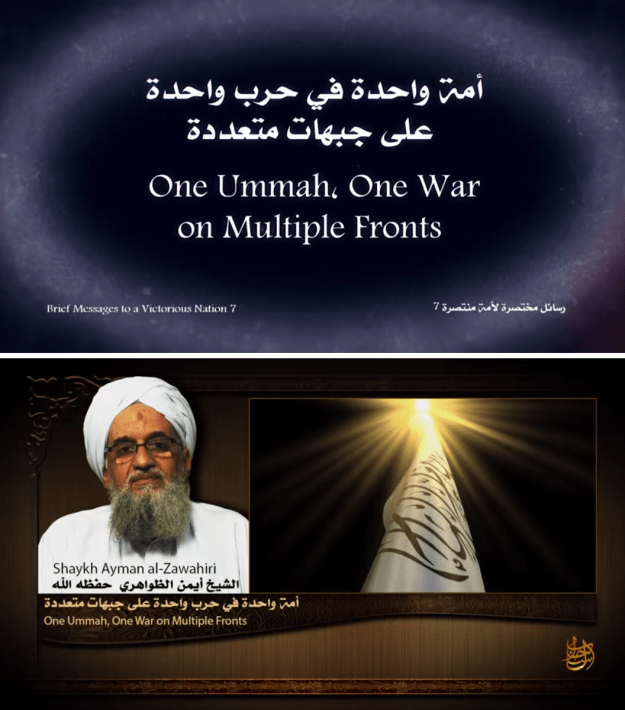
Ayman al-Zawahiri, the leader of al-Qaeda, released a nearly-six-minute speech today entitled, “One Umma, One War on Multiple Fronts,” as part of the “Brief Messages” series, this being “Brief Messages to a Victorious Nation 7”. A transcript of al-Zawahiri’s speech was released by As-Sabha Media and is reproduced below with some editions in transliteration and explanatory notes added.
Al-Zawahiri continues a theme he has emphasized in previous speeches in this series, namely that Muslims are a unitary block, and thus the interference of the jihadists in all these states is legitimate because these states are false, their borders drawn by colonialists so as to keep Islamdom weak and divided, and their governments are agents of external powers (and therefore a de facto foreign occupation). The historical examples that al-Zawahiri reaches for in describing the kind of “resistance” to this Western scheme that al-Qaeda supports include the founder of the Muslim Brotherhood, Hassan al-Banna, and the first leader of the Taliban, Mullah Muhammad Umar. Continue reading
By Kyle Orton (@KyleWOrton) on 8 June 2017

Al-Naba 84
The eighty-forth edition of Al-Naba (The News), released by the Islamic State on 8 June 2017, included a section on the terrorist attacks in Britain, on London Bridge, on 3 June, and in Australia, the siege of the apartment block in Melbourne, on 5 June. Continue reading
By Kyle Orton (@KyleWOrton) on 6 June 2017

Abdallah al-Muhaysini
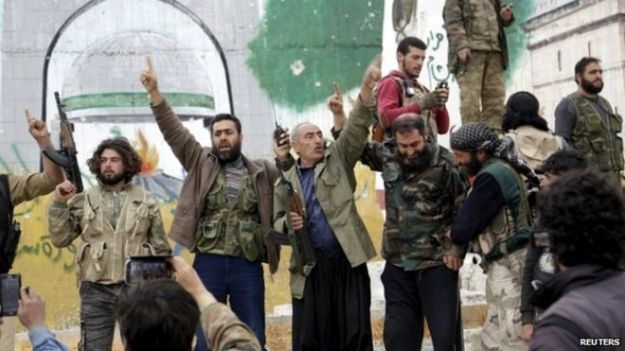
A major diplomatic crisis has erupted between the Gulf states, pitting Saudi Arabia, Bahrain, and the United Arab Emirates against Qatar because of what these states claim is Qatar’s destabilizing behaviour.[1] On 5 June, Abdallah al-Muhaysini, identified last year by the U.S. government as a senior member of al-Qaeda in Syria, put out a message on Telegram effectively taking Qatar’s side, arguing that the campaign against Qatar was an American-orchestrated conspiracy against a government that had supported Muslims, i.e. Islamists.[2] The message is republished below with some syntactical and spelling edits. Continue reading
By Kyle Orton (@KyleWOrton) on 1 June 2017

Hussam al-Atrash was the most senior religious official of Harakat Nooradeen al-Zengi and is now Deputy General Security Official of Hay’at Tahrir al-Sham (HTS), a jihadi-salafist insurgent group in north-western Syria whose relationship with al-Qaeda is much-contested. On 31 May, al-Atrash issued a statement arguing for a change of course for the insurgency in the “Greater Idlib” area.
Continue reading
By Kyle Orton (@KyleWOrton) on 25 May 2017

Article about Manchester Arena suicide-killer Salman Abedi, page 2 of Al-Naba 82
The Islamic State (IS) released the eighty-second edition of its newsletter, Al-Naba, on 25 May 2017. The first article in Al-Naba 82 was about the suicide attack on the Manchester Arena on 22 May, which IS claimed the next day. The article in Al-Naba provided very few details about the murderer, Salman Abedi, or IS’s role in the attack, mostly gloating over the allegedly panicky reaction of the British state. Continue reading
By Kyle Orton (@KyleWOrton) on 20 May 2017

A ruling in the name of the Islamic State’s Delegated Committee, prepared it seems by one of its senior members, Abu Zayd al-Iraqi, was issued on 17 May, expanding the scope of who, within the Muslim community, IS considers a heretic. The memo was addressed to “All Wilayat, Dawawin, and Committees,” and entitled, “That Those Who Perish Would Perish Upon Proof and Those Who Live Would Live Upon Proof”. The wide use of takfir (excommunication) has been one of IS’s most defining and controversial features—even within the jihadist world. This judgment, which comes in the context of a broader centralization of authority—on 14 May a decree banned individual IS fighters from using social media—takes IS into territory akin to the Armed Islamic Group (GIA), which hereticized whole sections of Algeria’s population and began slaughtering them. The text of the ruling was released in English and is reproduced below. Continue reading
By Kyle Orton (@KyleWOrton) on 14 May 2017

The son of al-Qaeda’s founder, Hamza Usama bin Ladin, released a speech on 13 May 2017, “Advice for Martyrdom-Seekers in the West”. The speech took the form of a ten-minute video released by As-Sahab, which was noticeably better in quality than al-Qaeda’s recent produce. The video opened by praising Sayyid Nusayr, and then included picture tributes in the background as Hamza spoke to some past jihadist attackers: Nidal Malik Hasan, Ramzi Yusef, Arid Uka, Ayman Hasan, Sulayman Khater, Mohammed Bouyeri. Michael Adebolajo, Michael Adebowale, and Mevlut Mert Altintas. An English translation of the speech is posted below, with some explanatory notes added and key sections highlighted in bold. Continue reading