Tag Archives: al-Qaeda in Iraq

Reviewing the Iraqi Surge and Awakening

Book Review: Carter Malkasian, ‘Illusions of Victory’, Oxford University Press, 2017. pp. 280.

By Kyle Orton (@KyleWOrton) on 4 July 2018

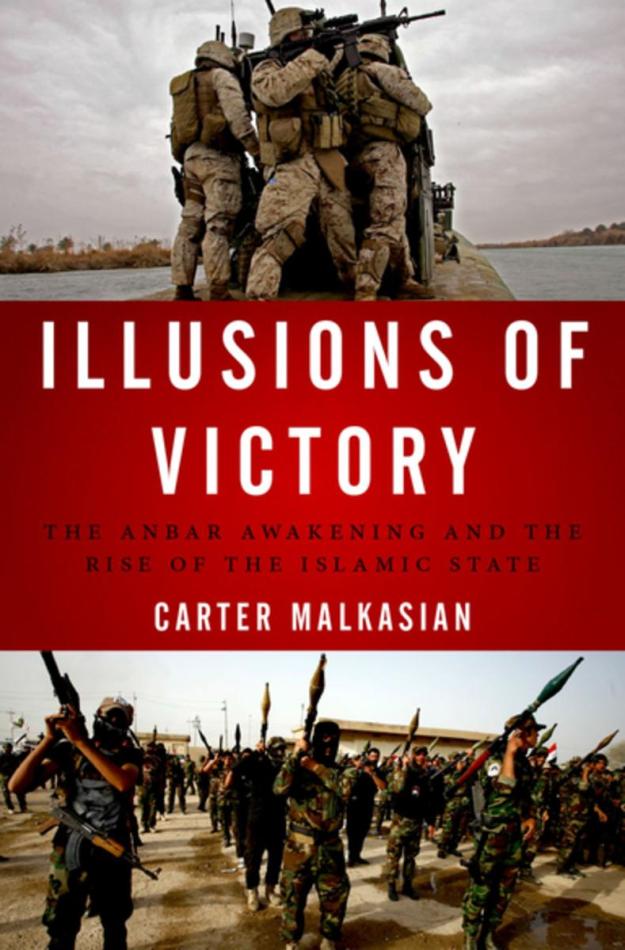
Carter Malkasian sets out in Illusions of Victory: The Anbar Awakening and the Rise of the Islamic State to upend the conventional understanding of the campaign against the Islamic State (IS) movement, known at the time as al-Qaeda in Iraq (AQI), in Anbar province of western Iraq. Continue reading

The Announcement of the Islamic State—in 2006

By Kyle Orton (@KyleWOrton) on 18 March 2018

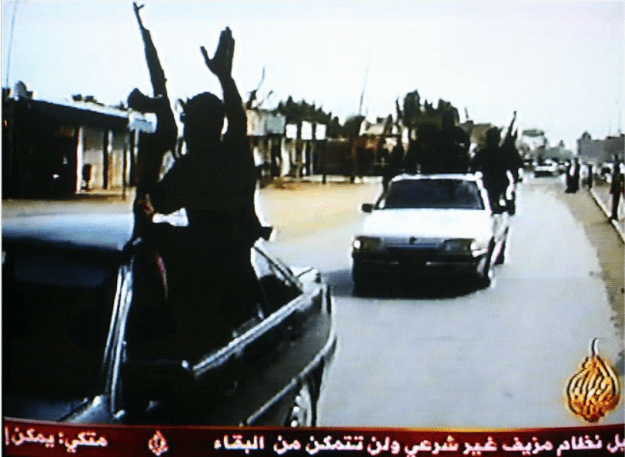
Jihadists on parade in Ramadi, 18 October 2006, to celebrate the declaration of the Islamic state (image source: Al-Jazeera)

After the formation of the Islamic State of Iraq (ISI), the leader, Hamid al-Zawi (Abu Umar al-Baghdadi), made his first speech on 23 December 2006. An English translation of the speech was released by ISI and is reproduced below. Continue reading

The Announcement of the Mujahideen Shura Council in Iraq

By Kyle Orton (@KyleWOrton) on 17 March 2018

A statement attributed to Abu Maysara al-Iraqi, the official spokesman of Al-Qaeda in Mesopotamia (AQM), was released on 15 January 2006 that announced AQM was being merged with five other Salafi insurgent groups to create the Mujahideen Shura Council (al-Majlis Shura al-Mujahideen). A translation of the statement is produced below.

Continue reading

Profile: First Spokesman of the Islamic State Movement

By Kyle Orton (@KyleWOrton) on 16 March 2018

The predecessor organization to the Islamic State (IS), the Islamic State in Iraq (ISI), used to run a “Prominent Martyrs” or “Distinguished Martyrs” series: essentially obituaries for important members of the IS movement. In the forty-sixth edition, on 18 August 2010, ISI profiled Abu Maysara al-Iraqi, the first official spokesman and the deputy of the Media Department until he was killed in 2006. A translation of Abu Maysara’s biography was issued by Ansar al-Mujahideen forum and is reproduced below with some minor editions for transliteration and some interesting points highlighted in bold. Continue reading

Islamic State’s First Leader Denies He Has Been Captured, West Wonders If He Exists

By Kyle Orton (@KyleWOrton) on 6 January 2018

Iraqi soldiers from the 1st Iraqi Army Division and U.S. Soldiers board a U.S. Marine Corps CH-53 Super Stallion helicopter at Camp Ramadi, 15 Nov. 2015 (DoD photo by Staff Sgt. Daniel St. Pierre, U.S. Air Force)

The leader of the Islamic State (IS) when it was declared in October 2006 was Hamid al-Zawi (Abu Umar al-Baghdadi). Al-Zawi was killed in April 2010 and replaced in May 2010 by the current leader of the IS movement, Ibrahim al-Badri (Abu Bakr al-Baghdadi), who more explicitly embraced the title of “caliph”. On 12 May 2009, al-Zawi gave his seventeenth speech, entitled Umala Kadhabun (عملاء كذابون), which translates to something like “Lying Agents” or “Deceitful Spies”. The speech was released by IS’s Al-Furqan Media Productions and a translation was made by a pro-IS online outlet, The Jihadist Media Elite. The transcript is reproduced below. Continue reading

Qatar and the Gulf Crisis

By Kyle Orton (@KyleWOrton) on 30 November 2017

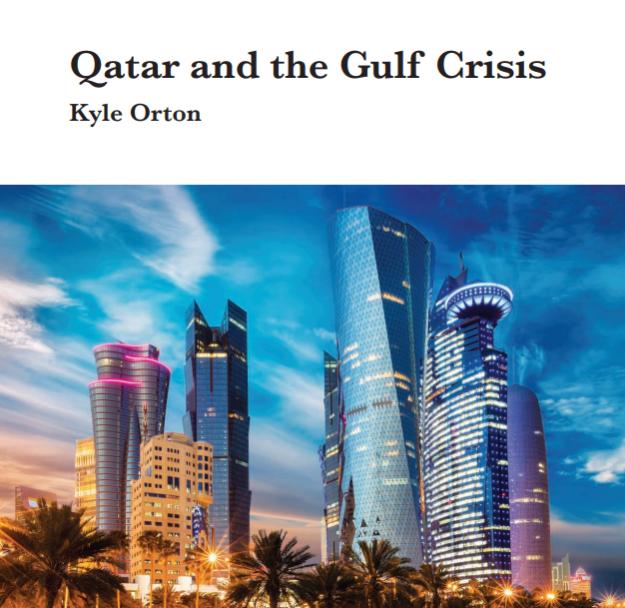
I released a report today, published by the Henry Jackson Society, Qatar and the Gulf Crisis. The intent was to examine the charges made against the Qatari government by its Gulf neighbours with regard to the funding of terrorism, the hosting of extremists, the dissemination of hate speech and incitement, among other things. Having separated fact from fiction with regards to he accusations against Qatar, the report proposes how Britain might proceed in such a way as to press Doha on issues of concern, while avoiding being drawn into the middle of the Gulf dispute, and trying to foster reconciliation between allies, especially at a time when a united front is necessary to oppose the far larger challenge of the Iranian theocracy.  Continue reading

The Islamic State’s Minister of War Criticises Regional Religious Leaders For Not Supporting The Jihad in Iraq

By Kyle Orton (@KyleWOrton) on 24 November 2017

Abdul Munim al-Badawi (Abu Hamza al-Muhajir), the “war minister” of the Islamic State of Iraq, the predecessor to ISIS, made a brief five-minute speech on 30 April 2007, entitled “Nada ila Ulema al-Umma” (نِدَاءٌ إِلَى عُلَمَاءِ الأُمَّةِ). “Ulema” refers to Islamic scholars, sometimes translated as “clerics”, a slightly misleading comparison with Christianity, and “umma” refers to the worldwide community of Muslims, so the title of the speech translates as, “An Appeal to the Community’s Scholars”. Al-Badawi’s basic point—made at a time when the Islamic State movement was beginning to suffer under the pressure of the Surge and Sahwa—was to condemn the regional ulema for not supporting, and not having supported, the jihadists in Iraq against the Americans and the Shi’is. Implicitly, Al-Badawi is criticising the ulema for holding back Muslims in regional States who might otherwise have joined the Iraqi jihad as foreign fighters and suicide bombers, potentially making a difference to the Islamic State’s military fortunes. A rough translation of the speech is reproduced below.

Continue reading

Al-Qaeda Instructs the Islamic State’s Predecessor Not to Attack Iran

By Kyle Orton (@KyleWOrton) on 21 November 2017

Usama bin Ladin, Qassem Sulaymani

Among the documents recovered from Usama bin Ladin’s compound in Abbottabad was the “Letter to Karim”, dated 18 October 2007. The letter was released in 2015 by the Office of the Director of National Intelligence (ODNI). “Karim” likely refers to Abdul Munim al-Badawi (Abu Hamza al-Muhajir), the leader of al-Qaeda in Mesopotamia (AQM), the predecessor organization to the Islamic State, after the group’s founder, Ahmad al-Khalayleh (Abu Musab al-Zarqawi), was killed in June 2006. The letter is reproduced below with some interesting details highlighted in bold. Continue reading

Profile of an Islamic State Media Emir: Abu Zahra al-Issawi

By Kyle Orton (@KyleWOrton) on 12 November 2017

The forty-fifth edition of the Islamic State’s “Distinguished Martyrs” series, published by al-Furqan Media in Rajab 1431 (June/July 2010), profiled Abu Zahra al-Issawi, the media emir or information minister of the organization between some point after July 2007, when Khalid al-Mashadani (Abu Zayd al-Mashadani) was arrested, and some point before September 2009, when Ahmad al-Ta’i was announced as holding the position. [UPDATE: Al-Ta’i turned out to be Abu Muhammad al-Furqan, and his real name was Wael al-Ta’i.] Continue reading

The Third Deputy of the Islamic State: Muhammad Khalaf Shakar

By Kyle Orton (@KyleWOrton) on 12 November 2017

Muhammad Shakar had, according to his martyr biography, “become influenced by Salafism in 1997-98 while serving as a part of [Saddam] Hussein’s Special Republican Guard”.[1] Quitting the military and returning to his home in Mosul, Shakar was harassed by the regime until he went to join Ansar al-Islam in the mountains of Kurdistan.[2]

Shakar, known as Abu Talha al-Ansari or Abu Talha al-Mawsuli, joined the predecessor to Islamic State either just before or just after Saddam fell, and he was arrested in Mosul on 14 June 2005. Continue reading