Tag Archives: al-Qaeda in Mesopotamia

Coalition Eliminates Senior Islamic State Official Haji Tayseer

By Kyle Orton (@KyleWOrton) on 26 May 2020

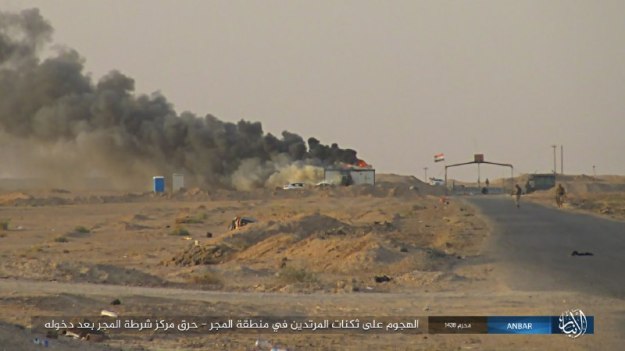
Islamic State Wilayat al-Anbar, October 2017

This morning, the Iraqi government announced that Moataz Numan al-Jaburi (Haji Tayseer), a senior member of the Islamic State (IS), had been killed in Deir Ezzor in eastern Syria by an airstrike from the U.S.-led Coalition, utilising intelligence supplied by Iraq’s Counter-Terrorism Service (CTS, Jihaz Mukafahat al-Irhab). Continue reading

In Search of the Caliph

By Kyle Orton (@KyleWOrton) on 8 November 2019

This article was originally published at European Eye on Radicalization under the headline, “Who is the New Leader of the Islamic State?” 
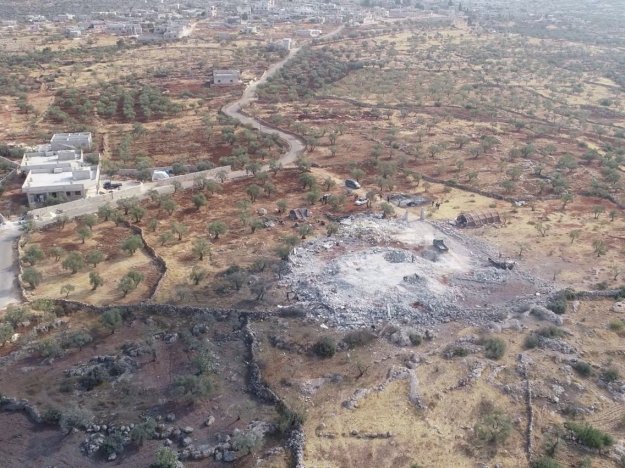
The destroyed compound where Abu Bakr al-Baghdadi was found in Syria // Drone footage taken by Turkey’s state-run Anadolu Agency

The so-called caliph of the Islamic State (ISIS), Ibrahim al-Badri (Abu Bakr al-Baghdadi), was killed in an American raid in Syria on 27 October, and the spokesman, Abu Hassan al-Muhajir, was killed the next day in an airstrike. ISIS acknowledged the losses and appointed new leaders on Halloween.

Abu Hamza al-Qurayshi introduced himself in a nearly-eight-minute audio statement as the new spokesman and named Abu Ibrahim al-Hashemi al-Qurayshi as Al-Baghdadi’s replacement. Little information was given about either man.

The U.S. government has said it knows “almost nothing” about the new caliph, Abu Ibrahim, leaving us no closer, for now, to knowing his identity. But some options present themselves. Continue reading

Islamic State Profiles the Leadership

By Kyle Orton (@KyleWOrton) on 6 April 2019

Islamic State flag in front of the main gate of Saddam Husayn’s palace in Tikrit, 5 April 2015 // AFP PHOTO / MOHAMMED SAWAF

A lengthy document—roughly sixty pages and 12,000 words—was published online on 21 February 2019 containing biographies of twenty-seven senior Islamic State (IS) officials, past and more recent. Those bios that are dated were written between October 2018 and the time of publication, with one exception that was written in the summer of 2018. The author claims to be an IS veteran. While longevity is difficult to prove, the fact that the author provides heretofore unseen images of some of the IS leaders suggests that at a minimum he is an IS operative. Continue reading

Testimony of Islamic State Defector Abu Sulayman al-Utaybi

By Kyle Orton (@KyleWOrton) on 6 November 2018

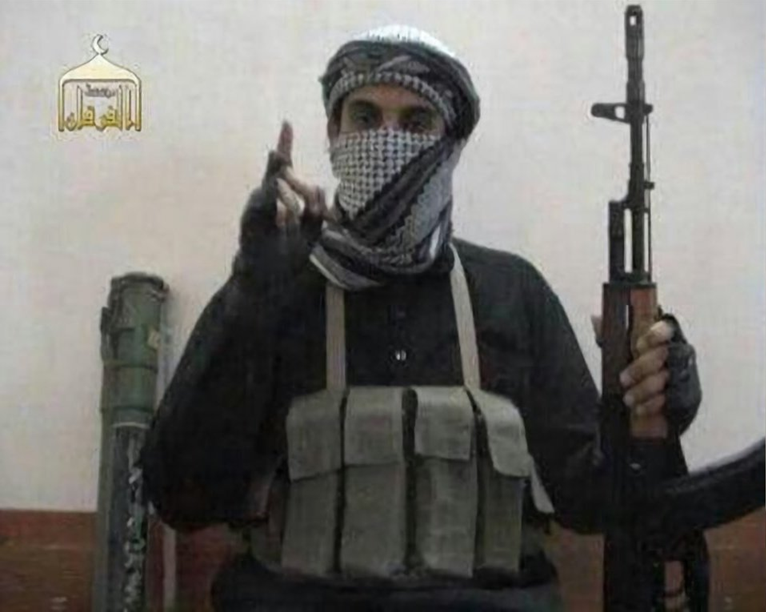
Abu Sulayman al-Utaybi, a Saudi who abandoned his Islamic studies to journey to Iraq in 2006, was appointed chief judge, of the Islamic State movement in March 2007, six months after the Statehood declaration. Between April and June 2007, Abu Sulayman released some public sermons—the picture above is from the first—for what was then called the Islamic State of Iraq (ISI), which had publicly dissolved its bonds to Al-Qaeda when it became a “State” in October 2006, while in fact retaining its bay’a (oath of allegiance) to Al-Qaeda in private.

Continue reading

The Announcement of the Islamic State—in 2006

By Kyle Orton (@KyleWOrton) on 18 March 2018

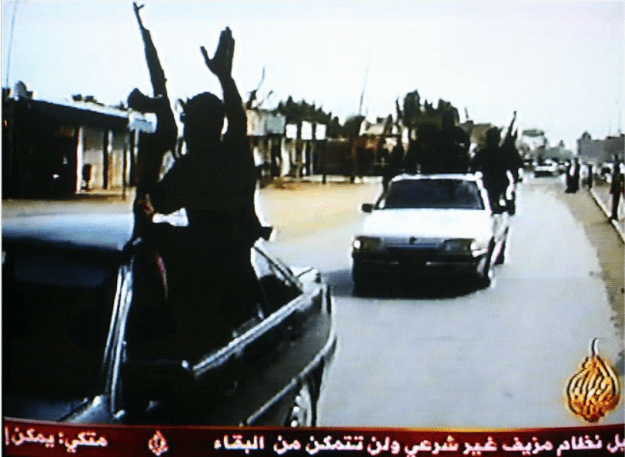
Jihadists on parade in Ramadi, 18 October 2006, to celebrate the declaration of the Islamic state (image source: Al-Jazeera)

After the formation of the Islamic State of Iraq (ISI), the leader, Hamid al-Zawi (Abu Umar al-Baghdadi), made his first speech on 23 December 2006. An English translation of the speech was released by ISI and is reproduced below. Continue reading

The Announcement of the Mujahideen Shura Council in Iraq

By Kyle Orton (@KyleWOrton) on 17 March 2018

A statement attributed to Abu Maysara al-Iraqi, the official spokesman of Al-Qaeda in Mesopotamia (AQM), was released on 15 January 2006 that announced AQM was being merged with five other Salafi insurgent groups to create the Mujahideen Shura Council (al-Majlis Shura al-Mujahideen). A translation of the statement is produced below.

Continue reading

Profile: First Spokesman of the Islamic State Movement

By Kyle Orton (@KyleWOrton) on 16 March 2018

The predecessor organization to the Islamic State (IS), the Islamic State in Iraq (ISI), used to run a “Prominent Martyrs” or “Distinguished Martyrs” series: essentially obituaries for important members of the IS movement. In the forty-sixth edition, on 18 August 2010, ISI profiled Abu Maysara al-Iraqi, the first official spokesman and the deputy of the Media Department until he was killed in 2006. A translation of Abu Maysara’s biography was issued by Ansar al-Mujahideen forum and is reproduced below with some minor editions for transliteration and some interesting points highlighted in bold. Continue reading

Islamic State’s First Leader Denies He Has Been Captured, West Wonders If He Exists

By Kyle Orton (@KyleWOrton) on 6 January 2018

Iraqi soldiers from the 1st Iraqi Army Division and U.S. Soldiers board a U.S. Marine Corps CH-53 Super Stallion helicopter at Camp Ramadi, 15 Nov. 2015 (DoD photo by Staff Sgt. Daniel St. Pierre, U.S. Air Force)

The leader of the Islamic State (IS) when it was declared in October 2006 was Hamid al-Zawi (Abu Umar al-Baghdadi). Al-Zawi was killed in April 2010 and replaced in May 2010 by the current leader of the IS movement, Ibrahim al-Badri (Abu Bakr al-Baghdadi), who more explicitly embraced the title of “caliph”. On 12 May 2009, al-Zawi gave his seventeenth speech, entitled Umala Kadhabun (عملاء كذابون), which translates to something like “Lying Agents” or “Deceitful Spies”. The speech was released by IS’s Al-Furqan Media Productions and a translation was made by a pro-IS online outlet, The Jihadist Media Elite. The transcript is reproduced below. Continue reading

The Islamic State’s Minister of War Criticises Regional Religious Leaders For Not Supporting The Jihad in Iraq

By Kyle Orton (@KyleWOrton) on 24 November 2017

Abdul Munim al-Badawi (Abu Hamza al-Muhajir), the “war minister” of the Islamic State of Iraq, the predecessor to ISIS, made a brief five-minute speech on 30 April 2007, entitled “Nada ila Ulema al-Umma” (نِدَاءٌ إِلَى عُلَمَاءِ الأُمَّةِ). “Ulema” refers to Islamic scholars, sometimes translated as “clerics”, a slightly misleading comparison with Christianity, and “umma” refers to the worldwide community of Muslims, so the title of the speech translates as, “An Appeal to the Community’s Scholars”. Al-Badawi’s basic point—made at a time when the Islamic State movement was beginning to suffer under the pressure of the Surge and Sahwa—was to condemn the regional ulema for not supporting, and not having supported, the jihadists in Iraq against the Americans and the Shi’is. Implicitly, Al-Badawi is criticising the ulema for holding back Muslims in regional States who might otherwise have joined the Iraqi jihad as foreign fighters and suicide bombers, potentially making a difference to the Islamic State’s military fortunes. A rough translation of the speech is reproduced below.

Continue reading

The Islamic State Planned For Sectarian War in Iraq From the Beginning

By Kyle Orton (@KyleWOrton) on 13 October 2017

The Iraqi Kurdish authorities arrested Mustafa Haji Muhammad Khan (Hassan Ghul) on 23 January 2004. Khan had been dispatched to Iraq by Nashwan Abd al-Baqi (Abd al-Hadi al-Iraqi), one of the key military officials of al-Qaeda “central” (AQC), to function as AQC’s intermediary with Ahmad al-Khalayleh (Abu Musab al-Zarqawi), the founder of the Islamic State movement. Khan replaced Abdallah al-Kurdi, the first envoy sent by Abd al-Baqi. Al-Kurdi had failed to establish any footing to do his job effectively, but Khan, a battle-hardened jihadist from Baluchistan, earned a measure of respect from al-Khalayleh and facilitated a productive conversation between AQC and al-Khalayleh. Al-Khalayleh, possessed of a pathological anti-Shi’ism, wrote a seventeen-page memo to Usama bin Laden explaining his strategy to defeat the Americans by starting a total war between the sects in Iraq. That memo, in digital form, was given to Khan, and Khan had it in his possession when he was captured. A translation of the letter is given below with some interesting sections highlighted in bold.[1] Continue reading