Tag Archives: al-Qaeda in Mesopotamia

Eulogy of Abu Musab al-Zarqawi from his Wife

By Kyle Orton (@KyleWOrton) on 26 November 2021
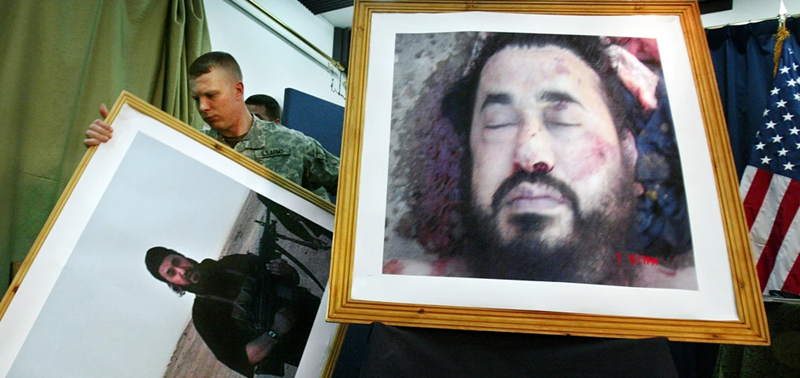
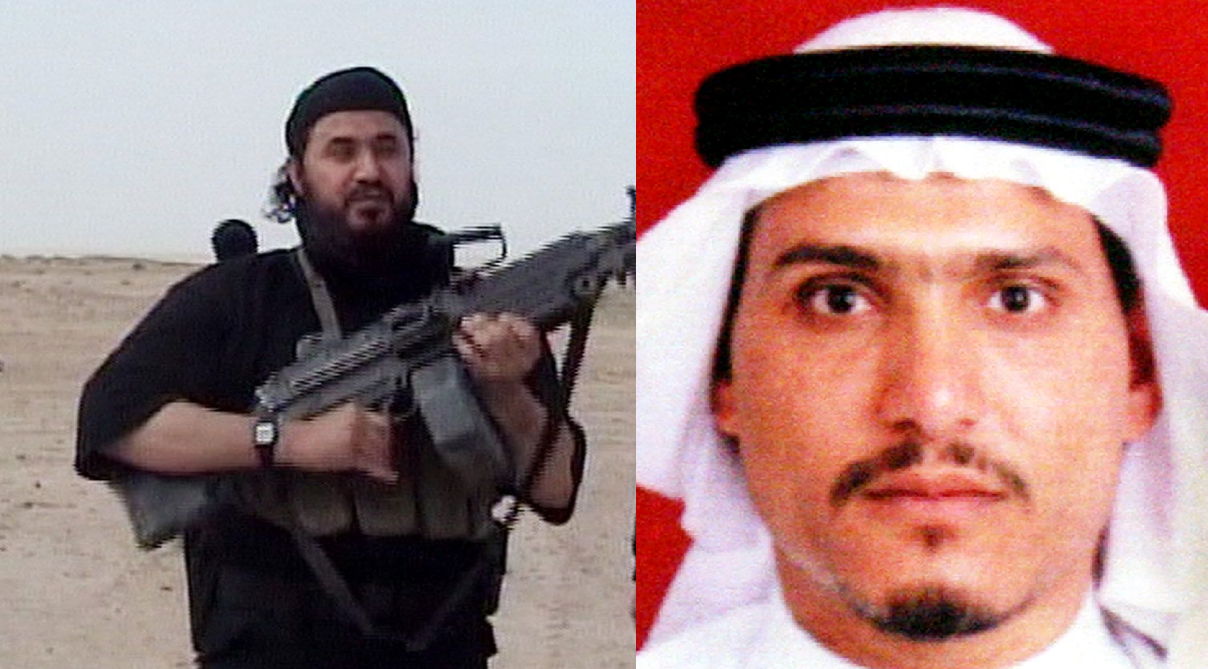
After the founder of the Islamic State movement, Ahmad al-Khalayleh, the infamous Abu Musab al-Zarqawi, was killed on 7 June 2006, an open letter eulogising him was posted by his wife, known only as Umm Muhammad (“the Mother of Muhammad”). The letter dates, it seems, to 6 July 2006, about a month after Zarqawi’s demise.[1] The content is mostly boilerplate: celebrating “the Shaykh of the Slaughterers” for terrorising the Americans and others who wanted constitutional government in Iraq,[2] venomous sectarian incitement against Shi’is, declaring that jihadist victory is near and cannot be derailed by the “martyrdom” of one leader. What is perhaps most notable when reading the letter at this distance is, firstly, that it was published by an Al-Qaeda media outlet, and, secondly, how much space is devoted to praising Usama bin Laden, and declaring the undying fealty of Zarqawi and his men to Bin Laden. Because, of course, the IS movement was at this time nominally a subordinate component of Bin Laden’s network named Al-Qaeda in Mesopotamia (AQM). The Zarqawists’ overt breach with Al-Qaeda still eight years in the future.

Continue reading
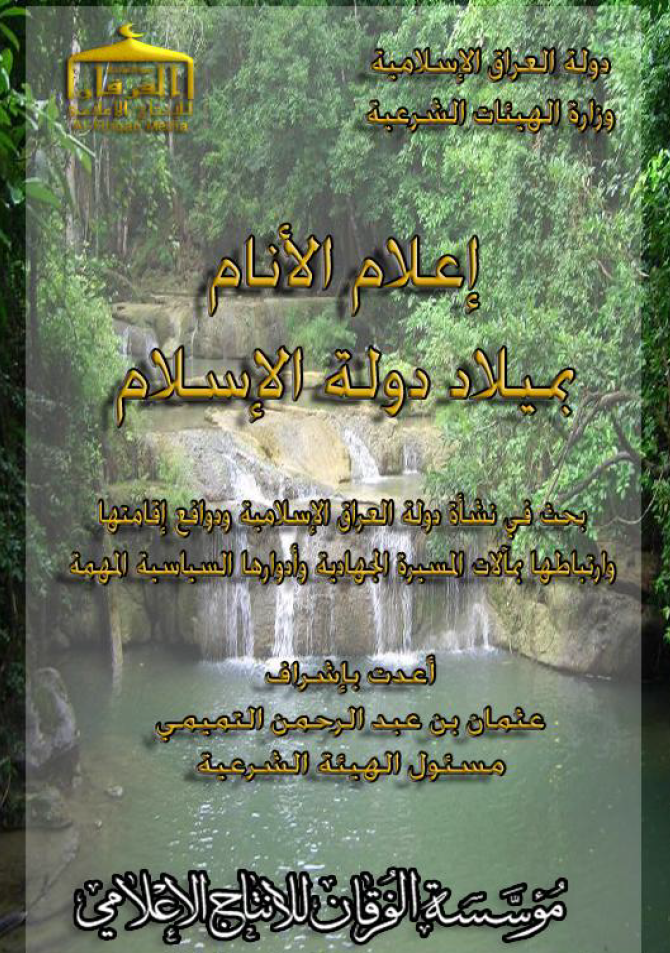
The 2007 Islamic State Book “Informing Mankind” of its Justifications for the Caliphate

By Kyle Orton (@KyleWOrton) on 22 November 2021

The Islamic State movement published an 87-page book, “Informing Mankind of the Birth of the Islamic State” or “Informing the People of the Birth of the Islamic State” (I’lam al-Anam bi-Milad Dawlat al-Islam), on 7 January 2007. The document was released by Al-Furqan Media Foundation, the central Islamic State propaganda institution, and first appeared on the World News Network website. A rough translation of the book appears below.

Continue reading

The Capture of the Islamic State “Finance Minister” and the Impact of Leadership Losses

By Kyle Orton (@KyleWOrton) on 22 October 2021

This article was originally published at European Eye on Radicalization

Sami Jassim al-Jaburi (Haji Hamid) | IMAGE SOURCE

Mustafa al-Khadhemi, the Iraqi Prime Minister, announced on the morning of 11 October that the Iraqi National Intelligence Service (INIS) had arrested Sami Jassim al-Jaburi (Haji Hamid), the effective finance emir of the Islamic State (ISIS), in “a complex external operation”. Continue reading

Islamic State Profiles the Godfather of its Media Department

By Kyle Orton (@KyleWOrton) on 8 May 2021

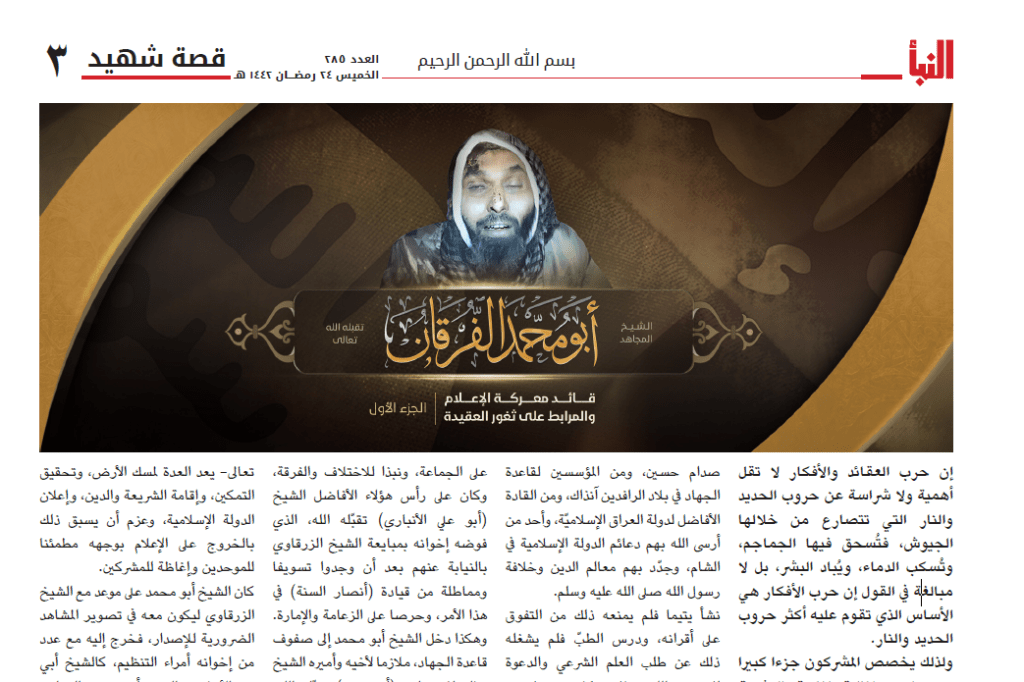
Wael al-Ta’i (Abu Muhammad al-Furqan), Al-Naba 285, p. 3

The 285th edition of Al-Naba, the weekly newsletter of the Islamic State (IS), released on 6 May, had a biography of Abu Muhammad al-Furqan, one of the most important IS leaders, the head of its Central Media Department and its operational ruler when he was killed in September 2016. Continue reading

The First Speech of Abu Hamza al-Muhajir as Al-Qaeda in Iraq Emir

By Kyle Orton (@KyleWOrton) on 5 April 2021

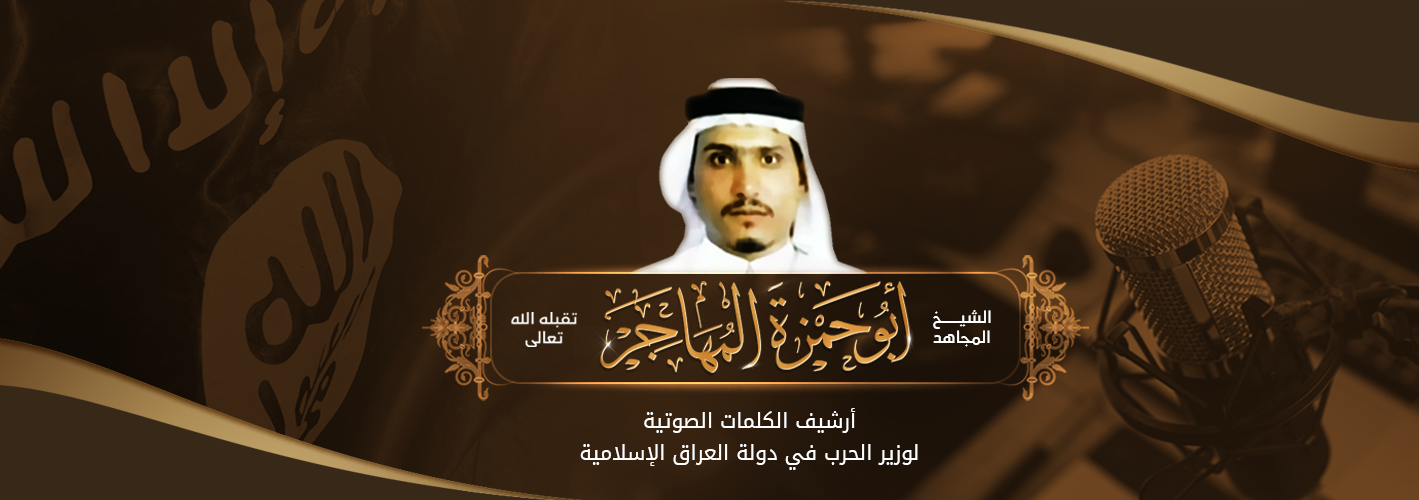
Ahmad al-Khalayleh (Abu Musab al-Zarqawi), the infamous founder of the Islamic State movement, known at the time as Al-Qaeda in Iraq (AQI) and formerly part of the Mujahideen Shura Council (MSC), was killed on 7 June 2006. Zarqawi’s successor was officially announced five days later, in a written statement released on 12 June, as Abu Hamza al-Muhajir, an Egyptian with a long history in and around Al-Qaeda. The next day, 13 June 2006, Abu Hamza gave his first speech as AQI emir, entitled, “The Gathering Will Be Defeated and They Will Turn Their Backs [in Retreat]”, drawn from an ayat of the Qur’an (54:45). The statement and the speech are translated below.

Continue reading

The First “Interview” with the Islamic State’s War Minister (2008)

By Kyle Orton (@KyleWOrton) on 3 April 2021

The Islamic State of Iraq (ISI) released a forty-five-minute media product, “The First Audio Interview with Shaykh Abu Hamza al-Muhajir”, on 24 October 2008. A translated transcript of the interview is reproduced below, with some interesting and important sections highlighted in bold.

Continue reading

The Islamic State’s Acknowledgement of the Deaths of Abu Umar al-Baghdadi and Abu Hamza al-Muhajir

By Kyle Orton (@KyleWOrton) on 18 March 2021

Continue reading

The First Speech of Abu Hamza al-Muhajir

By Kyle Orton (@KyleWOrton) on 15 March 2021

Destruction at the Sadeer Hotel in Baghdad, 9 March 2005

The Islamic State movement, then-known as Al-Qaeda in Mesopotamia (AQM), used a suicide truck bomb to blow up the Sadeer Hotel, where many foreign contractors were staying, and the next-door Agriculture Ministry, on 9 March 2005, murdering three people and wounding forty, thirty of them Americans. Reporting at the time noted that “insurgents wearing police uniforms first shot to death a guard at the Agriculture Ministry’s gate, allowing the truck to enter a compound the ministry shares with the adjacent Sadeer hotel”, and these details were confirmed in a two-minute audio message released later in the day by Abu Hamza al-Muhajir, the veteran Egyptian jihadist who would take over AQM when its founder was killed in 2006.[1] A transcript of the brief speech is reproduced below. Continue reading

Inducement and Terror: How the Islamic State Deals With Sunni Social Leaders

By Kyle Orton (@KyleWOrton) on 14 March 2021

Abdul Munim al-Badawi (Abu Hamza al-Muhajir), the then-leader of Al-Qaeda in Mesopotamia (AQM), released his fourth audio statement on 28 September 2006. The speech was entitled, “Ta’alaw ila Kalimatin Sawa” (تعالوا إلى كلمة سواء): “Come to a Just Word”.[1] An English transcript was released by the jihadists and is reproduced below. Continue reading

The First Cabinet of the Islamic State

By Kyle Orton (@KyleWOrton) on 5 March 2021

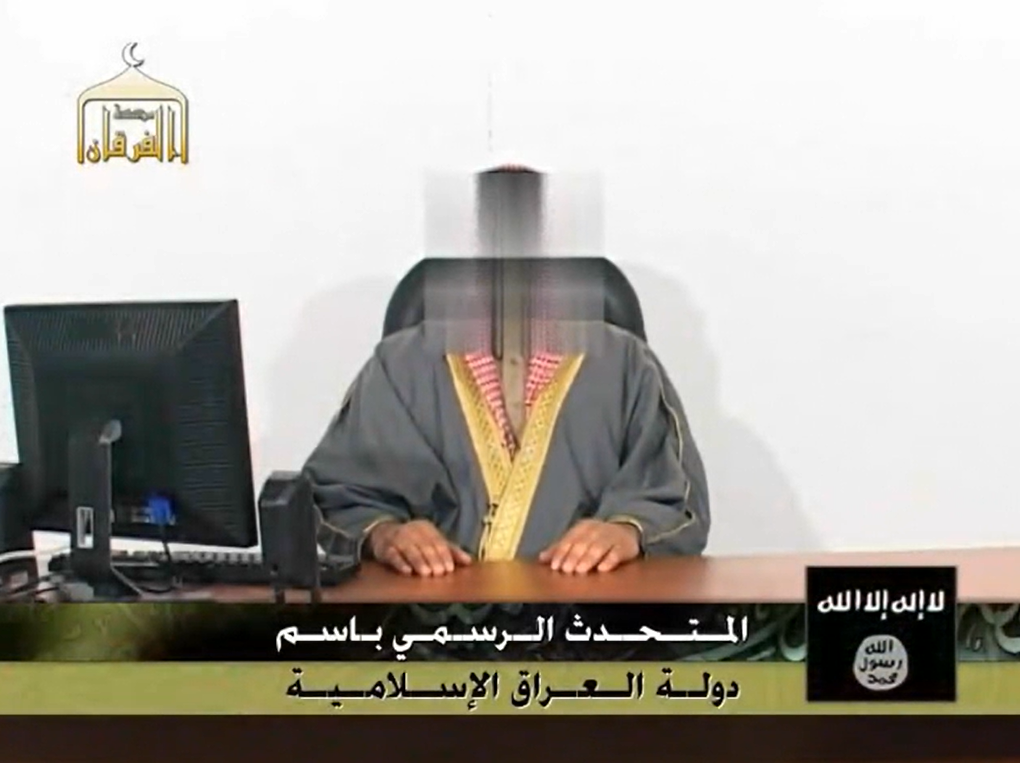
On 19 April 2007, seven months after the Islamic State (IS) movement declared its “State”, the official spokesman, Muharib al-Jaburi, announced the first “cabinet” for this “state”, appointing leaders for various “ministries”. Unusually for IS in this era, the speech was delivered as a video address—albeit (as can be seen) with Muharib’s face blurred out—rather than as an audio address. The reason for this was clearly to push back against the criticism of the IS movement that its leader could not be the “caliph” of all the Muslims, which at this stage IS was not overtly claiming, while being faceless and nameless, known only by his kunya.

Continue reading