Tag Archives: Awakening

The Islamic State’s Official Biography of the Caliph’s Deputy

By Kyle Orton (@KyleWOrton) on December 18, 2016
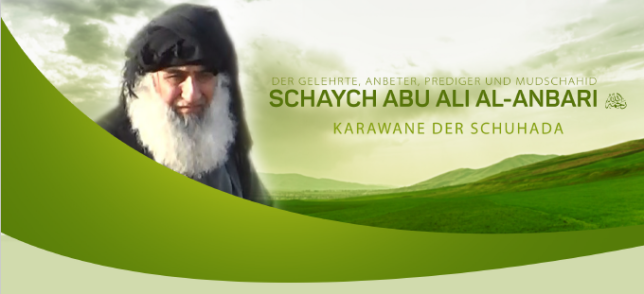
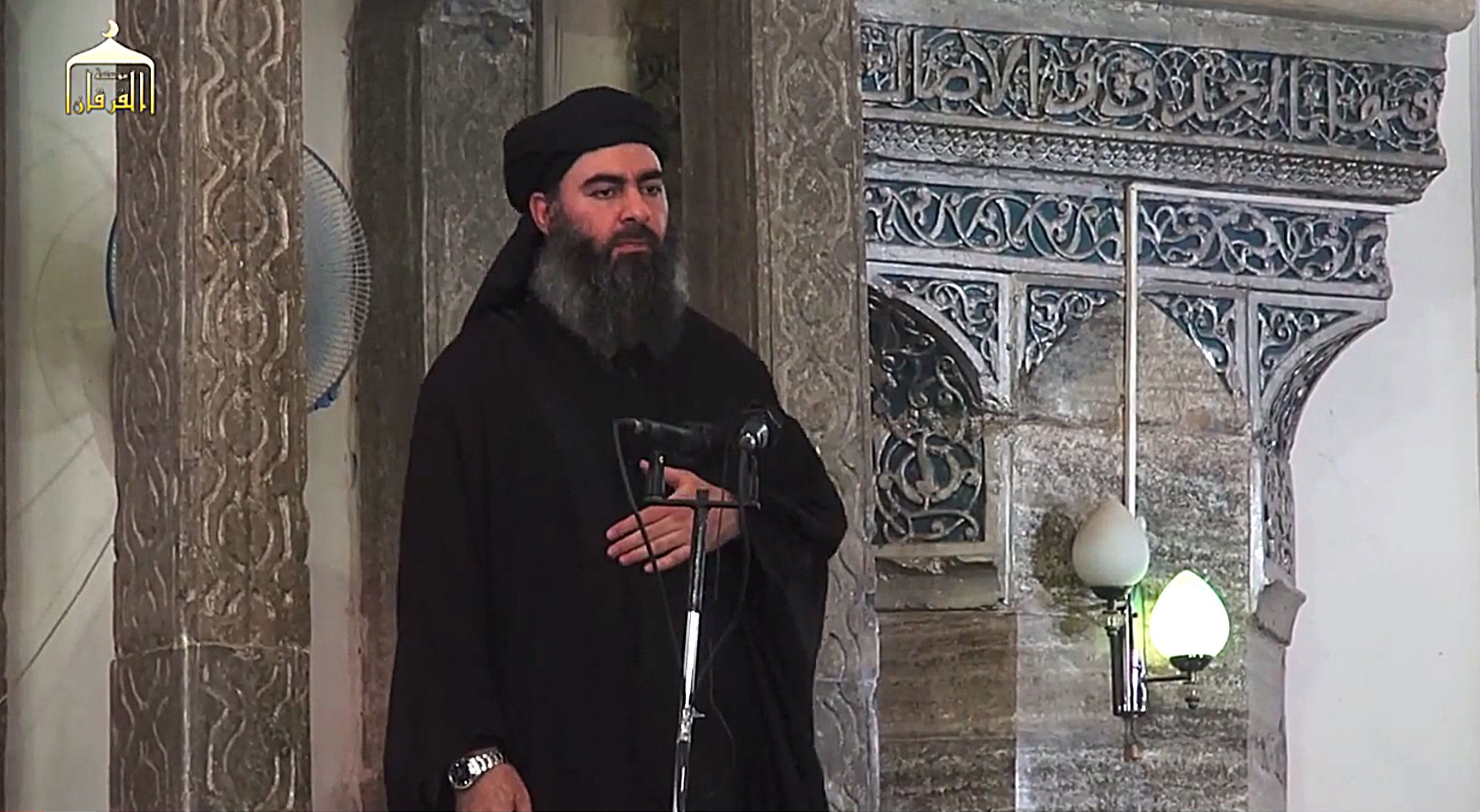
Obituary for Abdurrahman al-Qaduli in the German version of Rumiya, 11 November 2016

Obituary for Abdurrahman al-Qaduli in the German version of Rumiya, 11 November 2016

The forty-first edition of the Islamic State’s newsletter, al-Naba, released within the territory of the caliphate on 30 July 2016 and released online on 2 August, and the forty-third edition (released 13 and 16 August), contained a two-part obituary for Abd al-Rahman al-Qaduli (Abu Ali al-Anbari), the caliph’s deputy when he was killed on 24 March. The obituaries, entitled, “The Devout Scholar and Mujahid Preacher: Shaykh Abu Ali al-Anbari”,[1] make clear that al-Qaduli was one of the most consequential jihadists in the history of the Islamic State movement. Below is a translation, with some interesting and/or important sections highlighted in bold. The biography resolves some long-standing mysteries, and some of the claims are dubious in light of other evidence we have: these issues, and other points of context and explanation, are in the footnotes. The subheadings are mine, added to signpost the narrative and break it up into more manageable chunks.
Continue reading
Al-Qaeda Signals A Return to Iraq, Incites Against An American-Iranian Conspiracy

By Kyle Orton (@KyleWOrton) on November 4, 2016

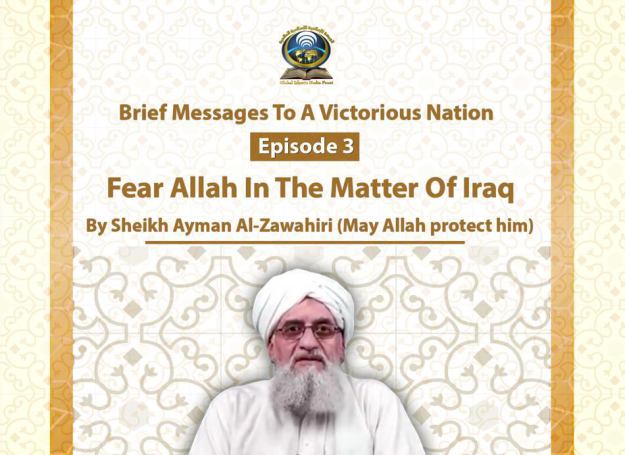
Al-Qaeda’s leader, Ayman al-Zawahiri, gave a speech on August 25, 2016, entitled, “Fear Allah in the Matter of Iraq” (or “Fear Allah in Iraq”). Released by al-Qaeda’s As-Sahab Media Foundation, the speech is the third installment of the “Brief Messages To A Victorious Nation” (or “Brief Messages To A Victorious Umma”) series. A translation of the speech was released by Al-Muwahideen Media, a pro-Qaeda channel, last month and is reproduced below with some editions in transliteration and important sections highlighted in bold. Continue reading

Looking At the Islamic State’s Past, Seeing its Future

By Kyle Orton (@KyleWOrton) on August 27, 2016

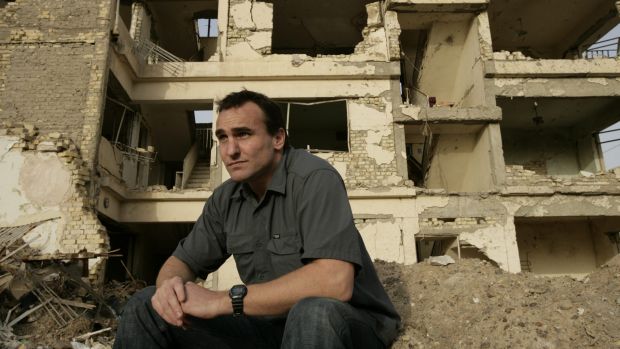
Michael Ware

Michael Ware

Only the Dead documents the experience of Michael Ware, an Australian journalist who arrived in Iraq in early 2003 and spent eleven months-per-year there for seven years. Ware made contact soon after the fall of Saddam Hussein with those resisting the new order, at a time when the Americans were struggling to map such forces.

Ware established communication with the more nationalist-Islamist forces. Once in that milieu, the globalist jihadists, who were working in the shadows, a small, foreign-dominated force towards which even many insurgents were guarded, found him. The leader of the jihadists, Ahmad al-Khalayleh, became something of an obsession for Ware as he stepped onto the world stage with his gruesome tactics as Abu Musab al-Zarqawi. Zarqawi, the “Shaykh of the Slaughters,” would found an organization that became a movement and then burst Iraq’s frontiers, known to us now as the Islamic State (IS).

In tracking Zarqawi and his men, Ware presents some incredible footage and gives some snapshots from the fascinating days, whose effects we are all still feeling, when the Iraqi insurgency was taking root. Continue reading

Profile of the Islamic State Caliph: Abu Bakr al-Baghdadi

By Kyle Orton (@KyleWOrton) on August 7, 2016

This post is drawn from a recent report I published profiling the leadership of the Islamic State.

The leader of the Islamic State (IS) since 2010 has been Abu Bakr al-Baghdadi, previously known as Abu Dua or Abu Awad, and his real name—acknowledged by IS itself since the declaration of the so-called Caliphate in 2014—is Ibrahim Awwad Ibrahim Ali Muhammad al-Badri al-Samarrai.

Continue reading

The Islamic State is Losing Militarily, Gaining Politically

By Kyle Orton (@KyleWOrton) on June 29, 2016

The New York Post had a symposium on the progress of the U.S.-led campaign against the Islamic State. This is my contribution:

The American-led effort to defeat the Islamic State is yielding significant tactical and military results. But the campaign is deeply flawed: It’s being waged as if the politics can be worked out after the fall of ISIS’s statelet, and in the process providing ISIS the conditions that will ensure its revival. Continue reading

Saddam Hussein Prepared the Ground for the Islamic State

By Kyle Orton (@KyleWOrton) on April 26, 2016

This essay, written to tie together my work on the relationship between the Saddam Hussein regime and the Islamic State, was completed last summer and submitted to an outlet, where it entered a form of development hell. After giving up on that option late last year, the opportunity arose to get a shorter version published in The New York Times in December. But I procrastinated too long over what to do with the full essay and a recent change in my work situation means I no longer have the bandwidth to go through the process of finding it a new home, so here it is.

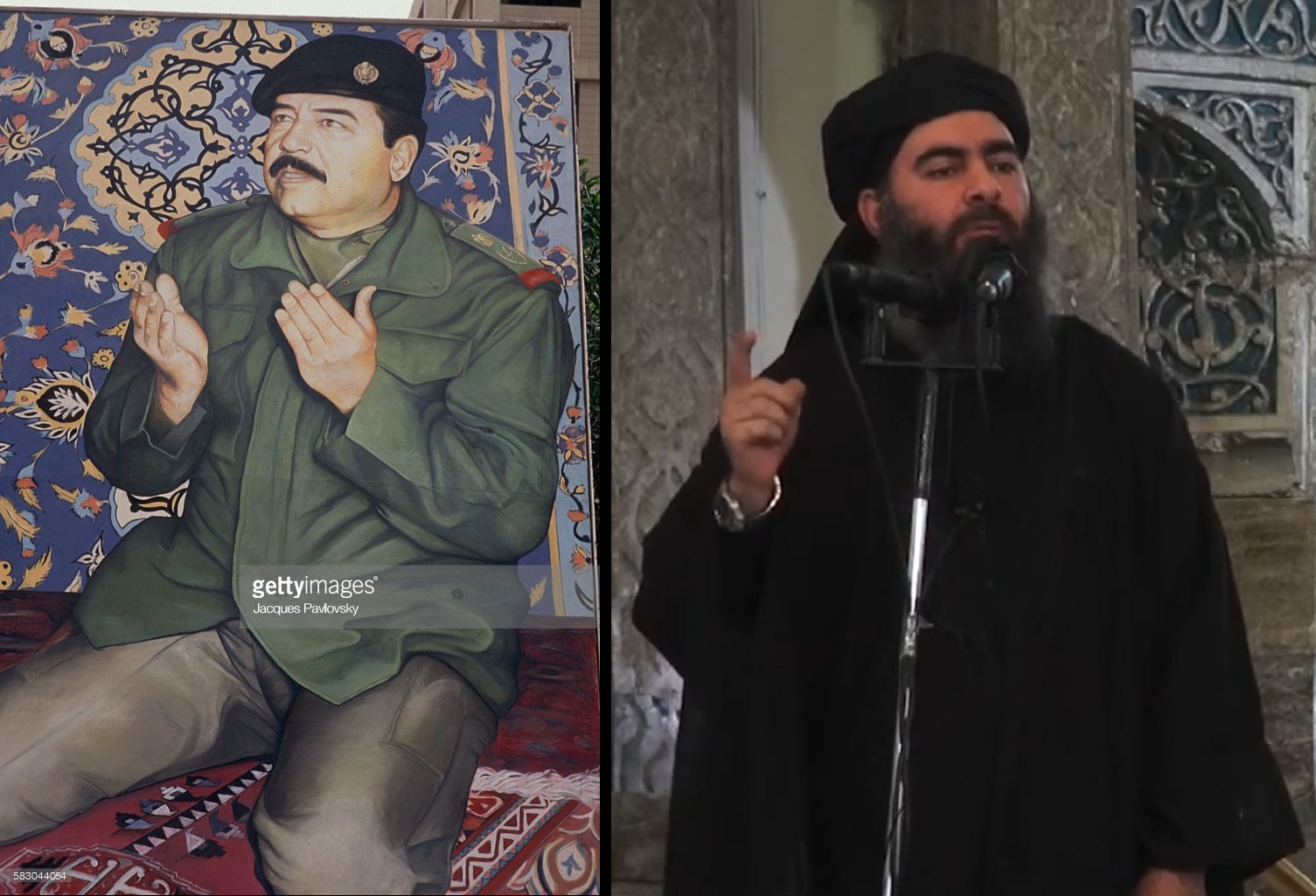
“Abu-Bakr al Baghdadi is a product of the last decade of Saddam’s reign,” argues Amatzia Baram, a scholar of Iraq. He is correct in at least three ways. First, in its last decade in power, the Iraqi Ba’ath regime transformed into an Islamist government, cultivating a more religious, sectarian population on which the Islamic State (ISIS) could draw. Part of Saddam Hussein’s “Faith Campaign” also involved outreach to Islamist terrorists, including al-Qaeda, which meant that the synthesis of Ba’athism and Salafism that fused into the Iraqi insurgency after the fall of Saddam was already well advanced by the time the Anglo-American forces arrived in Baghdad in 2003. Second, the ISIS leadership and military planning and logistics is substantially reliant on the intellectual capital grown in the military and intelligence services of the Saddam regime. And finally, the smuggling networks on which ISIS relies, among the tribes and across the borders of Iraq’s neighbours, for the movement of men and materiel, are directly inherited from the networks erected by the Saddam regime in its closing decade to evade the sanctions. The advantages of being the successor to the Saddam regime make ISIS a more formidable challenge than previous Salafi-jihadist groups, and one that is likely to be with us for some time.

Continue reading

Barack Obama Comes Clean

By Kyle Orton (@KyleWOrton) on March 11, 2016
1

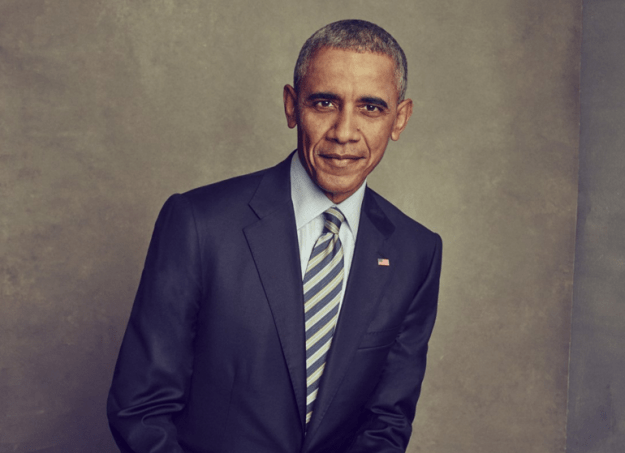
Yesterday, Jeffrey Goldberg’s latest interview with President Obama was published. There have been numerous worthwhile takes on what is a very revealing conversation, such as Max Boot and Nibras Kazimi, and it is very difficult to quarrel with the conclusion of David Frum that “the dominant theme of these interviews is that we, all of us, have grievously let down the president,” who has exactly one self-criticism: “Obama admits he does not make sufficient allowances for how unreasonable other people are.” What I think deserves most attention is that the President has finally aligned his rhetoric, especially on Iran, with his actual foreign policy. Continue reading

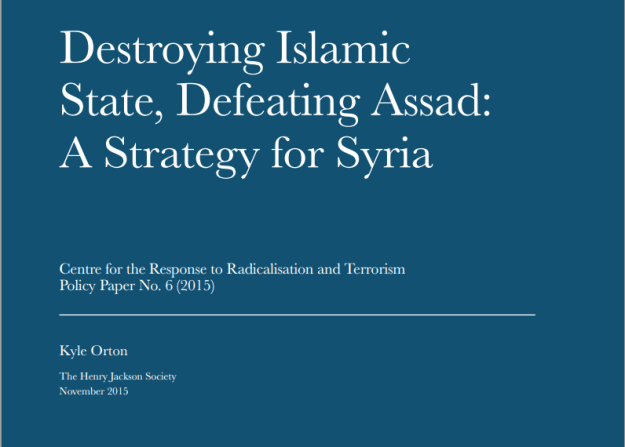
Destroying Islamic State, Defeating Assad: A Strategy for Syria

By Kyle Orton (@KyleWOrton) on November 25, 2015

1

Today, my first report with The Henry Jackson Society was published: “Destroying Islamic State, Defeating Assad: A Strategy for Syria“. Continue reading

To Defeat The Islamic State, Get Rid Of Assad First

By Kyle Orton (@KyleWOrton) on July 3, 2015

1

The British government is considering beginning airstrikes into Syria against the Islamic State (ISIS). London is currently engaged in airstrikes against ISIS in Iraq and has troops in the Kurdish areas of northern Iraq training and advising the Peshmerga.

Since ISIS’ territory in Syria is its “most valuable and sustainable,” the case for ignoring a border that ISIS has erased would seem to be a good one.

But no less a figure than the Conservative chair of the defence select committee, Julian Lewis, thinks otherwise:

In 2010 the government wanted to remove Assad without helping al-Qaeda or similar groups that subsequently became Daesh. Now we apparently want to remove Daesh but without helping Assad. These two things are incompatible. It is a choice of evils.

The view that Syria is divided between the Assad dictatorship and ISIS has become commonplace. It is mistaken. Continue reading

America’s Silent Partnership With Iran And The Contest For Middle Eastern Order: Part Four

By Kyle Orton (@KyleWOrton) on February 10, 2015

1

This is the fourth of a four-part series looking at the United States’ increasingly-evident de facto alliance with Iran in the region. The first part looked at the way this policy has developed since President Obama took office and how it has been applied in Iraq; the second part looked at the policy’s application in Syria; the third part looked at its application in Lebanon, Afghanistan, and Yemen; and this part is a conclusion. Continue reading