By Kyle Orton (@KyleWOrton) on 26 August 2021

Taliban patrol in Wazir Akbar Khan, Kabul, 18 August 2021 [image source]
By Kyle Orton (@KyleWOrton) on 26 August 2021
Taliban patrol in Wazir Akbar Khan, Kabul, 18 August 2021 [image source]
By Kyle Orton (@KyleWOrton) on 24 January 2021

Sakib Mahmuljin [image source]
By Kyle Orton (@KyleWOrton) on 8 January 2021
This article was originally published at European Eye on Radicalization

The world has been captivated this week by the scenes of an insurrectionary mob overrunning the United States Capitol at the behest of President Donald Trump. It is unlikely that many people remember or even know that nearly forty years ago, this building—the meeting place of the U.S. Congress, the place where laws are made—was bombed by a Communist terrorist group, a group remarkable for its all-female membership. A new book, Tonight We Bombed the U.S. Capitol: The Explosive Story of M19, America’s First Female Terrorist Group, by William Rosenau, a senior policy historian at CNA and a fellow in the International Security program at New America, examines this forgotten episode. Continue reading
By Kyle Orton (@KyleWOrton) on September 11, 2020
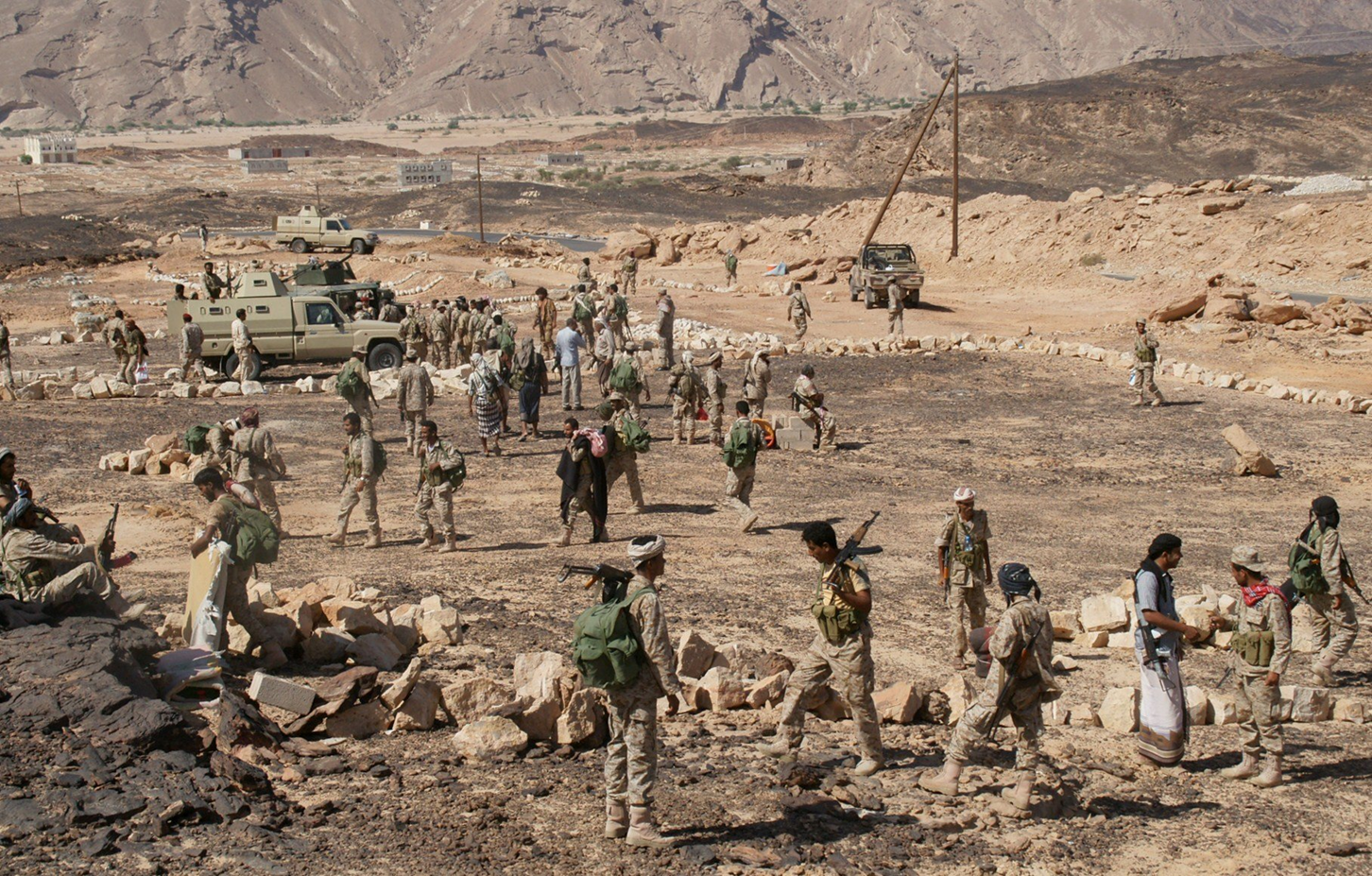
In writing a chapter earlier this year about the current status of Al-Qaeda, part of the process was reviewing the organisation’s history since its formation in the late 1980s. What really struck me was how extensively Al-Qaeda is now manipulated, under the influence of, and in places even controlled by state powers. To mark the nineteenth anniversary of 9/11, I thought I could give a brief sketch of this development.
By Kyle Orton (@KyleWOrton) on 7 January 2020
This article was originally published at European Eye on Radicalization
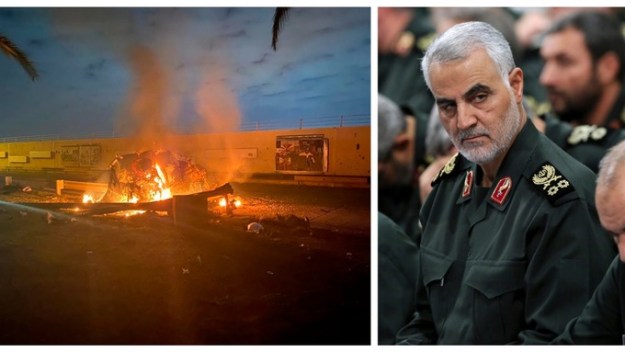
At 1 AM on 3 January, an American drone strike killed the head of Iran’s Quds Force, the division of the Islamic Revolutionary Guards Corps (IRGC) charged with exporting the Islamic revolution, and his Iraqi deputy, Jamal al-Ibrahimi (Abu Mahdi al-Muhandis). Sulaymani was the strategic driver of Iran’s expansionist policy in the Middle East, as well as the orchestrator of its terrorism and assassinations further afield. Unlike with the killing of Al-Qaeda’s Usama bin Laden in 2011 or the Islamic State’s Ibrahim al-Badri (Abu Bakr al-Baghdadi) in October, where the dynamics shifted little, Sulaymani’s death opens up questions about the direction in which the Middle East will now move. Continue reading
By Kyle Orton (@KyleWOrton) on 28 December 2019

In a long article last week, I looked at why the U.S. ran a formal occupation of Iraq for fourteen months after the fall of Saddam Husayn in April 2003, given that there had been an explicit pre-invasion decision not to have an occupation government. The short answer is that the occupation was installed through deception by the State Department, supported by the Central Intelligence Agency (CIA). State and CIA had argued for a protracted occupation in the Situation Room debates in 2002, but President George W. Bush had sided with the Pentagon, which advocated a rapid transfer of power to Iraqis. Having lost in the formal inter-agency process, the State Department succeeded by subversion in getting its way on the ground in Iraq. The disaster this caused in the mismanagement of post-Saddam Iraq was, as the article explained in detail, only the most serious impact of the toxic schism between State/CIA and the Pentagon, a factor whose import is difficult to overstate when examining how the Bush administration functioned. (This feud also at times drew in the Vice President’s Office, which tended to support the Pentagon.)
By Kyle Orton (@KyleWOrton) on 27 December 2019

The Iraqi National Congress (INC), the umbrella group for the Iraqi opposition to Saddam Husayn from the 1990s up to 2003, has been immensely controversial, mostly because of its leader, Ahmad Chalabi, against whom the Central Intelligence Agency (CIA) and State Department waged a bitter bureaucratic war, a lot of it in the press, getting into circulation stories of INC trickery—possibly on behalf of Iran—being behind the Bush administration’s decision to invade Iraq.
By Kyle Orton (@KyleWOrton) on 22 December 2019
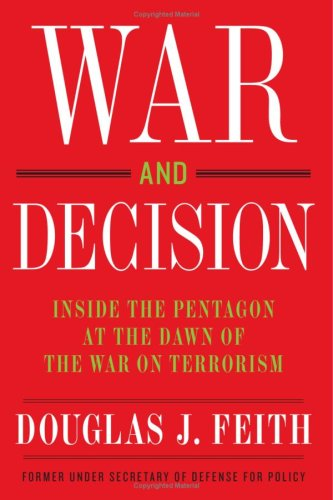
Douglas Feith was the U.S. Under Secretary of Defense for Policy from 2001 to 2005, one of the most senior positions at the Pentagon during one of the most consequential periods in recent history, covering the 11 September 2001 atrocities and early phase of the U.S.-led response. Feith later wrote a highly illuminating memoir, War and Decision: Inside the Pentagon at the Dawn of the War on Terrorism, which tried to drain some of the hysteria out of the public “debate” about the Iraq dimension of the U.S. policy in particular by explaining the internal arguments in the Bush administration leading up to the decision to finish with Saddam Husayn in 2003, and trying to set those arguments in their proper historical context, both in relation to Iraq—where “the war” had begun twelve years earlier—and the altered American threat perceptions in the shadow of 9/11. Unlike a lot of the gossipy tomes that emerged from former officials, Feith’s book is notably light on opinion and contains reams of declassified documents so readers can check his analysis against the source material. One of Feith’s key judgments is that “the chief mistake was maintaining an occupation government in Iraq for over a year”.[1] As Feith explains in great detail in the book, this was never supposed to happen. So how did it?
By Kyle Orton (@KyleWOrton) on 15 April 2019
In February 1979, police in south-eastern Australia arrested six people. The suspects were members of the Croatian nationalist scene that agitated against Communist Jugoslavija and they had planned to commit a series of attacks against symbols of Marshal Tito’s regime that could have killed hundreds of Australians. Except they hadn’t, as Hamish McDonald, a journalist with the Sydney Morning Herald, shows in Framed (2012). Despite the “Croatian Six” being convicted for terrorism and spending a decade in prison, the reality of what had happened was nearly the exact opposite—and at least some powerful people in the Australian government knew or suspected as much from the get-go. Continue reading
Published at The Arab Weekly
By Kyle Orton (@KyleWOrton) on 27 November 2018
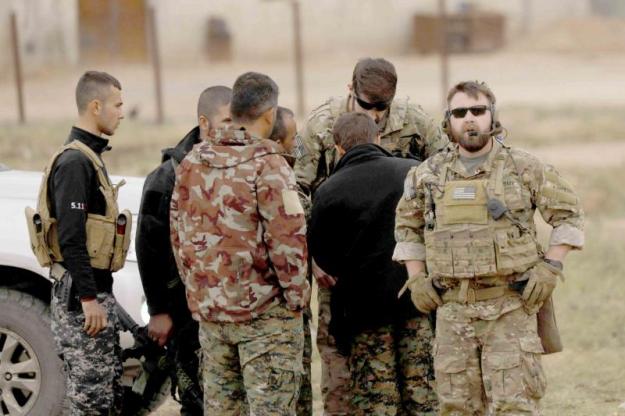
U.S. forces and members of the “Syrian Democratic Forces” (SDF) patrol Al-Darbasiya in northeastern Syria, 4 November 2018. (AFP)
Despite the change of rhetoric between US Presidents Barack Obama and Donald Trump, the United States has continued to lose influence, political and military, in the Middle East to the Iran-Russia axis. Continue reading
 Kyle Orton's Blog