By Kyle Orton (@KyleWOrton) on 24 January 2021

Sakib Mahmuljin [image source]
By Kyle Orton (@KyleWOrton) on 24 January 2021
Sakib Mahmuljin [image source]
By Kyle Orton (@KyleWOrton) on 20 January 2021
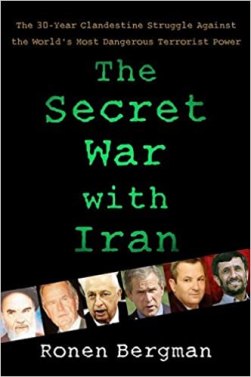
Last week, as one of his last acts in office, U.S. Secretary of State Mike Pompeo gave a speech about Iran’s collaboration with Al-Qaeda. It was unfortunate that Pompeo did this at this time and in this way, with such blatant political intent, because the factual content of Pompeo’s speech was unassailable: the Islamic Republic’s long relationship with Al-Qaeda does stretch back about three decades, the killing of Al-Qaeda’s deputy Abdullah Ahmed Abdullah (Abu Muhammad al-Masri) in Tehran in August 2020 is demonstrative of a shift in the strategic positioning of the organisation away from Pakistan to Iran, and even the part of Pompeo’s speech that got the most pushback—about Tehran’s contact with the 9/11 killers—is not controversial and is not new.
Unmentioned in Pompeo’s speech was one of the crucibles that forged this relationship, and forged Al-Qaeda into something more than a regional menace, namely the Bosnian war of 1992-5. Continue reading
By Kyle Orton (@KyleWOrton) on 8 January 2021
This article was originally published at European Eye on Radicalization

The world has been captivated this week by the scenes of an insurrectionary mob overrunning the United States Capitol at the behest of President Donald Trump. It is unlikely that many people remember or even know that nearly forty years ago, this building—the meeting place of the U.S. Congress, the place where laws are made—was bombed by a Communist terrorist group, a group remarkable for its all-female membership. A new book, Tonight We Bombed the U.S. Capitol: The Explosive Story of M19, America’s First Female Terrorist Group, by William Rosenau, a senior policy historian at CNA and a fellow in the International Security program at New America, examines this forgotten episode. Continue reading
By Kyle Orton (@KyleWOrton) on October 23, 2020
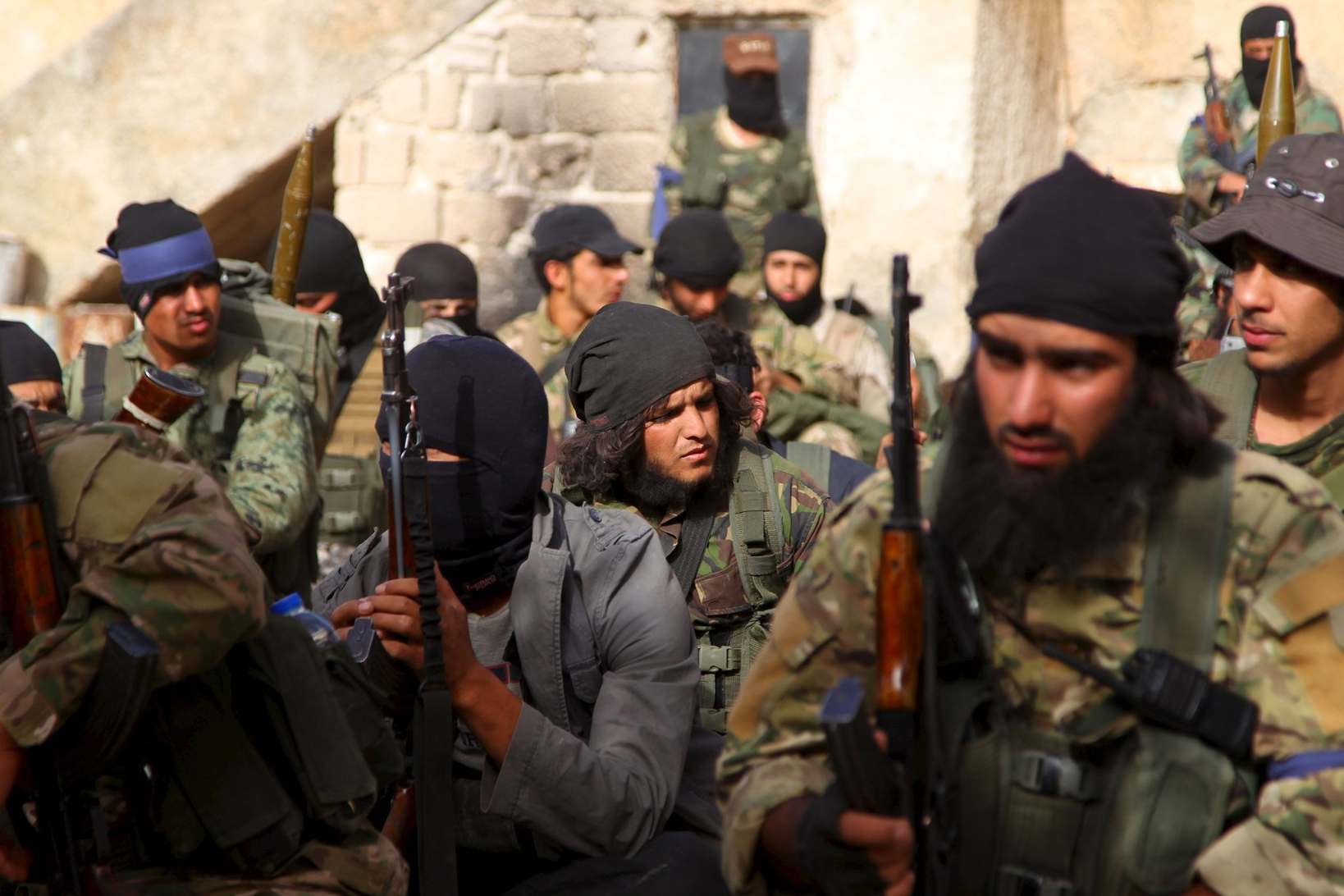
A chapter about Islamism in Syria I wrote for the American Foreign Policy Council’s (AFPC) ‘World Almanac of Islamism’ was published today. Do check it out, and the broader site, which is a great, accessible resource. The format of the website necessitated that the chapter as I submitted it was edited, condensed, and split up to fill out the various categories. In case it is of any interest, the original version of the chapter is reproduced below.
By Kyle Orton (@KyleWOrton) on September 11, 2020
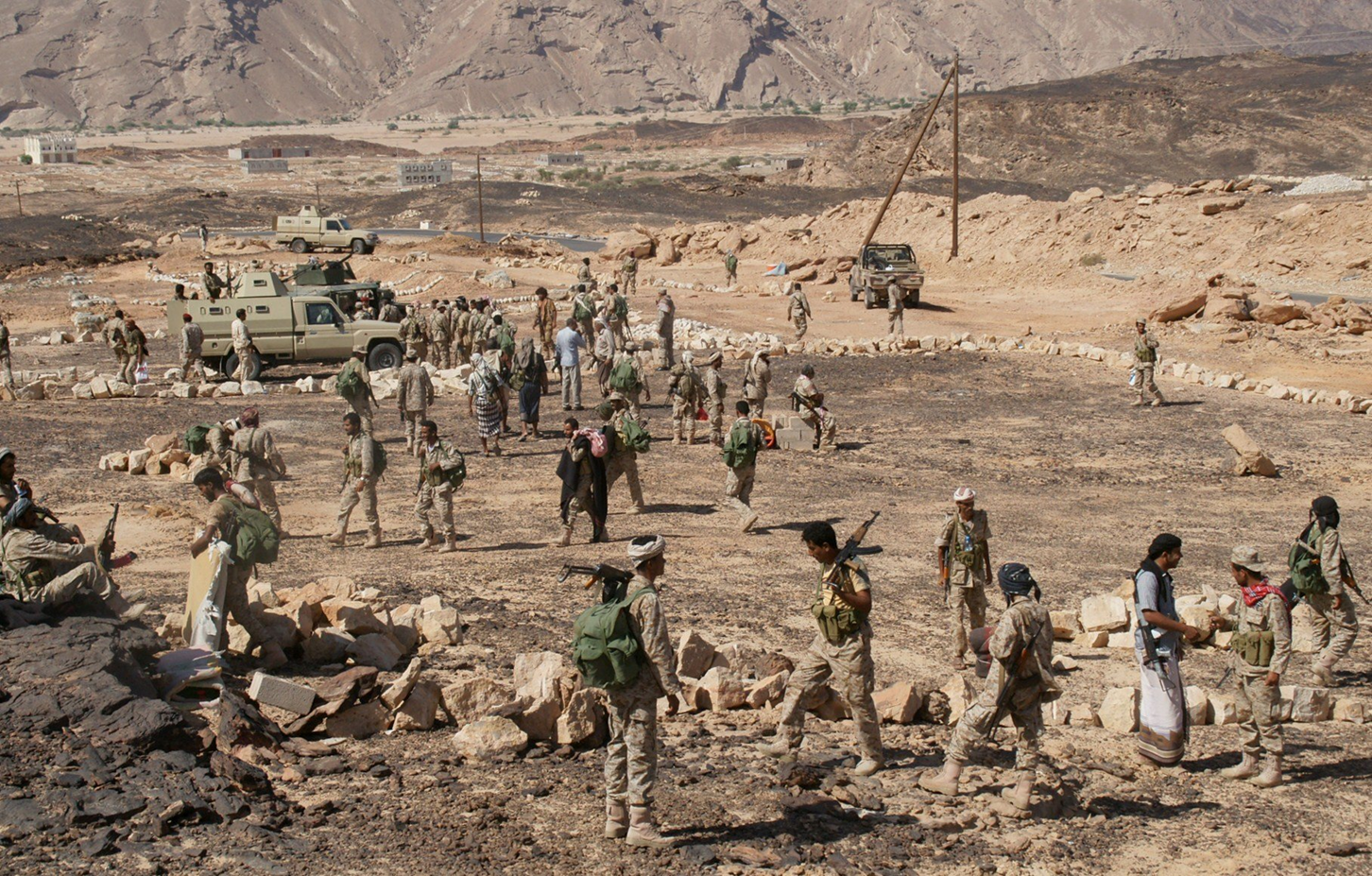
In writing a chapter earlier this year about the current status of Al-Qaeda, part of the process was reviewing the organisation’s history since its formation in the late 1980s. What really struck me was how extensively Al-Qaeda is now manipulated, under the influence of, and in places even controlled by state powers. To mark the nineteenth anniversary of 9/11, I thought I could give a brief sketch of this development.
By Kyle Orton (@KyleWOrton) on 11 June 2020
France announced last Friday that its forces in Mali had killed Abd al-Malek Drukdel (Abu Musab Abd al-Wadud), the emir of Al-Qaeda in the Islamic Maghreb (AQIM), which covers the North Africa and Sahel areas. Paris has sometimes been unreliable on these matters, but the United States independently confirmed Drukdel was gone, as have sources within AQIM. The French also announced that on 19 May they had arrested Mohamed Mrabat, a veteran jihadist and member of the Islamic State in the Greater Sahara (ISGS). Continue readingBy Kyle Orton (@KyleWOrton) on 5 February 2020

The Mujahideen Battalion (El-Mudžahid) in Bosnia in the early 1990s [image source]
By Kyle Orton (@KyleWOrton) on 28 December 2019

In a long article last week, I looked at why the U.S. ran a formal occupation of Iraq for fourteen months after the fall of Saddam Husayn in April 2003, given that there had been an explicit pre-invasion decision not to have an occupation government. The short answer is that the occupation was installed through deception by the State Department, supported by the Central Intelligence Agency (CIA). State and CIA had argued for a protracted occupation in the Situation Room debates in 2002, but President George W. Bush had sided with the Pentagon, which advocated a rapid transfer of power to Iraqis. Having lost in the formal inter-agency process, the State Department succeeded by subversion in getting its way on the ground in Iraq. The disaster this caused in the mismanagement of post-Saddam Iraq was, as the article explained in detail, only the most serious impact of the toxic schism between State/CIA and the Pentagon, a factor whose import is difficult to overstate when examining how the Bush administration functioned. (This feud also at times drew in the Vice President’s Office, which tended to support the Pentagon.)
By Kyle Orton (@KyleWOrton) on 22 December 2019
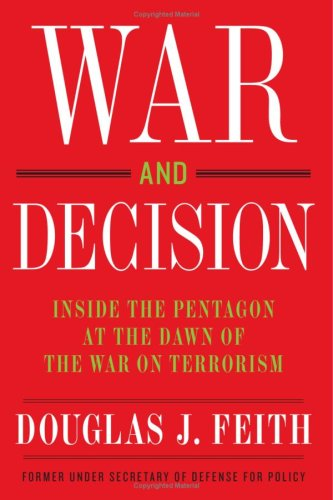
Douglas Feith was the U.S. Under Secretary of Defense for Policy from 2001 to 2005, one of the most senior positions at the Pentagon during one of the most consequential periods in recent history, covering the 11 September 2001 atrocities and early phase of the U.S.-led response. Feith later wrote a highly illuminating memoir, War and Decision: Inside the Pentagon at the Dawn of the War on Terrorism, which tried to drain some of the hysteria out of the public “debate” about the Iraq dimension of the U.S. policy in particular by explaining the internal arguments in the Bush administration leading up to the decision to finish with Saddam Husayn in 2003, and trying to set those arguments in their proper historical context, both in relation to Iraq—where “the war” had begun twelve years earlier—and the altered American threat perceptions in the shadow of 9/11. Unlike a lot of the gossipy tomes that emerged from former officials, Feith’s book is notably light on opinion and contains reams of declassified documents so readers can check his analysis against the source material. One of Feith’s key judgments is that “the chief mistake was maintaining an occupation government in Iraq for over a year”.[1] As Feith explains in great detail in the book, this was never supposed to happen. So how did it?
By Kyle Orton (@KyleWOrton) on 9 July 2019
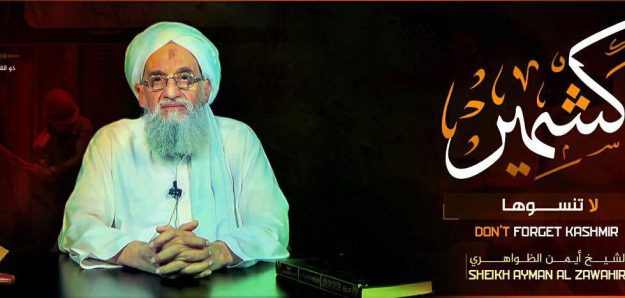
Al-Qaeda’s leader, Ayman al-Zawahiri, released a speech, “Don’t Forget Kashmir”, which as the title suggests focused on that conflict on the Subcontinent. Al-Zawahiri was insistent on fighting India, but he also wanted to “liberate” the Kashmiri jihad from the oversight of the Pakistani secret police and military, who have used these Islamist paramilitary forces as instruments of state policy against the Indian Union since the time of partition. In Al-Zawahiri’s telling the Pakistani state, such as it is, is too close to the Americans and the West. A transcript of the speech, released in English by Al-Qaeda’s As-Sahab Media, is reproduced below. Continue reading

 Kyle Orton's Blog