Tag Archives: ISIS

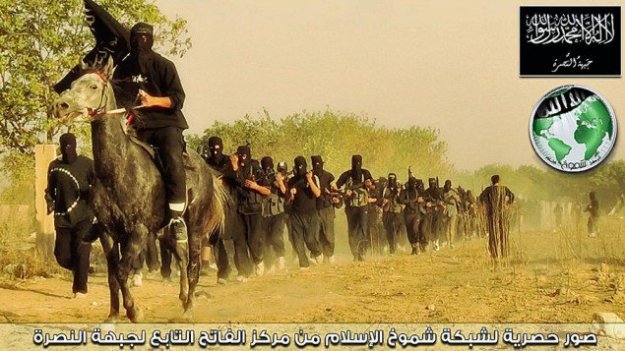
Jabhat al-Nusra Rejects the Islamic State of Iraq’s Takeover

By Kyle Orton (@KyleWOrton) on April 2, 2014

1

On 10 April 2013, Jabhat al-Nusra’s leader, Abu Muhammad al-Jolani, put out a speech, published by al-Manara al-Bayda, entitled, “About the Fields of Syria”. In the speech, al-Jolani rejected the statement from thirty-six hours earlier by Abu Bakr al-Baghdadi, which revealed officially that al-Nusra was a front-organization for the Islamic State of Iraq (ISI), and then al-Baghdadi asserted his authority publicly over al-Nusra, dissolving ISI and al-Nusra into a new group, the Islamic State of Iraq and Syria (ISIS). This dispute would ultimately lead to ISIS being expelled from al-Qaeda’s network after it refused the orders of al-Qaeda’s leadership to return to Iraq and leave al-Nusra as al-Qaeda’s branch in Syria. A translation of this speech by jihadology.net is reproduced below with some minor editions for clarity and some interesting sections highlighted in bold. Continue reading

The Announcement of the Islamic State of Iraq and Syria

By Kyle Orton (@KyleWOrton) on April 2, 2014
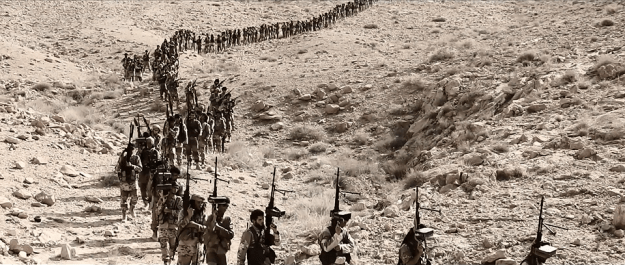
Al-Qaeda expelled the Islamic State of Iraq and Syria (ISIS) from its ranks on February 3, 2014. This was the culmination of a dispute that broke into the public eye with ISIS’s declaration in April 2013, an effort by ISIS’s emir, Abu Bakr al-Baghdadi, to formally subsume the secret Syrian wing of the then-Islamic State of Iraq (ISI), known as Jabhat an-Nusra, under his own banner, and the rejection of both al-Nusra’s leadership and al-Qaeda’s to this move. In truth, the schism between ISIS and al-Qaeda has its roots all the way back to the beginning, when ISIS became al-Qaeda’s Iraqi branch, al-Qaeda in Mesopotamia (AQM), in 2004.

Below is the transcript of the audio address by al-Baghdadi, released by al-Furqan on 8 April 2013, entitled, “Give Good News to the Believers: The Declaration of the Islamic State of Iraq and Syria”. Some transliterations have been altered, the syntax has been cleared up, and some interesting or important sections highlighted in bold. Continue reading

Iran Is Supporting al-Qaeda In Syria

By Kyle Orton (@KyleWOrton) on March 24, 2014

1

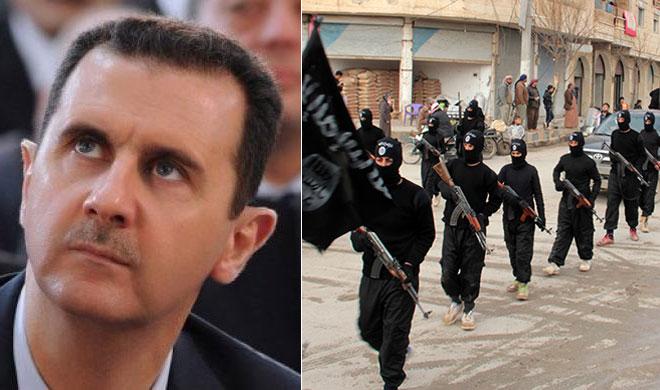
Given the increasing power of the Iranian theocracy in Syria on the Assad regime’s side, and the evidence of an overlap between the Assad regime and the Sunni jihadists who have descended on Syria, it is important to assess Tehran’s relationship with Salafi-jihadism.

Continue reading

The Assad Regime’s Collusion With ISIS and al-Qaeda: Assessing The Evidence

By Kyle Orton (@KyleWOrton) on March 24, 2014

1

There has long been speculation in Syrian oppositionist circles that the regime was colluding with the Qaeda-type forces in the insurgency, to shore-up its own base by frightening the minorities and to ward off external help to the rebellion from the West. Continue reading

Al-Qaeda Disowns ISIS

By Kyle Orton (@KyleWOrton) on March 21, 2014

On February 3, 2014, Tanzim Qaedat al-Jihad (The Base of Holy War Organisation)—al-Qaeda—disowned ad-Dawla al-Islamiya fil-Iraq wa-Sham (the Islamic State of Iraq and Syria, ISIS), finally resolving the tortured question of the group’s “affiliation” with the terror network. Continue reading

Ayman al-Zawahiri Expels ISIS From Al-Qaeda

By Kyle Orton (@KyleWOrton) on March 21, 2014

1

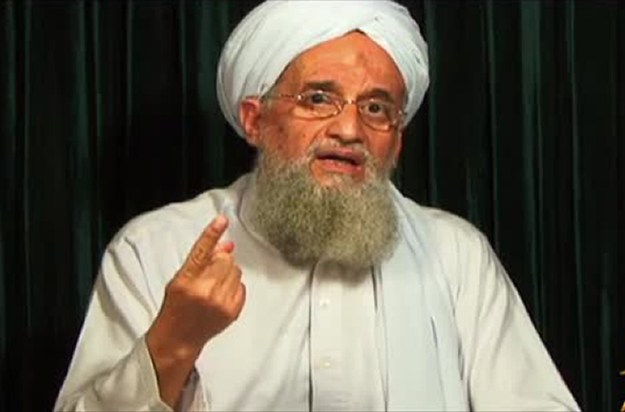
The announcement of the Islamic State of Iraq and Syria (ISIS) in April 2013 saw the Islamic State of Iraq (ISI) claim to subsume its Syrian branch, Jabhat al-Nusra, a move rejected by al-Nusra’s leader who then swore allegiance to al-Qaeda. Both ISI and al-Nusra were believed to be branches of al-Qaeda at the time, and al-Qaeda’s emir, Ayman al-Zawahiri, ruled that ISI should return to Iraq and al-Nusra should remain as al-Qaeda’s separate branch in Syria. ISI, keeping the ISIS name, dismissed this decision—and ISI(S)’s spokesman did so even more forcibly. After a year of turmoil,  al-Zawahiri released a statement on February 3, 2014, disowning ISIS. Al-Zawahiri’s speech was translated by @IraqiWitness and is reproduced below. Continue reading