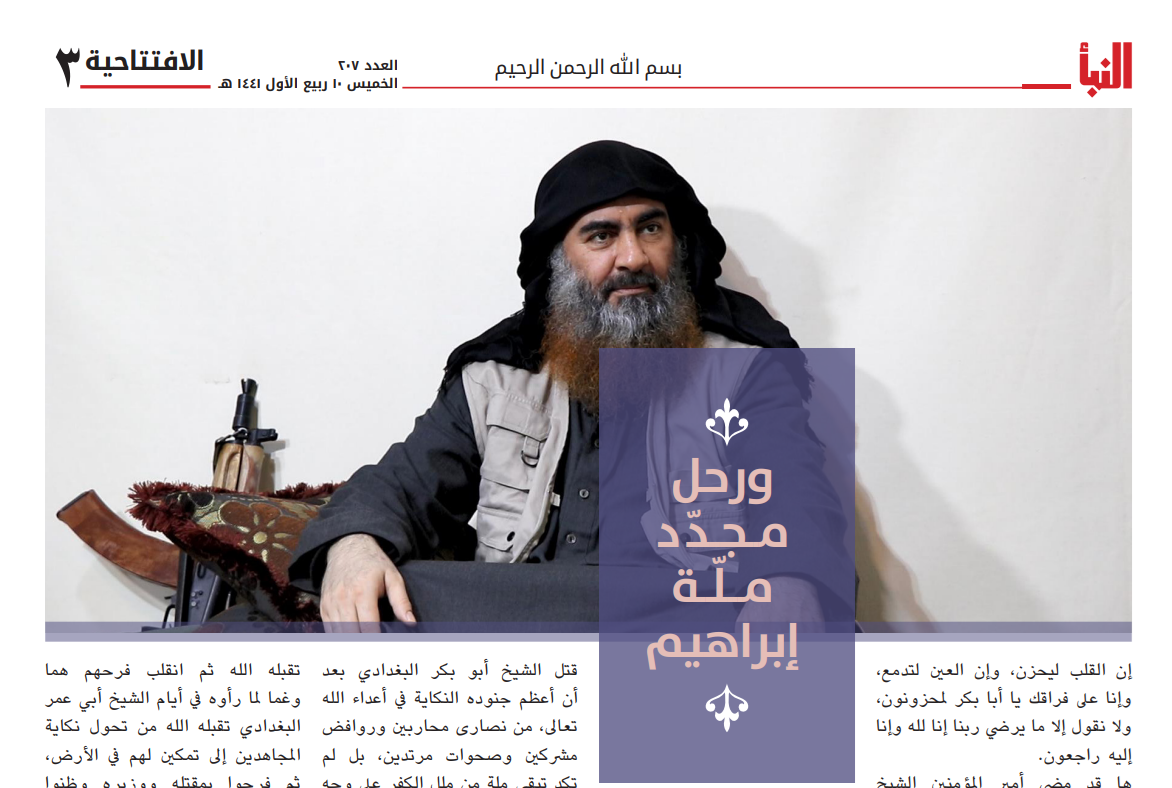
The 207th edition of Al-Naba, the weekly newsletter of the Islamic State (IS), published on 7 November 2019, devotes its main editorial to Ibrahim al-Badri (Abu Bakr al-Baghdadi), the first “Caliph” when the “Caliphate” was declared in June 2014, who was killed on 27 October 2019.
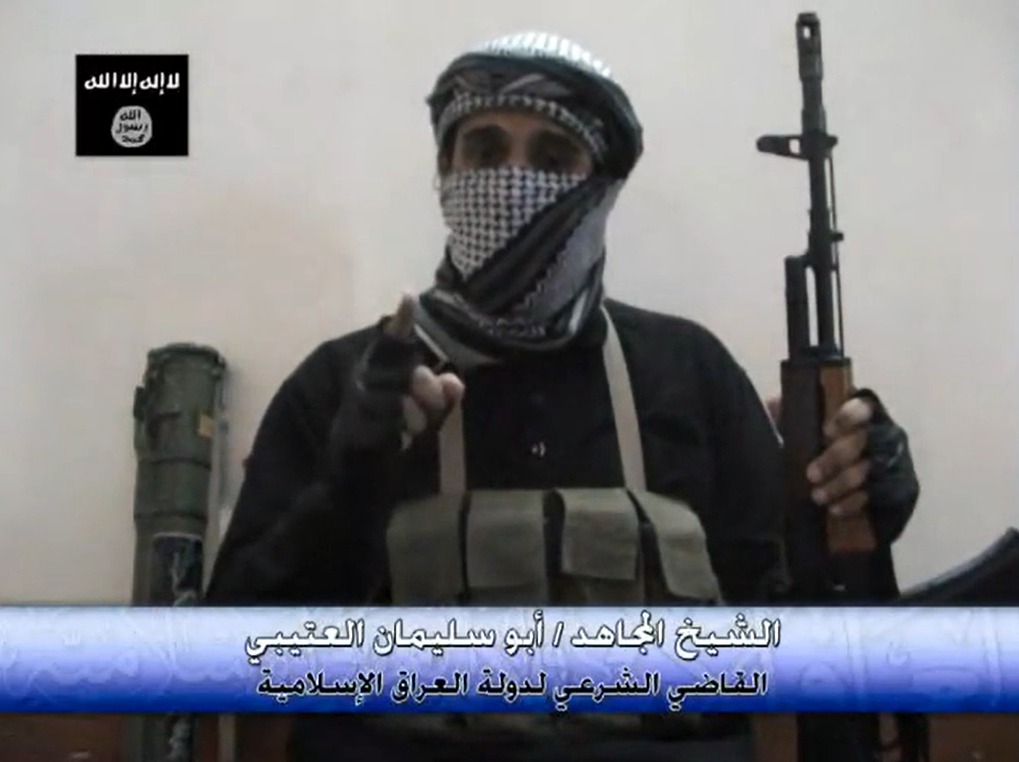
As explained in a previous post, Abu Sulayman al-Utaybi, the Chief Judge of the Islamic State of Iraq (ISI) from early April to late August 2007, has become an important character in many accounts of the history of the Islamic State movement because his abrupt removal from office was followed by his defection from ISI and a journey to Al-Qaeda’s central leadership in Pakistan, where he provided a testimony against his former bosses. If interested in an assessment of that testimony and the whole saga around how it has been used—by Western scholars, Al-Qaeda, and other critics of the Islamic State—check out the prior post. This post reproduces the transcript for what is, as far as I can tell, Abu Sulayman’s first media product for ISI, a twenty-minute video speech released by Al-Furqan Foundation for Media Production on 11 April 2007, entitled, “Why Do We Wage Jihad?”
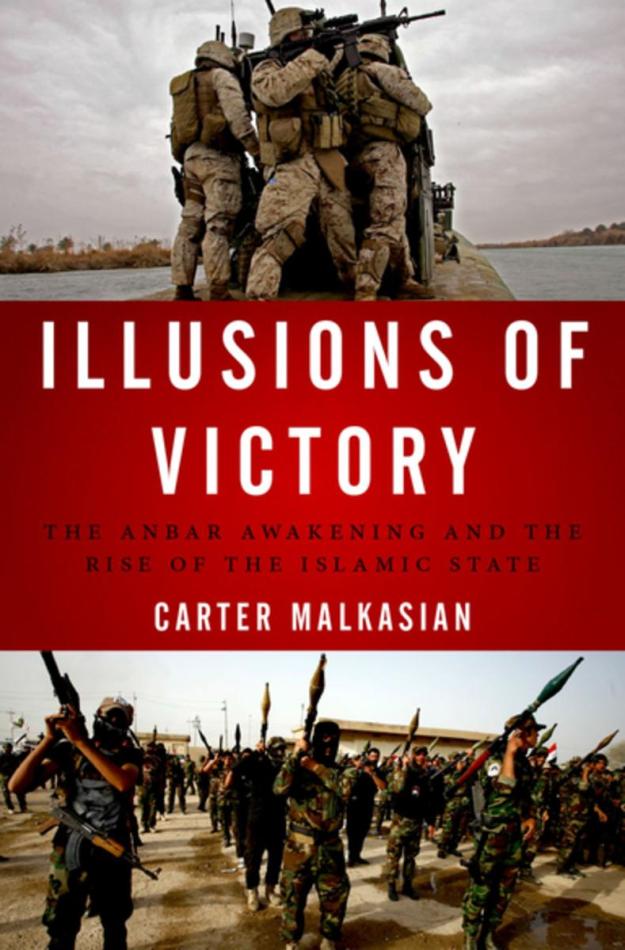
Carter Malkasian sets out in Illusions of Victory: The Anbar Awakening and the Rise of the Islamic State to upend the conventional understanding of the campaign against the Islamic State (IS) movement, known at the time as al-Qaeda in Iraq (AQI), in Anbar province of western Iraq. Continue reading →
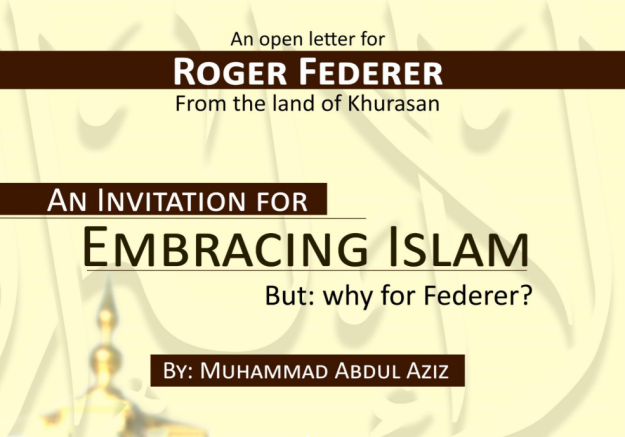
Al-Qaeda-linked Telegram channels circulated a surreal statement on 26 June 2018, an “open letter” inviting Roger Federer, the famous Swiss tennis player, to embrace Islam. The text of that statement is reproduced below. Continue reading →
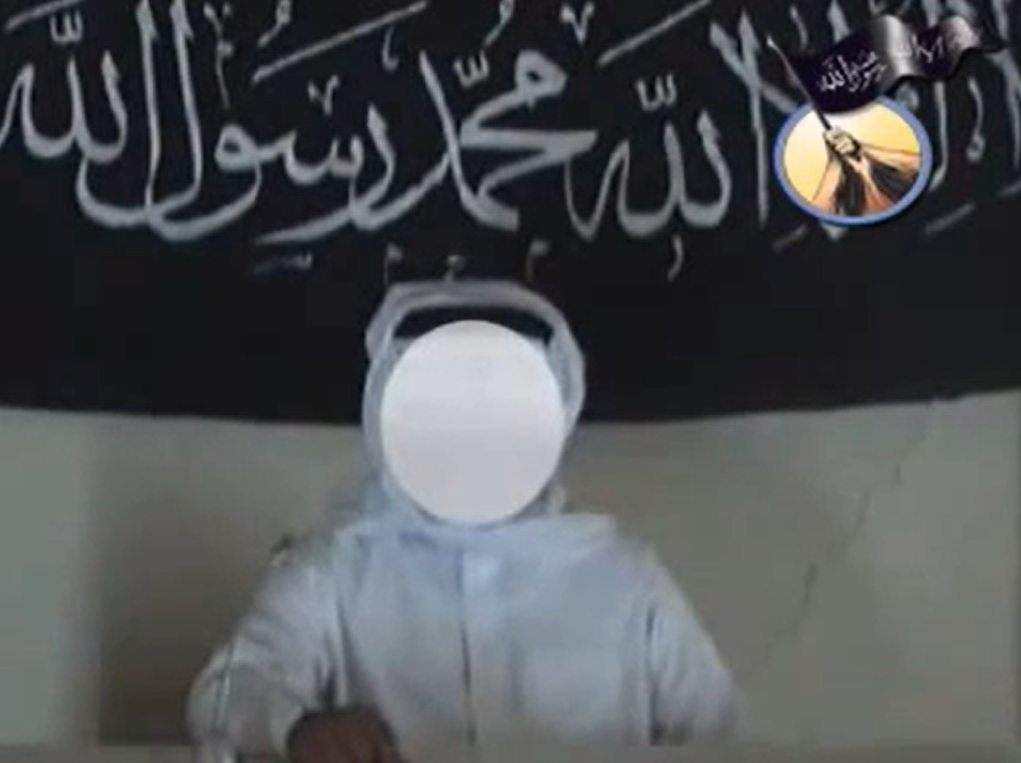
A video statement was put out on 15 October 2006 by the official spokesman of what was then called the Mujahideen Shura Council (al-Majlis Shura al-Mujahideen or MSM), the entity in which Al-Qaeda in Iraq (AQI) had nominally subsumed itself in January 2006, announcing the creation of the Islamic State of Iraq (ISI). The MSM spokesman, Muharib al-Jubouri, seen above, who had not been in the job long—the first AQI/MSM spokesman, Abu Maysara al-Iraqi, had been killed a few months earlier—was now the ISI spokesman,[1] and his speech made clear that a coalition of tribesmen and insurgents announced by MSM three days earlier, the Alliance of the Scented Ones (Hilf al-Mutayibeen), was also incorporated in this “State”. The transcript of Muharib’s speech, entitled (unimaginatively enough), “Announcement on the Establishment of the Islamic State of Iraq”, is translated below.
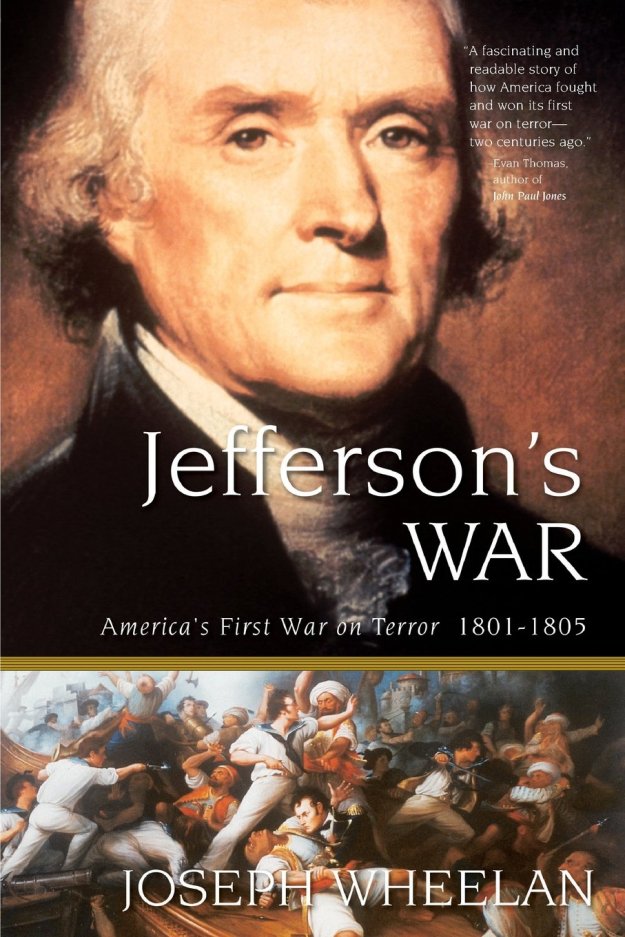
Review of ‘Jefferson’s War: America’s First War on Terror, 1801-1805’, by Joseph Wheelan
“The Terror,” raids by pirates who believed themselves to be on a holy mission, were “an accepted hazard of conducting foreign trade, much like hurricanes”. So notes Joseph Wheelan in his 2004 book, Jefferson’s War. That changed after a naval expedition by the United States put down the trade in the first two decades of the nineteenth century. Continue reading →
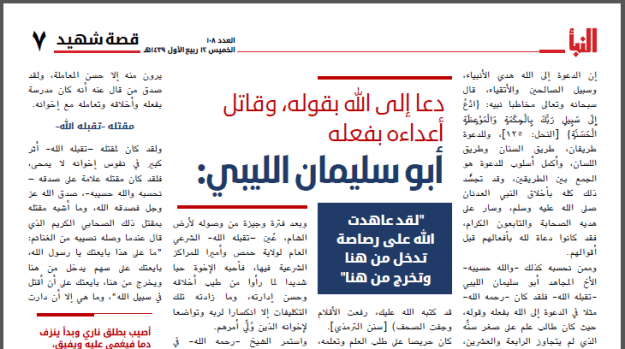
The latest edition of the Islamic State’s newsletter, Al-Naba 108, released on 1 December 2017, has a profile on page 7 of a fighter named Abu Sulayman al-Libi, a Libyan jihadist who came to Syria soon after the caliphate declaration in June 2014 and became the senior religious official in Homs. Abu Sulayman was killed in the fighting between IS and the pro-Asad coalition in the deserts of eastern Homs Province, near the T3 oil pumping station. This probably means Abu Sulayman was killed in the last days of September or the first few days of October during the IS counter-attack to the regime coalition’s push into Deir Ezzor. A rough translation of the Naba obituary is published below. Continue reading →
Abdul Munim al-Badawi (Abu Hamza al-Muhajir), the “war minister” of the Islamic State of Iraq, the predecessor to ISIS, made a brief five-minute speech on 30 April 2007, entitled “Nada ila Ulema al-Umma” (نِدَاءٌ إِلَى عُلَمَاءِ الأُمَّةِ). “Ulema” refers to Islamic scholars, sometimes translated as “clerics”, a slightly misleading comparison with Christianity, and “umma” refers to the worldwide community of Muslims, so the title of the speech translates as, “An Appeal to the Community’s Scholars”. Al-Badawi’s basic point—made at a time when the Islamic State movement was beginning to suffer under the pressure of the Surge and Sahwa—was to condemn the regional ulema for not supporting, and not having supported, the jihadists in Iraq against the Americans and the Shi’is. Implicitly, Al-Badawi is criticising the ulema for holding back Muslims in regional States who might otherwise have joined the Iraqi jihad as foreign fighters and suicide bombers, potentially making a difference to the Islamic State’s military fortunes. A rough translation of the speech is reproduced below.
The Islamic State’s June 2014 declaration that the areas it controlled were the restored “Caliphate” was seen by many as a novel development. In fact, “the State” was declared in October 2006. The next month, the predecessor of the Islamic State (IS), Al-Qaeda in Mesopotamia (AQM), dissolved itself, and a month after that the claim to statehood was expanded upon—while being wilfully ambiguous about the caliphal pretensions—in the first speech by the then-emir, Hamid al-Zawi (Abu Umar al-Baghdadi). Similarly, though confusion remains on the point, it was in this same period that the symbol of the Islamic State, its black flag, was established.



 Kyle Orton's Blog