Tag Archives: Islam

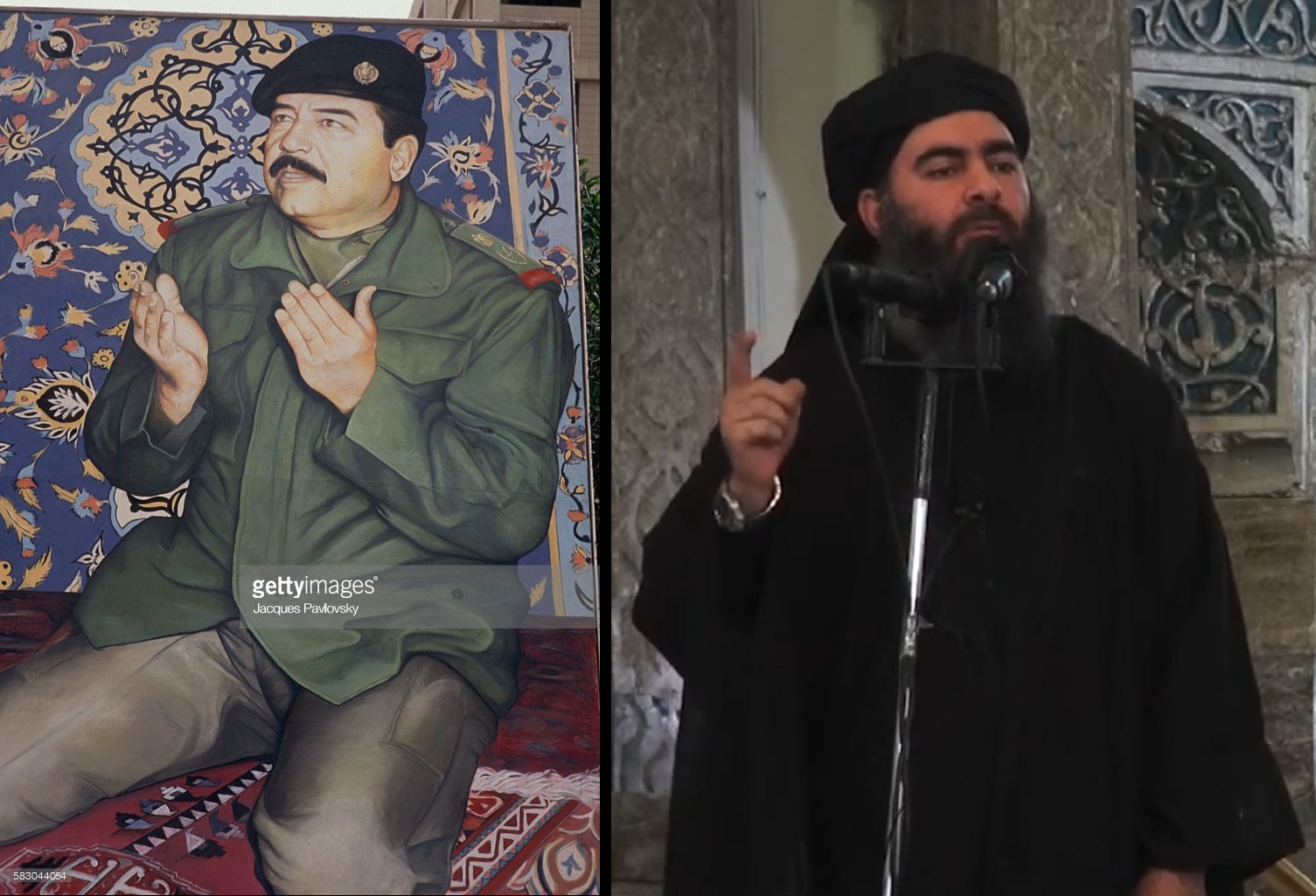
Saddam Hussein Prepared the Ground for the Islamic State

By Kyle Orton (@KyleWOrton) on April 26, 2016

This essay, written to tie together my work on the relationship between the Saddam Hussein regime and the Islamic State, was completed last summer and submitted to an outlet, where it entered a form of development hell. After giving up on that option late last year, the opportunity arose to get a shorter version published in The New York Times in December. But I procrastinated too long over what to do with the full essay and a recent change in my work situation means I no longer have the bandwidth to go through the process of finding it a new home, so here it is.

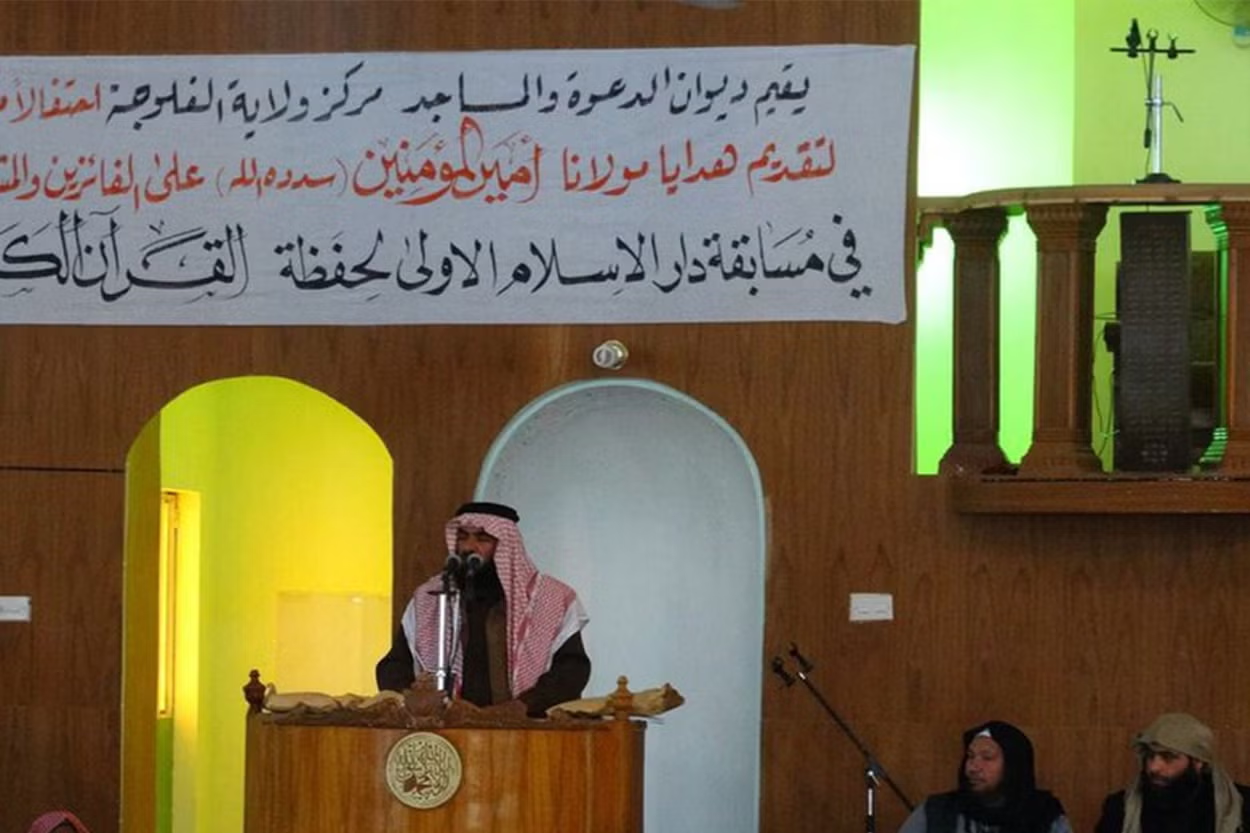
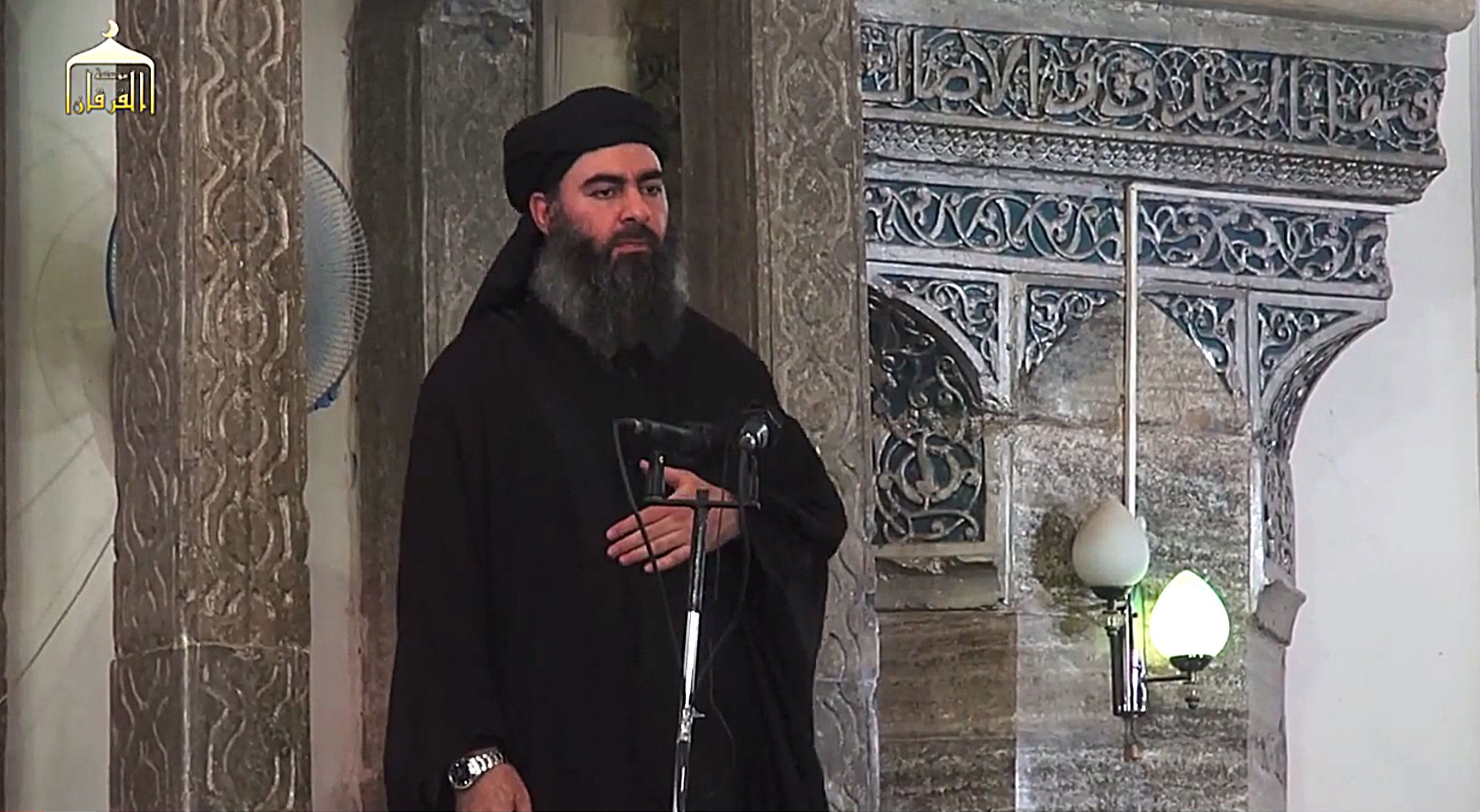
“Abu-Bakr al Baghdadi is a product of the last decade of Saddam’s reign,” argues Amatzia Baram, a scholar of Iraq. He is correct in at least three ways. First, in its last decade in power, the Iraqi Ba’ath regime transformed into an Islamist government, cultivating a more religious, sectarian population on which the Islamic State (ISIS) could draw. Part of Saddam Hussein’s “Faith Campaign” also involved outreach to Islamist terrorists, including al-Qaeda, which meant that the synthesis of Ba’athism and Salafism that fused into the Iraqi insurgency after the fall of Saddam was already well advanced by the time the Anglo-American forces arrived in Baghdad in 2003. Second, the ISIS leadership and military planning and logistics is substantially reliant on the intellectual capital grown in the military and intelligence services of the Saddam regime. And finally, the smuggling networks on which ISIS relies, among the tribes and across the borders of Iraq’s neighbours, for the movement of men and materiel, are directly inherited from the networks erected by the Saddam regime in its closing decade to evade the sanctions. The advantages of being the successor to the Saddam regime make ISIS a more formidable challenge than previous Salafi-jihadist groups, and one that is likely to be with us for some time.

Continue reading

Islamic State Denounces Those Who Make Palestine the Foremost Muslim Cause

By Kyle Orton (@KyleWOrton) on April 2, 2016

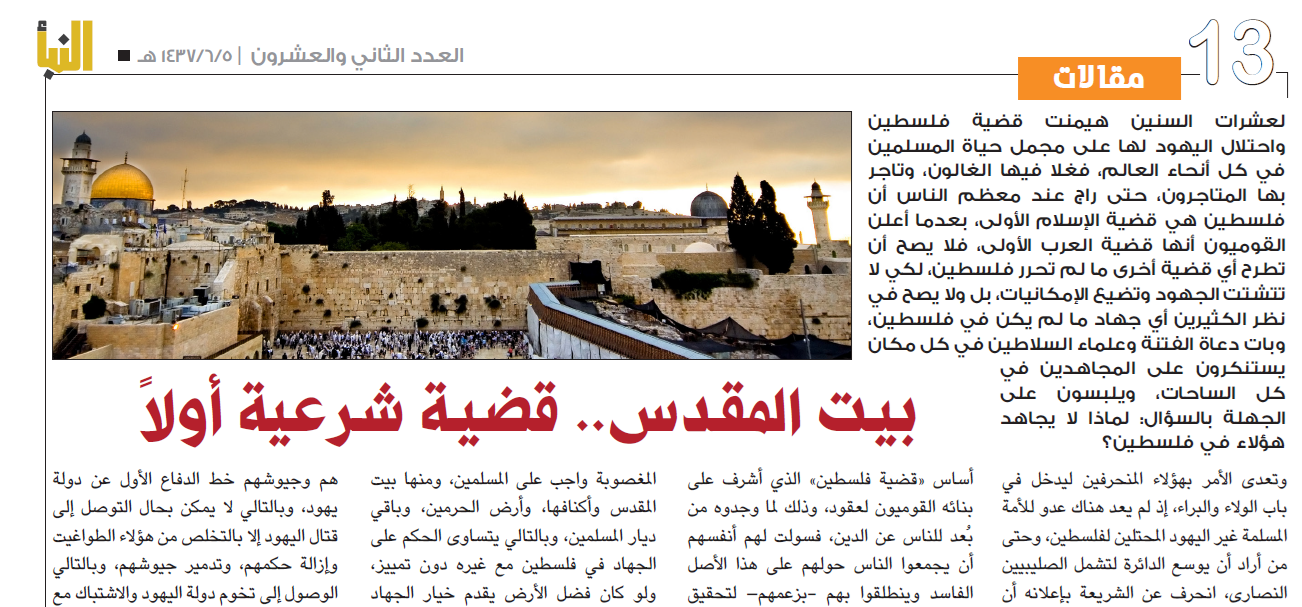
An article in the twenty-second edition of al-Naba, the Islamic State’s (IS) newsletter, released on 15 March 2016, explained why the group has not made fighting Israel a priority.

Continue reading

Islam’s Origins Make For An Extraordinary Story, But Not A Miracle

By Kyle Orton (@KyleWOrton) on March 20, 2016

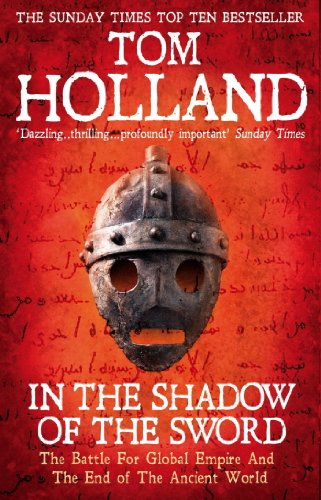
Tom Holland’s In the Shadow of the Sword: The Battle for Global Empire and the End of the Ancient World (2012) is a smooth read, a feat hardly foreordained in a book that exceeds 500 pages in length. Holland writes narratively, giving his interpretation of the most likely scenario of Islam’s origins—and then presents the extended evidence and debates in endnotes for those who wish to dig into the weeds. This has gotten him into trouble among haughtier reviewers for writing “pop history”, which appears to mean an exploration of the past that there is a danger people will want to read.

Continue reading

Islam’s First Terrorists

By Kyle Orton (@KyleWOrton) on August 24, 20151. The Assassins (book)
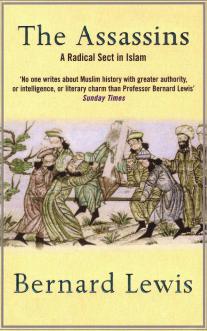
Book Review: The Assassins: A Radical Sect in Islam (1967) by Bernard Lewis

This review can be read in six parts: one, two, three, fourfive, and six.

Abstract

The fourth Caliph, Ali, was assassinated during a civil war that his supporters, Shi’atu Ali (Followers of Ali), lost to the Umayyads, who thereafter moved the capital to Damascus. The Shi’a maintained that the Caliphate should have been kept in the Prophet’s family; over time this faction evolved into a sect unto themselves, which largely functioned as an official opposition, maintaining its claim to the Caliphate, but doing little about it. Several ghulat (extremist) Shi’a movements emerged that did challenge the Caliphate. One of them was the Ismailis. Calling themselves the Fatimids, the Ismailis managed to set up a rival Caliphate in Cairo from the mid-tenth century until the early twelfth century that covered most of North Africa and western Syria. A radical splinter of the Ismailis, the Nizaris, broke with the Fatimids in the late eleventh century and for the next century-and-a-half waged a campaign of terror against the Sunni order from bases in Persia and then Syria. In the late thirteenth century the Nizaris were overwhelmed by the Mongols in Persia and by the Egyptian Mameluke dynasty which halted the Mongol invasion in Syria. The Syrian-based branch of the Nizaris became known as the Assassins, and attained legendary status in the West after they murdered several Crusader officials in the Levant. Attention has often turned back to the Assassins in the West when terrorist groups from the Middle East are in the news, but in the contemporary case of the Islamic State (ISIS) the lessons the Nizaris can provide are limited. Continue reading

Islam’s First Terrorists, Part 6

By Kyle Orton (@KyleWOrton) on August 22, 2015

This is the final part of a six-part series. Read parts one, two, three, four, and five, or read the whole essay.

Masyaf fortress, the headquarters of the Nizari Ismailis (The Assassins) in Syria

Masyaf fortress, the headquarters of the Nizari Ismailis (The Assassins) in Syria

Conclusion

The Nizari Ismailis did not invent assassination, of course; only lent it their name. The Ismailis were “part of a long tradition that goes back to the beginnings of Islam … of popular and emotional cults in sharp contrast with the learned and legal religion of the established order.” Still, the Nizaris did rely on the Holy Law. The ideal of Islamic governance might be authoritarian, but it is not arbitrary; if a ruler crosses the shari’a it becomes a duty to resist. This element became gradually more marginal as the religion formed into a State and Empire, but it was there and many other sects had called on it in their opposition to the prevailing regimes. The Nizaris were the first to call up this tradition of righteous rebellion and combine it with an effective opposition organization.

In their use of conspiracy, assassination, and even the ceremonial nature of the murders and the weapon-cult, the Assassins were hardly unique. But they might well be the first terrorists: those who, at an overwhelming disadvantage in conventional terms, used unconventional means in a planned, long-term campaign of targeted violence as a political weapon with the intention of overturning the established order. Continue reading

A Myth Revisited: “Saddam Hussein Had No Connection To Al-Qaeda”

Book Review: The Connection: How al-Qaeda’s Collaboration With Saddam Hussein Has Endangered America (2004) by Stephen Hayes

By Kyle Orton(@KyleWOrton) on June 21, 2015


More than twelve years after the fall of Saddam Hussein, the conventional wisdom is that Saddam’s regime had no connection with al-Qaeda, and such “evidence” as was adduced was tortured out of Ibn al-Shaykh al-Libi in the Bush administration’s desperation to cobble together a casus belli. But if one puts ideology on hold, and considers the evidence of Stephen Hayes’ The Connection, a rather different picture emerges. Continue reading

Book Review: A Shameful Act (2006) by Taner Akcam

By Kyle Orton (@KyleWOrton) on June 9, 2015

1

This is the complete review. It has previously been posted in three parts: Part 1 on the question of whether the 1915-16 Armenian massacres constitute genocide; Part 2 on the post-war trials and the Nationalist Movement; and Part 3 gives some conclusions on what went wrong in the Allied efforts to prosecute the war criminals and the implications for the present time, with Turkey’s ongoing denial that genocide took place and the exodus of Christians from the Middle East.

A Question of Genocide

The controversy over the 1915-16 massacres of Armenian Christians in the Ottoman Empire is whether those acts constitute genocide. Those who say they don’t are not the equivalent of Holocaust-deniers in that they do not deny that the massacres happened; what they deny is that the massacres reach the legal definition of genocide. Their case is based on three interlinked arguments:

  • Unlike the Nazi Holocaust where a defenceless population was murdered only for its identity, the Armenians were engaged in a massive armed revolt, and this is why the Ottoman government decided to deport them.
  • The intent of the Ottomans was not massacre but the removal of the Armenians, who had sided with one foreign invading power (Russia) and who were showing signs of collaborating with another (Britain), from the militarily sensitive areas as Turkey suffered a two-front invasion in early 1915.
  • While terrible massacres of Armenians, plus starvation and the cold, took maybe a million lives during the deportations—the numbers are very uncertain, again unlike the Holocaust—when the Armenians reached their destinations in Syria and Iraq, which were also part of the Ottoman Empire, they were well-treated and allowed to rebuild their lives, which would not have been the case had the Ottomans intended their destruction.

Taner Akcam’s A Shameful Act: The Armenian Genocide and the Question of Turkish Responsibility presents evidence to undermine every one of these arguments. Continue reading

Book Review: A Shameful Act (2006) by Taner Akcam, Part 3

By Kyle Orton (@KyleWOrton) on June 7, 2015

Part 1 of this review dealt with the question of whether the 1915-16 Armenian massacres constitute genocide. Part 2 was about the post-war trials and the Nationalist Movement. This part gives some conclusions on what went wrong in the Allied efforts to prosecute the war criminals and the implications for the present time. Alternatively, the complete review is available here.

Continue reading

Book Review: The Muslim Discovery of Europe (1982) by Bernard Lewis

By Kyle Orton (@KyleWOrton) on May 7, 2015

1

With the triumph of relativism and the current economic woes of the West, the sense that Western civilization is unique and in some respects—to use an old-fashioned word—better than the alternatives, and worth defending and exporting, is waning. But Bernard Lewis’ The Muslim Discovery of Europe suggests a longer view in which Europe, while containing all the faults of previous civilizations, has been one of the few to begin the process of correcting those faults, and has corrected many more than any other civilization.

One feature of European civilization that stands out as unique is curiosity. Continue reading

Book Review: Introduction to the Qur’an (1953) by Richard Bell

By Kyle Orton (@KyleWOrton) on January 13, 2015

4

Richard Bell’s Introduction to the Qur’an is, at less than 200 pages, a brief and easily-digestible explanation of the context in which Islam’s “holy” book arose, and the problems of reconciling theological orthodoxy with historical accuracy. More than six decades after publication, the book remains influential in scholarship of the Qur’an. Continue reading