By Kyle Orton (@KyleWOrton) on 3 September 2022
Islamic State Spokesman Counters “Accusations” Against the Group and Explains its Purpose in Syria
Leave a reply
By Kyle Orton (@KyleWOrton) on 3 September 2022
By Kyle Orton (@KyleWOrton) on 31 August 2022

Islamic State fighters from Wilayat Sinai in Egypt || Al-Naba 348, p. 5
By Kyle Orton (@KyleWOrton) on 24 August 2022

Area on the banks of the Tigris where the cadets of Camp Speicher were massacred by the Islamic State || Scott Peterson/The Christian Science Monitor
By Kyle Orton (@KyleWOrton) on 16 August 2022
By Kyle Orton (@KyleWOrton) on 18 June 2022
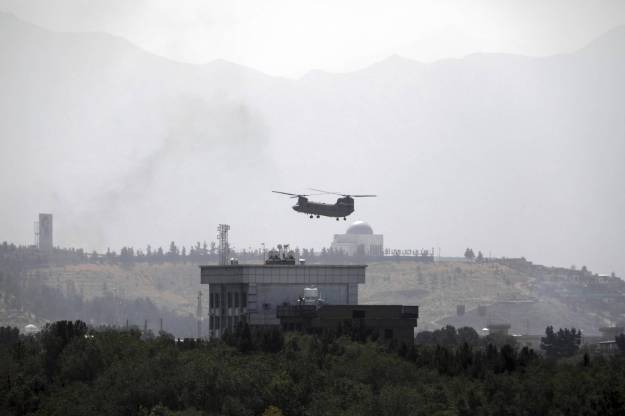
A U.S. helicopter above the American Embassy in Kabul, 15 August 2021 | AP
By Kyle Orton (@KyleWOrton) on 31 March 2022
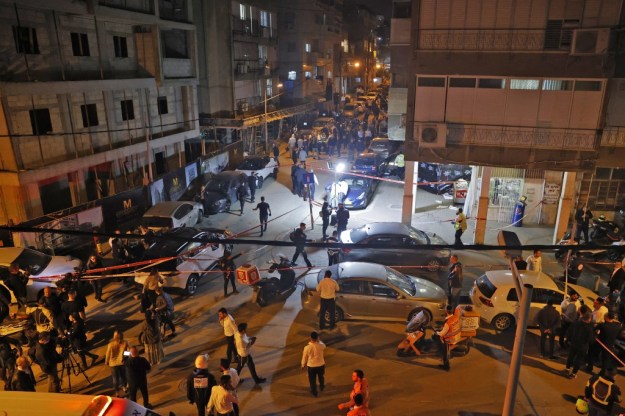
Israeli security forces reacting to the terrorist attack in Bnei Brak near Tel Aviv, 29 March 2022 || Photo by JACK GUEZ / AFP
Israeli Prime Minister Naftali Bennett has said his country is “facing a new wave of terrorism” after five attacks in the last ten days have killed eleven people. The Islamic State (IS) has effectively admitted to carrying out two of the atrocities, the first time in five years the terrorist group has carried out attacks in the Jewish state. This hiatus, partly a reflection of the fact that, unlike some other Islamist extremists, IS does not make the anti-Israel cause a central plank of its propaganda, also reflects the relatively small inroads IS’s ideology has made to this point among Palestinian and Israeli Arabs. Whether this is now changing is unclear. Continue reading
By Kyle Orton (@KyleWOrton) on 15 March 2022
By Kyle Orton (@KyleWOrton) on 22 February 2022

Kabul, the capital of Afghanistan, fell to jihadists on 15 August 2021, and this has emboldened the jihadist movement across the world, providing it with a morale boost and a model, as well as renewing the terrorist safe haven that incubated 9/11. Continue reading