Tag Archives: jihadism

Clerics Put Forward an Initiative to Unite Jihadists in Syria

By Kyle Orton (@KyleWOrton) on 27 October 2017

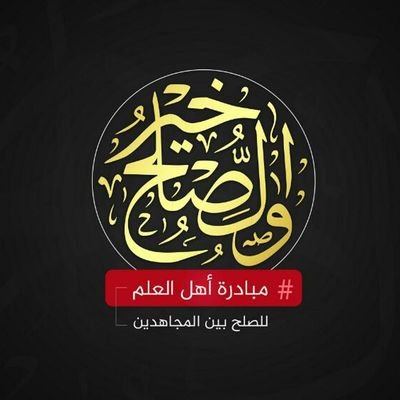
It was announced on 25 October that a unity proposal had been formulated to resolve the dispute in Syria between Hay’at Tahrir al-Sham (HTS), its former command organization, al-Qaeda, and the jihadi splinter faction from Ahrar al-Sham, Jaysh al-Ahrar, which has broken between the two. The initiative was backed by major jihadi-salafist clerics, Issam al-Barqawi (Abu Muhammad al-Maqdisi) and Umar Othman (Abu Qatada al-Filistini), and invited the support of all jihadi “scholars”. The text of the proposal, translated by Al-Maqalaat, is reproduced below, with some editions to transliteration and syntax. Continue reading

Don’t Celebrate the Fall of Raqqa Just Yet

By Kyle Orton (@KyleWOrton) on 24 October 2017

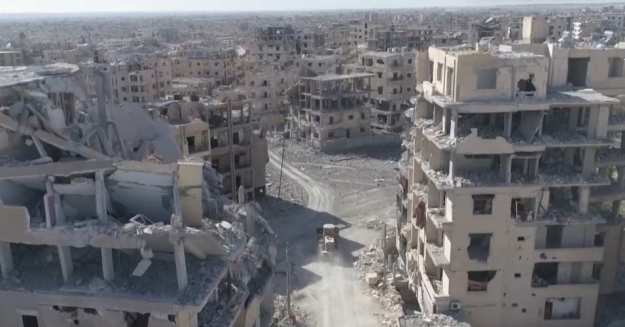
Raqqa city has been destroyed (image source)

The Islamic State (IS) captured Raqqa city, its first provincial capital, in January 2014. Six months later, IS declared its caliphate and Raqqa became its de facto capital. Last Tuesday, the partner force of the US-led anti-IS Coalition, the “Syrian Democratic Forces” (SDF), entered the city centre in Raqqa. A deal had evacuated most of the remaining jihadists over the prior weekend, though a determined core remained and still held about 10 per cent of the city. The caliphate is crumbling and the Coalition says IS has 6,500 fighters left. According to the Coalition, this puts IS “on the verge of a devastating defeat”. Unfortunately, there is no reason to believe this is true. To the contrary, IS is more powerful at this point, in theatre, even after the military reverses inflicted on it by the Coalition, than in the period after the “defeat” of 2008, and the outlook is more favourable now to IS. Moreover, IS now has an international reach, physically and ideologically, it did not previously possess. Continue reading

Russia Takes Advantage of the Schism in NATO Between America and Turkey

Originally published at The International Business Times

By Kyle Orton (@KyleWOrton) on 9 October 2017

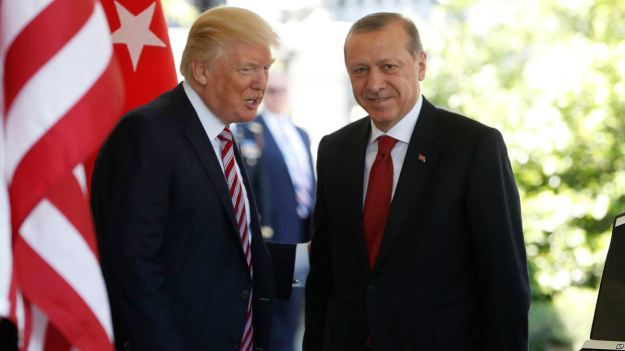
President Donald Trump meets Turkey’s President Recep Tayyip Erdogan at the White House, 16 May 2017. (AP Photo/Pablo Martinez Monsivais)

Relations between Turkey and the United States hit a new low on Sunday 8 October. The U.S. State Department suspended “all non-immigrant visa services at all U.S. diplomatic facilities in Turkey”.

The Turkish government retaliated—citing concerns about the “commitment of the government of the United States to the security of the Turkish Mission facilities and personnel”—by “suspend[ing] all non-immigrant visa service[s] at all Turkish diplomatic facilities in the U.S..” Continue reading

By Strengthening Iran, the Coalition Has Ensured the Islamic State’s Survival

Published at The Telegraph

By Kyle Orton (@KyleWOrton) on 6 October 2017

The “defeat” of the Islamic State (ISIL), signified by its eviction from Mosul in July, its impending loss of Raqqa, and an apparent resurgence of Bashar al-Assad’s regime in Syria, seemed to augur a new era of stability for the Middle East. The jihadists would be gone and Iranian-backed governments in Syria and Iraq consolidated.

True, Assad murdering those who resisted him with poison gas and concentration camps, and hiding the evidence by installing crematoria, would nag at our conscience. But foreign policy is a cold-blooded business and it has been decreed that ISIL is the greatest—really the only—threat emanating from the region.

It would not be justice, but it would be peace. Or something like that. Continue reading

Islamic State Leader Says the Show Goes On

By Kyle Orton (@KyleWOrton) on 28 September 2017

The leader of the Islamic State (IS), Ibrahim al-Badri (Abu Bakr al-Baghdadi), released a 46-minute audio statement today, his first statement for about eleven months. Entitled, “Sufficient Is Your Lord As A Guide And A Helper” or “Your Lord Suffices as Guide and Helper”, it is al-Badri’s twelfth speech since he became leader of the IS movement in 2010 and the seventh since IS declared the restoration of the caliphate. Continue reading

Iraqi Kurdistan’s Independence Referendum and the West’s Middle East Strategy

By Kyle Orton (@KyleWOrton) on 27 September 2017

The Kurdistan Regional Government (KRG) held a referendum on 25 September, and voted overwhelmingly—with nearly 93% in favour—for independence. The comparison with Brexit might have been overworked by all sides, but there was a familiarity: while the result itself was not a shock, the fact of the referendum itself came as a surprise to many in what one might call the global elite, which lectured in that endearing way that had such success in deterring Brits a year ago. Then as now, the effect was, if anything, to stoke the bloody-mindedness of a population that had considerable qualms but had enough pride to repudiate being harangued in those accents. Still, as with Brexit, it wasn’t as if the naysayers didn’t have a case, and now comes the really difficult work. Continue reading

One More Time on Saddam and the Islamic State

Originally published at The Henry Jackson Society

By Kyle Orton (@KyleWOrton) on 2 September 2017

The most recent issue of Perspectives on Terrorism had a paper by Ronen Zeidel entitled, ‘The Dawa’ish: A Collective Profile of IS Commanders’, which was “the first attempt to provide a comprehensive collective profile of commanders and leaders of the Islamic State (IS)”. Based on “an inventory of over 600 names”, the paper assessed the nationality, ethnicity, and tribal origins not just of the very senior IS commanders, but those lower down, a novel and much-needed line of investigation. Zeidel found that these commanders of the IS movement are or were overwhelmingly Iraqi and Sunni Arab, with an important Turkoman contingent.

Zeidel’s findings are important for drawing attention again to the local-revolutionary character of an organisation that gets a great deal of attention for its foreign fighters and external attacks, especially in the West, but which only a recently acquired global reach—and, indeed, only recently needed to: until 2011, the West was easily reachable since it had troops on the ground in Iraq, so the incentive to invest resources in creating a foreign terrorist apparatus was minimal.

One small part of Zeidel’s work has created something of a storm, however. Zeidel gives the occupation held by these commanders and, for those where this was known, 72% of them were former regime elements (FREs) from the dictatorship of Saddam Husayn. This reignited the argument over how important the FREs have been to IS. Continue reading

The Syrian Regime Helped the Islamic State Murder Americans

By Kyle Orton (@KyleWOrton) on 26 August 2017

The Asad family regime in Syria has long been known to have had a key role in the formation and sustenance of the Islamic State (IS) and its predecessors. Without the Asad regime’s assistance, the IS movement could not have hoped to pose such a challenge to the Iraqi government, regional states, and Western interests and citizens. This has been underlined in a series of Federal Court rulings in the United States that have brought together evidence on this matter. In April, another such ruling found the Asad regime liable in the murder of three more Americans. Continue reading

Whither Al-Qaeda in Syria?

By Kyle Orton (@KyleWOrton) on 15 August 2017

A statement from Issam al-Barqawi, far better known as Abu Muhammad al-Maqdisi, the Jordan-based Palestinian jihadi-salafist cleric, was released in English on Telegram on 15 August 2017. The statement dealt with his view of Hay’at Tahrir al-Sham (HTS), highlighting again the questions around this Syrian-based jihadi group and its relations with al-Qaeda. Continue reading

Iran and Russia Are Using the Taliban Against the West

By Kyle Orton (@KyleWOrton) on 5 August 2017

Taliban jihadists (image source)

The New York Times reported on the growing closeness of relations between the governments in Iran and Russia, and the Taliban movement in Afghanistan, something that became especially salient earlier this year and which has been visible for at least two years. Continue reading