Tag Archives: KGB

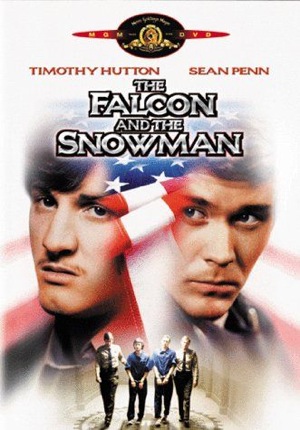
Film Review: The Falcon and the Snowman (1985)

By Kyle Orton (@KyleWOrton) on August 25, 2015

1

In 1974, former Catholic seminary student Christopher Boyce (played by Timothy Hutton) takes a job at TRW, a Southern California aerospace firm, where he is read on to highly classified programs related to the then-new technology of satellites. Through a childhood friend, drug dealer, and minor smuggler, Andrew Daulton Lee (played by Sean Penn), Boyce begins selling secrets to Soviet intelligence based in the Embassy in Mexico.

Credit should be given for the graphics. While released in the mid-1980s, the clothing (and hair) is clearly of 1970s vintage. But the film’s narrative is direly flawed—both in what it does say and what it doesn’t.
Continue reading

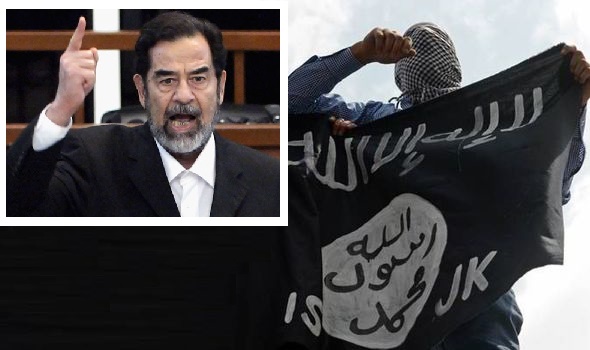
A Response to Criticism: Why the Ex-Saddamists in the Islamic State Matter

By Kyle Orton (@KyleWOrton) on August 10, 2015

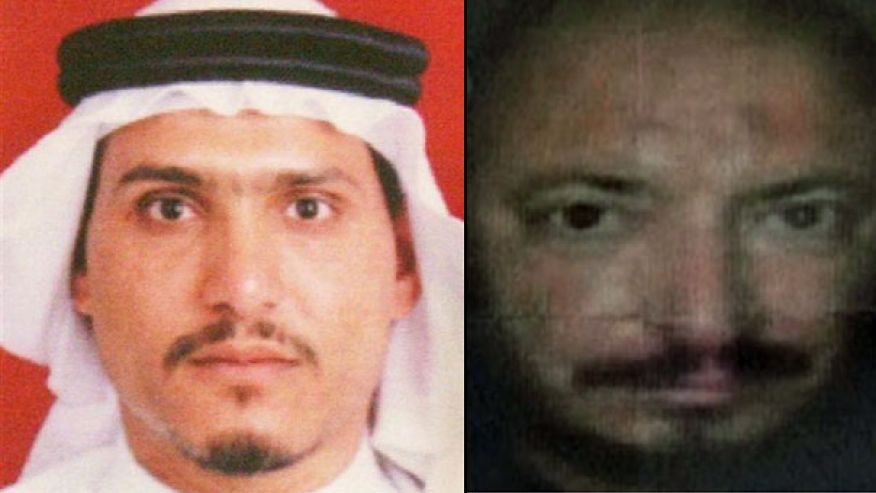
Abu Ayyub al-Masri and Abu Omar al-Baghdadi: ISIS's co-leaders, 2006-10

Abu Ayyub al-Masri and Abu Omar al-Baghdadi: ISIS’s co-leaders, 2006-10

In the Jerusalem Post on Sunday, Seth Frantzman wrote in opposition to the idea that the ex-military-intelligence officials of the Saddam Hussein regime had contributed significantly to the success of the Islamic State (ISIS) in taking over large swathes of Syria and Iraq. Much of what Frantzman says, about the overestimation of ISIS and Iran’s growing Imperium pushing Sunnis into ISIS’s camp, is unarguable, but he is in error about the time-frame of the ex-Saddamists’ migration into ISIS and underestimates their impact. Continue reading

Russia’s Secret Police

By Kyle Orton (@KyleWOrton) on August 1, 20151

Charles Ruud’s and Sergei Stepanov’s Fontanka 16: The Tsar’s Secret Police traces the evolution of political policing in Russia, focusing on the Okhranka, the final incarnation of the secret police before the Russian Revolution in 1917, and along the way puts paid to a whole array of myths about the pre-Bolshevik Russian government, especially as regards the Jewish Question.

The growth of the Russian political police occurred in four major stages. The first phase lasted from the founding of the Russian State by Ivan the Terrible (1533-84) after the expulsion of the Tatars to the opening of the “Third Section” in 1826 as a reaction to the Decembrist revolt the previous year—the first time the Imperial State security services were housed at Fontanka 16 in St. Petersburg—which intended to (and succeeded in, as 1848 would demonstrate) extirpate the liberal spirit that challenged the autocracy. The third phase saw the Third Section become the Department of Police at the onset of a crackdown after the assassination of Alexander II in 1881, who had enacted broad liberal reforms on censorship and serfdom. The elite secret police force grew out of the palace guard, becoming known as the Okhranka (though this is more usually rendered in English as Okhrana). The final phase began in 1906, after the 1905 revolution, when the Okhranka worked to stop a liberal-radical coalition building. Continue reading

Demise of an ex-Saddamist in Libya

By Kyle Orton (@KyleWOrton) on July 21, 2015

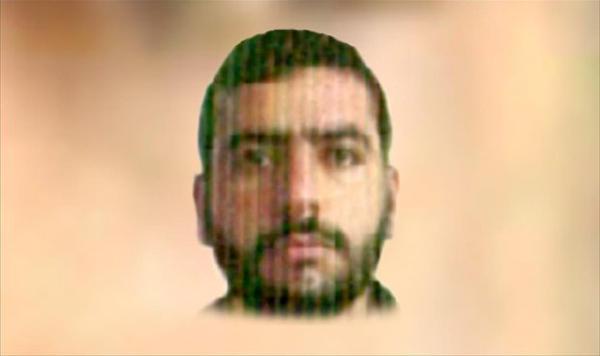
Abu Nabil al-Anbari

Abu Nabil al-Anbari

An Islamic State (ISIS) commander was killed in Libya in mid-June, The Daily Beast reported yesterday, after being “paraded … through the streets amid the taunts of onlookers, and then walked … to a gallows, where he was hanged.” [SEE UPDATES] This occurred in the eastern city of Derna, long a hotbed of Islamic militancy. The crucial thing about the “executed” ISIS operative is that he was an Iraqi and an FRE—a former (Saddam) regime element—who had been dispatched to Libya last year to oversee the cultivation of an ISIS branch.

Continue reading

Saddam’s Henchmen Were Fanatics Long Before They Joined The Islamic State

By Kyle Orton (@KyleWOrton) on July 20, 2015

Published at National Review

After long neglect, the media has finally recognized the role of the FREs—former (Saddam) regime elements—within the Islamic State (ISIS). But the pendulum has now swung too far: Some reports are now claiming that the FREs have transformed the leader of the terror army, Abu Bakr al-Baghdadi, into nothing more than a front man for the Baathists.

These suppositions are mistaken. Most FREs within ISIS have not been ideologically Baathists for a long time. Continue reading

Does Iran Support The Islamic State?

By Kyle Orton (@KyleWOrton) on May 26, 2015

Qassem Suleimani, Iran's spymaster, believed in some MidEast conspiracy theories to control ISIS

Qassem Suleimani, Iran’s spymaster, believed in some Mid-East conspiracy theories to control ISIS

In 2010, Farzad Farhangian, an Iranian diplomat based in Belgium, defected to Norway. Farhangian has now emerged with the extraordinary accusation that the Islamic Republic of Iran is controlling the Islamic State (ISIS) and using it as part of Tehran’s war against the Gulf States, especially Saudi Arabia. Farhangian’s accusations are lurid and (literally) incredible, but the question of Iran’s role in ISIS’ creation and growth, and Iran’s manipulation of ISIS to further its own ends, is one well worth asking. Continue reading

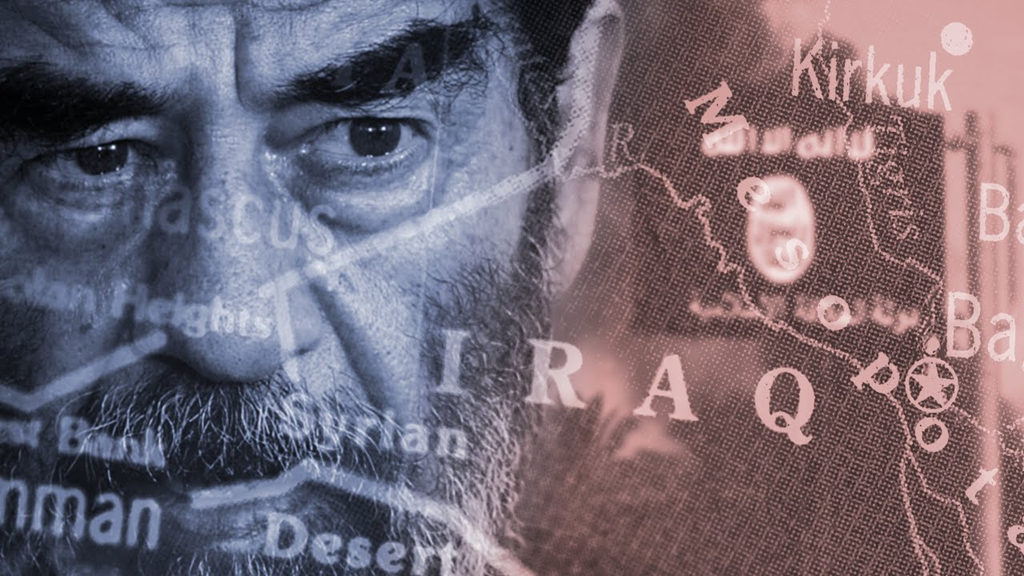
Saddam Hussein’s Regime Produced The Islamic State

By Kyle Orton (@KyleWOrton) on April 21, 2015

1

Having presented the evidence that Saddam Hussein Islamized his foreign policy and then Islamized his regime, above all with the Islamic Faith Campaign, beginning in June 1993 that tried to fuse Ba’athism with Salafism, encouraging (and keeping under surveillance) a religious revival in Iraq that redounded to the benefit of the regime’s legitimacy and support, I wanted to look at what this history means for Iraq and the wider region now.

I pointed out in October that the “military strength” of the Islamic State (ISIS) “comes from the remnants of Saddam Hussein’s military-intelligence apparatus and the Caucasus’ Salafi-jihadists.” Continue reading

Who Killed The Anti-Assad Imam In London?

By Kyle Orton (@KyleWOrton) on April 9, 2015

Abdul Hadi Arwani

Abdul Hadi Arwani

Abdul Hadi Arwani, a Syrian-born imam, was found shot dead in his car on Tuesday in Wembley, northwest London. The British police are still refusing to officially name Arwani, but his friends and supporters have done so. Arwani leaves behind six children.

There are many possibilities for who killed Arwani. As the manager of a construction firm, it could be a deal gone wrong. The involvement of anti-terrorism police in the investigation into Arwani’s murder could indicate a far-Right anti-Muslim assailant. However, a source close to the investigation said that Arwani was struck down in an operation that had all the hallmarks of a “State-sponsored assassination“. To find that the long arm of Bashar al-Assad’s mukhabarat had caught up with Arwani would hardly be a surprise. Continue reading

ISIS: America’s Alliance with Iran is Hampering the Fight Against Terror

By Kyle Orton (@KyleWOrton) on February 7, 20151

Published at Left Foot Forward

Book Review: ISIS: Inside the Army of Terror (2015) Michael Weiss and Hassan Hassan

ISIS: Inside the Army of Terror, by Michael Weiss and Hassan Hassan, is brilliantly easy to read. Concise yet thorough the book charts the history of a group, “[a]t once sensationalized and underestimated,” that is simultaneously a terrorist organisation, mafia, conventional army, sophisticated intelligence-gathering apparatus, propaganda machine and the remnants of the Saddam Hussein regime which controls an area the size of Britain in the heart of the Middle East. Continue reading

Black September: the PLO’s Deniable Terrorism Wing

By Kyle Orton (@KyleWOrton) on January 19, 2015

A Black September terrorist appears on the balcony in the Olympic Village in Munich, September 1972 (photo via AP)

The Black September group was formed in September 1971, ostensibly as a splinter from the Palestine Liberation Organization (PLO), but in reality the PLO retained control of Black September and used it to carry out terrorist operations that raised the Palestinian organisations’ profile, without staining the PLO with these atrocities. Continue reading