Tag Archives: NATO

America’s Search for Stability in Syria is Hostage to the Turkey-PKK War

This article was published at Ahval

By Kyle Orton (@KyleWOrton) on 13 November 2018

Joint patrols begin around Manbij (image source)

The United States has taken steps Syria in recent months that suggest a shift towards reconciliation with Turkey. Even if this is so, however, there is still such a deep divide over strategic outlook that these steps could be easily reversed, opening a new round of uncertainty in northern Syria as 2018 draws to a close. Continue reading

Can the Europeans Help Reach Peace in Syria?

This article was published at The New Turkey

By Kyle Orton (@KyleWOrton) on 27 October 2018

Today in Istanbul, four governments—Turkey, Russia, Germany, and France—are meeting for a summit over Syria, attempting to consolidate the Sochi Agreement signed by Russia and Turkey over Idlib, and re-invigorate the international political process. There is little reason to think that these talks can succeed on either front. Continue reading

The Turkey-Saudi Rivalry for America’s Attention

This article was published at Ahval

By Kyle Orton (@KyleWOrton) on 26 October 2018

The Turkish government’s recent record in foreign policy is hardly a success story. It is therefore noteworthy that, so far, Ankara has handled the murder of Saudi journalist Jamal Khashoggi with a singular deftness. Whether Turkish President Recep Tayyip Erdoğan can see this through is now the key question. Continue reading

The State of Play in Syria and Iraq on the Eve of the Idlib Offensive

By Kyle Orton (@KyleWOrton) on 29 August 2018

Two ideas that have become quite prevalent are that the Islamic State is defeated or on its way to defeat and that the Syrian war is winding down. Both are gravely mistaken. Continue reading

The Legacy of Kofi Annan

By Kyle Orton (@KyleWOrton) on 19 August 2018

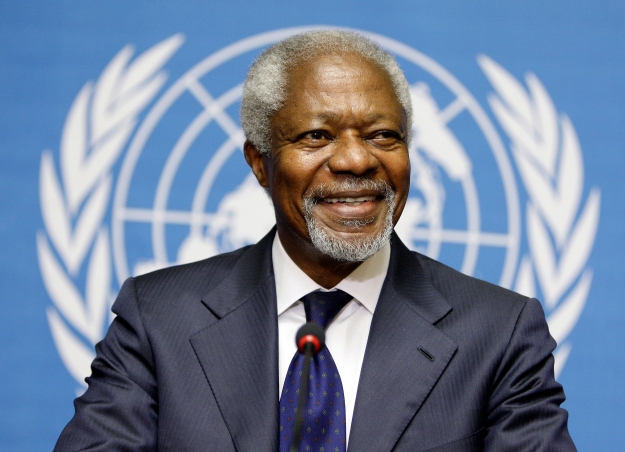
Kofi Annan (picture source)

Kofi Annan, the Secretary-General of the United Nations between 1997 and 2006, died yesterday aged 80. Annan and the U.N. received the Nobel Peace Prize in 2001, and he was credited with “bringing new life to the organization” and emphasising “its obligations with regard to human rights”. The reality was quite different, and Annan’s disastrous record was hardly confined to his time at the helm. Both before (as head of the U.N. peacekeeping department) and after (as U.N. and Arab League envoy to Syria), Annan presided over some of the institution’s worst catastrophes. Continue reading

The Outlook for the America-Turkey Relationship is Bleak

By Kyle Orton (@KyleWOrton) on 15 August 2018

America’s imposition of sanctions on Turkey brings the relationship to its lowest ebb in more than forty years. Almost as soon as the Justice and Development Party (AKP) and its leader, Recep Tayyip Erdoğan, came into office in 2002 there have been tensions in the relationship. These manageable differences escalated considerably during the time of President Barack Obama, primarily because of his Syria policy, and now threaten to boil over. The chances to soothe a vital strategic partnership appear to be slipping. Continue reading

The Russian-Orchestrated Fall of Deraa Sets the Stage to Push the U.S. Out of Syria and Enable Assad’s Reconquest

This article was published at Ahval under the headline, “Russia to Pick Apart NATO Allies to Reconquer All of Syria”.

By Kyle Orton (@KyleWOrton) on 31 July 2018

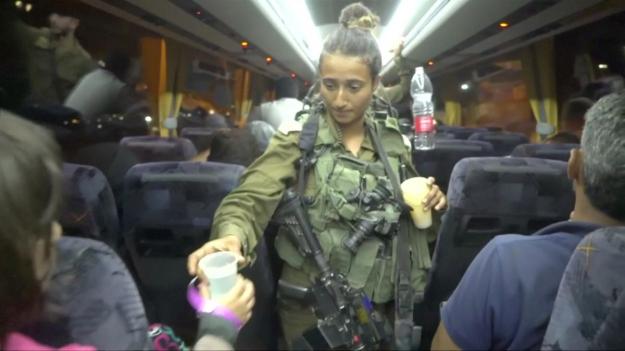
An Israeli solider hands out water on a bus, during the Syria Civil Defence extraction from the Golan Heights // 22 July 2018, provided by Israeli Army to Reuters

The collapse of the opposition in southern Syria is the final destruction of the originally constituted rebellion against President Bashar Assad. It is also a demonstration that the United States under President Donald Trump is no more invested in shaping the outcome in Syria than his predecessor, and marks the potential end of the diplomatic pact that had allowed Turkey to retain some sphere of influence unmolested by the pro-Syrian government coalition. Continue reading

The Secular Foreign Fighters of the West in Syria

By Kyle Orton (@KyleWOrton) on 24 July 2018

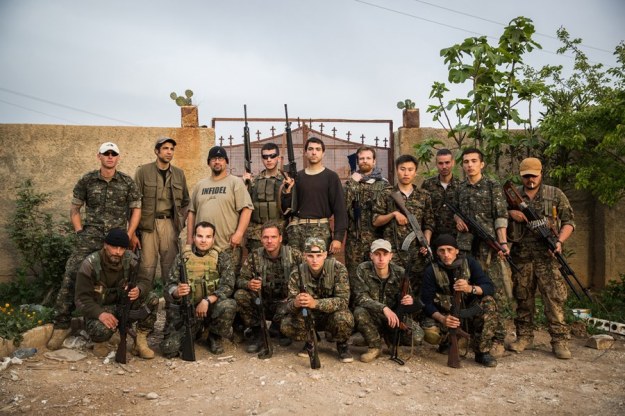
Foreign fighters with the YPG/PKK on the outskirts of Tal Tamr in northwestern Syria, 16 April 2015. UYGAR ÖNDER ŞİMŞEK / AFP / Getty Images

ABSTRACT: The Kurdistan Workers Party (PKK) operates under the names of the Democratic Union Party and the People’s Protection Units in Syria. The PKK is registered as a terrorist group by most Western governments, the European Union and Turkey, where it originated as a separatist organization. Nonetheless, the YPG has been the partner of the United States-led coalition in Syria against the ISIS. The strengthening of the YPG/PKK and its political messaging has brought in a flow of western foreign fighters. Some of these fighters are now returning to their homelands with indications that they are bringing security problems with them.

Article published in Insight Turkey.

Turkey’s Upcoming Foreign Policy Challenges

By Kyle Orton (@KyleWOrton) on 12 July 2018

American troops look out toward the border with Turkey from a small outpost near the town of Minbij, 7 Feb. 2018 (AP Photo/Susannah George)

As Turkey moves past last month’s election, the foreign policy challenges remain acute, particularly in Syria, and there is a looming confrontation with the United States over sanctions on Iran that might undo the recent progress toward the normalisation of U.S.-Turkish relations. Continue reading

Turkey’s Syria Policy and the Elections

By Kyle Orton (@KyleWOrton) on 7 June 2018

Turkish soldiers and their rebel dependencies in Efrin, 18 March 2018 // AFP

On June 24, for the first time in 15 years, there seems a possibility, however faint, that elections in Turkey will end in defeat for President Recep Tayyip Erdoğan.

It is an uphill battle, not least because of the ongoing state of emergency after the 2016 attempted coup, which has exacerbated the systemic biases against Erdoğan’s political opponents. But the Turkish opposition has managed to overcome its own fractiousness and has a strategic game-plan that makes sense. One card Erdoğan still has to play is foreign policy, and there are signs in Syria and Iraq of advantageous news to come. Continue reading