By Kyle Orton (@KyleWOrton) on 4 April 2025
By Kyle Orton (@KyleWOrton) on 17 March 2018
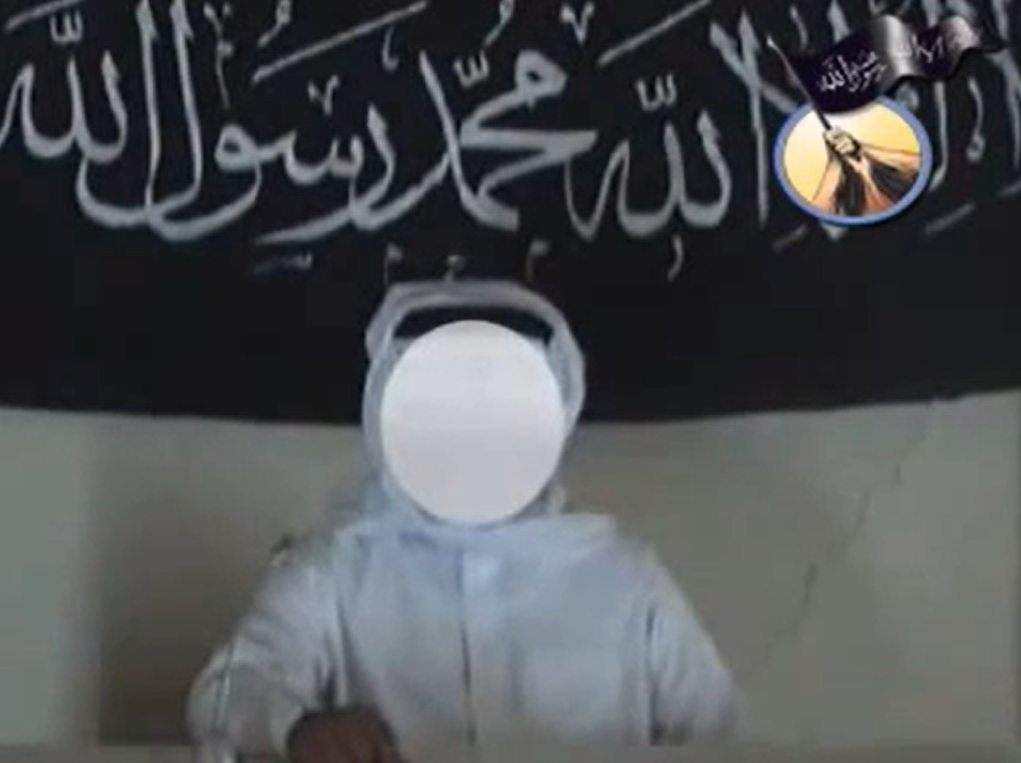
A video statement was put out on 15 October 2006 by the official spokesman of what was then called the Mujahideen Shura Council (al-Majlis Shura al-Mujahideen or MSM), the entity in which Al-Qaeda in Iraq (AQI) had nominally subsumed itself in January 2006, announcing the creation of the Islamic State of Iraq (ISI). The MSM spokesman, Muharib al-Jubouri, seen above, who had not been in the job long—the first AQI/MSM spokesman, Abu Maysara al-Iraqi, had been killed a few months earlier—was now the ISI spokesman,[1] and his speech made clear that a coalition of tribesmen and insurgents announced by MSM three days earlier, the Alliance of the Scented Ones (Hilf al-Mutayibeen), was also incorporated in this “State”. The transcript of Muharib’s speech, entitled (unimaginatively enough), “Announcement on the Establishment of the Islamic State of Iraq”, is translated below.
By Kyle Orton (@KyleWOrton) on January 29, 2017
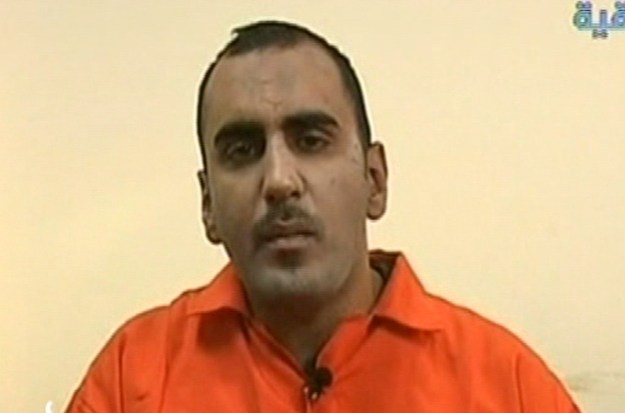
Hudayfa al-Batawi was among the Iraqis who joined the Islamic State (IS) movement early after the fall of Saddam Husayn, having been a long-time Salafist extremist. Al-Batawi rose through the ranks and became the emir of Baghdad, involved in some of the worst attacks in that city in 2009 and 2010. Arrested in late 2010, al-Batawi was killed in a prison riot in 2011. Continue reading
By Kyle Orton (@KyleWOrton) on January 6, 2017
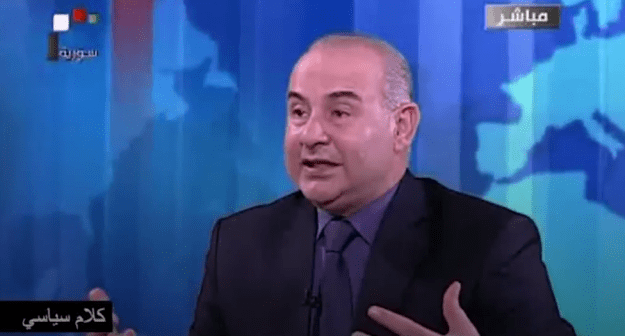
Khaled Abboud
From the beginning of the uprising in Syria in 2011, there have been accusations that Bashar al-Assad’s regime was in a de facto partnership with the Islamic State (IS) against the mainstream opposition. These accusations have a considerable basis in fact: during the entirety of the Anglo-American occupation of Iraq, Assad collaborated with IS jihadists in the destabilization of Iraq, killing thousands of Iraqi civilians and hundreds of American and British troops. Once the Syrian uprising was underway, the regime undertook various measures to bolster extremists in the insurgency. Assad and IS worked in tandem to leave Syria as a binary choice between themselves: Assad was sure this would rehabilitate him in the eyes of the world and transform his criminal regime into a partner of the international community in suppressing a terrorist insurgency, and IS wanted to rally Sunnis to its banner. The Secretary of the Syrian Parliament has now come forward to underline this. Continue reading
By Kyle Orton (@KyleWOrton) on April 26, 2016
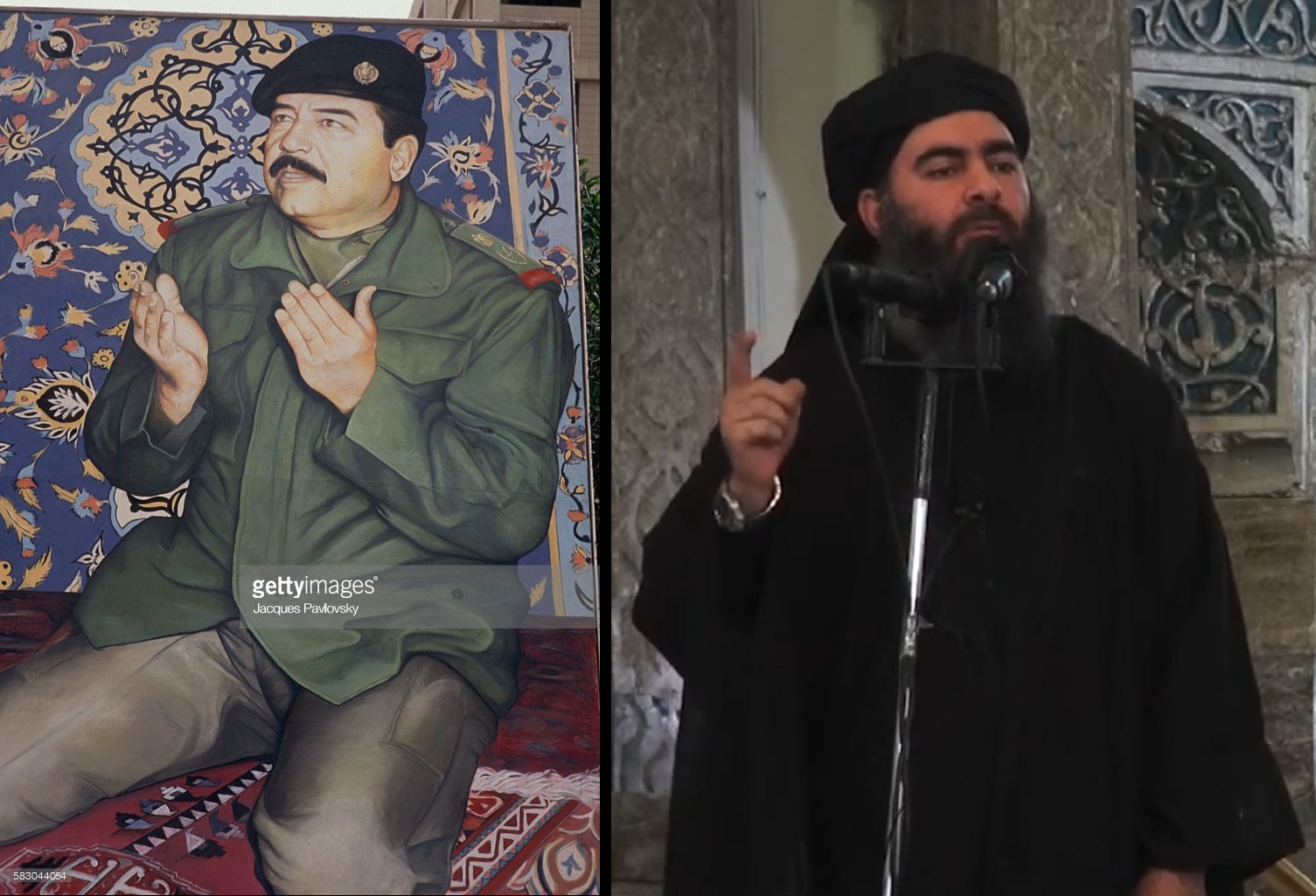
This essay, written to tie together my work on the relationship between the Saddam Hussein regime and the Islamic State, was completed last summer and submitted to an outlet, where it entered a form of development hell. After giving up on that option late last year, the opportunity arose to get a shorter version published in The New York Times in December. But I procrastinated too long over what to do with the full essay and a recent change in my work situation means I no longer have the bandwidth to go through the process of finding it a new home, so here it is.
“Abu-Bakr al Baghdadi is a product of the last decade of Saddam’s reign,” argues Amatzia Baram, a scholar of Iraq. He is correct in at least three ways. First, in its last decade in power, the Iraqi Ba’ath regime transformed into an Islamist government, cultivating a more religious, sectarian population on which the Islamic State (ISIS) could draw. Part of Saddam Hussein’s “Faith Campaign” also involved outreach to Islamist terrorists, including al-Qaeda, which meant that the synthesis of Ba’athism and Salafism that fused into the Iraqi insurgency after the fall of Saddam was already well advanced by the time the Anglo-American forces arrived in Baghdad in 2003. Second, the ISIS leadership and military planning and logistics is substantially reliant on the intellectual capital grown in the military and intelligence services of the Saddam regime. And finally, the smuggling networks on which ISIS relies, among the tribes and across the borders of Iraq’s neighbours, for the movement of men and materiel, are directly inherited from the networks erected by the Saddam regime in its closing decade to evade the sanctions. The advantages of being the successor to the Saddam regime make ISIS a more formidable challenge than previous Salafi-jihadist groups, and one that is likely to be with us for some time.
By Kyle Orton (@KyleWOrton) on January 12, 2016
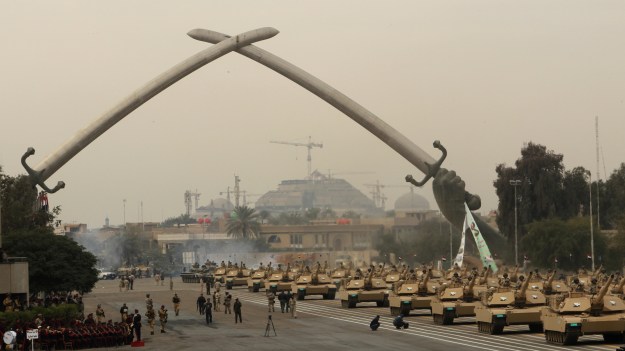
The “Victory Arch,” which Saddam built after the war with Iran. (January 2012)
About three weeks ago I wrote a piece for The New York Times explaining the evolution of Saddam Hussein’s regime away from the hard-secularism of its Ba’athist origins, and how this had prepared the ground for the Islamic State (IS). I received much positive feedback, but the social media reaction was inevitable: little thought and much anger, particularly from people who view Iraqi history through a political prism and felt I was trying to exculpate George W. Bush. With rare exceptions, the critique could hardly be called thoughtful. So it is nice to finally have such a critique to deal with, from Samuel Helfont and Michael Brill in today’s Foreign Affairs. Continue reading
By Kyle Orton (@KyleWOrton) on June 5, 2015 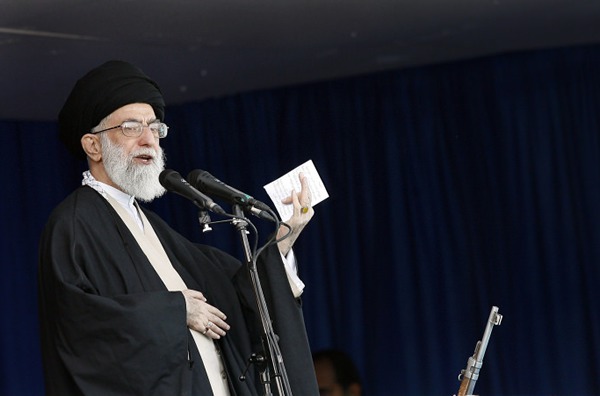 In the Guardian this morning, Jonathan Steele has written an article defending President Barack Obama’s Iran policy. Steele allows others to make his points for him, but he contributes to a narrative in which rapprochement with Iran is a worthy policy—even as the President formally denies that the Iran negotiations are about anything other than the nuclear-weapons program. Steele writes:
In Iraq, [Iranian officials] insist, Iran is a force for stability, helping [Iraqi prime minister] Haider al-Abadi’s government militarily while urging it to be more attentive to Sunni concerns—just as Washington is.
This is nonsense. In 2008, after the US ‘surge’, violence in Iraq was down 90 per cent, and the political process had begun to work. This was achieved by separating the Sunni Arab tribes of western Iraq from al-Qaeda in Mesopotamia (AQM), the forerunner to the Islamic State (ISIS).
By Kyle Orton (@KyleWOrton) on May 23, 2015
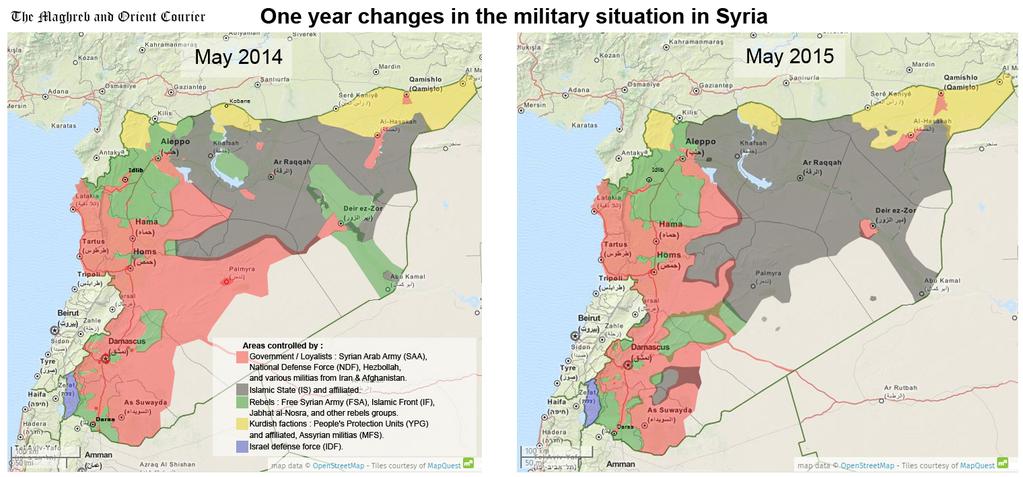
To hear President Obama tell it, his announced program to defeat the Islamic State (ISIS), which began with airstrikes into Iraq last August that were extended into Syria in September, is working, albeit with some tactical setbacks. The implication is that the setbacks of the U.S.-led anti-ISIS campaign are not strategic.
As J.M. Berger phrased it:
In the Washington vernacular, the act of Being Strategic implies a near mystical quality of superior thinking possessed by some, and clearly lacking amongst the vulgarians of the world—heedless brutes such as ISIL. Tactics are short-term ploys, easy to dismiss. Strategy is for winners.
Unfortunately, this soothing view is almost exactly wrong: it is the United States that is relying on various short-term methods—commando raids into the Syrian desert, for example—while ISIS has a long-term goal fixed in mind and is working assiduously to achieve it. The U.S.-led Coalition is losing, in short, and ISIS is winning. Continue reading
By Kyle Orton (@KyleWOrton) on March 15, 2015

Qassem Suleimani
Iraq’s Prime Minister Haider al-Abadi announced the beginning of an offensive on March 1 to dislodge the Islamic State (ISIS) from Salah ad-Din Province. Abadi announced that this would be led by the Iraqi army and Hashd al-Shabi, known in English as the Popular Mobilization Units (PMUs), the militias composed overwhelmingly of Shi’ites and directed by Iran.
While the offensive seems to be winding down, it is not over. ISIS is out of ad-Dawr/Dour and al-Awja, south of Tikrit, and Albu Ajeel to the east. Al-Alam to the north seems to still be contested. On March 10, ISIS was driven out of al-Qadissiya, a northern district of Tikrit City. On March 11, the anti-ISIS forces entered Tikrit City, “inched closer to the city center … and took up positions in a military hospital, the police academy and the traffic police headquarters … Forces in southern districts took over three palaces erected by former dictator Saddam Hussein”. Continue reading
By Kyle Orton (@KyleWOrton) on February 10, 2015

This is the fourth of a four-part series looking at the United States’ increasingly-evident de facto alliance with Iran in the region. The first part looked at the way this policy has developed since President Obama took office and how it has been applied in Iraq; the second part looked at the policy’s application in Syria; the third part looked at its application in Lebanon, Afghanistan, and Yemen; and this part is a conclusion. Continue reading
 Kyle Orton's Blog