Tag Archives: Osama bin Laden

Further Evidence of Mohammed Emwazi’s Radical Ties—And CAGE’s Meltdown

By Kyle Orton (@KyleWOrton) on March 7, 2015

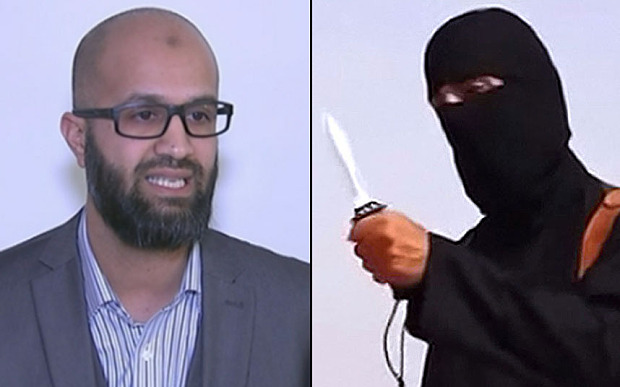
Asim Qureshi; Mohammed Emwazi (

Asim Qureshi; Mohammed Emwazi (“Jihadi John”)

Earlier this week I wrote of the unmasking of “Jihadi John,” the Islamic State’s (ISIS) video-beheader, as 26-year-old British citizen Mohammed Emwazi. I had two purposes. One was to gloat over the implosion of CAGE (formerly Cageprisoners), an Islamist terrorist-advocacy group that had gotten itself called a “human rights organisation”. And the second was to point out that the narrative peddled by CAGE and other apologists, that Emwazi had been radicalised by heavy-handed British security methods, was plainly absurd.

Emwazi had been associating with al-Qaeda agents and sympathisers and was part of a London-based network that dispatched fighters to al-Qaeda’s Somali branch al-Shabab years before he came into contact with the security services—indeed the security services had only taken an interest in Emwazi because he was already radicalised. In the last few days both of these trends have continued: CAGE’s total collapse moves closer and Emwazi’s known nefarious associations are multiplying. Continue reading

Iran and Global Terror: From Argentina to the Fertile Crescent

By Kyle Orton (@KyleWOrton) on February 27, 2015
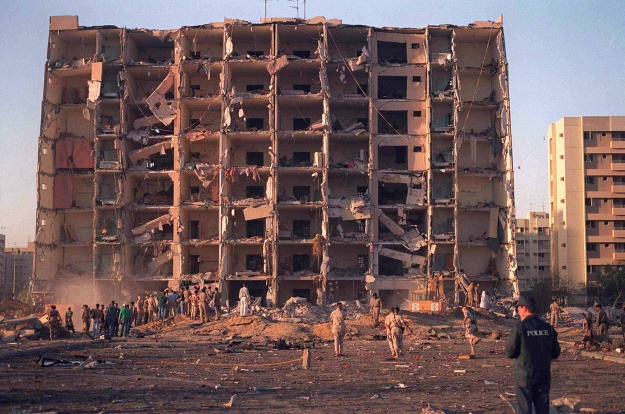
Khobar Towers, which Iran jointly bombed with al-Qaeda

Khobar Towers, which Iran jointly bombed with al-Qaeda

Argentina’s government yesterday announced it was dissolving the Secretariat of Intelligence (S.I.), an intelligence agency tainted by the “Dirty War” regimes (1974-83), and more recent abuses as President Cristina Kirchner has taken Argentina back toward autocracy, and replacing it with a Federal agency. Just two days before, charges of corruption were levelled against Antonio Stiusso, S.I.’s director until Kirchner fired him in December. At the beginning of this month, Stiusso went missing. It now seems Stiusso has taken shelter in a neighbouring State.

These events are the latest twist in an extraordinary saga that has followed the discovery of the body of Alberto Nisman on Jan. 18 in his apartment in Buenos Aires, shot in the head in an apparent suicide. Nisman was a prosecutor investigating the July 18, 1994, bombing of the Argentine Israelite Mutual Association (AMIA) building in Argentina’s capital. All the evidence that Nisman had gathered pointed to Iran as the perpetrator. Few believe Nisman committed suicide, and—the history of Argentines being “suicided” considered—most fingers are pointing at Iran. Continue reading

The Islamic State, Libya, and Interventionism

By Kyle Orton (@KyleWOrton) on February 19, 2015

Rebels with Qaddafi's

Rebels with Qaddafi’s “golden gun”

Yesterday morning in Libya, it was announced that militias from Misrata were moving into Sirte to combat the Islamic State (I.S.). The militias preparing to fight I.S. are drawn from Libya Dawn, the Islamist coalition that ousted the internationally-recognised government in August 2014. Continue reading

ISIS: America’s Alliance with Iran is Hampering the Fight Against Terror

By Kyle Orton (@KyleWOrton) on February 7, 20151

Published at Left Foot Forward

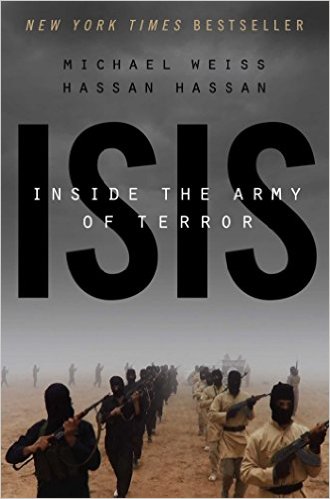
Book Review: ISIS: Inside the Army of Terror (2015) Michael Weiss and Hassan Hassan

ISIS: Inside the Army of Terror, by Michael Weiss and Hassan Hassan, is brilliantly easy to read. Concise yet thorough the book charts the history of a group, “[a]t once sensationalized and underestimated,” that is simultaneously a terrorist organisation, mafia, conventional army, sophisticated intelligence-gathering apparatus, propaganda machine and the remnants of the Saddam Hussein regime which controls an area the size of Britain in the heart of the Middle East. Continue reading

Al-Qaeda Issues Strategic Guidelines for Jihadist Warfare

By Kyle Orton (@KyleWOrton) on January 7, 2015

Al-Qaeda’s emir, Ayman al-Zawahiri, released a document on 14 September 2013, entitled, Tawjihat ‘Amma lil-Amal al-Jihadi (توجيهات عامة للعمل الجهادي), variously translated as: “General Guidelines for the Work of Jihad” or “General Guidelines for Jihadist Action”. Al-Zawahiri’s document is reproduced below. Continue reading

Iraq Is Still Suffering The Effects Of Saddam Hussein’s Islamist Regime

By Kyle Orton (@KyleWOrton) on December 17, 2014

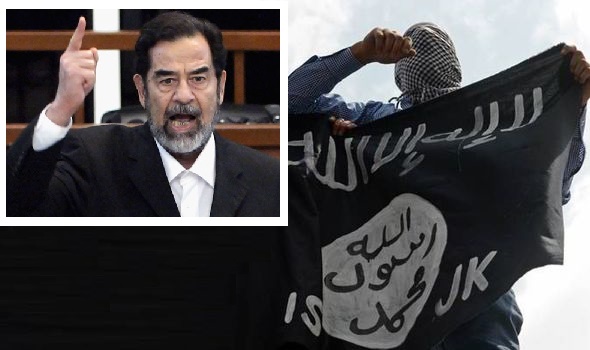
Throughout his entire trial, Saddam Hussein was never without a Qur'an

Throughout his entire trial, Saddam Hussein was never without a Qur’an

In June, Samuel Helfont published a paper for the Middle East Institute entitled, ‘Saddam and the Islamists: The Ba’thist Regime’s Instrumentalization of Religion in Foreign Affairs’. Relying on “newly released Iraqi state and Ba’th Party archives,” Helfont’s central argument is:

Saddam maintained deep reservations about Islamism until the end. However, this did not prevent his regime from working extensively with Islamists and Islamic activists outside Iraq. Indeed, religion played a leading role in the country’s foreign policy throughout the 1990s.”

Continue reading

The Other Side of the “Torture” Debate

By Kyle Orton (@KyleWOrton) on December 11, 2014

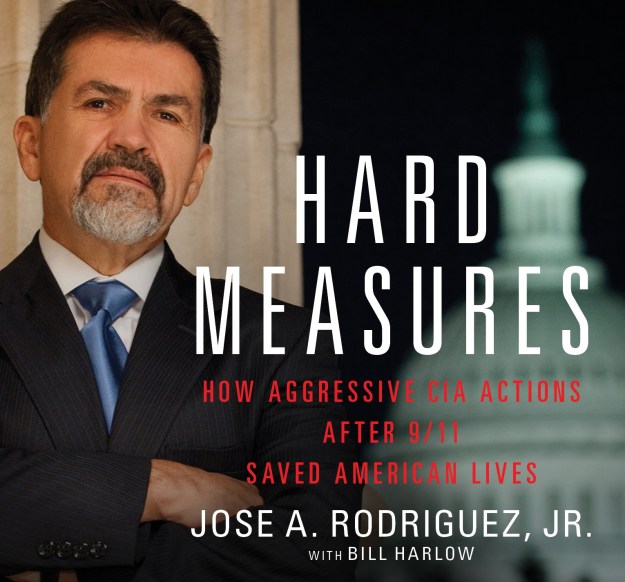
As a final act while the Democrats hold their majorities in Congress, the United States Senate Select Committee on Intelligence (SSCI) released a report on December 9, the “Committee Study of the Central Intelligence Agency’s Detention and Interrogation Program”, known to the Twitterverse as the “Torture Report”. This has reignited the debate about America’s use of harsh interrogation methods, the so-called “enhanced interrogation techniques” (EITs), against al-Qaeda operatives in the shadow of the 9/11 massacre. The politics surrounding this matter—even on basic questions, such as whether discomfort works to induce cooperation in detainees—are poisonous, and the publication of this partisan Committee Study has done nothing to assist this environment. One means of trying to get at the truth is to examine a counterpoint, the 2012 book, Hard Measures: How Aggressive CIA Actions After 9/11 Saved American Lives, a memoir by Jose Rodriguez, the man who oversaw the Central Intelligence Agency’s Counterterrorism Centre from 2001 to 2004. Continue reading

There Have Been Real Achievements In Afghanistan, But Leaving Puts Them At Risk

By Kyle Orton (@KyleWOrton) on November 22, 2014

1

Since President Obama’s 2009 announcement of a ‘surge’ in Afghanistan that simultaneously announced the date of withdrawal, the western focus in Afghanistan has shifted to the exits.

The steady drizzle of bad news since then has reinforced this sense that it’s over, we’ve had enough and we’re leaving.

American and British troops quit Helmand in late October, basically ceding it to Taliban control. On Tuesday John Sopko, the head of the American auditor mechanism (SIGAR) said that efforts to promote economic growth in Afghanistan have ‘accomplished nothing.’ Continue reading

WikiBaghdady Claims to Leak the Islamic State’s Secrets

By Kyle Orton (@KyleWOrton) on October 8, 2014

Before the account, first published in April 2014, by an ostensible Islamic State (IS) defector, “Abu Ahmad”, there was the Twitter account @WikiBaghdady, which released a lot of information in the same vein about the alleged impiousness of the jihadist organization. @WikiBaghdady’s testimony, as collected by Yousef Bin Tashfin, is republished below, with some editions for transliteration and syntax, to ensure its preservation. Continue reading

The ‘Khorasan Group’ And Al-Qaeda Central

By Kyle Orton (@KyleWOrton) on September 23, 2014

Muhsin al-Fadhli

Muhsin al-Fadhli

This morning, after forty-two months of trying to stay out, the United States launched airstrikes into Syria. The strikes overwhelmingly targeted the Islamic State in ar-Raqqa City and its surrounding areas, reportedly killing seventy I.S. jihadists, but there was a second barrage of strikes in Idlib, which are said to have killed fifty jihadists, and were directed against a shadowy outfit that emerged in the press a little over a week ago called the Khorasan Group. Continue reading