By Kyle Orton (@KyleWOrton) on 23 February 2023

By Kyle Orton (@KyleWOrton) on 24 August 2022
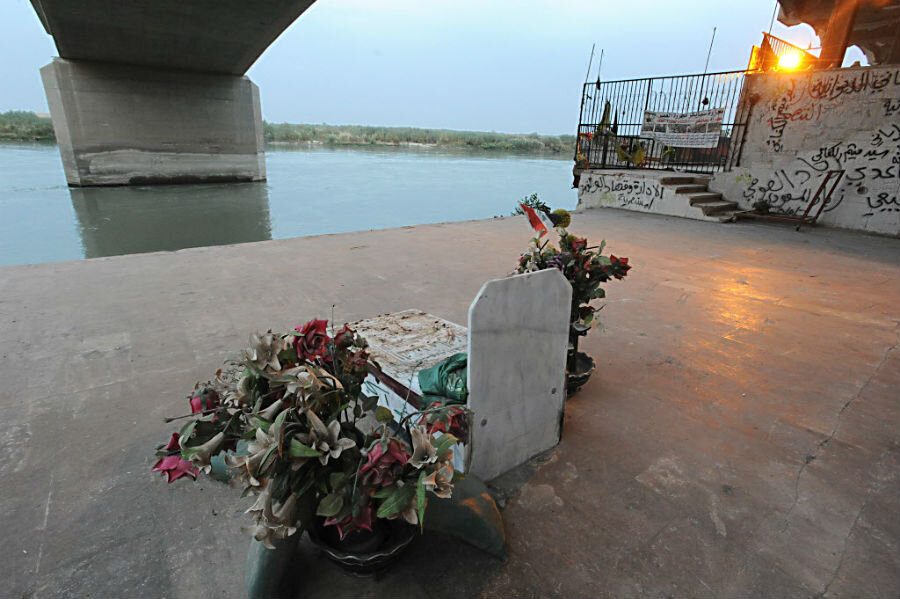
Area on the banks of the Tigris where the cadets of Camp Speicher were massacred by the Islamic State || Scott Peterson/The Christian Science Monitor
By Kyle Orton (@KyleWOrton) on 30 July 2022

Islamic State in Palmyra, December 2016
By Kyle Orton (@KyleWOrton) on 3 July 2022

An IRA parade in Belfast || Image source
By Kyle Orton (@KyleWOrton) on 19 December 2021

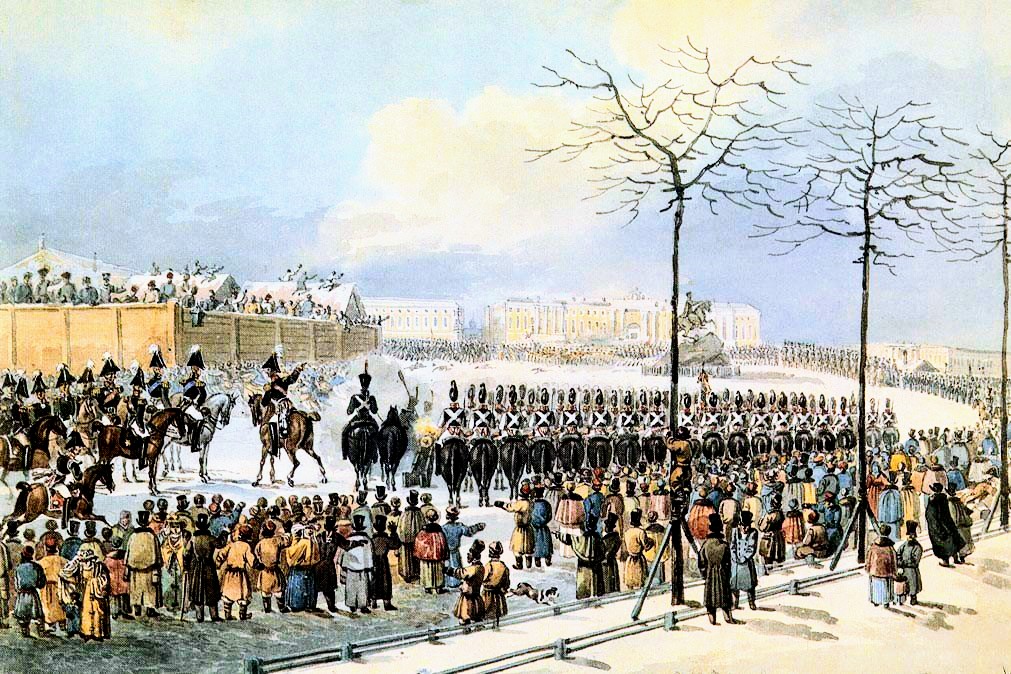
Skobelev Square during the February Revolution, painting by Aleksandr Gerasimov, 1917
The “February Revolution” is so-called because Russia at the time was on the Julian (Old Style (O.S.)) calendar. By the Gregorian (New Style (N.S.)) calendar, which Russia adopted in February 1918, these events take place in March 1917. And momentous events they were, leading to the abdication of the last Tsar, the end of a monarchy and an entire system of power and authority that dated back more than 350 years. For eight months in 1917, Russia struggled to extend the constitutionalist reforms that had begun under the Tsardom within a more liberal framework. The liberals never did gain the upper hand over the radicals, not even after the September 1917 de facto return to autocracy. In November 1917, a coup by the most extreme Leftist faction, the Bolsheviks, terminated the experiment, burying for seven decades even the aspirations in Russia for liberalism and democracy. Continue reading
By Kyle Orton (@KyleWOrton) on 15 December 2021

Tsar Nicholas II and Kaiser Wilhelm II aboard a ship in the Gulf of Finland, 1905
In the early historiography of the Great War, it was accepted that Germany was chiefly responsible, with debates on the margins about the degree of intentionality and premeditation. Of late, however, “It has become fashionable to spread the guilt of the First World War liberally around Europe”, as one prominent historian noted.[1] Some revisionists go even further and try to find another state that is not only equally as culpable as Germany but more so. In this post, I want to, without in any way pretending to be comprehensive, deal with the argument that blames Russia for the 1914-18 War. Continue reading