By Kyle Orton (@KyleWOrton) on 29 January 2022

Al-Naba 323, front page
By Kyle Orton (@KyleWOrton) on 25 January 2022
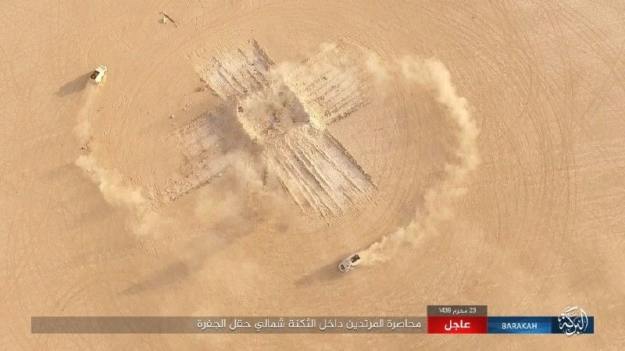
Islamic State in its desert sanctuaries in eastern Syria, 2017
By Kyle Orton (@KyleWOrton) on 22 January 2022
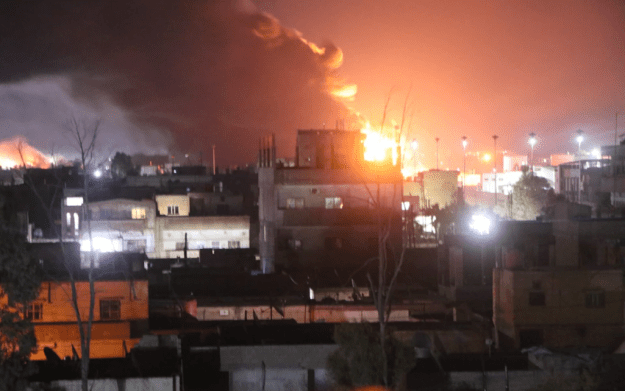
Islamic State car bombing against Al-Sinaa prison in Syria, 20 January 2022 [image source]
By Kyle Orton (@KyleWOrton) on 15 January 2022
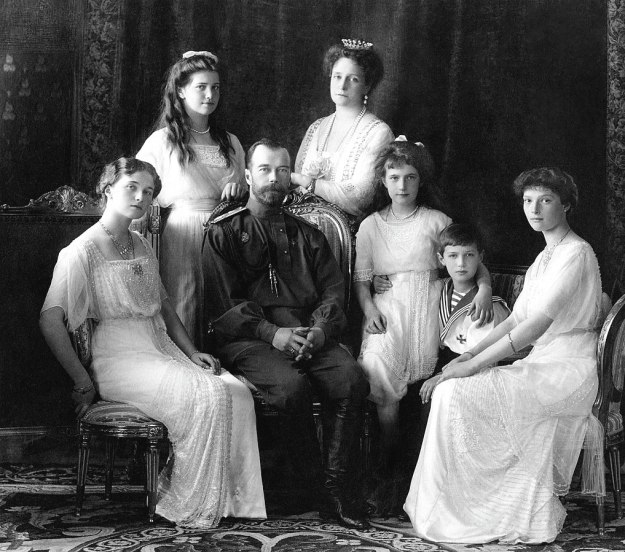
The Russian Imperial Family: Olga, Maria, Nicholas II, Empress Alexandra, Anastasia, Tsesarevich Alexei, and Tatiana. Taken in Crimea, 1913.
By Kyle Orton (@KyleWOrton) on 30 December 2021

Grand Duke Alexander Mikhailovich in exile in France, February 1929
Grand Duke Alexander Mikhailovich (1866-1933), the brother-in-law of Tsar Nicholas II (r. 1894-1917), gives an interesting anecdote in the second volume of his memoirs, Always a Grand Duke, published in the year he died, 1933, showing how the last Russian Emperor conceived of the duties of his office. Continue reading
By Kyle Orton (@KyleWOrton) on 19 December 2021
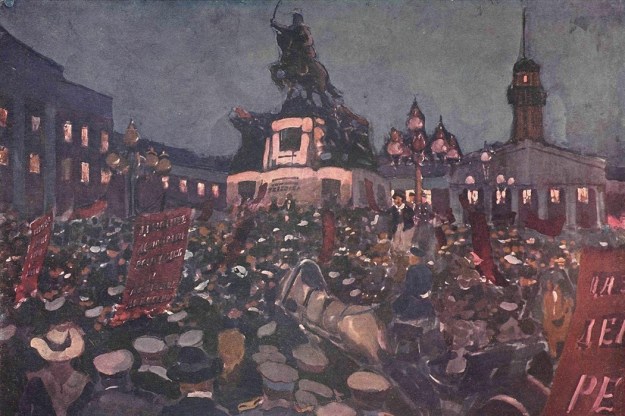
Skobelev Square during the February Revolution, painting by Aleksandr Gerasimov, 1917
The “February Revolution” is so-called because Russia at the time was on the Julian (Old Style (O.S.)) calendar. By the Gregorian (New Style (N.S.)) calendar, which Russia adopted in February 1918, these events take place in March 1917. And momentous events they were, leading to the abdication of the last Tsar, the end of a monarchy and an entire system of power and authority that dated back more than 350 years. For eight months in 1917, Russia struggled to extend the constitutionalist reforms that had begun under the Tsardom within a more liberal framework. The liberals never did gain the upper hand over the radicals, not even after the September 1917 de facto return to autocracy. In November 1917, a coup by the most extreme Leftist faction, the Bolsheviks, terminated the experiment, burying for seven decades even the aspirations in Russia for liberalism and democracy. Continue reading
By Kyle Orton (@KyleWOrton) on 26 November 2021
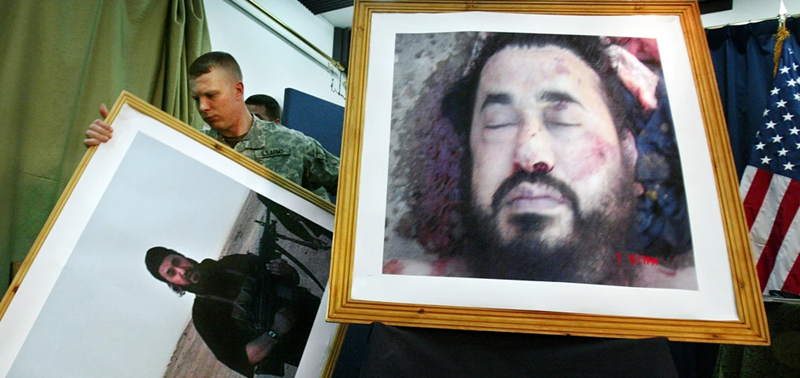
After the founder of the Islamic State movement, Ahmad al-Khalayleh, the infamous Abu Musab al-Zarqawi, was killed on 7 June 2006, an open letter eulogising him was posted by his wife, known only as Umm Muhammad (“the Mother of Muhammad”). The letter dates, it seems, to 6 July 2006, about a month after Zarqawi’s demise.[1] The content is mostly boilerplate: celebrating “the Shaykh of the Slaughterers” for terrorising the Americans and others who wanted constitutional government in Iraq,[2] venomous sectarian incitement against Shi’is, declaring that jihadist victory is near and cannot be derailed by the “martyrdom” of one leader. What is perhaps most notable when reading the letter at this distance is, firstly, that it was published by an Al-Qaeda media outlet, and, secondly, how much space is devoted to praising Usama bin Laden, and declaring the undying fealty of Zarqawi and his men to Bin Laden. Because, of course, the IS movement was at this time nominally a subordinate component of Bin Laden’s network named Al-Qaeda in Mesopotamia (AQM). The Zarqawists’ overt breach with Al-Qaeda still eight years in the future.
Continue readingBy Kyle Orton (@KyleWOrton) on 22 November 2021
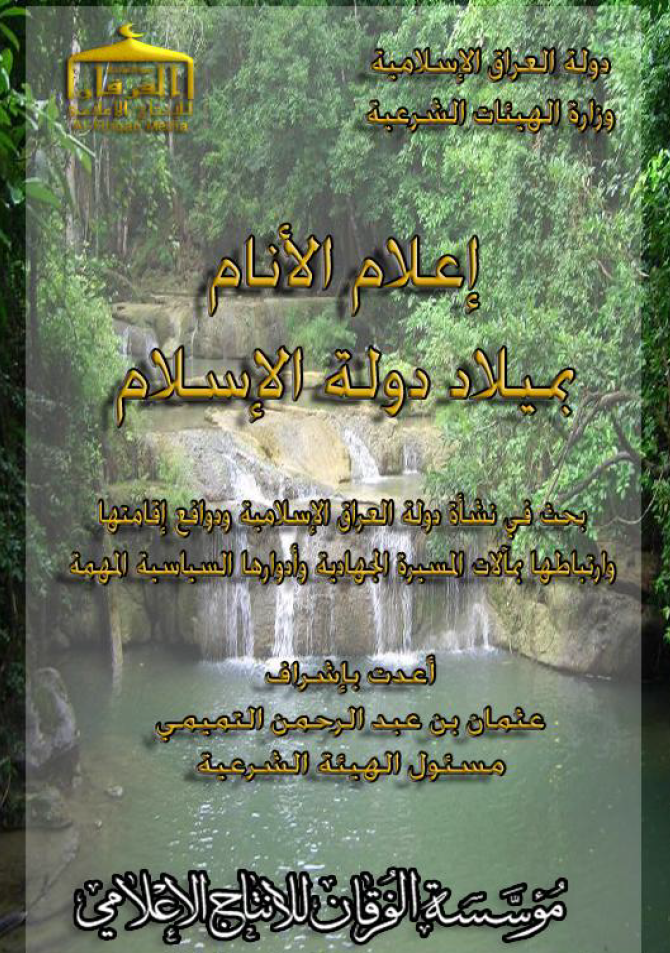
The Islamic State movement published an 87-page book, “Informing Mankind of the Birth of the Islamic State” or “Informing the People of the Birth of the Islamic State” (I’lam al-Anam bi-Milad Dawlat al-Islam), on 7 January 2007. The document was released by Al-Furqan Media Foundation, the central Islamic State propaganda institution, and first appeared on the World News Network website. A rough translation of the book appears below.
By Kyle Orton (@KyleWOrton) on 22 October 2021
This article was originally published at European Eye on Radicalization

Sami Jassim al-Jaburi (Haji Hamid) | IMAGE SOURCE
Mustafa al-Khadhemi, the Iraqi Prime Minister, announced on the morning of 11 October that the Iraqi National Intelligence Service (INIS) had arrested Sami Jassim al-Jaburi (Haji Hamid), the effective finance emir of the Islamic State (ISIS), in “a complex external operation”. Continue reading


