Tag Archives: terrorism

Qassem Sulaymani and the Future of Iran’s Imperial Project

By Kyle Orton (@KyleWOrton) on 7 January 2020

This article was originally published at European Eye on Radicalization
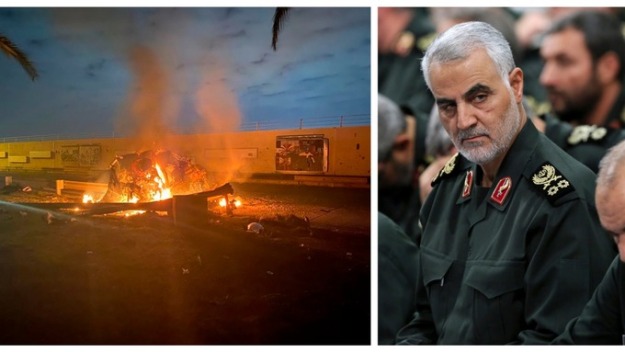
At 1 AM on 3 January, an American drone strike killed the head of Iran’s Quds Force, the division of the Islamic Revolutionary Guards Corps (IRGC) charged with exporting the Islamic revolution, and his Iraqi deputy, Jamal al-Ibrahimi (Abu Mahdi al-Muhandis). Sulaymani was the strategic driver of Iran’s expansionist policy in the Middle East, as well as the orchestrator of its terrorism and assassinations further afield. Unlike with the killing of Al-Qaeda’s Usama bin Laden in 2011 or the Islamic State’s Ibrahim al-Badri (Abu Bakr al-Baghdadi) in October, where the dynamics shifted little, Sulaymani’s death opens up questions about the direction in which the Middle East will now move. Continue reading

The CIA and Iraq: Intelligence Failures, Media Successes

By Kyle Orton (@KyleWOrton) on 28 December 2019

In a long article last week, I looked at why the U.S. ran a formal occupation of Iraq for fourteen months after the fall of Saddam Husayn in April 2003, given that there had been an explicit pre-invasion decision not to have an occupation government. The short answer is that the occupation was installed through deception by the State Department, supported by the Central Intelligence Agency (CIA). State and CIA had argued for a protracted occupation in the Situation Room debates in 2002, but President George W. Bush had sided with the Pentagon, which advocated a rapid transfer of power to Iraqis. Having lost in the formal inter-agency process, the State Department succeeded by subversion in getting its way on the ground in Iraq. The disaster this caused in the mismanagement of post-Saddam Iraq was, as the article explained in detail, only the most serious impact of the toxic schism between State/CIA and the Pentagon, a factor whose import is difficult to overstate when examining how the Bush administration functioned. (This feud also at times drew in the Vice President’s Office, which tended to support the Pentagon.)

Continue reading

The Intelligence Value of the Iraqi National Congress

By Kyle Orton (@KyleWOrton) on 27 December 2019

The Iraqi National Congress (INC), the umbrella group for the Iraqi opposition to Saddam Husayn from the 1990s up to 2003, has been immensely controversial, mostly because of its leader, Ahmad Chalabi, against whom the Central Intelligence Agency (CIA) and State Department waged a bitter bureaucratic war, a lot of it in the press, getting into circulation stories of INC trickery—possibly on behalf of Iran—being behind the Bush administration’s decision to invade Iraq.

Continue reading

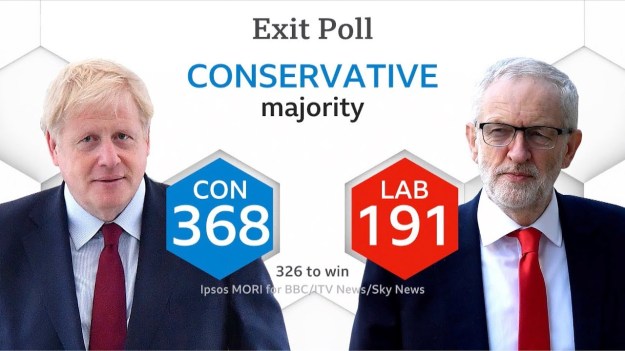
Britain’s Brexit Debate is Finally Over

By Kyle Orton (@KyleWOrton) on 15 December 2019

This article was published at QPosts

The victory of Boris Johnson’s Conservative Party, and the crushing defeat of Jeremy Corbyn’s Labour Party, is the beginning of the end of three years of turbulence in Britain. Continue reading

The PKK and Russia

By Oved Lobel on 18 November 2019

PKK at a terrorist training camp in the Asad regime-held Bekaa Valley of Lebanon, 1991 [source]

My friend Oved Lobel, a researcher focused on Russia’s role in the Middle East (among other things), found several interviews the Russian media did with Kurdistan Workers’ Party (PKK) leaders, one with the leader himself Abdullah Ocalan, talking about, inter alia, the group’s relationship with Moscow. He very helpfully translated them and with his permission they are published below.

The broad outline of the PKK’s relationship with the Soviet Union—and then the Russian Federation—is fairly clear. After the PKK was founded in Turkey in the late 1970s by Ocalan, it was evicted from the country during the 1980 military coup. The PKK moved to Syria, where Ocalan was already based, having fled Turkey in June 1979. From there, the PKK moved into the Bekaa area of Lebanon, at that time controlled by the Syrian regime of Hafez al-Asad, and the Soviets acted through Asad, as they so often did in dealing with terrorist groups, to build the PKK into a fighting force that was then unleashed in 1984 on Turkey, a frontline NATO state in the Cold War. Continue reading

Islamic State Bids Farewell to the Caliph

By Kyle Orton (@KyleWOrton) on 10 November 2019

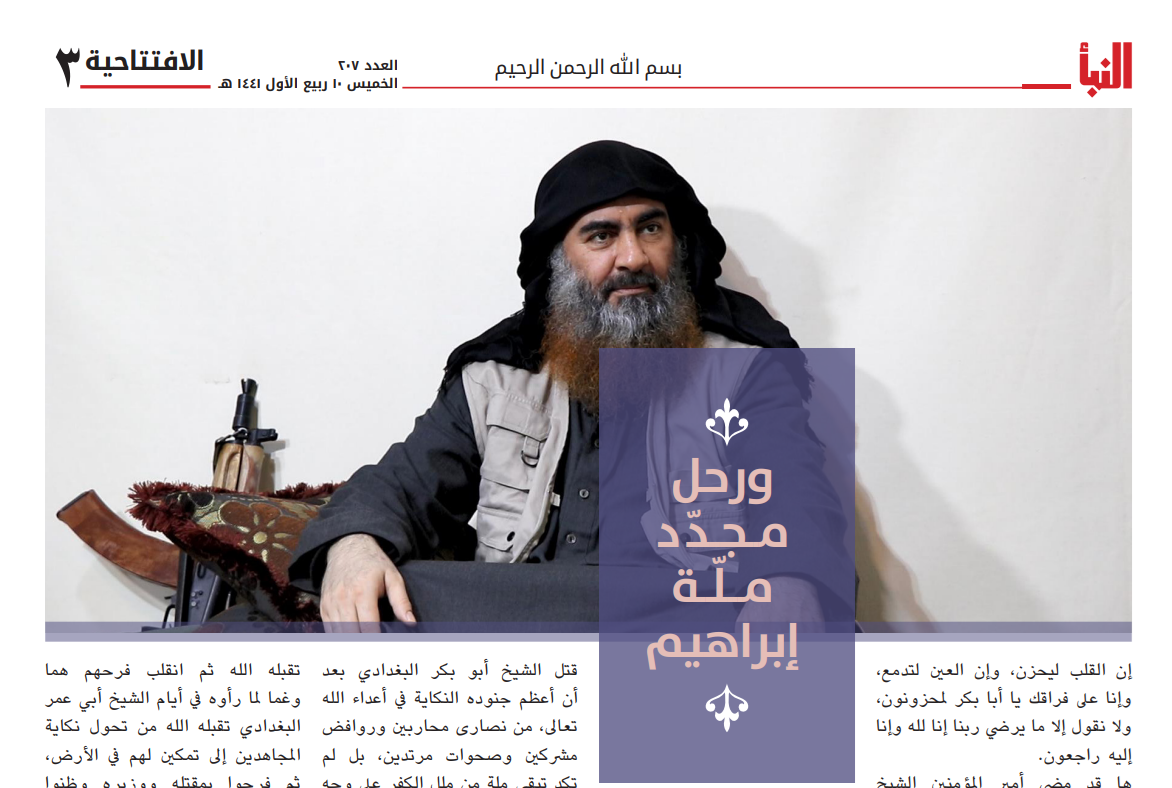
The 207th edition of Al-Naba, the weekly newsletter of the Islamic State (IS), published on 7 November 2019, devotes its main editorial to Ibrahim al-Badri (Abu Bakr al-Baghdadi), the first “Caliph” when the “Caliphate” was declared in June 2014, who was killed on 27 October 2019.

Continue reading

The First Speech of Islamic State Spokesman Abu Muhammad al-Adnani

By Kyle Orton (@KyleWOrton) on 7 November 2019

Taha Falaha (Abu Muhammad al-Adnani) [right] appearing in an Islamic State video alongside Tarkhan Batirashvili (Abu Umar al-Shishani, 3 June 2017, displaying a scene from 2014 when IS demolished the borders between Iraq and Syria. Falaha was killed in August 2016. It is common for IS to hold back pictures and footage of its leaders for time-spans that can reach over a decade.

Taha Falaha was the effective deputy of the Islamic State (IS) when he was killed on 30 August 2016, by which time he was also overseeing the foreign attacks campaign by IS and serving as governor of the IS-held areas in Syria. Likely, however, Falaha, is best-known internationally by his kunya, Abu Muhammad al-Adnani, and for his role as IS’s official spokesman, particularly his speech in September 2014 inciting Muslims in the West to commit terrorist attacks against their native countries. Falaha had been recruited in Aleppo in 2002 by IS’s founder, Ahmad al-Khalayleh (Abu Musab al-Zarqawi) and steadily advanced through IS’s media department, eventually being announced as the official spokesman with his first speech, released on 1 August 2011. An English-language transcript of that first speech, an hour-long audio message entitled, al-Dawlat al-Islam Baqiya (“The Islamic State Remains” or “The Islamic State Endures”), was released by “Ansar al-Mujahideen English Forum Language and Translation Department” and was posted to their forum on 4 March 2012. The transcript is reproduced below with some editions from the Arabic transcript and some important parts highlighted in bold. Continue reading

Obama Made America’s Collapse in the Middle East Inevitable

A version of this article was published at The Arab Weekly.

By Kyle Orton (@KyleWOrton) on 12 October 2019

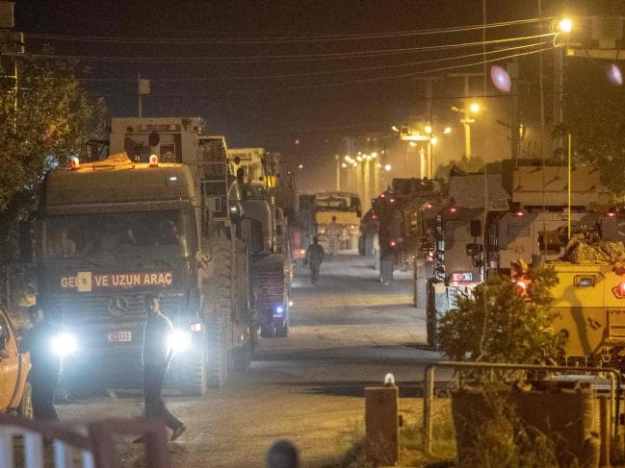
Turkish Armed Forces heading towards the border with Syria, 8 October 2019 // BULENT KILIC / AFP

The beginning of Turkey’s third incursion into Syria on Wednesday, this time dubbed Operation PEACE SPRING and aimed at the areas east of the Euphrates River, is the culmination of an American policy started under Barack Obama that has been continued by Donald Trump. That it is inevitable makes it no less tragic for the innocents caught up in this mess. It does mean that the emotive posturing on social media, and attempts by Obama era officials to cast the blame for the Syria catastrophe onto Trump, are more-than-usually grotesque. Continue reading

Last Insurgent Bastion in Syria Shows Signs of Collapse

By Kyle Orton (@KyleWOrton) on 25 August 2019

A version of this article was published at The Arab Weekly

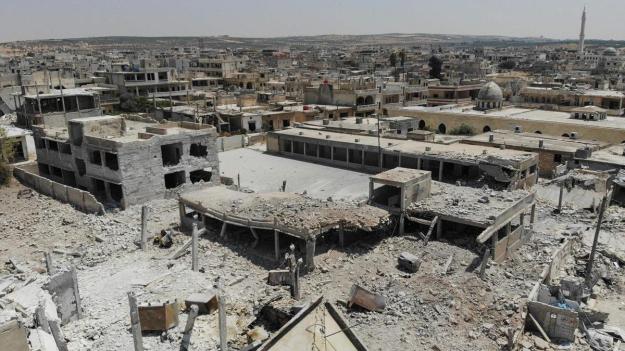
Devastation in Khan Shaykhun, Idlib, Syria, 3 August 2019 (AFP)

Bashar al-Assad’s regime, supported by Russia and (in a more deniable form) Iran, began an offensive against the last insurgent-held enclave in Syria, Idlib, in the last days of April. Up until a month ago, this looked like an embarrassing fiasco: with a minimal increase in Turkish support to its rebel proxies, the pro-Assad forces had been able to gain about one-percent of the territory in the southern part of “Greater Idlib”. In the last fortnight, however, the pro-Assad coalition has made important breakthroughs that could prove decisive. Continue reading