Category Archives: History

Crusader Whodunnit: The Curious Case of Conrad of Montferrat

By Kyle Orton (@KyleWOrton) on 9 August 2020

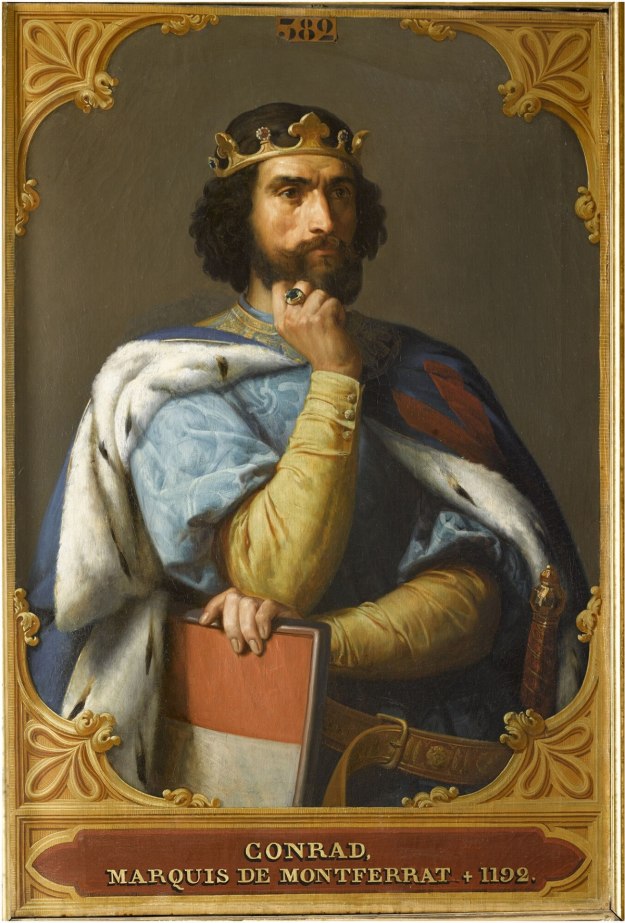
Conrad of Montferrat … imagined. Picture is from the Paris of the 1840s, by François-Édouard Picot.

Conrad of Montferrat, the monarch of the Kingdom of Jerusalem, one of the four Crusader principalities, was assassinated in Tyre on 28 April 1192 by the Nizari Ismailis, the legendary Assassins. The event received a lot of interest in its own time and since in the Christian world—and fuelled the various myths about the Nizaris either being focused on the Crusaders (the Nizaris’ war was always with the Sunni order) or operating in Europe (which they never did). There has also long been speculation about a third party having sponsored the Nizaris, and a paper by Patrick A. Williams examines this issue. Continue reading

America, Puritanism, and Hysteria

By Kyle Orton (@KyleWOrton) on 28 July 2020

The Witch (2016) is set in the Plymouth Colony, what is now the U.S. state of Massachusetts, in the 1630s. The focus is on Puritanism and the witch craze, subjects that are not entirely irrelevant at the present time. Continue reading

The Soviets’ Bagman in Britain

By Kyle Orton (@KyleWOrton) on 22 February 2020
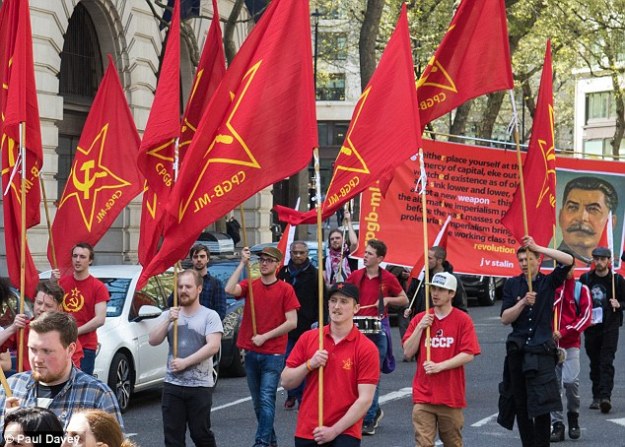
Communist Party of Great Britain (Marxist–Leninist) (CPGB-ML) carrying banners and Stalin postsers at a May Day parade // May 2016

Jeremy Corbyn has been dogged throughout his time as leader of the British Labour Party by his associates. Having Seumas Milne, a believing Stalinist and general conspiracy theorist, as his spin-doctor and primary strategist is actually among the least disgraceful things about Corbyn. Corbyn was, despite later attempts at obfuscation, a vocal supporter of the Provisional Irish Republican Army (PIRA). Corbyn was paid £20,000 for pro-Iranian propaganda by the clerical regime. He laid a wreath honouring Black September, the deniable unit of the Palestine Liberation Organisation (PLO) responsible inter alia for the mutilation and murder of Israeli athletes at Munich in 1972. Then there was Fidel Castro, HAMAS, Hizballah, and on and on.

Thus, when it was revealed, two years ago this month, that Corbyn supplied political and other intelligence to the secret police of Communist Czechoslovakia, it was unsurprising. Corbyn was known to have supported the Soviet side in the Cold War, from Castro’s Cuba to the Sandinistas in Nicaragua; had he known of Soviet support to PIRA, it would not have turned him against them. So, it was all taken very much in stride. Putting aside the lament that it should have been a bigger scandal that the Leader of the Opposition was once an “operational contact” for the Soviet Bloc, it was an interesting look at how the Soviet Union, through its satellite states, sought to cultivate sympathisers and exert influence in Britain—and how little is known, even now, about the scale and success of such things.

Somebody who could have shed more light on this was Reuben Falber, a senior official of the Communist Party of Great Britain (CPGB) and its key liaison with the KGB. When he died on 29 April 2006, he took most of his secrets with him. Still, what is known of Falber’s career gives some insight and such insights are by no means all retrospective. Continue reading

The CIA and Iraq: Intelligence Failures, Media Successes

By Kyle Orton (@KyleWOrton) on 28 December 2019

In a long article last week, I looked at why the U.S. ran a formal occupation of Iraq for fourteen months after the fall of Saddam Husayn in April 2003, given that there had been an explicit pre-invasion decision not to have an occupation government. The short answer is that the occupation was installed through deception by the State Department, supported by the Central Intelligence Agency (CIA). State and CIA had argued for a protracted occupation in the Situation Room debates in 2002, but President George W. Bush had sided with the Pentagon, which advocated a rapid transfer of power to Iraqis. Having lost in the formal inter-agency process, the State Department succeeded by subversion in getting its way on the ground in Iraq. The disaster this caused in the mismanagement of post-Saddam Iraq was, as the article explained in detail, only the most serious impact of the toxic schism between State/CIA and the Pentagon, a factor whose import is difficult to overstate when examining how the Bush administration functioned. (This feud also at times drew in the Vice President’s Office, which tended to support the Pentagon.)

Continue reading

Why Was There Ever An American Occupation of Iraq?

By Kyle Orton (@KyleWOrton) on 22 December 2019

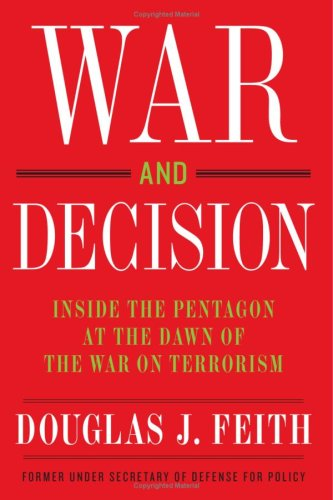
Douglas Feith was the U.S. Under Secretary of Defense for Policy from 2001 to 2005, one of the most senior positions at the Pentagon during one of the most consequential periods in recent history, covering the 11 September 2001 atrocities and early phase of the U.S.-led response. Feith later wrote a highly illuminating memoir, War and Decision: Inside the Pentagon at the Dawn of the War on Terrorism, which tried to drain some of the hysteria out of the public “debate” about the Iraq dimension of the U.S. policy in particular by explaining the internal arguments in the Bush administration leading up to the decision to finish with Saddam Husayn in 2003, and trying to set those arguments in their proper historical context, both in relation to Iraq—where “the war” had begun twelve years earlier—and the altered American threat perceptions in the shadow of 9/11. Unlike a lot of the gossipy tomes that emerged from former officials, Feith’s book is notably light on opinion and contains reams of declassified documents so readers can check his analysis against the source material. One of Feith’s key judgments is that “the chief mistake was maintaining an occupation government in Iraq for over a year”.[1] As Feith explains in great detail in the book, this was never supposed to happen. So how did it?

Continue reading

The PKK and Russia

By Oved Lobel on 18 November 2019

PKK at a terrorist training camp in the Asad regime-held Bekaa Valley of Lebanon, 1991 [source]

My friend Oved Lobel, a researcher focused on Russia’s role in the Middle East (among other things), found several interviews the Russian media did with Kurdistan Workers’ Party (PKK) leaders, one with the leader himself Abdullah Ocalan, talking about, inter alia, the group’s relationship with Moscow. He very helpfully translated them and with his permission they are published below.

The broad outline of the PKK’s relationship with the Soviet Union—and then the Russian Federation—is fairly clear. After the PKK was founded in Turkey in the late 1970s by Ocalan, it was evicted from the country during the 1980 military coup. The PKK moved to Syria, where Ocalan was already based, having fled Turkey in June 1979. From there, the PKK moved into the Bekaa area of Lebanon, at that time controlled by the Syrian regime of Hafez al-Asad, and the Soviets acted through Asad, as they so often did in dealing with terrorist groups, to build the PKK into a fighting force that was then unleashed in 1984 on Turkey, a frontline NATO state in the Cold War. Continue reading

The Shah, the Cold War, and the Islamists

By Kyle Orton (@KyleWOrton) on 20 March 2019

Abbas Milani’s The Shah gives a portrait of Iran’s last monarch, Muhammad Reza Pahlavi, and the impact that his downfall forty years ago continues to have in the Middle East, notably the emboldening of the Islamist movement. Continue reading

The Establishment of the Qajar Dynasty in Iran

By Kyle Orton (@KyleWOrton) on 28 February 2019

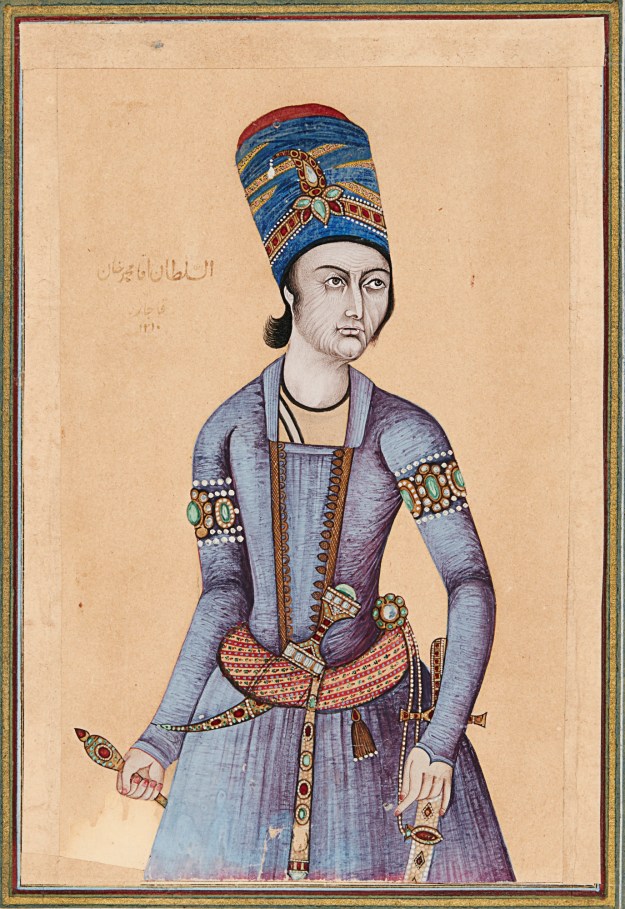
Agha Mohammad Khan Qajar, founder of the Qajar dynasty (1794-1925) in Iran [source]

Gavin R.G. Hambly, a Middle East scholar and historian, wrote a paper in 1963 about the establishment of the Qajar dynasty, the second-to-last ruling House in Iran, and particularly about its first monarch, Agha Mohammad Khan. The paper is slightly revisionist about Agha Mohammad, countering the long-standing reputation of him as solely a ruthless despot. The Qajars, for all their faults, prevented the outright colonisation of Iran in the nineteenth century, and imposed an order that held the country together, albeit while losing tracts of territory on the periphery—the Caucasus and Turkmenistan to the Russians in the north, and areas in the east to the British, notably Herat, which was annexed to Afghanistan, and parts of Baluchistan and Sistan to what would later become Pakistan. This resilience of the Iranian state is largely ascribable to Agha Mohammad, argues Hambly, who showed a sense of public spirit he is rarely credited with in consciously making the lives of ordinary Iranians better. Continue reading

The Fall of the Shah and the Rise of Islamism

By Kyle Orton (@KyleWOrton) on 17 January 2019

Forty years ago yesterday, Muhammad Reza Pahlavi, the Shah (King) of Iran, left his country for the last time as a year-long revolution crested. A month later, the remnants of the Imperial Government collapsed and Grand Ayatollah Ruhollah Khomeini was swept to power after his long exile, establishing the first Islamist regime. Andrew Scott Cooper’s 2016 book, The Fall of Heaven: The Pahlavis and the Final Days of Imperial Iran, charts how this happened. Continue reading

Saddam Hussein Prepared the Ground for the Islamic State

By Kyle Orton (@KyleWOrton) on April 26, 2016

This essay, written to tie together my work on the relationship between the Saddam Hussein regime and the Islamic State, was completed last summer and submitted to an outlet, where it entered a form of development hell. After giving up on that option late last year, the opportunity arose to get a shorter version published in The New York Times in December. But I procrastinated too long over what to do with the full essay and a recent change in my work situation means I no longer have the bandwidth to go through the process of finding it a new home, so here it is.

“Abu-Bakr al Baghdadi is a product of the last decade of Saddam’s reign,” argues Amatzia Baram, a scholar of Iraq. He is correct in at least three ways. First, in its last decade in power, the Iraqi Ba’ath regime transformed into an Islamist government, cultivating a more religious, sectarian population on which the Islamic State (ISIS) could draw. Part of Saddam Hussein’s “Faith Campaign” also involved outreach to Islamist terrorists, including al-Qaeda, which meant that the synthesis of Ba’athism and Salafism that fused into the Iraqi insurgency after the fall of Saddam was already well advanced by the time the Anglo-American forces arrived in Baghdad in 2003. Second, the ISIS leadership and military planning and logistics is substantially reliant on the intellectual capital grown in the military and intelligence services of the Saddam regime. And finally, the smuggling networks on which ISIS relies, among the tribes and across the borders of Iraq’s neighbours, for the movement of men and materiel, are directly inherited from the networks erected by the Saddam regime in its closing decade to evade the sanctions. The advantages of being the successor to the Saddam regime make ISIS a more formidable challenge than previous Salafi-jihadist groups, and one that is likely to be with us for some time.

Continue reading