Tag Archives: Ahmad al-Khalayleh

A Turncoat Still Loved By the Islamic State: Manaf al-Rawi

By Kyle Orton (@KyleWOrton) on January 29, 2017

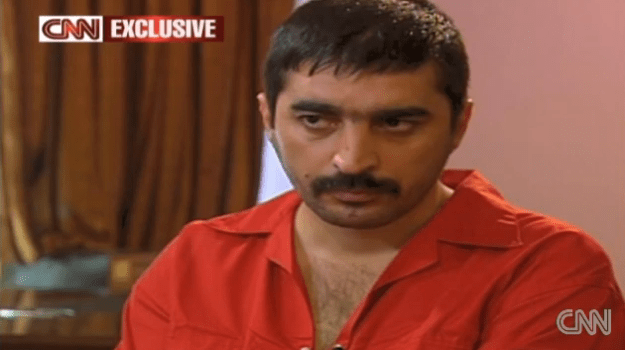
Manaf al-Rawi

Manaf al-Rawi

Manaf Abdul Rahim al-Rawi was the leader of operations in Baghdad for the Islamic State of Iraq (ISI), the predecessor to the Islamic State (IS), between 2008 and his arrest in 2010. Al-Rawi had been with IS from its earliest days and his arrest in 2004 only advanced him through the ranks as he networked in prison. Upon release and assumption of the post of wali (governor) of Baghdad, al-Rawi was responsible for some of the worst atrocities in 2009 and 2010 in that city. Al-Rawi was executed in prison in 2013. Continue reading

Abdallah Najem al-Jawari: A Key Early Leader of the Islamic State

By Kyle Orton (@KyleWOrton) on January 28, 2017

1

Abdallah Najem al-Jawari (Abu Azzam al-Iraqi) was something like the Islamic State (IS) movement’s first Finance Minister and a senior regional official, first in his native Anbar—he was from Fallujah—and later in Baghdad. Joining the group quickly after the collapse of the Saddam Husayn regime, al-Jawari was killed in 2005. Al-Jawari remains among those commemorated by IS as founders who set the stage for the current rise of “the State”.
Continue reading

Mohamed Moumou: Islamic State’s Commander of the North

By Kyle Orton (@KyleWOrton) on January 28, 2017

Mohamed Moumou (Abu Qaswara)

Mohamed Moumou (Abu Qaswara)

Mohamed Moumou, better-known as Abu Qaswara, was the Commander of the North for the Islamic State of Iraq (ISI), one of the most powerful military positions in the group, when he was killed by American forces in Mosul on 5 October 2008. Continue reading

Profile of Abu Raghd: On the Origins of the Iraqi Jihad

By Kyle Orton (@KyleWOrton) on January 28, 2017

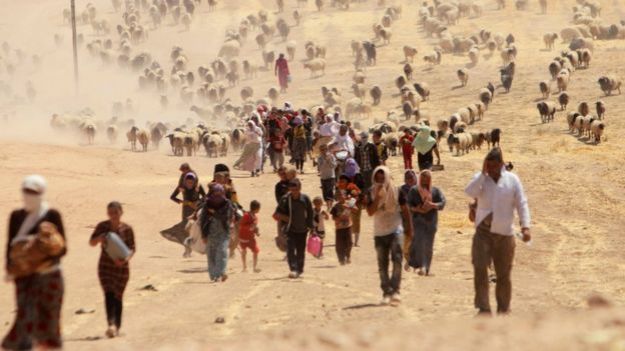
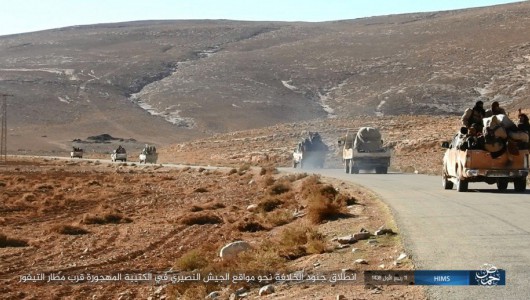
2016-11-10-is-closing-in-on-palmyra-p13

In his first speech as the then-Islamic State of Iraq’s (ISI’s) official spokesman in August 2011, Taha Falaha (Abu Muhammad al-Adnani) referred to several of the group’s “leaders” who had been killed. Among them was Abu Raghd, whose biography provides a glimpse of the role regional states—specifically Saddam Husayn’s Iraq and Bashar al-Assad’s Syria—played in facilitating the birth of the Islamic State (IS). Continue reading

The Flag of the Islamic State

By Kyle Orton (@KyleWOrton) on January 27, 2017

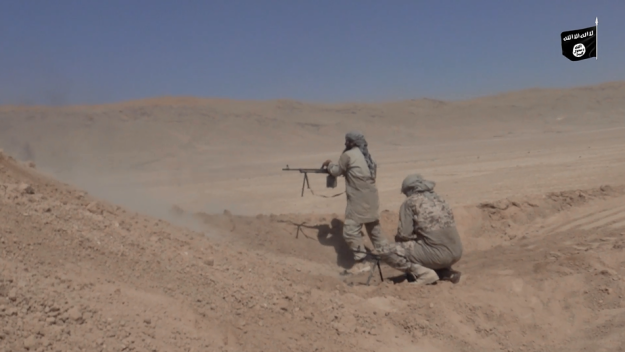
The Islamic State’s June 2014 declaration that the areas it controlled were the restored “Caliphate” was seen by many as a novel development. In fact, “the State” was declared in October 2006. The next month, the predecessor of the Islamic State (IS), Al-Qaeda in Mesopotamia (AQM), dissolved itself, and a month after that the claim to statehood was expanded upon—while being wilfully ambiguous about the caliphal pretensions—in the first speech by the then-emir, Hamid al-Zawi (Abu Umar al-Baghdadi). Similarly, though confusion remains on the point, it was in this same period that the symbol of the Islamic State, its black flag, was established.

Continue reading

The Islamic State’s First War Minister

By Kyle Orton (@KyleWOrton) on January 25, 2017

One of the few existing pictures of Abu Hamza al-Muhajir (Abdul Munim al-Badawi)

One of the few existing pictures of Abu Hamza al-Muhajir (Abdul Munim al-Badawi)

Below is reproduced a very short biography for Abu Hamza al-Muhajir, sometimes called Abu Ayyub al-Masri, whose real name is Abdul Munim al-Badawi,[1] that circulated on pro-Islamic State forums. Al-Badawi took over leadership of al-Qaeda in Iraq (AQI) when its founder, Ahmad al-Khalayleh (Abu Musab al-Zarqawi), was killed on 7 June 2006. Al-Badawi then declared his allegiance to Hamid al-Zawi (Abu Umar al-Baghdadi) and the Islamic State of Iraq (ISI) on 10 November 2006, formally dissolving al-Qaeda on Iraqi territory, and becoming al-Zawi’s deputy. Abu Hamza had been in Iraq, including Baghdad, a year before Saddam Husayn was overthrown, and he and al-Zawi were killed together on 18 April 2010. Continue reading

The Seeds of the Islamic State in Saddam’s Iraq

By Kyle Orton (@KyleWOrton) on January 22, 2017

Mustafa Ramdan Darwish (Abu Muhammad al-Lubnani)

Mustafa Ramdan Darwish (Abu Muhammad al-Lubnani)

After the leaders of the Islamic State die—usually killed by their foes—short biographies tend to be circulated on internet forums that favour the group. One such obituary—with the above picture—was disseminated for Mustafa Ramadan Darwish (Abu Muhammad al-Lubnani), and is reproduced below with some editions to transliteration and some interesting sections highlighted in bold. Darwish was the first leader of the Islamic State’s military portfolio and the second overall deputy (between September 2004 and early 2005) to the movement’s founder, Ahmad al-Khalayleh (Abu Musab al-Zarqawi). One of the most interesting parts of Darwish’s profile is its addition of details on the jihadi networks linked to al-Qaeda and the first generation of the Islamic State that were operating in Iraq in the final years of Saddam Husayn’s rule, a topic touched on in other biographies of Islamic State leaders. Continue reading

The Islamic State’s Media Apparatus and its New Spokesman

Originally published at The Henry Jackson Society.

By Kyle Orton (@KyleWOrton) on December 16, 2016

1

The Islamic State (IS) has named a new official spokesman, Abu Hassan al-Muhajir. Abu Hassan is the fourth man to hold the position of spokesman within the IS movement, and the third since it declared statehood in 2006. Very little is known about Abu Hassan but assessing the history of IS’s media enterprise offers some hints about his profile. In this regard, a new paper by Dr. Craig Whiteside of the International Centre for Counter Terrorism Terrorism is instructive. Looking forward, examining Abu Hassan’s inaugural speech offers some clues about the direction IS’s messaging and behaviour will take now as its statelet shrinks under pressure from the U.S.-led Coalition. Continue reading

Al-Qaeda Explains its Split with the Islamic State

By Kyle Orton (@KyleWOrton) on December 6, 2016

1

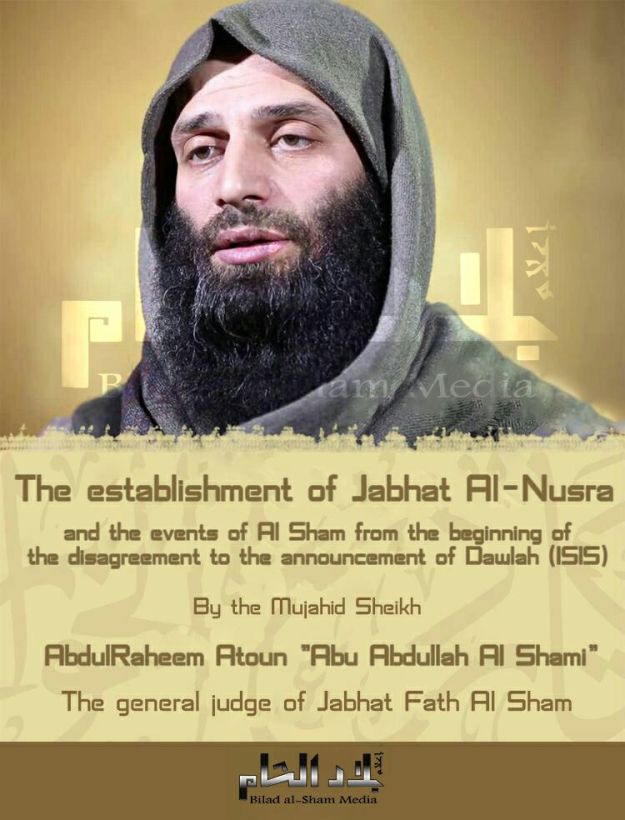
On 20 November 2016, Jabhat Fatah al-Sham (JFS), al-Qaeda’s rebranded presence in Syria, published its first official account of how JFS, previously known as Jabhat al-Nusra, split from its parent organization, the group we now know as the Islamic State (IS). The statement was composed by Abd al-Rahim Atun (Abu Abdullah al-Shami), identified as the General Judge of JFS. It is apparently drawn from the book, “Under the Shade of the Tree of Jihad” (p. 177-194), and the post was entitled, “The Establishment of Jabhat al-Nusra and the Events of al-Sham [Syria] from the Beginning of the Disagreement to the Announcement of al-Dawla [the State]”. On 27 November, Bilad al-Sham Media released an English language version of this statement, which is reproduced below with some editions for spelling, grammar, and so on, and some especially notable sections bolded. Continue reading

An Ideological Founder of Islamic State is Killed in Syria

UPDATE: It has subsequently become clear that the “Abu Abdullah al-Muhajir” who was killed in Syria on 18 November 2016 was not Muhammad al-Saghir, who is profiled below. The slain man, like al-Saghir a veteran of the war get the Soviets out of Afghanistan and an Egyptian jihadist with close links to al-Qaeda, also used the kunya “Abu Afghan al-Muhajir”.

By Kyle Orton (@KyleWOrton) on November 20, 2016

Abu Abdallah al-Muhajir (source)

A week ago, it became clear that the air war being waged by the U.S.-led Coalition, which primarily targets the Islamic State (IS), was going to expand its campaign against the leadership of Jabhat Fatah al-Sham (JFS), al-Qaeda’s rebranded branch in Syria. In the evening of 18 November 2016, the Coalition killed Abu Abdullah al-Muhajir, whose real name is Muhammad Ibrahim al-Saghir. Al-Saghir also uses the name Abd al-Rahman al-Ali. This killing would appear to be part of the Coalition’s new effort.

Al-Saghir has a long record as an important jihadi religious ideologue, though his exact relationship with al-Qaeda’s network remains unclear. Al-Saghir’s most lasting contribution to jihadi-salafism is as a key guide to the founder of IS, Ahmad al-Khalayleh. Continue reading