Tag Archives: al-Qaeda in Mesopotamia

The Top American in the Islamic State Attacks the Top American in Al-Qaeda

By Kyle Orton (@KyleWOrton) on 20 July 2017

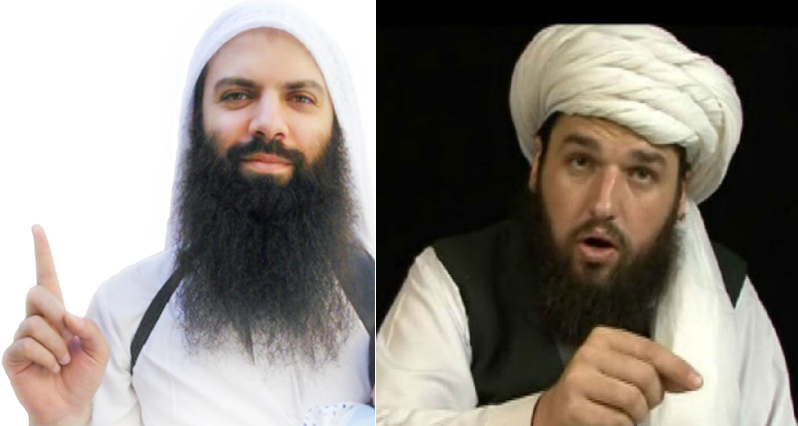
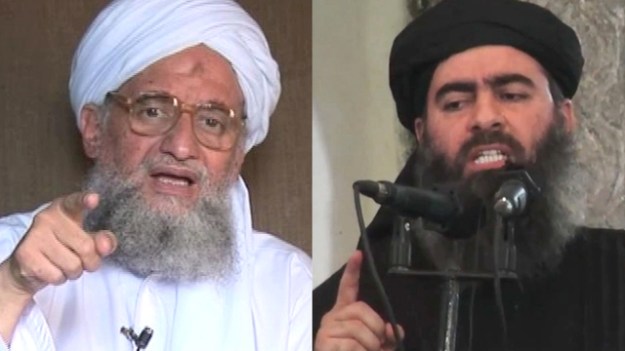
A couple of months ago, the Islamic State revealed that one of its most senior officials in the crucial media department until his death in January 2017 was an American, Ahmad Abousamra, known by various kunyas, including Abu Sulayman al-Shami and Abu Maysara al-Shami. Looking around afterwards, I came across an article by Abousamra condemning Adam Gadahn, another American, who was part of the core leadership of Al-Qaeda—one of the handful of men around Usama bin Laden and then Ayman al-Zawahiri—until he was killed in January 2015.

Continue reading

American Sanctions Hit Islamic State’s Finances, Propaganda, and Terrorism

By Kyle Orton (@KyleWOrton) on 16 June 2017

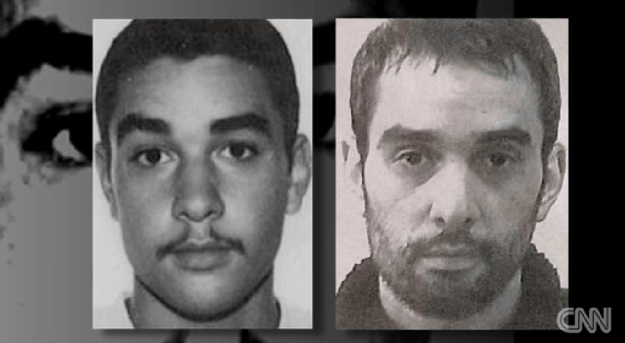
Usama Atar, older picture and most recent (picture via CNN)

Just three days after the U.S. government sanctioned two Islamic State (IS or ISIS) operatives for their role in helping the jihadists develop chemical weapons of mass destruction, another raft of sanctions were issued on 15 June against four IS members occupying varying positions within the organization from finance to propaganda to orchestrating the foreign attacks. Continue reading

America Sanctions Operatives of the Islamic State’s Chemical Weapons Department

By Kyle Orton (@KyleWOrton) on 13 June 2017

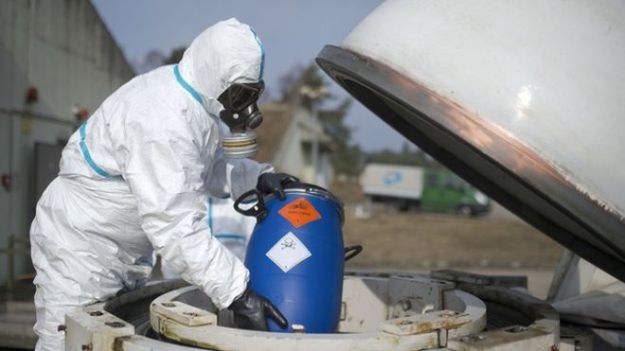
The U.S. Treasury Department’s Office of Foreign Assets Control (OFAC) announced financial sanctions against an individual involved in the “development” of chemical weapons of mass destruction (CWMD) for the Islamic State (IS) on 12 June. Simultaneously, the State Department labelled another individual involved in the development of CWMD for IS as a Specially Designated Global Terrorist (SDGT). These are the first sanctions of their kind. Continue reading

Al-Qaeda’s Deputy Killed in Syria

By Kyle Orton (@KyleWOrton) on February 27, 2017

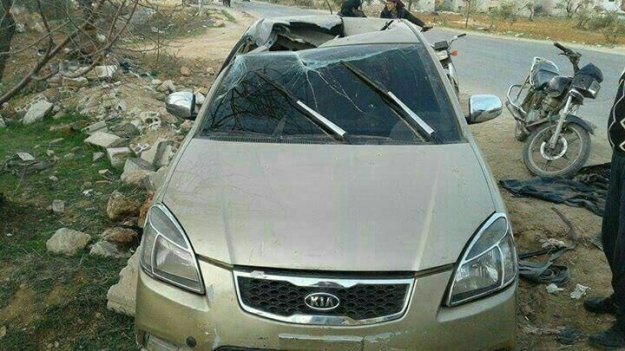
abu-al-khayr-car-killed-in

Last night it was reported that al-Qaeda’s overall deputy, Abu Khayr al-Masri, had been killed by the U.S.-led Coalition in Syria with a drone strike. This was soon seemingly confirmed by pro-Qaeda channels, and Abu al-Khayr was said to have been buried this morning. Though the emphasis on targeting jihadist leaders can be overdone, the demise of Abu al-Khayr is an important development, and one with significance beyond itself.

Abu al-Khayr’s career is demonstrative of a few interesting trends within the Jihadi-Salafist movement, primary among them the willingness of the Iranian revolution to work with the Sunni jihadists, al-Qaeda very much included, when it suits its purposes, particularly in undermining Western interests. Abu al-Khayr also elucidates the changed nature of al-Qaeda, where the “centre” (AQC) could now be said to be more in Syria than the Afghanistan-Pakistan, and where al-Qaeda operates both an overt and covert presence to try to secure a durable foothold in the Levant, which might in time be a base for attacks against the West, currently suspended only for tactical reasons. Continue reading

Al-Qaeda Reshapes the Insurgency in Northern Syria

By Kyle Orton (@KyleWOrton) on February 7, 2017

Hay’at Tahrir al-Sham logo

A series of clashes broke out on 19 January between al-Qaeda’s rebranded Syrian branch, Jabhat Fatah al-Sham (JFS), and its heretofore close ally and portal into the Syrian rebellion, Ahrar al-Sham. By 23 January, JFS had expanded its targets, engaging in hostilities with mainstream rebel groups in the “Greater Idlib” area, and specifically trying—and succeeding—in dismantling the positions of Jaysh al-Mujahideen, a moderate group, west of Aleppo. The crisis continued to escalate, forcing many groups to merge with Ahrar al-Sham for protection, until 28 January, when a JFS-led merger was announced under the banner of Hay’at Tahrir al-Sham (HTS), or the Syrian Liberation Committee. HTS announced a ceasefire, and since then individuals and groups—including a significant number from Ahrar—have given allegiance to HTS. This radical reshaping of revolutionary dynamics in northern Syria has undoubtedly created antibodies going forward against al-Qaeda that could be capitalized on by the international community, but the present situation is highly favourable to al-Qaeda. Continue reading

The Man Who Planned the Islamic State’s Takeover of Mosul

By Kyle Orton (@KyleWOrton) on January 31, 2017

Adnan al-Bilawi

Adnan al-Bilawi

Adnan Ismail Najem al-Bilawi al-Dulaymi (Abu Abdulrahman al-Bilawi), the leader of the Islamic State’s Military Council when he was killed on the eve of the Mosul offensive that he had planned in June 2014, was eulogized by IS’s official spokesman, Taha Falaha (Abu Muhammad al-Adnani), explaining his importance to the organization. Below is a profile of al-Bilawi and the section of Falaha’s speech dedicated to al-Bilawi. Continue reading

The Leader of the Islamic State in the 2004 Fallujah Battles: Umar Hadid

By Kyle Orton (@KyleWOrton) on January 30, 2017

Umar Hadid [right] (source)

Umar Hadid [right] (source)

Umar Hadid was a native of Fallujah, hence his kunya, Abu Khattab al-Falluji,[1] and a part of the extremist thread of the Salafist underground in Saddam Husayn’s Iraq. Working as an electrician for a time, Hadid had gone into internal exile years before the invasion after attacking Saddam’s security forces. In the aftermath of Saddam’s toppling, Hadid quickly joined with Ahmad al-Khalayleh (Abu Musab al-Zarqawi), the Jordanian founder of the Islamic State (IS) who had been in Baghdad from May 2002. Hadid rose swiftly in the ranks of the IS movement, and led the insurgency during the two battles with American forces in Fallujah in 2004, being killed during the second of them. Continue reading

The Flag of the Islamic State

By Kyle Orton (@KyleWOrton) on January 27, 2017

The Islamic State’s June 2014 declaration that the areas it controlled were the restored “Caliphate” was seen by many as a novel development. In fact, “the State” was declared in October 2006. The next month, the predecessor of the Islamic State (IS), Al-Qaeda in Mesopotamia (AQM), dissolved itself, and a month after that the claim to statehood was expanded upon—while being wilfully ambiguous about the caliphal pretensions—in the first speech by the then-emir, Hamid al-Zawi (Abu Umar al-Baghdadi). Similarly, though confusion remains on the point, it was in this same period that the symbol of the Islamic State, its black flag, was established.

Continue reading

The Islamic State’s Relationship With Al-Qaeda

By Kyle Orton (@KyleWOrton) on August 30, 2016

1

Since al-Qaeda broke ties with the Islamic State (IS), then the Islamic State of Iraq and Syria (ISIS), in 2014 there has been an ongoing war of narratives about what happened. Below is an attempt to work through this murky situation. Continue reading

Profile of the Islamic State Caliph: Abu Bakr al-Baghdadi

By Kyle Orton (@KyleWOrton) on August 7, 2016

This post is drawn from a recent report I published profiling the leadership of the Islamic State.

The leader of the Islamic State (IS) since 2010 has been Abu Bakr al-Baghdadi, previously known as Abu Dua or Abu Awad, and his real name—acknowledged by IS itself since the declaration of the so-called Caliphate in 2014—is Ibrahim Awwad Ibrahim Ali Muhammad al-Badri al-Samarrai.

Continue reading