Tag Archives: al-Qaeda

America’s Silent Partnership With Iran And The Contest For Middle Eastern Order: Part Three

By Kyle Orton (@KyleWOrton) on February 3, 2015

1

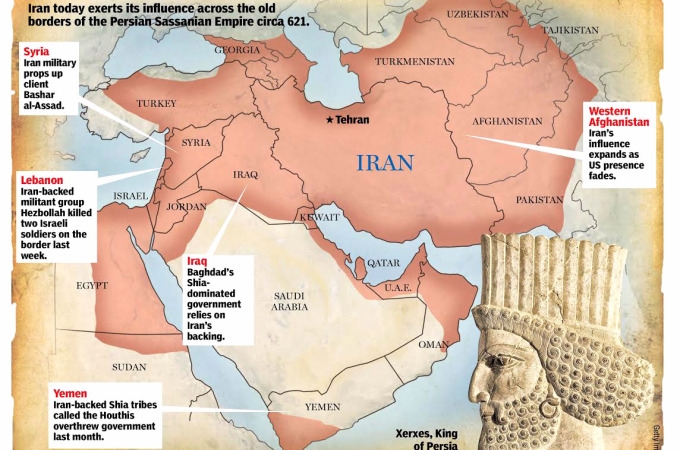
This is the third of a four-part series looking at the United States’ increasingly-evident de facto alliance with Iran in the region. This first part looked at the way this policy has developed since President Obama took office and how it has been applied in Iraq. The second part looked at the policy’s application in Syria; this part will look at its application in Lebanon, Afghanistan, and Yemen; and part four will be a conclusion. Continue reading →

America’s Silent Partnership With Iran And The Contest For Middle Eastern Order: Part Two

By Kyle Orton (@KyleWOrton) on January 29, 2015

Assad meeting with the boss

Assad meeting with the boss

This is the second of a four-part series looking at the United States’ increasingly-evident de facto alliance with Iran in the region. This first part looked at the way this policy has developed since President Obama took office and how it has been applied in Iraq. This part will look at the policy’s application in Syria; part three will look at its application in Lebanon, Afghanistan, and Yemen; and part four will be a conclusion. Continue reading →

America’s Silent Partnership With Iran And The Contest For Middle Eastern Order: Part One

By Kyle Orton (@KyleWOrton) on January 25, 2015

1

This is the first of a four-part series looking at the United States’ increasingly-evident de facto alliance with Iran in the region. This first part looks at the way this policy has developed since President Obama took office and how it has been applied in Iraq. Part two will look at the policy’s application in Syria; part three will look at its application in Lebanon, Afghanistan, and Yemen; and part four will be a conclusion. Continue reading →

A Debate On America’s Role In Syria’s Future

By Kyle Orton (@KyleWOrton) on January 21, 2015

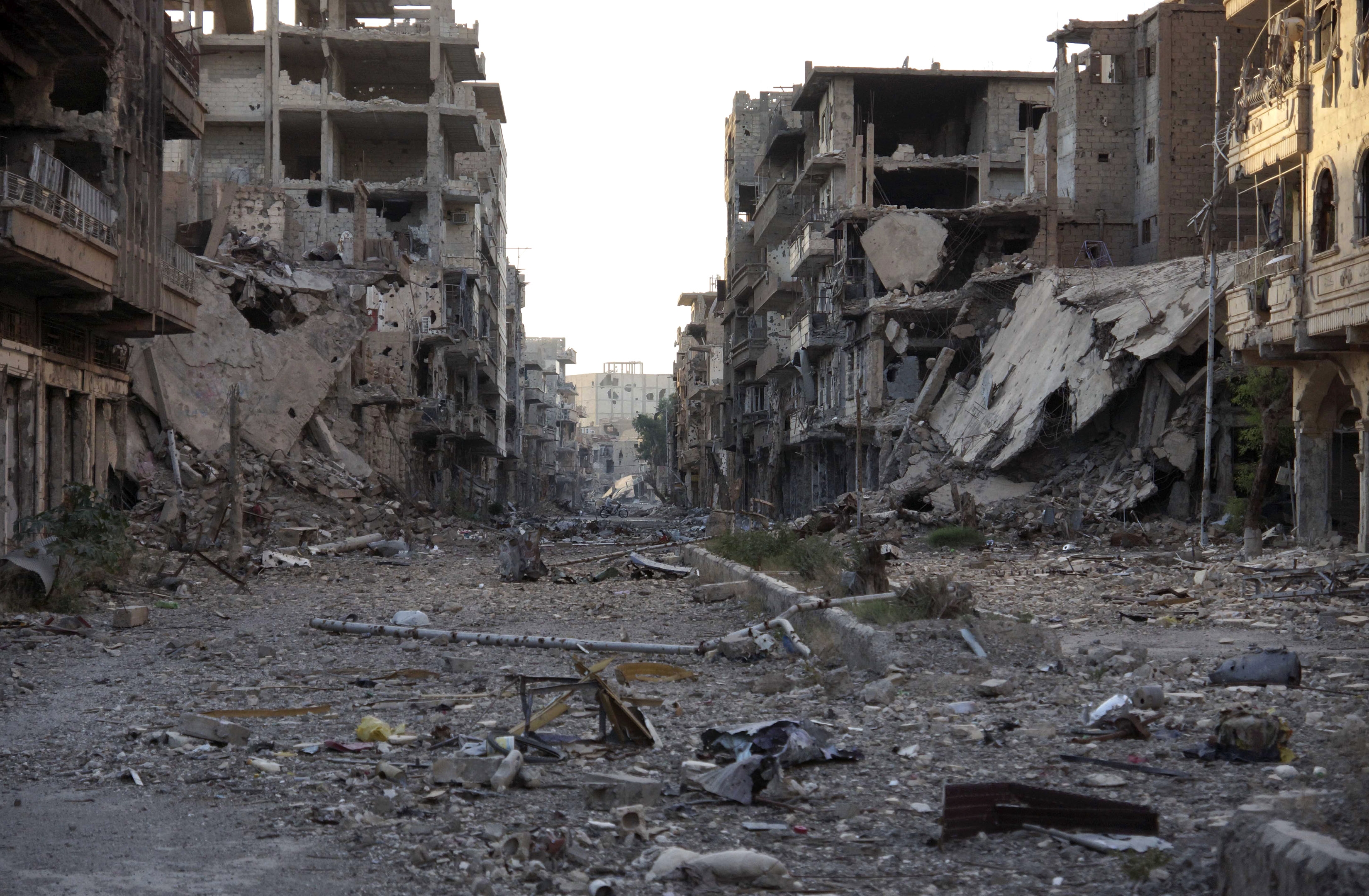
Devastation in Deir Ezzor, June 2013

Devastation in Deir Ezzor, June 2013

The McCain Institute hosted a debate last Thursday on the question, “Syria: Should the United States Do More?” Arguing in favour of the motion that the United States should do more was Michael Doran and Andrew Tabler. Arguing against were Joshua Landis and Aaron David Miller. Continue reading →

The Long History of Middle Eastern State-Terrorism In Paris

By Kyle Orton (@KyleWOrton) on January 19, 2015

Said Kouachi and Cherif Kouachi

Last week, Lee Smith wrote of the reasons that it was likely that there was a foreign hand, quite probably that of a State, in the attack on Charlie Hebdo and the Jewish deli in Paris. Smith noted that the French believe that the funding and weapons for the attacks came from abroad. Smith pointed to the historical record, in which terrorism in Paris is typically not carried out because of religion—or not directly: it might come from States that see themselves as god’s representatives on earth—or community grievances, but “because you’re getting paid to stage an operation on behalf of a particular cause or regime.” Smith gave three cases, and they seemed worth expanding on. Continue reading →

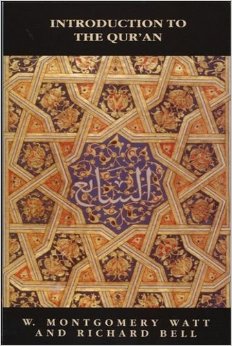
Book Review: Introduction to the Qur’an (1953) by Richard Bell

By Kyle Orton (@KyleWOrton) on January 13, 2015

4

Richard Bell’s Introduction to the Qur’an is, at less than 200 pages, a brief and easily-digestible explanation of the context in which Islam’s “holy” book arose, and the problems of reconciling theological orthodoxy with historical accuracy. More than six decades after publication, the book remains influential in scholarship of the Qur’an. Continue reading →

Al-Qaeda Issues Strategic Guidelines for Jihadist Warfare

By Kyle Orton (@KyleWOrton) on January 7, 2015

Al-Qaeda’s emir, Ayman al-Zawahiri, released a document on 14 September 2013, entitled, Tawjihat ‘Amma lil-Amal al-Jihadi (توجيهات عامة للعمل الجهادي), variously translated as: “General Guidelines for the Work of Jihad” or “General Guidelines for Jihadist Action”. Al-Zawahiri’s document is reproduced below. Continue reading →

From Kessab to Cannibals: Syria’s Media War

By Kyle Orton (@KyleWOrton) on January 5, 2015

Mother Agnes Mariam on RT. An agent of the regime, she dismissed Syria's rebels as a foreign conspiracy.

Mother Agnes Mariam on RT. An agent of the regime, she dismissed Syria’s rebels as a foreign conspiracy.

Fouad Ajami once said Syria was the “first YouTube war“. An academic study called Syria “the most socially mediated civil conflict in history“. From the start of the Syrian war, the media and propaganda dimension has been of immense importance, impacting the course of the war on the ground and affecting the policy of foreign States who could make a decisive difference in the conflict. Continue reading →

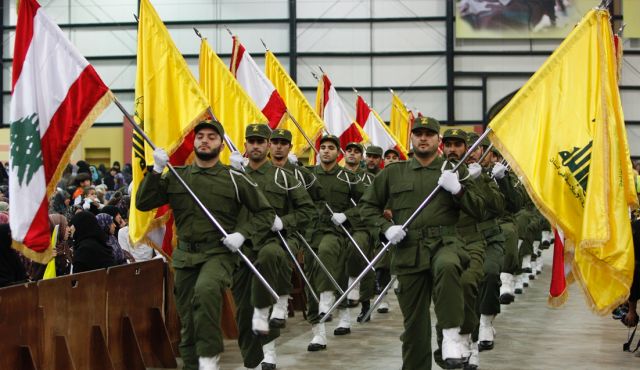
Iran Tries To Get American Support For Its Takeover Of Lebanon

By Kyle Orton (@KyleWOrton) on December 31, 2014

In early August, the Lebanese Armed Forces (LAF) arrested Abu Ahmad Jumaa, the leader of Liwa Fajr al-Islam (Islamic Dawn Brigade), which had been loyal to al-Qaeda’s Syrian branch, Jabhat an-Nusra but which had then-recently defected to the Islamic State (I.S.). In response, Nusra and I.S. fighters poured across the border into Arsal, Lebanon, where Jumaa was being held, and after five days of clashes the Salafi jihadists withdrew, taking with them thirty Lebanese security personnel. Five of the thirty are now dead: one from his injuries, the other four murdered—at least two of them beheaded. Continue reading →

What To Do About Syria: Sectarianism And The Minorities

By Kyle Orton (@KyleWOrton) on December 24, 2014

The Armenian Catholic Church of the Martyrs in Raqqa City

The Armenian Catholic Church of the Martyrs in Raqqa City

In the last few days I’ve been asked a lot about my longstanding view that the beginning of a Western strategy in Syria is the removal of Bashar al-Assad. The question has come from various angles and been phrased in various ways but it always boils down to: “What comes next?”

The best response I have seen to this comes from Thomas Nichols: “When someone says ‘tell me how it ends,’ it’s another way of saying: ‘I just don’t happen to like this particular case for intervention,’ for whatever reason.” Continue reading →