By Kyle Orton (@KyleWOrton) on April 2, 2016

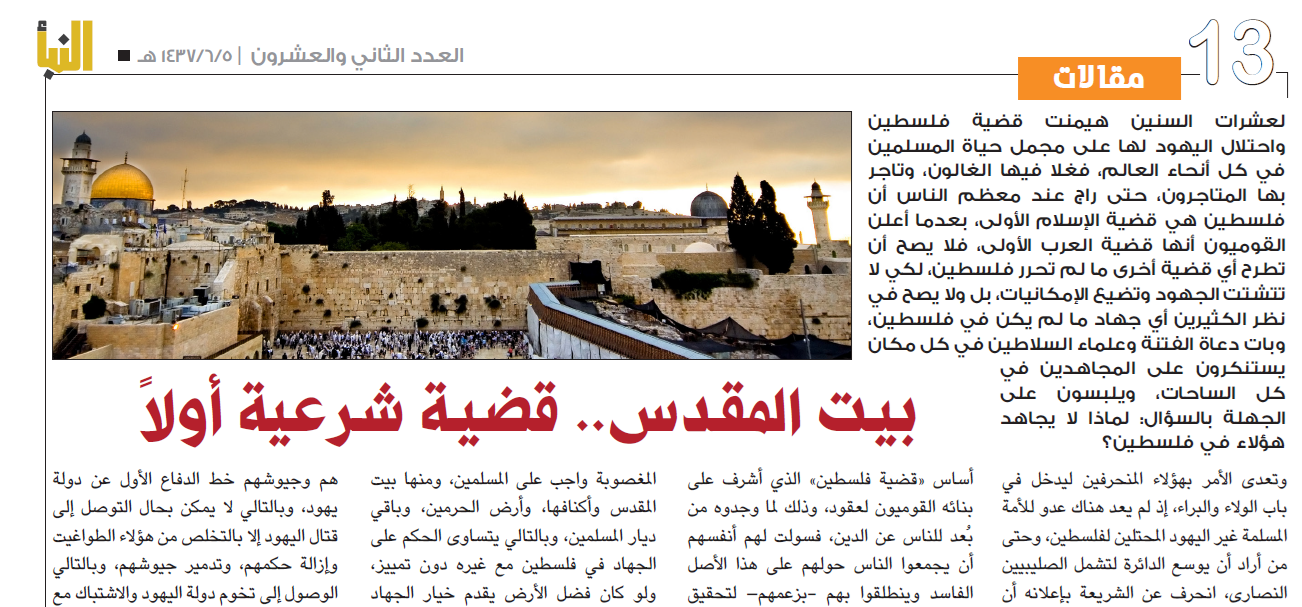
An article in the twenty-second edition of al-Naba, the Islamic State’s (IS) newsletter, released on 15 March 2016, explained why the group has not made fighting Israel a priority.
By Kyle Orton (@KyleWOrton) on April 2, 2016

An article in the twenty-second edition of al-Naba, the Islamic State’s (IS) newsletter, released on 15 March 2016, explained why the group has not made fighting Israel a priority.
By Kyle Orton (@KyleWOrton) on December 20, 2015

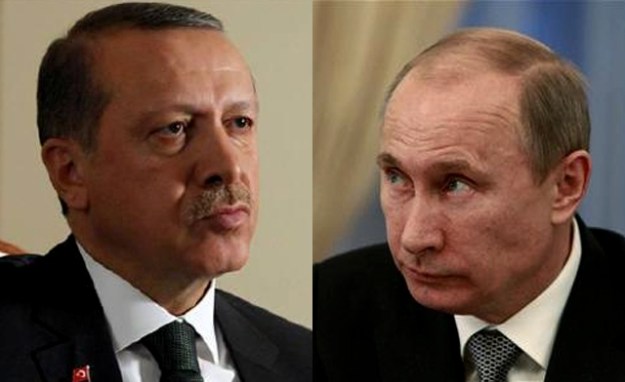
Turkey concluded its biggest investigation to date into Islamic State (IS) operatives on its territory on Friday, and blacklisted sixty-seven people. This provides a good moment to review what Turkey’s role has been in the rise of IS, especially amid the escalating accusations from Russia that Turkey is significantly responsible for financing IS. The reality is that while Turkish policy has, by commission and omission, made IS stronger than it would otherwise have been, so has Russia’s policy—and Russia’s policy was far more cynical than Turkey’s, deliberately intended empower extremists to discredit the rebellion against Bashar al-Assad. Turkey’s focus on bringing down Assad and Ankara’s fear of Kurdish autonomy led it into these policies and now—having seemingly found the will to act to uproot IS’s infrastructure on Turkish territory—there is the problem of actually doing so, when IS can (and has) struck inside Turkey. The concerns about these external funding mechanisms for IS, while doubtless important, obscure the larger problem: IS’s revenue is overwhelmingly drawn from the areas it controls and only removing those areas of control can deny IS its funds. Continue reading
Book Review: The Connection: How al-Qaeda’s Collaboration With Saddam Hussein Has Endangered America (2004) by Stephen Hayes
By Kyle Orton(@KyleWOrton) on June 21, 2015
More than twelve years after the fall of Saddam Hussein, the conventional wisdom is that Saddam’s regime had no connection with al-Qaeda, and such “evidence” as was adduced was tortured out of Ibn al-Shaykh al-Libi in the Bush administration’s desperation to cobble together a casus belli. But if one puts ideology on hold, and considers the evidence of Stephen Hayes’ The Connection, a rather different picture emerges. Continue reading
By Kyle Orton (@KyleWOrton) on April 9, 2015
Abdul Hadi Arwani, a Syrian-born imam, was found shot dead in his car on Tuesday in Wembley, northwest London. The British police are still refusing to officially name Arwani, but his friends and supporters have done so. Arwani leaves behind six children.
There are many possibilities for who killed Arwani. As the manager of a construction firm, it could be a deal gone wrong. The involvement of anti-terrorism police in the investigation into Arwani’s murder could indicate a far-Right anti-Muslim assailant. However, a source close to the investigation said that Arwani was struck down in an operation that had all the hallmarks of a “State-sponsored assassination“. To find that the long arm of Bashar al-Assad’s mukhabarat had caught up with Arwani would hardly be a surprise. Continue reading
By Kyle Orton (@KyleWOrton) on March 27, 2015
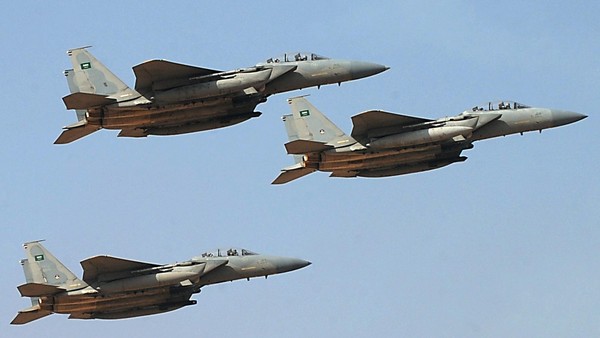
Late in the day on March 25, a Saudi-led coalition intervened in Yemen with airstrikes against the Houthis.
The Iranian-backed Houthis (a.k.a. Ansar Allah) took over Yemen’s capital, Sanaa, in September, and forced the resignation of the Saudi-backed Yemeni ruler, Abed Rabbo Mansour Hadi, in January. Hadi escaped house arrested in Sanaa and retreated to Aden with the remnants of his regime. On March 21, the Houthis had called for a “general mobilisation” and by the next day had pushed south toward Aden. The Houthis said they were combatting “terrorist forces”. As in Syria, Iran’s allied forces cast a narrative where there were no Sunni moderates, nobody with whom a deal might be struck.
Hadi’s predecessor, Ali Abdullah Saleh, whose resignation was compelled in early 2012 after the “Arab Spring,” stands accused not only by Hadi but by the United States of supporting the Houthis. Continue reading
By Kyle Orton (@KyleWOrton) on January 29, 2015
This is the second of a four-part series looking at the United States’ increasingly-evident de facto alliance with Iran in the region. This first part looked at the way this policy has developed since President Obama took office and how it has been applied in Iraq. This part will look at the policy’s application in Syria; part three will look at its application in Lebanon, Afghanistan, and Yemen; and part four will be a conclusion. Continue reading
By Kyle Orton (@KyleWOrton) on January 25, 2015
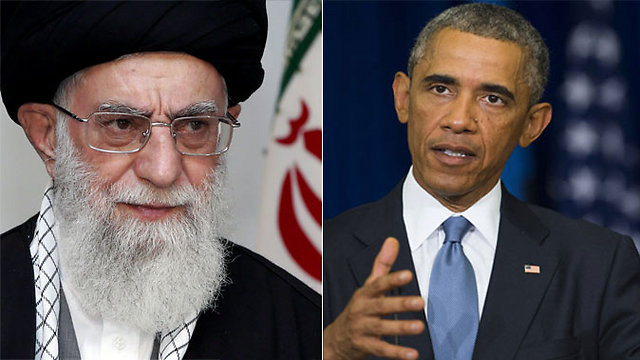
This is the first of a four-part series looking at the United States’ increasingly-evident de facto alliance with Iran in the region. This first part looks at the way this policy has developed since President Obama took office and how it has been applied in Iraq. Part two will look at the policy’s application in Syria; part three will look at its application in Lebanon, Afghanistan, and Yemen; and part four will be a conclusion. Continue reading
By Kyle Orton (@KyleWOrton) on September 25, 2014
Middle East Monitor Online (MEMO) has published an article by Yvonne Ridley that consists of an interview with Hassan Abboud just a few hours before he and most of the Ahrar a-Sham leadership were killed on September 9. The accusations Ridley records Abboud levelling against the Islamic State (I.S.) are deeply upsetting to the conventional view of the Syrian conflict. Continue reading
By Kyle Orton (@KyleWOrton) on September 21, 2014
Last month, Jeffrey Goldberg at The Atlantic published an interview with Hillary Clinton. At 8,000 words it can be off-putting to plough through, but I have now finally got around to it, and it is rather interesting. The interview focusses on the three areas where President Obama’s foreign policy has so conspicuously failed—Syria, Iran, and Israel—and also includes sections on Egypt and Libya, where the administration’s failure has been somewhat less in the news. Continue reading
By Kyle Orton (@KyleWOrton) on September 6, 2014

Notification from Ibn Taymiyya Media Center’s Facebook page on the “martyrdom” of Gazan Muhammad Ahmed Qanitah (March 2013)
On August 11, Jamaat Ansar ad-Dawla al-Islamiya fi Bayt al-Maqdis (The Group of the Supporters of the Islamic State in Jerusalem), released a “martyrdom” notice for “the mujahid brother” Mahmoud Nayef al-Qayrnawi (Abu al-Bara) of Gaza, who was killed by the regime on July 26 while fighting for the Islamic State (I.S.) at the Sha’ar gas field in Homs.
This is not the first Gazan jihadist killed in Syria. Continue reading