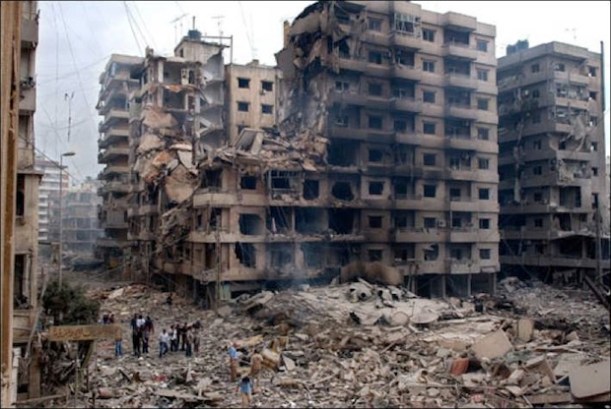
The destroyed Marine barracks that Iran’s agents blew up in Beirut on 23 October 1983 (image source)
The United States Department of Justice released indictments on 8 June 2017 for two operatives of the jihadist terrorist organisation, Hizballah, the Lebanese branch of Iran’s Islamic Revolutionary Guard Corps (IRGC), which is tasked with exporting the Islamist revolution in Iran through terrorism, subversion, and other means. The two men, Ali Kourani of New York and Samer al-Debek of Michigan, had been arrested on 1 June, and are charged with conducting surveillance for potential future terrorist attacks in the United States. Continue reading →
This essay, written to tie together my work on the relationship between the Saddam Hussein regime and the Islamic State, was completed last summer and submitted to an outlet, where it entered a form of development hell. After giving up on that option late last year, the opportunity arose to get a shorter version published in The New York Times in December. But I procrastinated too long over what to do with the full essay and a recent change in my work situation means I no longer have the bandwidth to go through the process of finding it a new home, so here it is.
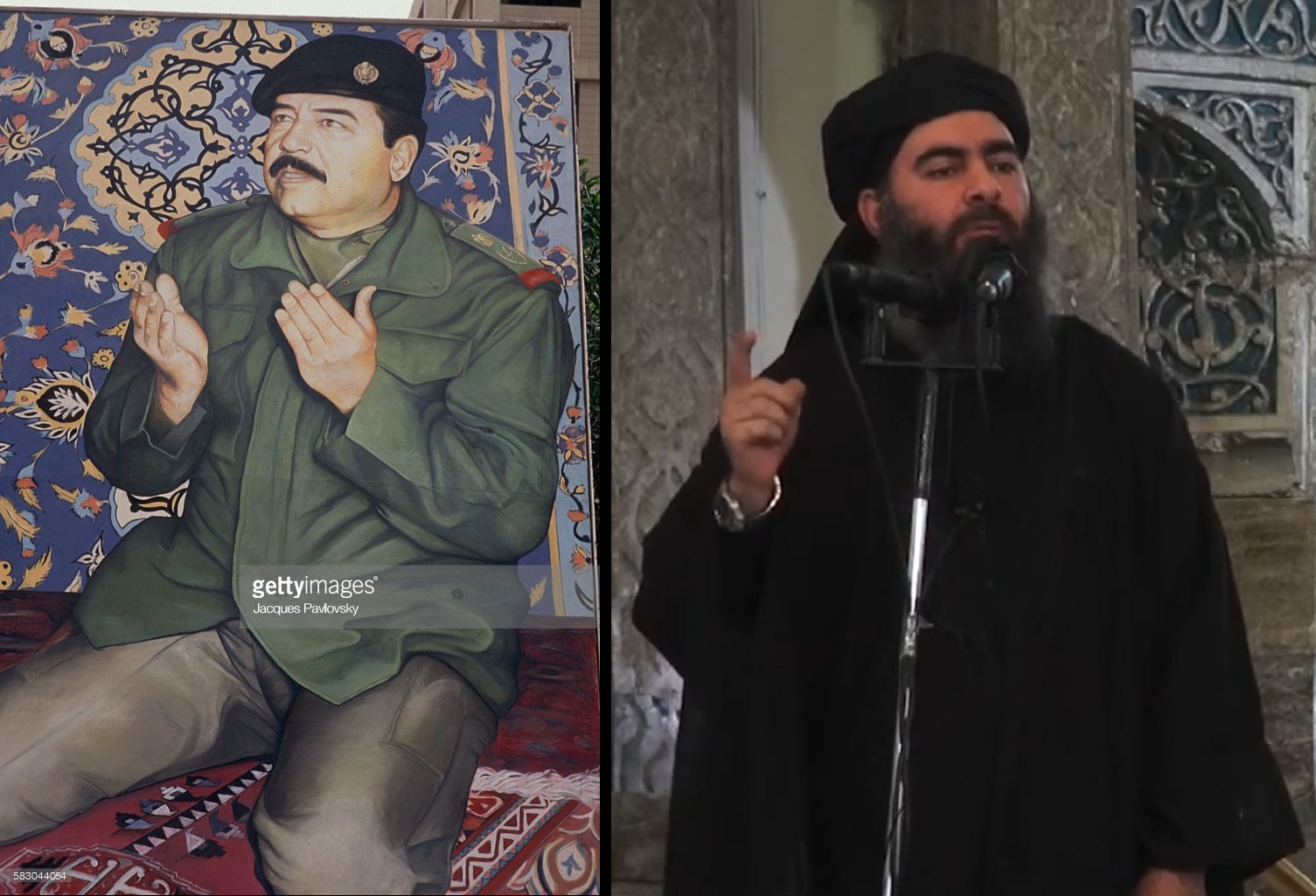
“Abu-Bakr al Baghdadi is a product of the last decade of Saddam’s reign,” argues Amatzia Baram, a scholar of Iraq. He is correct in at least three ways. First, in its last decade in power, the Iraqi Ba’ath regime transformed into an Islamist government, cultivating a more religious, sectarian population on which the Islamic State (ISIS) could draw. Part of Saddam Hussein’s “Faith Campaign” also involved outreach to Islamist terrorists, including al-Qaeda, which meant that the synthesis of Ba’athism and Salafism that fused into the Iraqi insurgency after the fall of Saddam was already well advanced by the time the Anglo-American forces arrived in Baghdad in 2003. Second, the ISIS leadership and military planning and logistics is substantially reliant on the intellectual capital grown in the military and intelligence services of the Saddam regime. And finally, the smuggling networks on which ISIS relies, among the tribes and across the borders of Iraq’s neighbours, for the movement of men and materiel, are directly inherited from the networks erected by the Saddam regime in its closing decade to evade the sanctions. The advantages of being the successor to the Saddam regime make ISIS a more formidable challenge than previous Salafi-jihadist groups, and one that is likely to be with us for some time.
Khobar Towers, which Iran jointly bombed with al-Qaeda
Argentina’s government yesterday announced it was dissolving the Secretariat of Intelligence (S.I.), an intelligence agency tainted by the “Dirty War” regimes (1974-83), and more recent abuses as President Cristina Kirchner has taken Argentina back toward autocracy, and replacing it with a Federal agency. Just two days before, charges of corruption were levelled against Antonio Stiusso, S.I.’s director until Kirchner fired him in December. At the beginning of this month, Stiusso went missing. It now seems Stiusso has taken shelter in a neighbouring State.
These events are the latest twist in an extraordinary saga that has followed the discovery of the body of Alberto Nisman on Jan. 18 in his apartment in Buenos Aires, shot in the head in an apparent suicide. Nisman was a prosecutor investigating the July 18, 1994, bombing of the Argentine Israelite Mutual Association (AMIA) building in Argentina’s capital. All the evidence that Nisman had gathered pointed to Iran as the perpetrator. Few believe Nisman committed suicide, and—the history of Argentines being “suicided” considered—most fingers are pointing at Iran. Continue reading →
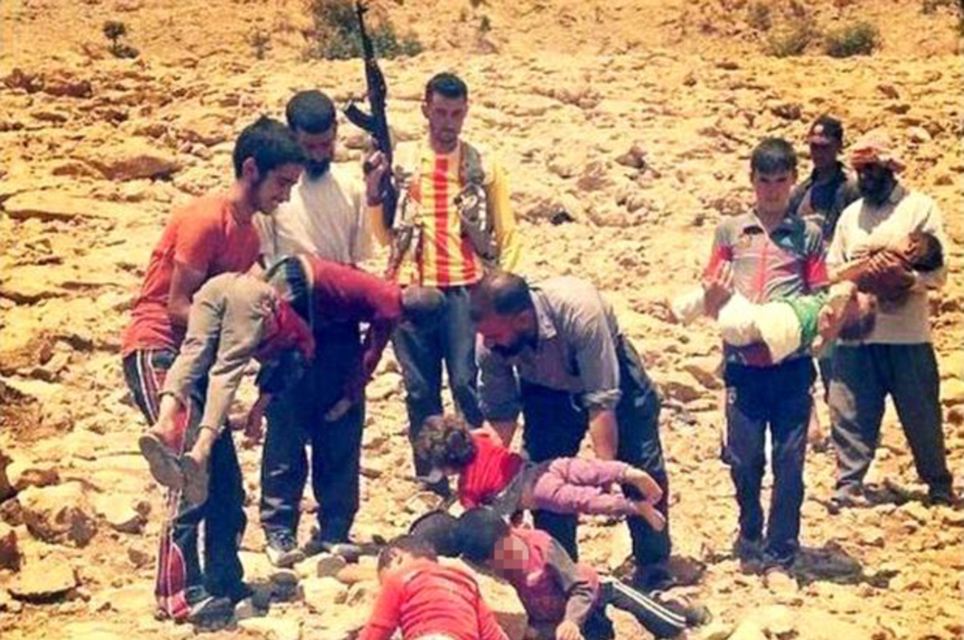
Yazidis fleeing from the Islamic State to Mount Sinjar, carrying their children
When the United States finally intervened against the Islamic State (I.S.) in early August the timing, if not exactly the strategic imperative, was determined at least in part by the scenes of Yazidis being starved to death on the side of Mount Sinjar. The Yazidis were forced to choose between descending the mountain and being murdered by the takfiris or remaining and dying of dehydration. As it turns out they were the lucky ones. Continue reading →
Middle East Monitor Online (MEMO) has published an article by Yvonne Ridley that consists of an interview with Hassan Abboud just a few hours before he and most of the Ahrar a-Sham leadership were killed on September 9. The accusations Ridley records Abboud levelling against the Islamic State (I.S.) are deeply upsetting to the conventional view of the Syrian conflict. Continue reading →