By Kyle Orton (@KyleWOrton) on 22 January 2023

By Kyle Orton (@KyleWOrton) on 4 September 2022

Christian homes burned by the Islamic State in the Ituri region of the Democratic Republic of the Congo || Al-Naba 352, p. 5
By Kyle Orton (@KyleWOrton) on 3 September 2022
By Kyle Orton (@KyleWOrton) on 26 May 2020
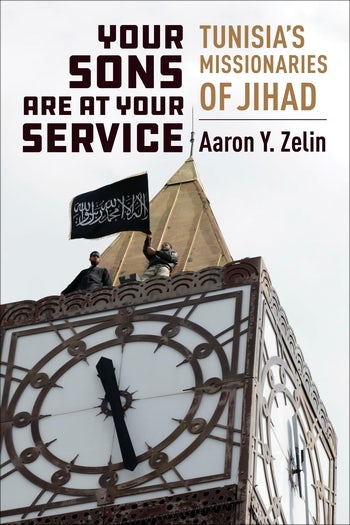
Early in his new book, Your Sons Are At Your Service: Tunisia’s Missionaries of Jihad, The Washington Institute’s Aaron Zelin quotes a pair of sociologists who note that ‘where theories are plentiful … ideas are vacuous’. The book is in many ways the antithesis of this approach. It is not without theoretical content; where social movement theory arises as a means of understanding jihadism, say, the author gives an overview of the literature to contextualise it for the reader. But the general approach is historical, empirical, and detail-rich, so that by the time Zelin summarises his findings in the various sections there can be no doubt about the evidentiary basis. Continue reading
By Kyle Orton (@KyleWOrton) on 28 December 2019

In a long article last week, I looked at why the U.S. ran a formal occupation of Iraq for fourteen months after the fall of Saddam Husayn in April 2003, given that there had been an explicit pre-invasion decision not to have an occupation government. The short answer is that the occupation was installed through deception by the State Department, supported by the Central Intelligence Agency (CIA). State and CIA had argued for a protracted occupation in the Situation Room debates in 2002, but President George W. Bush had sided with the Pentagon, which advocated a rapid transfer of power to Iraqis. Having lost in the formal inter-agency process, the State Department succeeded by subversion in getting its way on the ground in Iraq. The disaster this caused in the mismanagement of post-Saddam Iraq was, as the article explained in detail, only the most serious impact of the toxic schism between State/CIA and the Pentagon, a factor whose import is difficult to overstate when examining how the Bush administration functioned. (This feud also at times drew in the Vice President’s Office, which tended to support the Pentagon.)
By Kyle Orton (@KyleWOrton) on 20 March 2019

Abbas Milani’s The Shah gives a portrait of Iran’s last monarch, Muhammad Reza Pahlavi, and the impact that his downfall forty years ago continues to have in the Middle East, notably the emboldening of the Islamist movement. Continue reading
By Kyle Orton (@KyleWOrton) on 9 March 2019
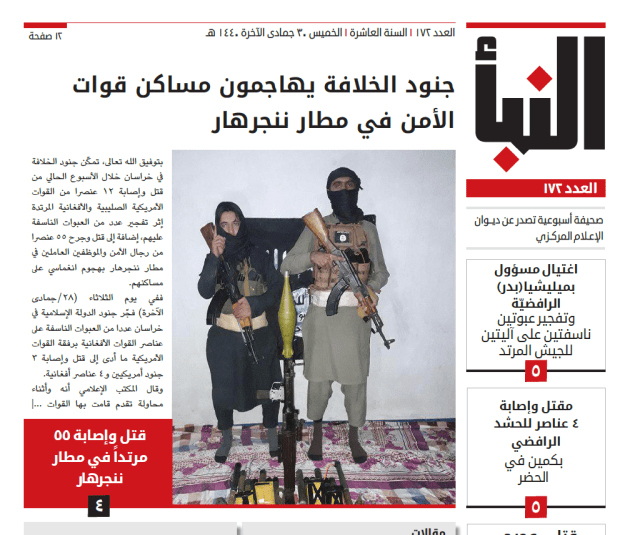
Al-Naba 172 front page
The Islamic State (IS) released the 172nd edition of Al-Naba, its newsletter, on 7 March 2019. Continue reading
By Kyle Orton (@KyleWOrton) on 17 January 2019
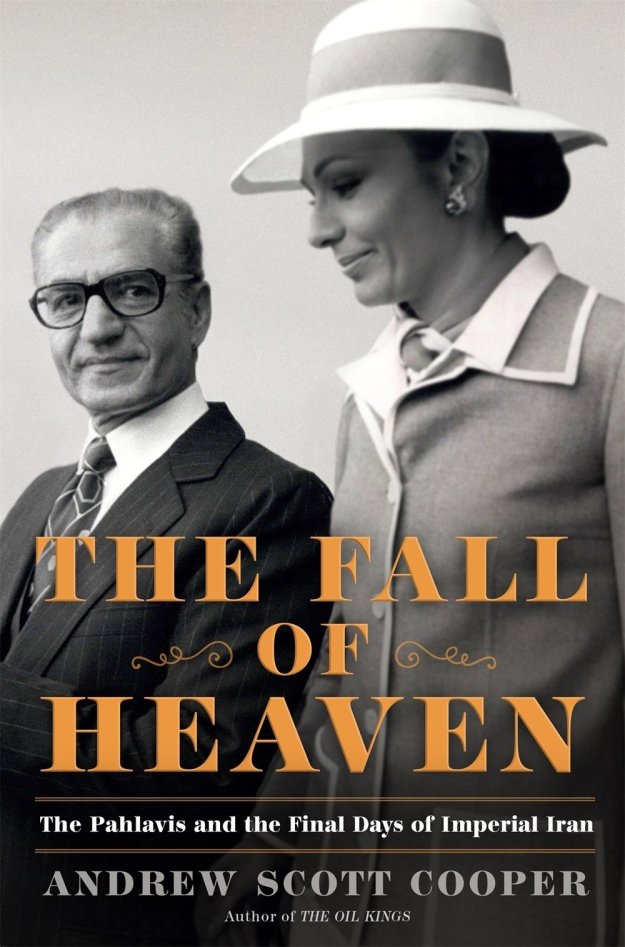
Forty years ago yesterday, Muhammad Reza Pahlavi, the Shah (King) of Iran, left his country for the last time as a year-long revolution crested. A month later, the remnants of the Imperial Government collapsed and Grand Ayatollah Ruhollah Khomeini was swept to power after his long exile, establishing the first Islamist regime. Andrew Scott Cooper’s 2016 book, The Fall of Heaven: The Pahlavis and the Final Days of Imperial Iran, charts how this happened. Continue reading
By Kyle Orton (@KyleWOrton) on 11 September 2018
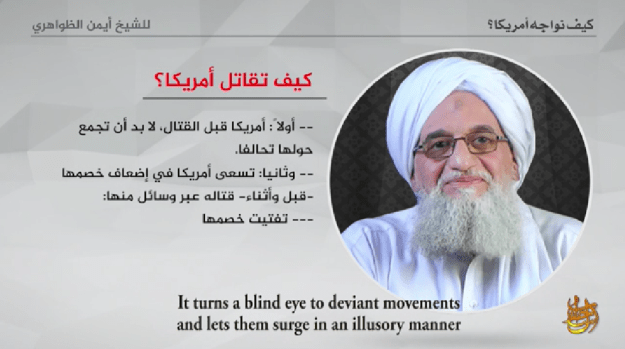
Al-Qaeda’s emir, Ayman al-Zawahiri, released a half-hour video speech today, entitled, “How to Confront America”. Al-Zawahiri’s speech mentions in passing the move of the U.S. Embassy in Israel from Tel Aviv to Jerusalem, but this—and the increasing relations of the Gulf states with the Jewish state—are held to be mere examples of the rot spread by America. Despite the lessening of Christian belief in the West, says Al-Zawahiri, the inhabitants of what was once called Christendom remain “Crusaders” at heart, with a fierce hatred for Islam and Muslims. Perhaps worse than any physical attack on the jihadists, however, is the ideological challenge of America’s secularism, Al-Zawahiri adds. An English transcript of the speech was released by As-Sahab Media and is reprinted below. Continue reading


 Kyle Orton's Blog