Tag Archives: terrorism

Al-Qaeda’s Deputy Killed in Syria

By Kyle Orton (@KyleWOrton) on February 27, 2017
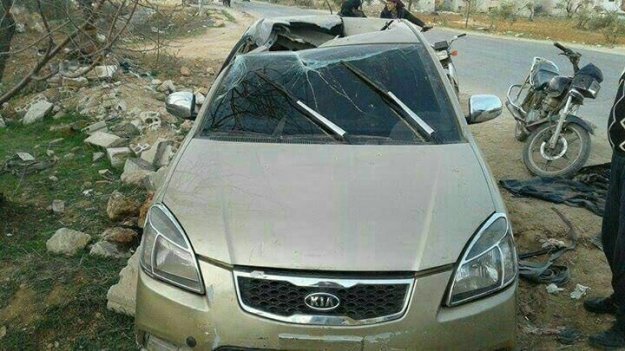
abu-al-khayr-car-killed-in

Last night it was reported that al-Qaeda’s overall deputy, Abu Khayr al-Masri, had been killed by the U.S.-led Coalition in Syria with a drone strike. This was soon seemingly confirmed by pro-Qaeda channels, and Abu al-Khayr was said to have been buried this morning. Though the emphasis on targeting jihadist leaders can be overdone, the demise of Abu al-Khayr is an important development, and one with significance beyond itself.

Abu al-Khayr’s career is demonstrative of a few interesting trends within the Jihadi-Salafist movement, primary among them the willingness of the Iranian revolution to work with the Sunni jihadists, al-Qaeda very much included, when it suits its purposes, particularly in undermining Western interests. Abu al-Khayr also elucidates the changed nature of al-Qaeda, where the “centre” (AQC) could now be said to be more in Syria than the Afghanistan-Pakistan, and where al-Qaeda operates both an overt and covert presence to try to secure a durable foothold in the Levant, which might in time be a base for attacks against the West, currently suspended only for tactical reasons. Continue reading
Islamic State Has Been Defeated in Al-Bab, But America Needs a New Direction in Syria

Published at The International Business Times and subsequently discussed on the IBTimes podcast

By Kyle Orton (@KyleWOrton) on February 27, 2017

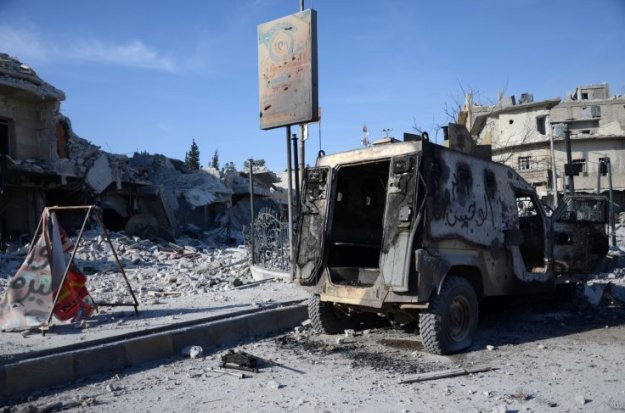
A burnt-out vehicle on a destroyed street in al-Bab on 23 February 2017 (Nazeer al-Khatib/AFP/Getty Images)

Turkey intervened in Syria in August 2016 with Operation Euphrates Shield (OES), which involved special forces, some regular troops, and the mobilisation of Syrian rebels to clear its border of terrorist threats by pushing ISIS (the Islamic State) away from the frontier and preventing the Syrian branch of the Kurdistan Workers’ Party (PKK) creating a state-let on its border that could be used as a harbour and launch-pad for attacks inside Turkey.

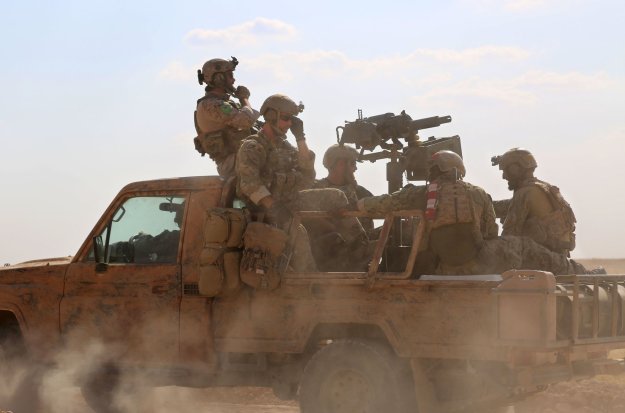
To secure this mission, on 13 November 2016 OES began an assault on al-Bab in the eastern countryside of Aleppo Province, just 15 miles from Turkey’s border and ISIS’ last major urban centre in Syria outside its capital, Raqqa. Some 102 days of combat later, on 23 February, al-Bab fell. What happens next could determine the course of the war as Turkey competes with the PKK to be the U.S.-led Coalition’s partner in clearing ISIS from Raqqa. Continue reading

The Need for Caution in Releasing Guantanamo Inmates

Originally published at The Henry Jackson Society.

By Kyle Orton (@KyleWOrton) on February 21, 2017

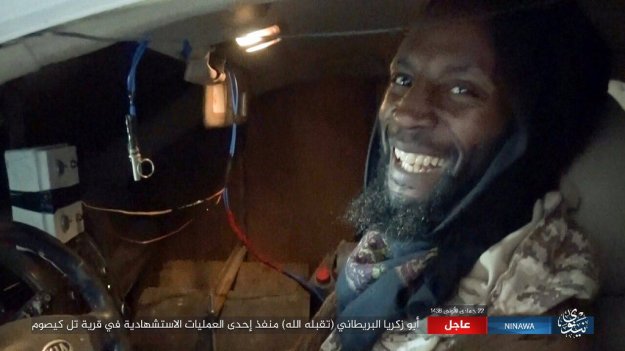
Ronald Fiddler (Abu Zakariya al-Britani)

Ronald Fiddler (Abu Zakariya al-Britani)

Since the offensive against Mosul, the Iraqi capital of the Islamic State (IS), began five months ago, IS has expended a high number of lives quite deliberately in suicide attacks. One of the suicide-attacks conducted on 20 February 2017, a car bombing against an Iraqi base, was by Abu Zakariya al-Britani, a British citizen now identified as Ronald Fiddler from Manchester. In 2002, Fiddler, then calling himself Jamal Udeen al-Harith, was sent to Guantanamo Bay, before being released in 2004 while still protesting his innocence. After suing the British government over his imprisonment, Fiddler received a substantial cash settlement in order to avoid compromising state secrets. Fiddler’s demise invites some revisiting of widely-held assumptions surrounding Guantanamo. Continue reading

Liberating Raqqa from the Islamic State

By Kyle Orton (@KyleWOrton) on February 17, 2017

As the new administration of Donald Trump works through the United States’ options in dealing with Syria, and the Islamic State (IS) specifically, one option apparently under consideration is the use of greater numbers of combat troops to accelerate the expulsion of IS from its Syrian capital, Raqqa. While more U.S. troops would undoubtedly hasten the collapse of IS’s grip on its urban strongholds in Syria, such a policy risks continuing the failed U.S. policies of the past six years in Syria that have tackled symptoms of the conflict, rather than its causes, have tried to tackle elements in isolation from the wider conflict, and have placed too great an emphasis on military progress over politics. Continue reading

When the Islamic State’s Founder Clashed with an Al-Qaeda Cleric

By Kyle Orton (@KyleWOrton) on February 12, 2017

Abu Musab al-Zarqawi [left] and Abu Muhammad al-Maqdisi [right]

Al-Qaeda’s expulsion of the Islamic State (IS) from its ranks three years ago did not come from nowhere. IS had always been problematic and the dispute in the months leading up to the decisive break was far from the first time that Al-Qaeda “central” had clashed with the Iraq-based group. Continue reading

How the Islamic State Claims Terrorist Attacks

By Kyle Orton (@KyleWOrton) on February 4, 2017

2

With the attempted terrorist attack using machetes at the Louvre museum in Paris yesterday by Abdullah Reda al-Hamamy, whose social media history shows statements at least sympathetic to the Islamic State (IS), it raises once again the question, making no assumptions about al-Hamamy’s motives, of how connected the organization headquartered in Raqqa is to the attacks taking place around the world under IS’s banner—and how we would know.

As IS’s attacks outside of the statelet it has built in Iraq and Syria increased in frequency over the last year, a rather routinized mechanism has developed for attributing blame: IS claims the atrocities—or attempted atrocities—through Amaq News Agency. Continue reading

The Flag of the Islamic State

By Kyle Orton (@KyleWOrton) on January 27, 2017

The Islamic State’s June 2014 declaration that the areas it controlled were the restored “Caliphate” was seen by many as a novel development. In fact, “the State” was declared in October 2006. The next month, the predecessor of the Islamic State (IS), Al-Qaeda in Mesopotamia (AQM), dissolved itself, and a month after that the claim to statehood was expanded upon—while being wilfully ambiguous about the caliphal pretensions—in the first speech by the then-emir, Hamid al-Zawi (Abu Umar al-Baghdadi). Similarly, though confusion remains on the point, it was in this same period that the symbol of the Islamic State, its black flag, was established.

Continue reading

What to Expect in Syria in 2017

By Kyle Orton (@KyleWOrton) on January 25, 2017

Syria has broken down as a functioning entity. There were some who saw in the takeover of Aleppo City last month by the coalition of states and militias that supports Bashar al-Assad’s regime the beginning of the end of the war. The pro-Assad coalition will make further territorial gains in 2017, but peace—even the peace of the graveyard—is still a long way off, and unlikely to ever arrive while Assad remains in power. The West, unwilling and apparently unable to remove him, nonetheless has vital interests in Syria that cannot be outsourced and must be secured by navigating a fragmented state. Continue reading

Jihadist Profile of Abu Bakr al-Baghdadi

By Kyle Orton (@KyleWOrton) on January 23, 2017

A short biography of the “Caliph” of the Islamic State (IS), Ibrahim al-Badri (Abu Bakr al-Baghdadi), was leaked online by the group in July 2013. A rough translation is reproduced below.

Continue reading

Islamic State Likely To Increase Terrorism Against Turkey

By Kyle Orton (@KyleWOrton) on January 7, 2017

Abdulkadir Masharipov (source)

It was an hour into 2017 that the Islamic State (IS) carried out its first act of mass-murder: an IS jihadist attacked the Reina nightclub in Istanbul, massacring thirty-nine people. IS has been attacking Turkey with increasing frequency over the last two years and, since Turkey intervened directly in Syria in August, IS’s media output has elevated the Turks into a priority target for terrorism. The public claim of responsibility by IS for the Reina attack suggests that we are moving into a new era in terms of how IS treats Turkey. Turkey’s increasingly warm relations with Russia have angered many Muslims around the world, providing jihadists an incentive and opportunity, and providing al-Qaeda political space it seemed to have lost to co-opt the Syrian rebellion. It is therefore likely that more bloodshed is to come for Turkey. Continue reading