Tag Archives: Turkey

Russia is No Partner Against the Islamic State

By Kyle Orton (@KyleWOrton) on February 12, 2016
1

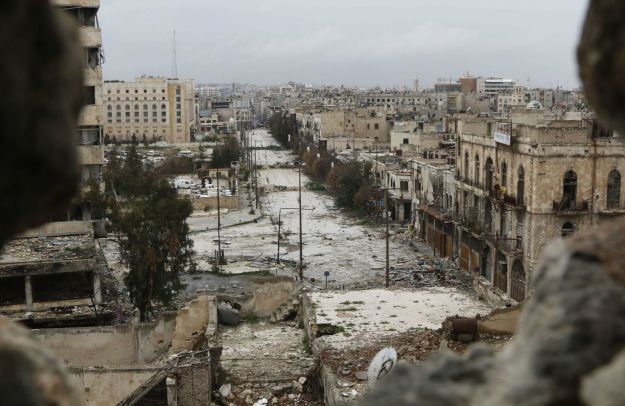
This morning, Russia ostensibly agreed to help the U.S. impose a ceasefire in Syria within a week—on the way to a negotiated settlement. This could not work right now, even if Russia intended it to. But Russia does not. Russia’s role since intervening in Syria in late September 2015 has been to bolster the regime of Bashar al-Assad and a primary tactic in that overarching strategic aim has been the attempt to destroy all opposition to Assad that the international community could possibly deal with, and to create a binary situation where there is only the regime and jihadi-Salafist terrorists, primarily the Islamic State (IS), and secondarily—in areas where they do not threaten key regime interests—Jabhat an-Nusra (al-Qaeda). Moscow will eventually turn on IS, but in the short-term Russia has engaged in indirect coordination with IS to weaken the rebels and push them out of key strategic areas, notably in eastern Aleppo where Russia bombed rebels out of the way who had been holding IS out for years. On Tuesday, Foreign Policy reported on another aspect of this Russia-IS collaboration that aims to empower the takfiris in the short-term as part of the long-term plan, also supported by Iran, to secure the Assad regime in power. Continue reading
Propaganda and the War Against Independent Media in Syria

By Kyle Orton (@KyleWOrton) on December 29, 2015

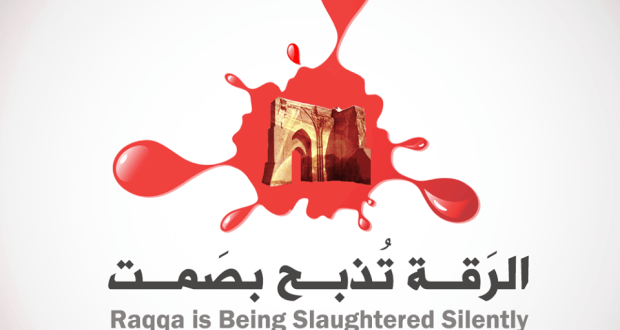
In the last month, the Islamic State (IS) has been waging a concerted campaign to shut down all independent sources of information emanating from its statelet. IS’s focus has been on Raqqa is Being Slaughtered Silently (RBSS), an activist group that began in April 2014 in IS’s de facto capital in northern Syria. RBSS has published information—including pictures and videos, much of it via Twitter—on the crimes of the “caliphate”. IS has now murdered at least five RBSS journalists and activists, two of them on foreign soil in Turkey, plus the father of one of RBSS’s founders. (The sixth case, also in Turkey, is more murky.) The suppression of independent media by IS is necessary to allow the group to maintain social control of the areas it rules and to sustain the narrative that it is building utopia on earth, which attracts in the foreign fighters that help IS maintain and expand its territory.
Continue reading

Is Turkey Responsible for the Islamic State?

By Kyle Orton (@KyleWOrton) on December 20, 2015

1

Turkey concluded its biggest investigation to date into Islamic State (IS) operatives on its territory on Friday, and blacklisted sixty-seven people. This provides a good moment to review what Turkey’s role has been in the rise of IS, especially amid the escalating accusations from Russia that Turkey is significantly responsible for financing IS. The reality is that while Turkish policy has, by commission and omission, made IS stronger than it would otherwise have been, so has Russia’s policy—and Russia’s policy was far more cynical than Turkey’s, deliberately intended empower extremists to discredit the rebellion against Bashar al-Assad. Turkey’s focus on bringing down Assad and Ankara’s fear of Kurdish autonomy led it into these policies and now—having seemingly found the will to act to uproot IS’s infrastructure on Turkish territory—there is the problem of actually doing so, when IS can (and has) struck inside Turkey. The concerns about these external funding mechanisms for IS, while doubtless important, obscure the larger problem: IS’s revenue is overwhelmingly drawn from the areas it controls and only removing those areas of control can deny IS its funds. Continue reading

In View of Vienna

By Kyle Orton (@KyleWOrton) on December 15, 2015

Published at NOW Lebanon.

1

So the Syrian opposition can unite. Foreign powers have been the major cause of rebel discord. Previous rebel unity initiatives like the Joint Command were pulled apart by the competition between the insurgency’s sponsors—Saudi Arabia and Qatar primarily—and the last rebel umbrella group, the Supreme Military Council, which was identified with Western power, collapsed after President Barack Obama decided not to punish Bashar al-Assad for the massive chemical weapons attack on the population of Ghouta. But under Saudi auspices, an opposition “team” was announced on December 10 after a three-day conference in Riyadh, which includes the political and military opposition and groups with varying ideologies and patrons. This is an achievement. Unfortunately, this team’s task is an impossible one: intended to partake in the Vienna process begun in October, ostensibly to negotiate an end to the war, Syria is not, at present, in a condition where a political agreement can be made and implemented, not least because the Assad regime and its supporters in Iran and Russia have doubled down, and the opposition continues to receive insufficient support to pressure the regime enough to force an agreement. Continue reading

As Syria’s Opposition Tries To Unite, Prospects For Peace Recede

By Kyle Orton (@KyleWOrton) on December 9, 2015

A version of this article was published at Middle East Eye.

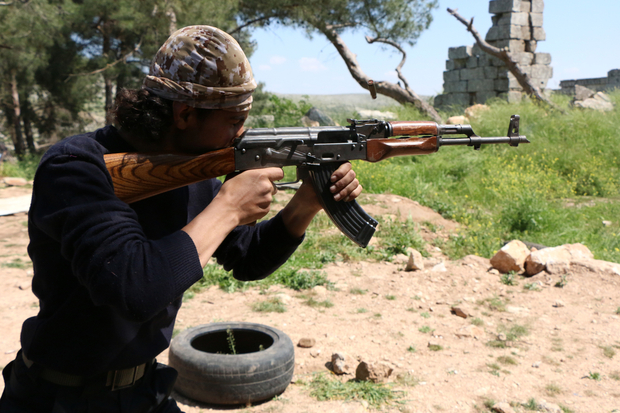
A rebel fighter from the Free Syrian Army's

A rebel fighter from the Free Syrian Army’s “First Battalion” takes part in military training on May 4, 2015, in rebel-held northern Rif Aleppo. (AFP, Baraa al-Halabi)

The Syrian opposition is meeting in Saudi Arabia between December 8 and 10 in an attempt to create a unified structure that can credibly sit across the table from the Bashar al-Assad regime in the internationally-organised peace talks in Vienna, and make a binding commitment on the path forward for Syria. Continue reading

Why Solely Backing the PYD Against the Islamic State is a Mistake

By Kyle Orton (@KyleWOrton) on October 20, 2015

Published at NOW Lebanon.

1

The Pentagon-run train-and-equip (T&E) program had intended to take Syrian rebels, stop them from being rebels by preventing them from fighting the Assad regime, and repurpose them into an American-directed strike force against the Islamic State (ISIS). Unsurprisingly, there were few takers and the program ended in disaster and humiliation. In the wake of this failure, President Barack Obama has turned away from the Arab rebels and looked to the Syrian Kurds to fight ISIS. This is a strategy that is not only doomed to fail—since Sunni Arabs taking responsibility for their local security is the only way to sustainably defeat ISIS—but would, if implemented, make the ISIS problem worse. A report from Amnesty International this week documenting crimes, including ethnic cleansing, by the armed Kurdish forces against Arabs and Turkmens in northern Syria also provides an occasion to look more closely at a force with a history of regime collaboration, political extremism, and terrorism. Continue reading

America Abandons the Syrian Revolution

By Kyle Orton (@KyleWOrton) on August 14, 2015

1

In the last week, two events have provided further evidence that the United States has effectively sided with the Assad regime in Syria, acting effectively as the regime’s air force, and that America’s alliance with Assad is part of the broader policy of détente with Iran, facilitated by the nuclear deal, which has ceded Syria to Iran as a sphere of influence. Continue reading

Turkey Fears A Kurdish State More Than The Islamic State

By Kyle Orton (@KyleWOrton) on July 28, 2015

A version of this article was published at NOW Lebanon 

1

After years of threatening, Turkey directly intervened in Syria on Friday, launching airstrikes against the Islamic State (ISIS), and finally allowed the U.S. to use Incirlik for jet and drone attacks against ISIS. Concurrently, Turkey launched airstrikes into Iraqi Kurdistan against the Kurdistan Workers’ Party (PKK). Ankara is framing this as an equal-opportunities war on terrorists, but Turkey’s actions over the last four years in Syria give a lot of cause for wonder as to which side Ankara is on when it comes to terrorism. Continue reading

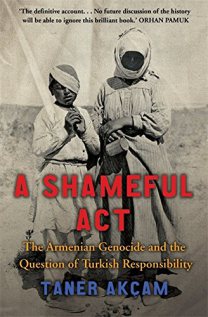
Book Review: A Shameful Act (2006) by Taner Akcam

By Kyle Orton (@KyleWOrton) on June 9, 2015

1

This is the complete review. It has previously been posted in three parts: Part 1 on the question of whether the 1915-16 Armenian massacres constitute genocide; Part 2 on the post-war trials and the Nationalist Movement; and Part 3 gives some conclusions on what went wrong in the Allied efforts to prosecute the war criminals and the implications for the present time, with Turkey’s ongoing denial that genocide took place and the exodus of Christians from the Middle East.

A Question of Genocide

The controversy over the 1915-16 massacres of Armenian Christians in the Ottoman Empire is whether those acts constitute genocide. Those who say they don’t are not the equivalent of Holocaust-deniers in that they do not deny that the massacres happened; what they deny is that the massacres reach the legal definition of genocide. Their case is based on three interlinked arguments:

  • Unlike the Nazi Holocaust where a defenceless population was murdered only for its identity, the Armenians were engaged in a massive armed revolt, and this is why the Ottoman government decided to deport them.
  • The intent of the Ottomans was not massacre but the removal of the Armenians, who had sided with one foreign invading power (Russia) and who were showing signs of collaborating with another (Britain), from the militarily sensitive areas as Turkey suffered a two-front invasion in early 1915.
  • While terrible massacres of Armenians, plus starvation and the cold, took maybe a million lives during the deportations—the numbers are very uncertain, again unlike the Holocaust—when the Armenians reached their destinations in Syria and Iraq, which were also part of the Ottoman Empire, they were well-treated and allowed to rebuild their lives, which would not have been the case had the Ottomans intended their destruction.

Taner Akcam’s A Shameful Act: The Armenian Genocide and the Question of Turkish Responsibility presents evidence to undermine every one of these arguments. Continue reading

Book Review: A Shameful Act (2006) by Taner Akcam, Part 3

By Kyle Orton (@KyleWOrton) on June 7, 2015

Part 1 of this review dealt with the question of whether the 1915-16 Armenian massacres constitute genocide. Part 2 was about the post-war trials and the Nationalist Movement. This part gives some conclusions on what went wrong in the Allied efforts to prosecute the war criminals and the implications for the present time. Alternatively, the complete review is available here.

Continue reading