Category Archives: Islamic Militancy

The Islamic State, Libya, and Interventionism

By Kyle Orton (@KyleWOrton) on February 19, 2015

Rebels with Qaddafi's

Rebels with Qaddafi’s “golden gun”

Yesterday morning in Libya, it was announced that militias from Misrata were moving into Sirte to combat the Islamic State (I.S.). The militias preparing to fight I.S. are drawn from Libya Dawn, the Islamist coalition that ousted the internationally-recognised government in August 2014. Continue reading

Shi’a Holy War and Iran’s Jihadist Empire

By Kyle Orton (@KyleWOrton) on February 12, 2015

1

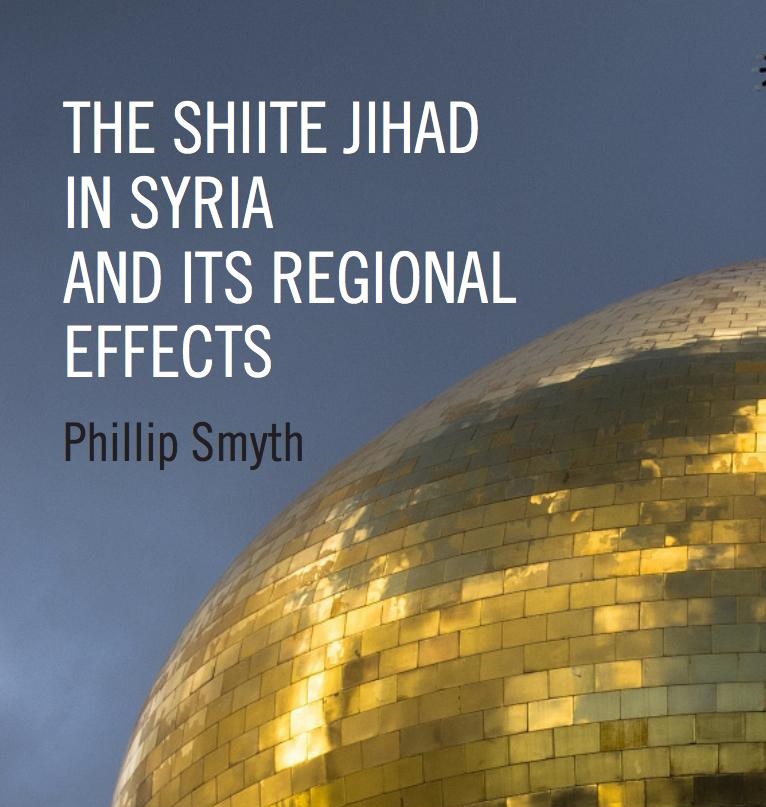
In watching the Syrian conflict, one of the most extraordinary tendencies of the reporting is the way “foreign fighter” and “jihadist” have become synonymous with the Sunni militants who have descended on that tormented country. This is one among many illusions that will hopefully be ended by Phillip Smyth’s monograph, “The Shiite Jihad in Syria and its Regional Effects“. You should read the whole thing but below are the salient points I took away. Continue reading

America’s Silent Partnership With Iran And The Contest For Middle Eastern Order: Part Four

By Kyle Orton (@KyleWOrton) on February 10, 2015

1

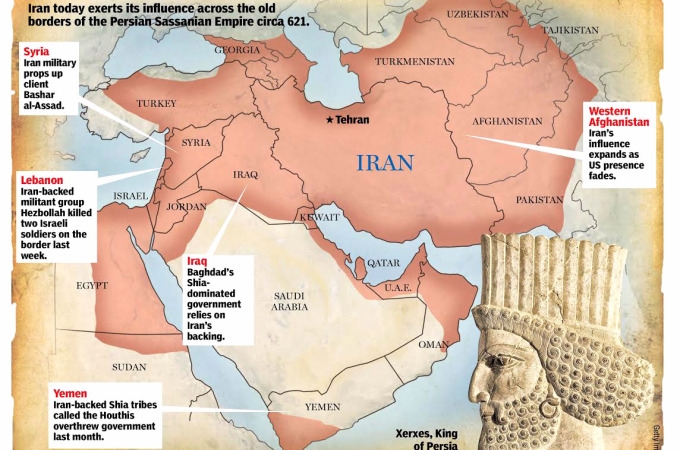
This is the fourth of a four-part series looking at the United States’ increasingly-evident de facto alliance with Iran in the region. The first part looked at the way this policy has developed since President Obama took office and how it has been applied in Iraq; the second part looked at the policy’s application in Syria; the third part looked at its application in Lebanon, Afghanistan, and Yemen; and this part is a conclusion. Continue reading

ISIS: America’s Alliance with Iran is Hampering the Fight Against Terror

By Kyle Orton (@KyleWOrton) on February 7, 20151

Published at Left Foot Forward

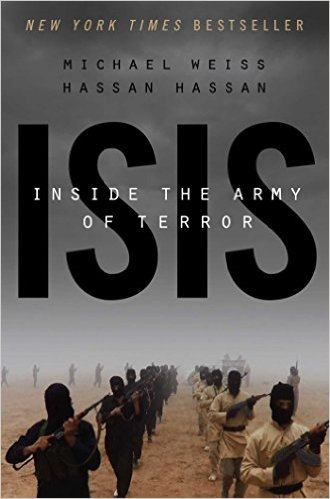
Book Review: ISIS: Inside the Army of Terror (2015) Michael Weiss and Hassan Hassan

ISIS: Inside the Army of Terror, by Michael Weiss and Hassan Hassan, is brilliantly easy to read. Concise yet thorough the book charts the history of a group, “[a]t once sensationalized and underestimated,” that is simultaneously a terrorist organisation, mafia, conventional army, sophisticated intelligence-gathering apparatus, propaganda machine and the remnants of the Saddam Hussein regime which controls an area the size of Britain in the heart of the Middle East. Continue reading

America’s Silent Partnership With Iran And The Contest For Middle Eastern Order: Part Three

By Kyle Orton (@KyleWOrton) on February 3, 2015

1

This is the third of a four-part series looking at the United States’ increasingly-evident de facto alliance with Iran in the region. This first part looked at the way this policy has developed since President Obama took office and how it has been applied in Iraq. The second part looked at the policy’s application in Syria; this part will look at its application in Lebanon, Afghanistan, and Yemen; and part four will be a conclusion. Continue reading

The Long History of Middle Eastern State-Terrorism In Paris

By Kyle Orton (@KyleWOrton) on January 19, 2015

Said Kouachi and Cherif Kouachi

Last week, Lee Smith wrote of the reasons that it was likely that there was a foreign hand, quite probably that of a State, in the attack on Charlie Hebdo and the Jewish deli in Paris. Smith noted that the French believe that the funding and weapons for the attacks came from abroad. Smith pointed to the historical record, in which terrorism in Paris is typically not carried out because of religion—or not directly: it might come from States that see themselves as god’s representatives on earth—or community grievances, but “because you’re getting paid to stage an operation on behalf of a particular cause or regime.” Smith gave three cases, and they seemed worth expanding on. Continue reading

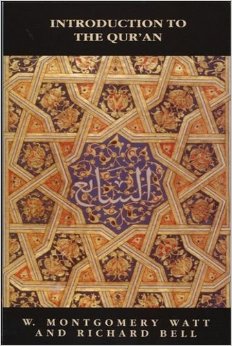
Book Review: Introduction to the Qur’an (1953) by Richard Bell

By Kyle Orton (@KyleWOrton) on January 13, 2015

4

Richard Bell’s Introduction to the Qur’an is, at less than 200 pages, a brief and easily-digestible explanation of the context in which Islam’s “holy” book arose, and the problems of reconciling theological orthodoxy with historical accuracy. More than six decades after publication, the book remains influential in scholarship of the Qur’an. Continue reading

Abu Bakr al-Baghdadi’s Second Speech as Islamic State Leader

By Kyle Orton (@KyleWOrton) on December 29, 2014

The current leader of the Islamic State (IS), Ibrahim al-Badri (Abu Bakr al-Baghdadi), released his first “proper” speech on July 21, 2012. But this was, in fact, his second public statement: Al-Badri had mourned Usama bin Laden in an audio message released on 9 May 2011 and vowed “blood for blood and destruction for destruction”. The 2012 speech, entitled, “Allah Will Not Allow Except That His Light Should Be Perfected”, was released by Al-Furqan Media and an English transcript—reproduced below—was issued by Fursan al-Balagh Media. Some key parts are highlighted in bold.
Continue reading

The Other Side of the “Torture” Debate

By Kyle Orton (@KyleWOrton) on December 11, 2014

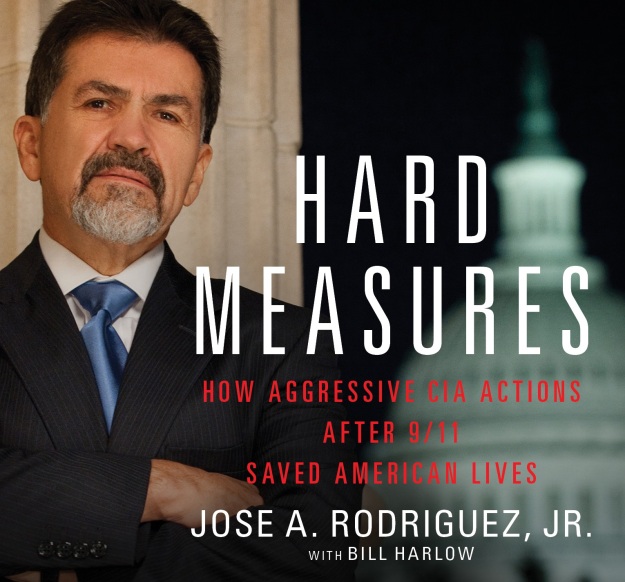
As a final act while the Democrats hold their majorities in Congress, the United States Senate Select Committee on Intelligence (SSCI) released a report on December 9, the “Committee Study of the Central Intelligence Agency’s Detention and Interrogation Program”, known to the Twitterverse as the “Torture Report”. This has reignited the debate about America’s use of harsh interrogation methods, the so-called “enhanced interrogation techniques” (EITs), against al-Qaeda operatives in the shadow of the 9/11 massacre. The politics surrounding this matter—even on basic questions, such as whether discomfort works to induce cooperation in detainees—are poisonous, and the publication of this partisan Committee Study has done nothing to assist this environment. One means of trying to get at the truth is to examine a counterpoint, the 2012 book, Hard Measures: How Aggressive CIA Actions After 9/11 Saved American Lives, a memoir by Jose Rodriguez, the man who oversaw the Central Intelligence Agency’s Counterterrorism Centre from 2001 to 2004. Continue reading

The Islamic State Creates Foreign “Provinces”

By Kyle Orton (@KyleWOrton) on December 6, 2014

Abu Bakr al-Baghdadi gave his eighth speech[1] since becoming the leader of the Islamic State (ISIS), entitled, “Even if the Disbelievers Despise Such”, on November 13, 2014. The speech was notable for two things. First, it taunted the American-led coalition about the lack of success their campaign has had against ISIS since it began in June and was extended into Syria in September, and invited the U.S. and other Western states to deploy ground troops. Secondly, the speech accepted the pledges of allegiance from groups outside Syria and Iraq for the first time, from Saudi Arabia, Yemen, Egypt, Libya, and Algeria. In Saudi Arabia and Yemen, the groups that have joined ISIS are unknown. In Egypt, the group is Ansar Bayt al-Maqdis (The Partisans of Jerusalem). In Libya, the group is al-Majlis Shura Shabab al-Islam (The Islamic Youth Consultation Council). And in Algeria the group is Jund al-Khalifa (Soldiers of the Caliphate). These areas will now become wilaya (provinces) of the caliphate, al-Baghdadi says, and ISIS will send a governor to oversee them. An English transcript of the speech was produced by ISIS and is reproduced below with important sections highlighted in bold. Continue reading