Tag Archives: France

Ahrar al-Sham and Al-Qaeda

By Kyle Orton (@KyleWOrton) on August 12, 2016

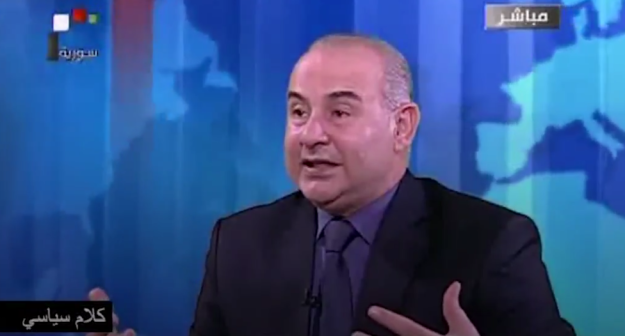
The Islamic State’s (IS) weekly newsletter, al-Naba, interviewed a high-ranking al-Qaeda defector, Abu Ubayda al-Lubnani, across two issues in February and March 2016. Abu Ubayda announced his defection from al-Qaeda to IS in April 2014 via al-Battar and Abu Ubayda’s name appeared on a list of prominent clerics supporting IS’s caliphate declaration that was circulated not long after the declaration. Abu Ubayda is described by al-Naba—as best as can be told accurately—as having been a member of al-Qaeda’s Shura or Consultation Council, a training officer in its Military Committee, and a counter-intelligence officer. Abu Ubayda is advertised as speaking about many secret aspects of al-Qaeda.

Among the topics Abu Ubayda covers is the alleged infiltration and manipulation of al-Qaeda by foreign intelligence services, specifically Pakistan’s Inter-Services Intelligence (ISI), which is not only a violation of jihadist doctrine by collaborating with an “infidel” and illegitimate state but led to the deaths of a number of senior al-Qaeda leaders.

Perhaps the most intriguing aspect of what Abu Ubayda has to say relates to al-Qaeda’s attempt to take advantage of the Syrian revolution. This persistent campaign has followed a pattern of disguising al-Qaeda’s presence and attempting to influence and eventually co-opt the rebellion against Bashar al-Assad’s regime. One lever al-Qaeda relied upon, according to Abu Ubayda, was Ahrar al-Sham, an organization that disclaims all connections to al-Qaeda and dissimulates about its ideology. Whatever Ahrar’s dominant ideology, it is simply a fact that it has served as the bridge between the foreign-led jihadists and Syrian Islamists, and its connections to al-Qaeda are evident enough. Abu Ubayda suggests Ahrar’s connections to al-Qaeda are even deeper than they appear. Continue reading

What We Know About The Islamic State’s Attack in Nice

By Kyle Orton (@KyleWOrton) on July 30, 2016

Mohamed Lahouaiej Bouhlel on the promenade in Nice on 14 July 2016

Mohamed Lahouaiej Bouhlel on the promenade in Nice on 14 July 2016

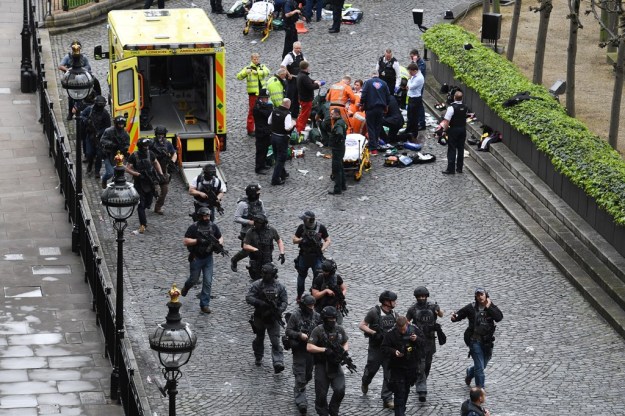
On 14 July 2016, Bastille Day, a lorry zig-zagged along the seafront Promenade des Anglais in Nice for two kilometres (1.25 miles) during a fireworks display. Eighty-four people, including ten children, were murdered instantly and two-hundred-plus wounded, nearly two-dozen critically. Below is a compilation of the evidence so far, which indicates that the killer was a part of a substantial network acting on behalf of the Islamic State, though there is not yet any evidence of a direct contact with the terrorist state headquartered in Raqqa. Continue reading

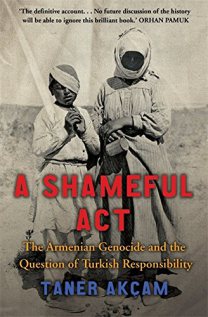
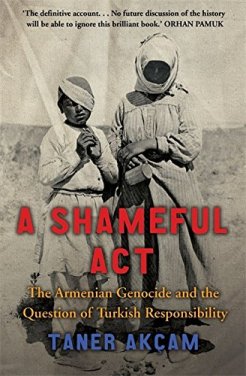
Book Review: A Shameful Act (2006) by Taner Akcam

By Kyle Orton (@KyleWOrton) on June 9, 20151

This is the complete review. It has previously been posted in three parts: Part 1 on the question of whether the 1915-17 massacres constitute genocide; Part 2 on the post-war trials and the Nationalist Movement; and Part 3 gives some conclusions on what went wrong in the Allied efforts to prosecute the war criminals and the implications for the present time, with Turkey’s ongoing denial of the genocide and the exodus of Christians from the Middle East.

A Question of Genocide

The controversy over the 1915-17 massacres of Armenian Christians by the Ottoman Empire is whether these acts constitute genocide. Those who say they don’t are not the equivalent of Holocaust-deniers in that while some minimize the figures of the slain, they do not deny that the massacres happened; what they deny is that the massacres reach the legal definition of genocide. Their case is based on three interlinked arguments:

  • Unlike the Nazi Holocaust when a defenceless population was murdered only for its identity, the Armenians were engaged in a massive armed revolt, and this is why the Ottoman government decided to deport them.
  • The intent of the Ottomans was not massacre but the removal of the Armenians, who had sided with one foreign invading power (Russia) and who were showing signs of collaborating with another (Britain), from the militarily sensitive areas as Turkey suffered a two-front invasion in early 1915.
  • While terrible massacres, plus starvation and the cold, took maybe a million lives during the deportations, when the Armenians reached their destinations in Syria and Iraq, which were also part of the Ottoman Empire, they were well-treated and allowed to rebuild their lives, which would not have been the case had the Ottomans intended their destruction.

Taner Akcam’s A Shameful Act: The Armenian Genocide and the Question of Turkish Responsibility presents evidence to undermine every one of these arguments. Continue reading

Book Review: A Shameful Act (2006) by Taner Akcam, Part 2

By Kyle Orton (@KyleWOrton) on June 4, 20151

The First Phase of the Trials

On October 30, 1918, the Ottoman Empire signed its final treaty of defeat. The Ottomans’ long decline began in 1683, and by the 1830s the Empire was referred to as the “sick man of Europe”. The armistice was a near-total surrender, allowing the occupation of any area the Allies deemed necessary for their security. Unfortunately, it was neither the end of the war nor the end of the massacres against the Armenians.

The Allies—Britain, France, and Russia—issued a declaration on May 24, 1915, saying:

In light of the crimes against humanity and civilisation committed by Turkey, the allied powers warn the Sublime Porte that members of the Ottoman government involved in the mass murder will be held personally responsible for these crimes.

Not coincidentally, within days of this an official deportation law was passed through the Ottoman Parliament and would thereafter be issued by the Interior Ministry as legal cover for the CUP’s actions. This was a first introduction of the concept of crimes against humanity, and of individual responsibility that extended to senior Generals and Heads of State. The Russians fell to the Communists and for reasons of realpolitik the French and Italians soon dropped their demands for punishing the Turkish war criminals, but the British were relentless. Continue reading

The Islamic State Officially Expands to Afghanistan

By Kyle Orton (@KyleWOrton) on 26 January 2015

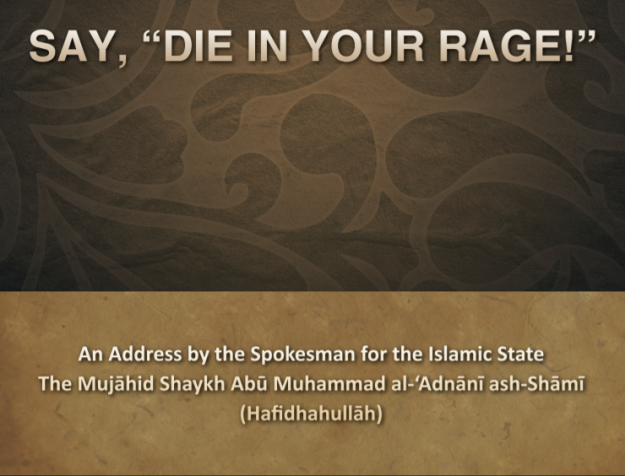
The spokesman of the Islamic State (ISIS), Abu Muhammad al-Adnani, gave a speech today entitled, “Say, ‘Die in Your Rage’,” which is drawn from a Surah of the Qur’an [3:119]. The main announcement from Adnani is the acceptance of another wilayat (province), i.e. foreign branch of IS, this time in Afghanistan, led by Hafiz Saeed Khan, a former Tehrik-i-Taliban Pakistan (TTP) or “Pakistani Taliban” commander who broke away and formed a pro-ISIS faction in October. This follows the first declaration on this matter a month ago by IS’s caliph, Abu Bakr al-Baghdadi, which accepted “provinces” from Saudi Arabia, Yemen, Egypt, Libya, and Algeria. Adnani went on to make the foredoomed request that the Afghan jihadists “abandon disunity and factionalism” in order to join ISIS. Continue reading

The Long History of Middle Eastern State-Terrorism In Paris

By Kyle Orton (@KyleWOrton) on January 19, 2015

Said Kouachi and Cherif Kouachi

Last week, Lee Smith wrote of the reasons that it was likely that there was a foreign hand, quite probably that of a State, in the attack on Charlie Hebdo and the Jewish deli in Paris. Smith noted that the French believe that the funding and weapons for the attacks came from abroad. Smith pointed to the historical record, in which terrorism in Paris is typically not carried out because of religion—or not directly: it might come from States that see themselves as god’s representatives on earth—or community grievances, but “because you’re getting paid to stage an operation on behalf of a particular cause or regime.” Smith gave three cases, and they seemed worth expanding on. Continue reading

ISIS Prepares the Ground for War Against the Syrian Rebellion

By Kyle Orton (@KyleWOrton) on April 6, 2014

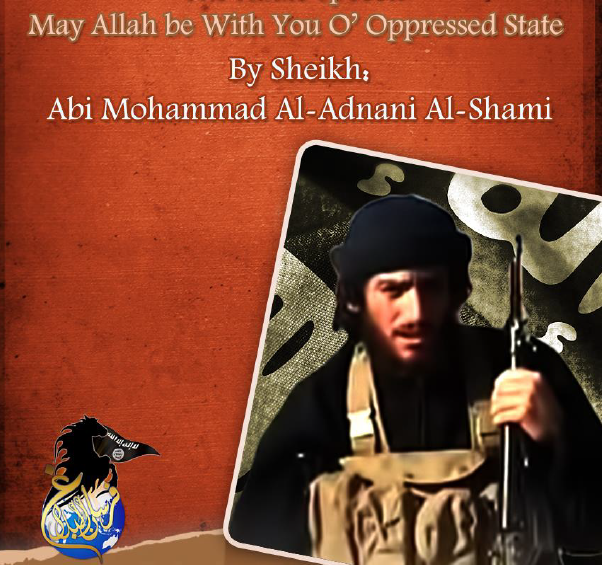
The spokesman for the Islamic State of Iraq and Syria (ISIS), Abu Muhammad al-Adnani, gave a speech on 30 September 2013, entitled, “Lak Allah Ayatuha al-Dawla al-Mazluma” (لك الله أيتها الدولة المظلومة), roughly: “God Is With You, O’ Oppressed State” (The English translation released by Fursan al-Balagh Media gives the title as, “May Allah Be With You, O’ Oppressed State”.) The speech is primarily a ferocious attack on the Syrian rebel groups, accusing them of being part of a Western-led conspiracy, which includes the media stations of Arab governments and their “mouthpieces” throughout the region, to manipulate the coverage of ISIS such that it blackens their name and turns Muslims away from them.

Continue reading