Tag Archives: sharia

Islam’s First Terrorists, Part 6

By Kyle Orton (@KyleWOrton) on August 22, 2015

This is the final part of a six-part series. Read parts one, two, three, four, and five, or read the whole essay.

Masyaf fortress, the headquarters of the Nizari Ismailis (The Assassins) in Syria

Masyaf fortress, the headquarters of the Nizari Ismailis (The Assassins) in Syria

Conclusion

The Nizari Ismailis did not invent assassination, of course; only lent it their name. The Ismailis were “part of a long tradition that goes back to the beginnings of Islam … of popular and emotional cults in sharp contrast with the learned and legal religion of the established order.” Still, the Nizaris did rely on the Holy Law. The ideal of Islamic governance might be authoritarian, but it is not arbitrary; if a ruler crosses the shari’a it becomes a duty to resist. This element became gradually more marginal as the religion formed into a State and Empire, but it was there and many other sects had called on it in their opposition to the prevailing regimes. The Nizaris were the first to call up this tradition of righteous rebellion and combine it with an effective opposition organization.

In their use of conspiracy, assassination, and even the ceremonial nature of the murders and the weapon-cult, the Assassins were hardly unique. But they might well be the first terrorists: those who, at an overwhelming disadvantage in conventional terms, used unconventional means in a planned, long-term campaign of targeted violence as a political weapon with the intention of overturning the established order. Continue reading

Islam’s First Terrorists, Part 3

By Kyle Orton (@KyleWOrton) on August 19, 2015

This is the third of a six-part series. Read parts one and two.

Masyaf fortress, eastern Hama, the headquarters of the Assassins (1141-1270)

Masyaf fortress, eastern Hama, the headquarters of the Assassins (1141-1270)

The death of Hassan-i Sabbah and The Resurrection

Rashid ad-Din Sinan

Rashid ad-Din Sinan

Hassan-i Sabbah, the Nizaris’ first and most successful leader, died in May 1124. Hassan-i Sabbah was a fanatic who sternly imposed the Holy Law—even executing one of his own sons for drinking wine and another son (mistakenly) for an unauthorized assassination. An extreme ascetic and recluse, Hassan-i Sabbah left his house twice in the thirty-five years after taking Alamut. Hassan-i Sabbah’s great skill was in weaponizing the discontents of the dispossessed and refining the doctrine of al-dawa jadida (the new preaching).

Hassan-i Sabbah never claimed to be the Imam, merely the only one who knew what the Imam wanted. Hassan-i Sabbah confirmed the Ismaili doctrine as essentially authoritarian, where the believer must follow an Imam, the only source of truth, who has been appointed by god (unlike the Sunni view where the believer can choose an Imam).

The Nizaris’ history divides into essentially four parts after this: Continue reading

Is Ahrar a-Sham a “Moderate” Syrian Rebel Group?

By Kyle Orton (@KyleWOrton) on July 12, 2015

Ahrar a-Sham

To answer my headline simply: no, Ahrar a-Sham’s leadership is not what anybody in the West means by “moderate” Syrian rebels that could be supported.

The question is provoked by an op-ed in The Washington Post last night signed by Labib al-Nahhas, Ahrar’s foreign political relations officer, the culmination of a public-relations campaign by Ahrar to rebrand itself as the mainstream alternative to the Islamic State (ISIS) and the Assad tyranny we’ve all been waiting for. Continue reading

Islamic State: The Afterlife of Saddam Hussein’s Regime

By Kyle Orton (@KyleWOrton) on July 4, 2015

Published at Baghdad Invest

1

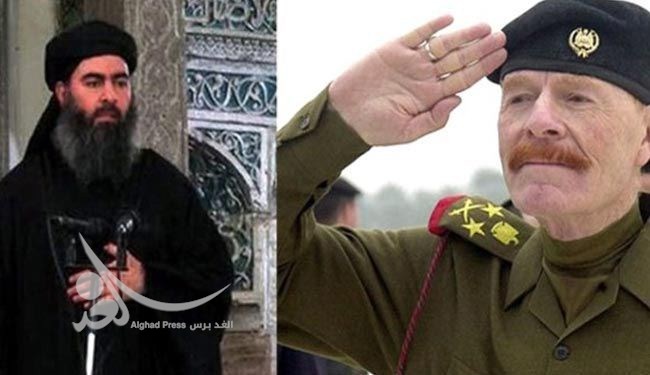
Izzat Ibrahim ad-Douri, Saddam Hussein’s long-time deputy, was reported dead (again) on April 17. An audio message on May 15 disproved this. Douri was the implementer of the Saddam regime’s Islamization program in its later years and a key architect of the insurgency after the regime was overthrown, which helped pave the way for the Islamic State (ISIS). ISIS has now turned on Douri and his associates, but ISIS could not have risen to its current stature without Douri’s help. Continue reading

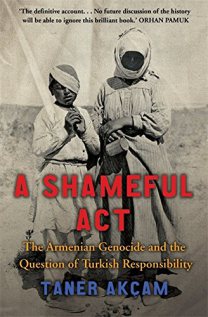
Book Review: A Shameful Act (2006) by Taner Akcam

By Kyle Orton (@KyleWOrton) on June 9, 20151

This is the complete review. It has previously been posted in three parts: Part 1 on the question of whether the 1915-17 massacres constitute genocide; Part 2 on the post-war trials and the Nationalist Movement; and Part 3 gives some conclusions on what went wrong in the Allied efforts to prosecute the war criminals and the implications for the present time, with Turkey’s ongoing denial of the genocide and the exodus of Christians from the Middle East.

A Question of Genocide

The controversy over the 1915-17 massacres of Armenian Christians by the Ottoman Empire is whether these acts constitute genocide. Those who say they don’t are not the equivalent of Holocaust-deniers in that while some minimize the figures of the slain, they do not deny that the massacres happened; what they deny is that the massacres reach the legal definition of genocide. Their case is based on three interlinked arguments:

  • Unlike the Nazi Holocaust when a defenceless population was murdered only for its identity, the Armenians were engaged in a massive armed revolt, and this is why the Ottoman government decided to deport them.
  • The intent of the Ottomans was not massacre but the removal of the Armenians, who had sided with one foreign invading power (Russia) and who were showing signs of collaborating with another (Britain), from the militarily sensitive areas as Turkey suffered a two-front invasion in early 1915.
  • While terrible massacres, plus starvation and the cold, took maybe a million lives during the deportations, when the Armenians reached their destinations in Syria and Iraq, which were also part of the Ottoman Empire, they were well-treated and allowed to rebuild their lives, which would not have been the case had the Ottomans intended their destruction.

Taner Akcam’s A Shameful Act: The Armenian Genocide and the Question of Turkish Responsibility presents evidence to undermine every one of these arguments. Continue reading

Book Review: A Shameful Act (2006) by Taner Akcam, Part 3

By Kyle Orton (@KyleWOrton) on June 7, 20151

Post-War Turkey

The last foreign troops left Istanbul on October 2, 1923. On October 6, Turkish troops re-occupied Istanbul, and on October 13 the Turkish capital was moved to Ankara. The independence struggle won, the focus now turned to the form independence would take.

Having already abolished the Sultanate—that is the executive post held by the House of Ottoman—Mustafa Kemal (later Atatürk) abolished the Caliphate on March 3, 1924. Atatürk also scrapped the office of Şeyh-ül İslam, banished the House of Ottoman (packing Sultan Abdülmecid onto the Orient Express), and closed the separate religious schools on the same day. The ulema had given much ground during the reforms of the nineteenth century but they had also frustrated and defeated many reformers; Atatürk would not be one of them. The promulgation of the Republican Constitution on April 20, 1924, confirmed parliamentary supremacy over the shari’a, secular law over theocracy.

In the late 1920s, further reforms were made. The fez, which “had become the last symbol of Muslim identification,” was banned. Atatürk had said the fez was “an emblem of ignorance … and hatred of progress”. Turks would wear the costume “common to the civilized nations of the world,” which is to say Europe. Atatürk adopted the Swiss legal code, which removed the Holy Law from personal status—abolishing polygamy, making both parties to a marriage equal, allowing divorce, and allowing people to change their religion. Islam was disestablished as the State religion, and as the final step the Arabic script was changed to Roman. The connection with the East was broken, and Turkey was firmly oriented West. Continue reading

Saddam Hussein’s Regime Produced The Islamic State

By Kyle Orton (@KyleWOrton) on April 21, 2015

1

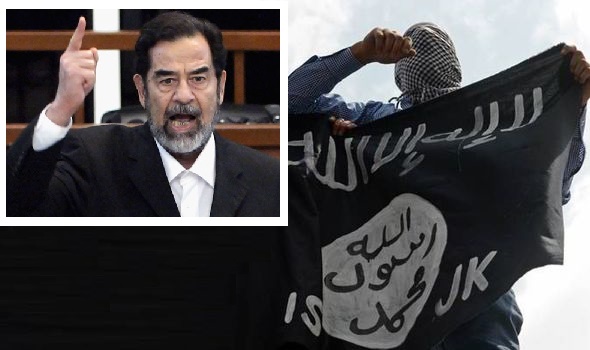
Having presented the evidence that Saddam Hussein Islamized his foreign policy and then Islamized his regime, above all with the Islamic Faith Campaign, beginning in June 1993 that tried to fuse Ba’athism with Salafism, encouraging (and keeping under surveillance) a religious revival in Iraq that redounded to the benefit of the regime’s legitimacy and support, I wanted to look at what this history means for Iraq and the wider region now.

I pointed out in October that the “military strength” of the Islamic State (ISIS) “comes from the remnants of Saddam Hussein’s military-intelligence apparatus and the Caucasus’ Salafi-jihadists.” Continue reading

Who Killed The Anti-Assad Imam In London?

By Kyle Orton (@KyleWOrton) on April 9, 2015

Abdul Hadi Arwani

Abdul Hadi Arwani

Abdul Hadi Arwani, a Syrian-born imam, was found shot dead in his car on Tuesday in Wembley, northwest London. The British police are still refusing to officially name Arwani, but his friends and supporters have done so. Arwani leaves behind six children.

There are many possibilities for who killed Arwani. As the manager of a construction firm, it could be a deal gone wrong. The involvement of anti-terrorism police in the investigation into Arwani’s murder could indicate a far-Right anti-Muslim assailant. However, a source close to the investigation said that Arwani was struck down in an operation that had all the hallmarks of a “State-sponsored assassination“. To find that the long arm of Bashar al-Assad’s mukhabarat had caught up with Arwani would hardly be a surprise. Continue reading

Are Syria’s Rebels Being Sacrificed To Al-Qaeda For Obama’s Détente With Iran?

By Kyle Orton (@KyleWOrton) on November 6, 2014

SRF leader Jamal Marouf

SRF leader Jamal Marouf

What a disaster. With American and coalition jets in the air overhead, ostensibly to do battle with Salafi-jihadists, al-Qaeda has been allowed to push rebel brigades the United States purports to support out of almost all of Idlib Province. Continue reading

Al-Qaeda In Syria Declares War On The Rebellion

By Kyle Orton (@KyleWOrton) on July 13, 2014

The only official picture of Jabhat an-Nusra’s Emir, Abu Muhammad al-Golani, given out by the Iraqi government.

Syria’s rebellion was already fighting for its life, squeezed between the regime and the Islamic State (I.S.) in Aleppo, and on Friday night a new front appeared to open. Jabhat an-Nusra, al-Qaeda’s official branch in Syria, announced that it was forming an Islamic Emirate. According to a translation by Hassan Hassan, Nusra’s commander, Abu Muhammad al-Golani, said that they would now start implementing the shari’a “in the full sense of the word,” and “without compromise, leniency, ambiguity, or politeness.” Golani specifically says that Nusra will begin implementing the hudud, the harsh punishments like amputation for theft, which Nusra has very deliberately not done so far, saying war conditions suspended such punishments according to the Holy Law. At a more material level, it avoided garnering them bad press for savagery against the civilian population. Golani dismissed with contempt the secular rebels as “grovelling” to the West, and declared I.S.’s Caliphate “void” and its members ghulat (extremists).

Continue reading