By Kyle Orton (@KyleWOrton) on 30 May 2025
By Kyle Orton (@KyleWOrton) on 26 November 2021
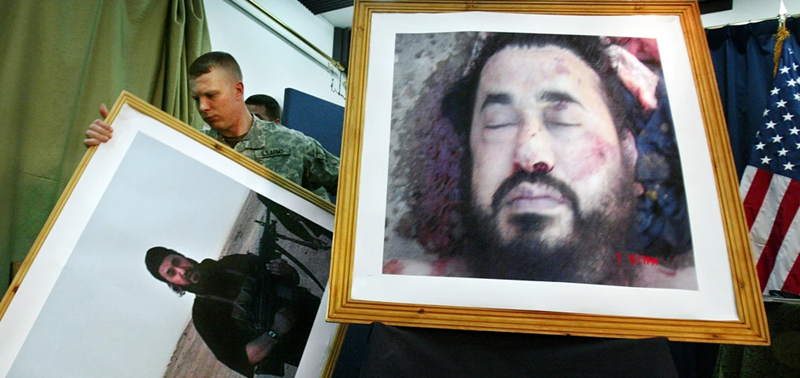
After the founder of the Islamic State movement, Ahmad al-Khalayleh, the infamous Abu Musab al-Zarqawi, was killed on 7 June 2006, an open letter eulogising him was posted by his wife, known only as Umm Muhammad (“the Mother of Muhammad”). The letter dates, it seems, to 6 July 2006, about a month after Zarqawi’s demise.[1] The content is mostly boilerplate: celebrating “the Shaykh of the Slaughterers” for terrorising the Americans and others who wanted constitutional government in Iraq,[2] venomous sectarian incitement against Shi’is, declaring that jihadist victory is near and cannot be derailed by the “martyrdom” of one leader. What is perhaps most notable when reading the letter at this distance is, firstly, that it was published by an Al-Qaeda media outlet, and, secondly, how much space is devoted to praising Usama bin Laden, and declaring the undying fealty of Zarqawi and his men to Bin Laden. Because, of course, the IS movement was at this time nominally a subordinate component of Bin Laden’s network named Al-Qaeda in Mesopotamia (AQM). The Zarqawists’ overt breach with Al-Qaeda still eight years in the future.
Continue readingBy Kyle Orton (@KyleWOrton) on 22 November 2021
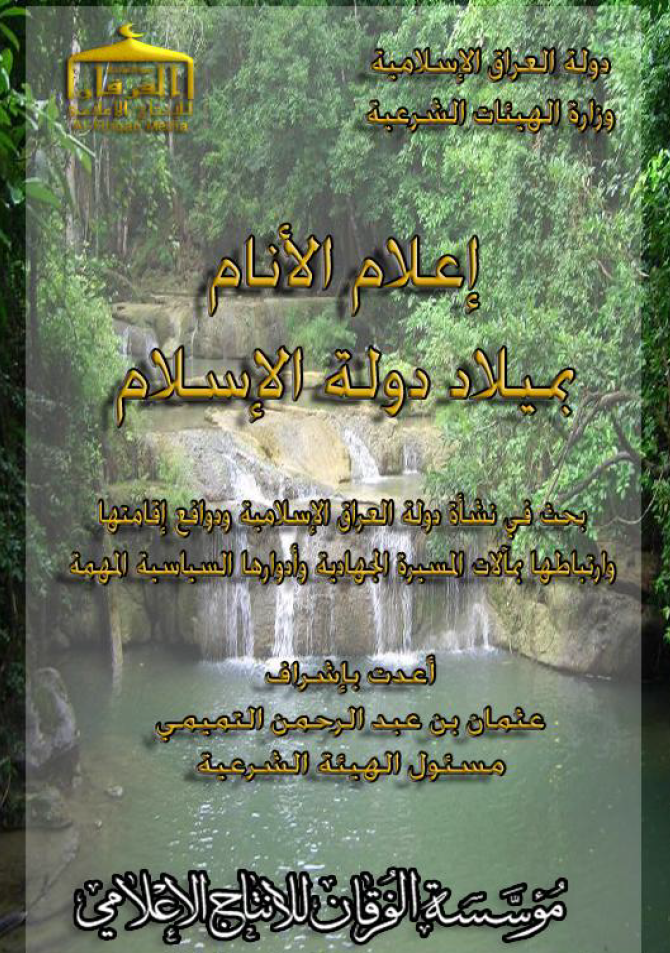
The Islamic State movement published an 87-page book, “Informing Mankind of the Birth of the Islamic State” or “Informing the People of the Birth of the Islamic State” (I’lam al-Anam bi-Milad Dawlat al-Islam), on 7 January 2007. The document was released by Al-Furqan Media Foundation, the central Islamic State propaganda institution, and first appeared on the World News Network website. A rough translation of the book appears below.
By Kyle Orton (@KyleWOrton) on 19 March 2021
Hamid al-Zawi, the leader of the Islamic State movement from 2006 to 2010, known only as Abu Umar al-Baghdadi during his lifetime, gave a speech on 19 March 2010 entitled, “The Soldiers’ Sermon for the Axe of al-Khalil Campaign” (Khutba al-Jund bi-Hamlat Fa’s al-Khalil). It was Al-Zawi’s twenty-second and, as it turned out, penultimate speech. Al-Zawi was killed almost exactly a month later, on 18 April 2010, alongside his deputy and “war minister”, Abd al-Munim al-Badawi (Abu Hamza al-Muhajir). A translation of the speech is published below.
By Kyle Orton (@KyleWOrton) on 2 December 2017

Al-Naba 107, page 8, 27 November 2017
The 107th edition of Al-Naba, the Islamic State’s newsletter, was released on 27 November 2017. On page 8 there was an article that cautioned against applying apocalyptic prophecies to the present day. A very rough translation is produced below. Continue reading
By Kyle Orton (@KyleWOrton) on 8 November 2017

The Khansaa Brigade, the all-female Islamic State espionage network and morality enforcement police, based in Raqqa city (image source)
A debate has been ongoing among analysts since the summer about the view the Islamic State (IS) has of mujahidat (female fighters). IS now seems to have settled the matter in its newsletter, Al-Naba. Continue reading
By Kyle Orton (@KyleWOrton) on January 27, 2017

The Islamic State’s June 2014 declaration that the areas it controlled were the restored “Caliphate” was seen by many as a novel development. In fact, “the State” was declared in October 2006. The next month, the predecessor of the Islamic State (IS), Al-Qaeda in Mesopotamia (AQM), dissolved itself, and a month after that the claim to statehood was expanded upon—while being wilfully ambiguous about the caliphal pretensions—in the first speech by the then-emir, Hamid al-Zawi (Abu Umar al-Baghdadi). Similarly, though confusion remains on the point, it was in this same period that the symbol of the Islamic State, its black flag, was established.