Tag Archives: Holocaust

The Criminality of the Syrian Regime

By Kyle Orton (@KyleWOrton) on 29 April 2018
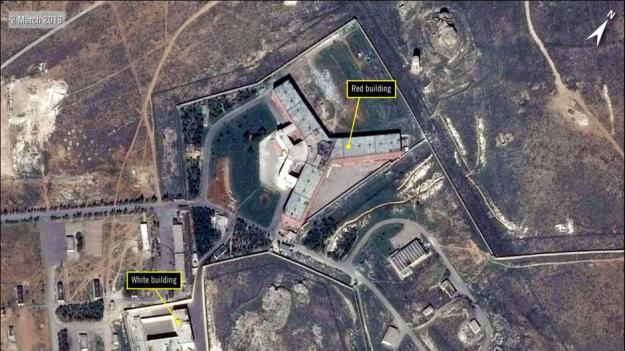
A satellite image of Sednaya prison, about 20 miles north-east of the presidential palace. CNES and ASTRIUM / Amnesty International via AFP

To accompany the release of “Syria’s Slaughterhouses”, a film by TRT World’s “Off The Grid”, I was asked to give an overview of the available evidence of the Assad regime’s crimes against humanity.

The launching of a limited punitive raid against the Syrian regime of Bashar al Assad for the use of poison gas has brought some attention to the regime’s crimes. The regime’s visible crimes are numerous and devastating.

In addition to using weapons of mass destruction, fighter jets have levelled ancient cities, sieges have starved populations into submission, and improvised explosives like barrel bombs have maimed thousands. These tactics are part of what UN investigators have called a “systematic and widespread attack against [the Syrian] civilian population”.

The UN commission recently noted that what the Assad regime has done amounts to crimes against humanity, including extermination, murder, rape, and torture.

What does not get enough attention is the part of Assad’s criminality that is most difficult to see: that which takes place in the prisons, a vast network of concentration camps where torture and murder is routine. Continue reading

Syria’s Regime Conducted the Khan Shaykhun Chemical Attack, United Nations Concludes

By Kyle Orton (@KyleWOrton) on 9 September 2017

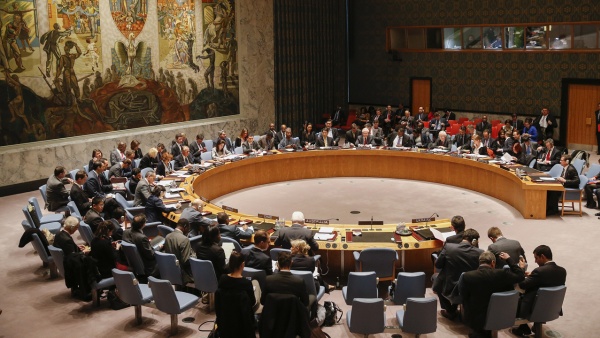
United Nations Security Council (Shannon Stapleton/Reuters)

After the use of chemical weapons of mass destruction (CWMD) in the Syrian town of Khan Shaykhun in April, American and French intelligence publicly assessed that the perpetrator was the regime of Bashar al-Asad, and President Donald Trump acted swiftly to punish the atrocity. The United Nations Independent International Commission of Inquiry on the Syrian Arab Republic released a report on 6 September that ratifies these findings, concluding that Asad attacked the population of Khan Shaykhun with chemical weapons. Continue reading

Islamic State Claims It Follows God’s Law, Jews and Christians Do Not

By Kyle Orton (@KyleWOrton) on August 1, 2016
1

The fifteenth issue of the Islamic State’s English-language magazine, Dabiq, released on 31 July 2016 contained an essay, “By the Sword,” a brief polemic that defends the Islamic State’s brutality on the basis that it is conducted according to the Word of God—laying open claim to genocide and slavery so long as it is undertaken by Muslims and not disbelievers, saying they would have felt no need to have apologized for the atomic bombing of Japan or the use of defoliants in Vietnam and would have been more thorough-going in the extermination of Native Americans and Jews, since these things are vouchsafed by the Creator. The Islamic State contends that the Jewish and Christian religious contain the same prescriptions for the forcible implementation of the Holy Law that the Qur’an does, but these monotheists have lapsed and pay more attention to the edicts of the United Nations. Continue reading

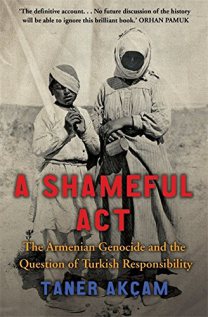
Book Review: A Shameful Act (2006) by Taner Akcam

By Kyle Orton (@KyleWOrton) on June 9, 2015

1

This is the complete review. It has previously been posted in three parts: Part 1 on the question of whether the 1915-16 Armenian massacres constitute genocide; Part 2 on the post-war trials and the Nationalist Movement; and Part 3 gives some conclusions on what went wrong in the Allied efforts to prosecute the war criminals and the implications for the present time, with Turkey’s ongoing denial that genocide took place and the exodus of Christians from the Middle East.

A Question of Genocide

The controversy over the 1915-16 massacres of Armenian Christians in the Ottoman Empire is whether those acts constitute genocide. Those who say they don’t are not the equivalent of Holocaust-deniers in that they do not deny that the massacres happened; what they deny is that the massacres reach the legal definition of genocide. Their case is based on three interlinked arguments:

  • Unlike the Nazi Holocaust where a defenceless population was murdered only for its identity, the Armenians were engaged in a massive armed revolt, and this is why the Ottoman government decided to deport them.
  • The intent of the Ottomans was not massacre but the removal of the Armenians, who had sided with one foreign invading power (Russia) and who were showing signs of collaborating with another (Britain), from the militarily sensitive areas as Turkey suffered a two-front invasion in early 1915.
  • While terrible massacres of Armenians, plus starvation and the cold, took maybe a million lives during the deportations—the numbers are very uncertain, again unlike the Holocaust—when the Armenians reached their destinations in Syria and Iraq, which were also part of the Ottoman Empire, they were well-treated and allowed to rebuild their lives, which would not have been the case had the Ottomans intended their destruction.

Taner Akcam’s A Shameful Act: The Armenian Genocide and the Question of Turkish Responsibility presents evidence to undermine every one of these arguments. Continue reading

Bernard Lewis and the Armenian Genocide Question

By Kyle Orton (@KyleWOrton) on June 7, 2015

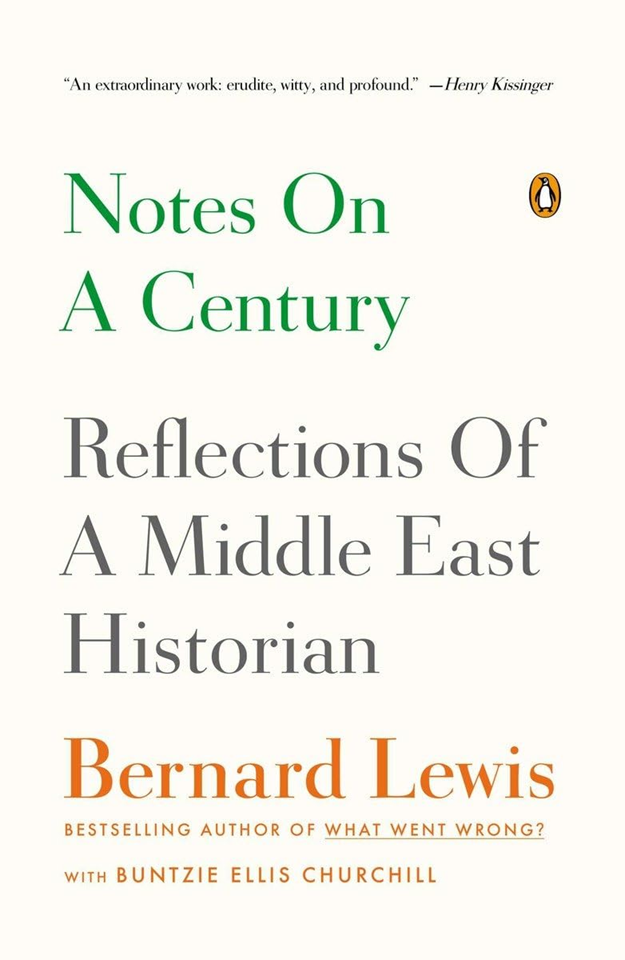
In 2012, Bernard Lewis published his memoirs, Notes on a Century: Reflections of a Middle East Historian, which included a chapter on the court case brought against him in France in the 1990s for refusing to agree that the massacres of Armenians in the Ottoman Empire in 1915-16 constitute genocide in the original sense of the term, as applied to the Nazi Holocaust of European Jewry. The chapter is reproduced below.

Continue reading

Book Review: A Shameful Act (2006) by Taner Akcam, Part 3

By Kyle Orton (@KyleWOrton) on June 7, 2015

Part 1 of this review dealt with the question of whether the 1915-16 Armenian massacres constitute genocide. Part 2 was about the post-war trials and the Nationalist Movement. This part gives some conclusions on what went wrong in the Allied efforts to prosecute the war criminals and the implications for the present time. Alternatively, the complete review is available here.

Continue reading