Tag Archives: sectarianism

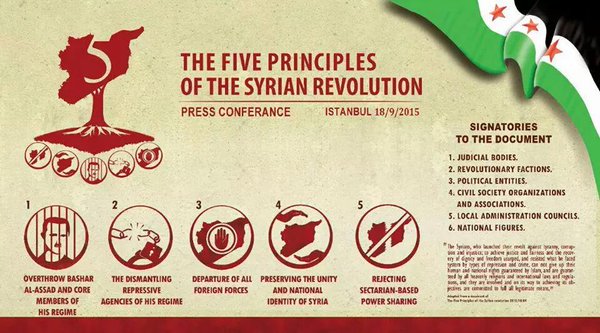
Syrian Opposition Statement of Principles of the Revolution

By Kyle Orton (@KyleWOrton) on September 18, 2015

After a meeting of the Syrian Islamic Council, a statement was published today, “The Five Principles Document of the Syrian Revolution,” which explained the baseline demands of the insurrectionary forces in Syria in any process to end the war. The principles included the removal of Syrian ruler Bashar al-Assad, disbanding the intelligence apparatus that has carried out the massacres and repression, and the expulsion of all foreign terrorists, including the Islamic State and the legion of Shi’a jihadists that the Iranian government has flooded into Syria to save the Assad regime. Continue reading

Islamic State Spokesman Calls For Immigration to the Caliphate, All Factions To Join

By Kyle Orton (@KyleWOrton) on July 1, 2015

On June 23, 2015, the Islamic State (IS) spokesman Abu Muhammad al-Adnani gave a speech, “O Our People, Respond to the Caller of Allah”. Al-Adnani, noting the coming of Ramadan, called on Muslims to journey to the caliphate, saying that hijra (emigration) in this month—and martyrdom—is the most blessed. Al-Adnani called on Muslims—specifically Iraqi Sunnis and Syrian rebel and Islamist insurgent groups—to unite around IS, which had no theological factions or ethnic distinctions among its membership, being the only pure expression of Islam, ruling by god’s law. Iraqi Sunni militias and Syrian rebels had betrayed the religion by seeking favour from, and even seeking alliance with, Western states. Al-Adnani threatened the town of Haditha, specifically the Jaghayfa clan, that if it surrendered now its repentance would be accepted, but if the town was overrun first then they would be slaughtered. Al-Adnani played heavily on the interlinked themes of anti-Shi’a sectarianism and the spreading influence of Iran and its proxies, repressing Sunnis. The old guard of the jihadi movement—clerics like Abu Muhammad al-Maqdisi and al-Qaeda’s leader Ayman al-Zawahiri (though neither are mentioned by name)—are attacked for not being on the battlefields. Al-Adnani also accepted the allegiance of the Russian-based faction that declared itself under the caliph’s authority, naming the group Wilayat al-Kavkaz. An English transcript of the speech was posted by IS and is reproduced below with some minor editions in transliteration and some interesting sections highlighted in bold. Continue reading

A Myth Revisited: “Saddam Hussein Had No Connection To Al-Qaeda”

Book Review: The Connection: How al-Qaeda’s Collaboration With Saddam Hussein Has Endangered America (2004) by Stephen Hayes
By Kyle Orton(@KyleWOrton) on June 21, 2015


More than twelve years after the fall of Saddam Hussein, the conventional wisdom is that Saddam’s regime had no connection with al-Qaeda, and such “evidence” as was adduced was tortured out of Ibn al-Shaykh al-Libi in the Bush administration’s desperation to cobble together a casus belli. But if one puts ideology on hold, and considers the evidence of Stephen Hayes’ The Connection, a rather different picture emerges. Continue reading

Book Review: The Consequences of Syria (2014) by Lee Smith

By Kyle Orton (@KyleWOrton) on May 9, 2015

1

Lee Smith’s The Consequences of Syria is part of the Hoover Institution’s “The Great Unravelling” series, which also included The Struggle for Mastery in the Fertile Crescent by the late Fouad Ajami (which I reviewed here.) You can purchase a copy here.

Published in June 2014, Smith narrates Syria’s terrible war to the opening months of 2014, the innumerable excuses made by the Obama administration for letting it run, and the theoretical framework behind the administration’s decision. The book is relatively short and the prose is direct; it takes very complex discussions of ideas and puts them in easily-digestible terms—all while keeping the reader’s eye on the practical implications.

Smith starts with the 2003 invasion of Iraq, the central event in President Obama’s thinking about the Middle East. Continue reading

Islamic State Spokesman Presents the Caliphate as Utopia, Says the Coalition War Against it is Failing

By Kyle Orton (@KyleWOrton) on April 5, 2015

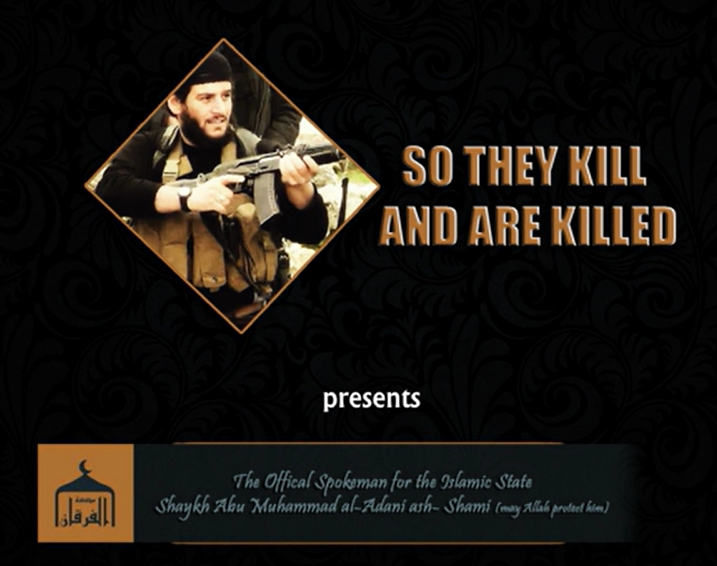
The spokesman of the Islamic State, Abu Muhammad al-Adnani, gave a speech on 12 March 2015 entitled, “They Kill and Are Killed” (فيَقتلون ويُقتلون), a phrase drawn from the Qur’an [9:111]. A translation of the speech is given below.

Continue reading

Defeat Jihadists in Syria by Being a Better Ally to the Opposition

By Kyle Orton (@KyleWOrton) on March 25, 2015

A still  from the video announcing the Ahrar a-Sham-Suqour a-Sham merger

A still from the video announcing the Ahrar a-Sham-Suqour a-Sham merger

Ahrar a-Sham “merged with“—in reality annexed—Suqour a-Sham on March 22. Ahrar’s leader, Hashem al-Sheikh (a.k.a. Abu Jabbar), is the leader of the Ahrar-Suqour formation, and Suqour’s leader, Ahmed Issa al-Sheikh (a.k.a. Abu Issa) is his deputy. Ahrar is the largest and most hardline Syrian insurgent group in Syria, and Suqour has a fairly stern Salafi-nationalist ideology—at least at its leadership level—and was once the largest rebel group in Idlib Province.

The first thing this brought to mind was Sam Heller’s witticism late last year: “the most successful, lasting approach to rebel unification so far has basically been ‘Ahrar al-Sham absorbs you’.” Continue reading

America’s Silent Partnership With Iran And The Contest For Middle Eastern Order: Part Four

By Kyle Orton (@KyleWOrton) on February 10, 2015

1

This is the fourth of a four-part series looking at the United States’ increasingly-evident de facto alliance with Iran in the region. The first part looked at the way this policy has developed since President Obama took office and how it has been applied in Iraq; the second part looked at the policy’s application in Syria; the third part looked at its application in Lebanon, Afghanistan, and Yemen; and this part is a conclusion. Continue reading

ISIS: America’s Alliance with Iran is Hampering the Fight Against Terror

By Kyle Orton (@KyleWOrton) on February 7, 20151

Published at Left Foot Forward

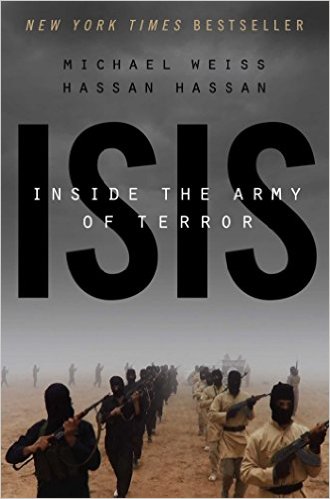
Book Review: ISIS: Inside the Army of Terror (2015) Michael Weiss and Hassan Hassan

ISIS: Inside the Army of Terror, by Michael Weiss and Hassan Hassan, is brilliantly easy to read. Concise yet thorough the book charts the history of a group, “[a]t once sensationalized and underestimated,” that is simultaneously a terrorist organisation, mafia, conventional army, sophisticated intelligence-gathering apparatus, propaganda machine and the remnants of the Saddam Hussein regime which controls an area the size of Britain in the heart of the Middle East. Continue reading

America’s Silent Partnership With Iran And The Contest For Middle Eastern Order: Part Three

By Kyle Orton (@KyleWOrton) on February 3, 2015

1

This is the third of a four-part series looking at the United States’ increasingly-evident de facto alliance with Iran in the region. This first part looked at the way this policy has developed since President Obama took office and how it has been applied in Iraq. The second part looked at the policy’s application in Syria; this part will look at its application in Lebanon, Afghanistan, and Yemen; and part four will be a conclusion. Continue reading

America’s Silent Partnership With Iran And The Contest For Middle Eastern Order: Part Two

By Kyle Orton (@KyleWOrton) on January 29, 2015

Assad meeting with the boss

Assad meeting with the boss

This is the second of a four-part series looking at the United States’ increasingly-evident de facto alliance with Iran in the region. This first part looked at the way this policy has developed since President Obama took office and how it has been applied in Iraq. This part will look at the policy’s application in Syria; part three will look at its application in Lebanon, Afghanistan, and Yemen; and part four will be a conclusion. Continue reading