Tag Archives: Kurds

Calls for U.S. Government to Recover ‘Mentally Unbalanced’ YPG Foreign Fighter

By Kyle Orton (@KyleWOrton) on June 9, 2015

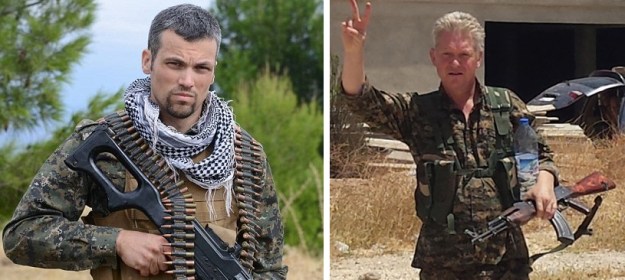
Jordan Matson, Michael Enright

Jordan Matson, an American fighting in the ranks of the People’s Protection Units (YPG), the Syrian wing of the Kurdistan Workers’ Party (PKK), posted a message to Facebook on 4 June 2015 about Michael Enright, a British YPG fighter who had been living in America and working as an actor. Matson says that Enright is “mentally unstable,” had come to Syria to sell his story and write a movie script, and had been disarmed and isolated by the YPG already because of the worry that he would harm himself or be harmed by others. Matson’s message is posted below with typos and “text speak” corrected. Continue reading

Bernard Lewis and the Armenian Genocide Question

By Kyle Orton (@KyleWOrton) on June 7, 2015

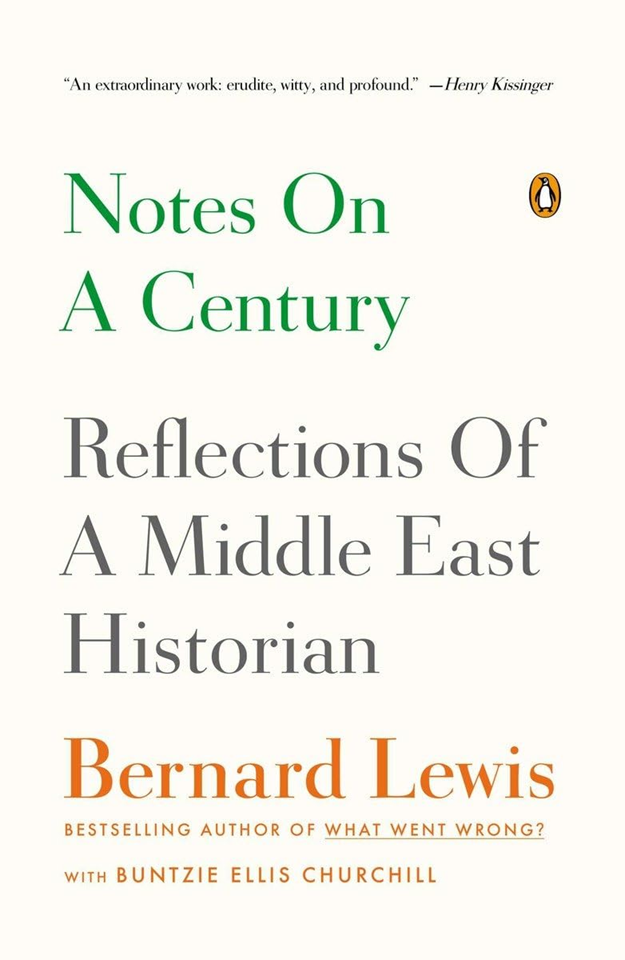
In 2012, Bernard Lewis published his memoirs, Notes on a Century: Reflections of a Middle East Historian, which included a chapter on the court case brought against him in France in the 1990s for refusing to agree that the massacres of Armenians in the Ottoman Empire in 1915-16 constitute genocide in the original sense of the term, as applied to the Nazi Holocaust of European Jewry. The chapter is reproduced below.

Continue reading

The Islamic State’s Strategy Is Working, Its Enemies Are Failing

By Kyle Orton (@KyleWOrton) on May 23, 2015

1

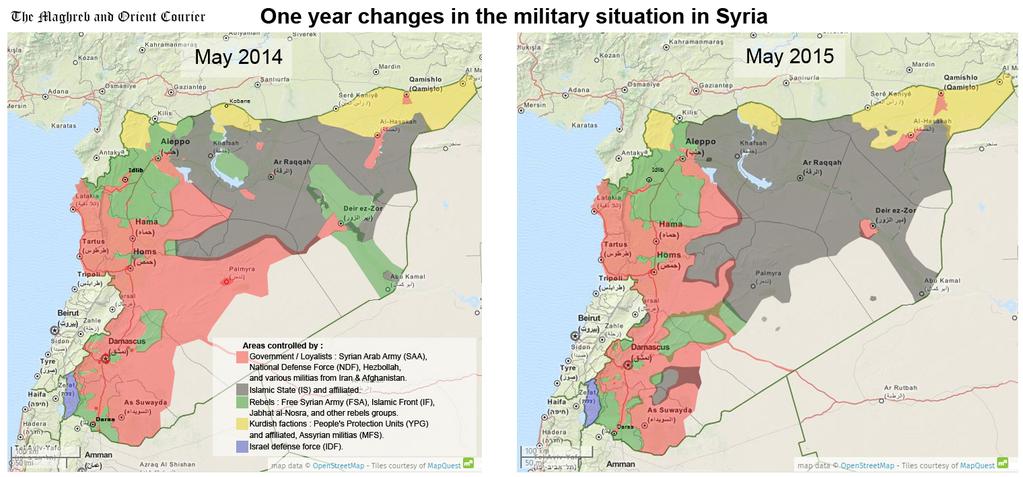
To hear President Obama tell it, his announced program to defeat the Islamic State (ISIS), which began with airstrikes into Iraq last August that were extended into Syria in September, is working, albeit with some tactical setbacks. The implication is that the setbacks of the U.S.-led anti-ISIS campaign are not strategic.

As J.M. Berger phrased it:

In the Washington vernacular, the act of Being Strategic implies a near mystical quality of superior thinking possessed by some, and clearly lacking amongst the vulgarians of the world—heedless brutes such as ISIL. Tactics are short-term ploys, easy to dismiss. Strategy is for winners.

Unfortunately, this soothing view is almost exactly wrong: it is the United States that is relying on various short-term methods—commando raids into the Syrian desert, for example—while ISIS has a long-term goal fixed in mind and is working assiduously to achieve it. The U.S.-led Coalition is losing, in short, and ISIS is winning. Continue reading

Raids in Syria Can’t Defeat the Islamic State If Obama Continues Alignment with Iran

By Kyle Orton (@KyleWOrton) on May 16, 2015

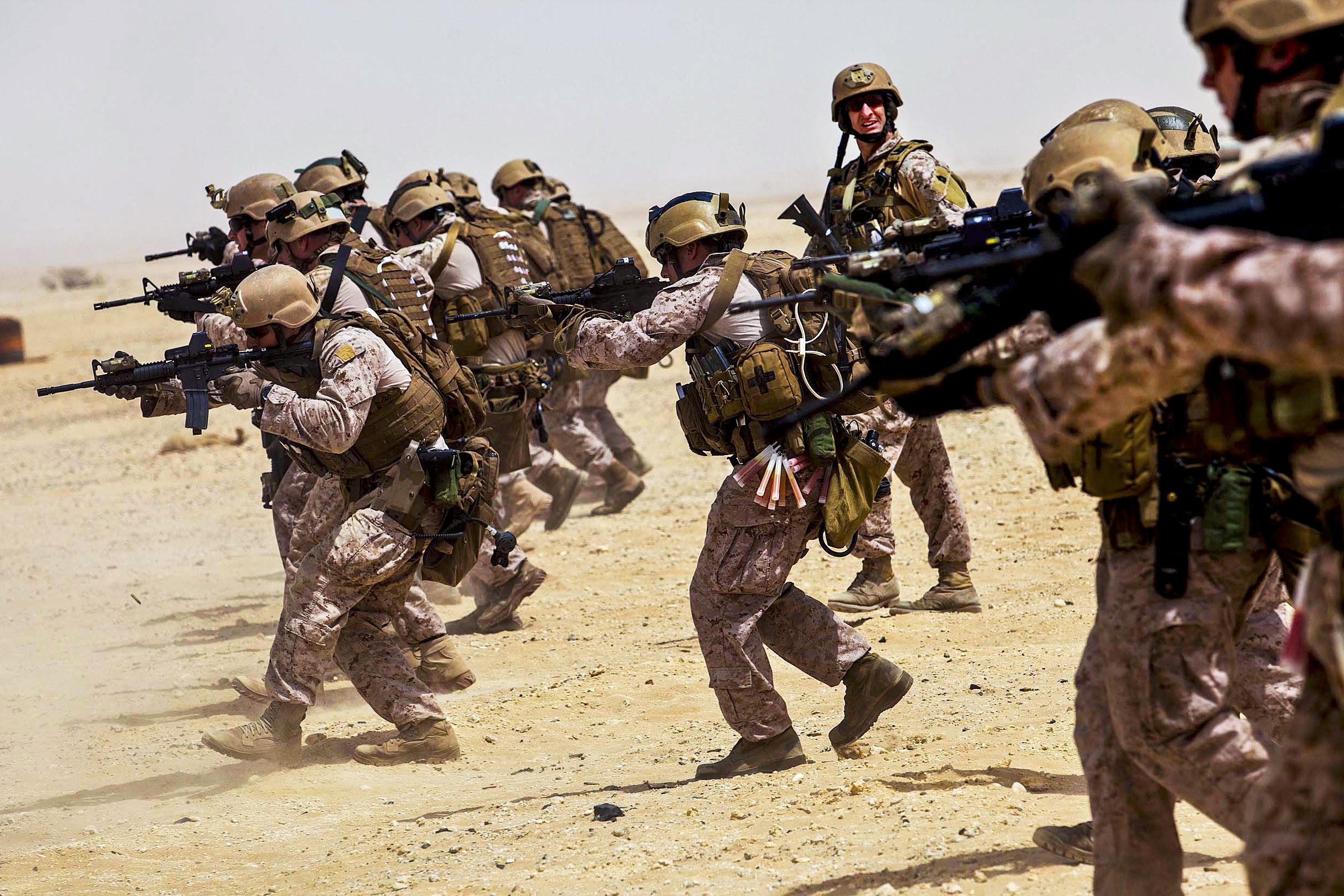
26th Marine Expeditionary Unit (MEU) Maritime Raid Force Marines fire M4 Carbines while conducting a marksmanship training exercise at a range in Qatar, April 22, 2013. Eagle Resolve is an annual multilateral exercise designed to enhance regional cooperative defense efforts of the Gulf Cooperation Council nations and U.S. Central Command. The 26th MEU is deployed to the 5th Fleet area of operations aboard the Kearsarge Amphibious Ready Group. The 26th MEU operates continuously across the globe, providing the president and unified combatant commanders with a forward-deployed, sea-based quick reaction force. The MEU is a Marine Air-Ground Task Force capable of conducting amphibious operations, crisis response and limited contingency operations. (U.S. Marine Corps photo by Cpl. Christopher Q. Stone, 26th MEU Combat Camera/Released)

Last night the United States launched a commando raid into al-Amr in Deir Ezzor in eastern Syria. According to the White House statement, Abu Sayyaf (real name: Fathi ben Awn ben Jildi Murad al-Tunisi), a senior Islamic State (ISIS) commander “overseeing … illicit oil and gas operations,” was killed, and his wife, Umm Sayyaf, was taken into American custody and is being held in Iraq. The Sayyaf couple had been holding a young Yazidi woman as a slave and she has now been freed.

Unfortunately, this American raid is a tactical success amid a strategic failure—and a tactical success likely to be used to obscure the strategic failure of the U.S. anti-ISIS campaign. Even in the narrowest humanitarian terms: if the freedom of this one Yazidi girl is used to perpetuate a policy that leaves many more Yazidi girls in bondage then it is a failure. Continue reading

The Gulf States Push Back Against Obama’s Iran Policy

By Kyle Orton (@KyleWOrton) on May 12, 2015

1

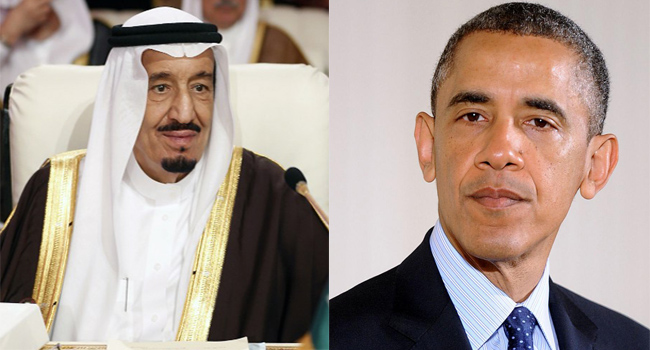
President Obama invited the leaders of the Gulf Cooperation Council (GCC) to a meeting at Camp David on Thursday to clear the air as the President looks to finalize his nuclear deal with Iran. But on Sunday, Saudi King Salman said he was not attending, and soon after the Bahraini monarch followed. The only Gulf leaders in attendance will be the Emirs of Qatar and Kuwait. Since leaders do not just have other things to do when they are scheduled for a private meeting with the President of the United States, this can be taken as a pointed snub to President Obama, and no amount of administration spin about Salman’s absence having nothing to do with political substance will change that. Continue reading

Saddam Hussein’s Regime Produced The Islamic State

By Kyle Orton (@KyleWOrton) on April 21, 2015

1

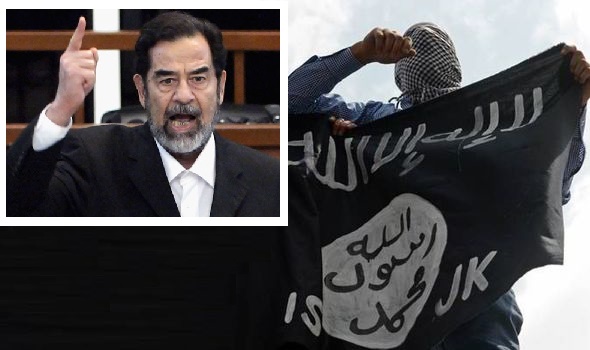
Having presented the evidence that Saddam Hussein Islamized his foreign policy and then Islamized his regime, above all with the Islamic Faith Campaign, beginning in June 1993 that tried to fuse Ba’athism with Salafism, encouraging (and keeping under surveillance) a religious revival in Iraq that redounded to the benefit of the regime’s legitimacy and support, I wanted to look at what this history means for Iraq and the wider region now.

I pointed out in October that the “military strength” of the Islamic State (ISIS) “comes from the remnants of Saddam Hussein’s military-intelligence apparatus and the Caucasus’ Salafi-jihadists.” Continue reading

America’s Silent Partnership With Iran And The Contest For Middle Eastern Order: Part Four

By Kyle Orton (@KyleWOrton) on February 10, 2015

1

This is the fourth of a four-part series looking at the United States’ increasingly-evident de facto alliance with Iran in the region. The first part looked at the way this policy has developed since President Obama took office and how it has been applied in Iraq; the second part looked at the policy’s application in Syria; the third part looked at its application in Lebanon, Afghanistan, and Yemen; and this part is a conclusion. Continue reading

ISIS: America’s Alliance with Iran is Hampering the Fight Against Terror

By Kyle Orton (@KyleWOrton) on February 7, 20151

Published at Left Foot Forward

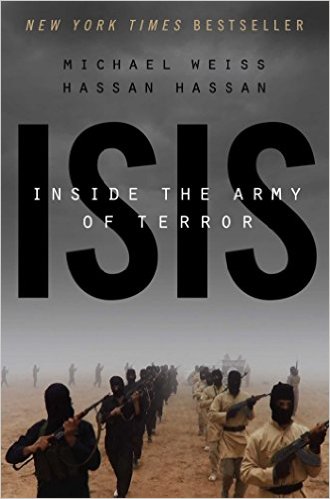
Book Review: ISIS: Inside the Army of Terror (2015) Michael Weiss and Hassan Hassan

ISIS: Inside the Army of Terror, by Michael Weiss and Hassan Hassan, is brilliantly easy to read. Concise yet thorough the book charts the history of a group, “[a]t once sensationalized and underestimated,” that is simultaneously a terrorist organisation, mafia, conventional army, sophisticated intelligence-gathering apparatus, propaganda machine and the remnants of the Saddam Hussein regime which controls an area the size of Britain in the heart of the Middle East. Continue reading

Obama’s Abandonment of Kobani Isn’t Just A Disaster For The Kurds

By Kyle Orton (@KyleWOrton) on October 9, 2014

Syrian Kurdish refugees at the Turkish frontier

Syrian Kurdish refugees at the Turkish frontier

After three-and-a-half years of resistance, the United States finally intervened in Syria on September 23 with airstrikes against the Islamic State (I.S.). The I.S. had begun an attack on the Kurdish-controlled enclave in northern Aleppo along the Turkish border on September 15/16. By October 5, the Kurdish forces had been driven back into the Kurdish-majority town of Kobani (a.k.a. Ayn al-Arab), and I.S. had them surrounded. The desperate scenes of Syrian Kurds fleeing over the Turkish border in the face of the takfiris’ recalls the Iraqi Kurds making a run for the hills after the March 1991 uprising against Saddam Hussein was crushed. Then as now the Kurds believed they had stronger American backing than turned out to be the case. Continue reading

America Must Go After Assad As Well As The Islamic State

By Kyle Orton (@KyleWOrton) on September 30, 2014

Aftermath of strikes on Jabhat an-Nusra's HQ in al-Muhandisin district of Aleppo City, Sept. 27, 2014

Aftermath of strikes on Jabhat an-Nusra’s HQ in al-Muhandisin district of Aleppo City, Sept. 27, 2014

I admit to some initial ambivalence over the extension of the American-led air war against the Islamic State (I.S.) into Syria. After forty-two months of President Obama’s inaction in Syria, there was an irrepressible sense of “at last”. This quickly unravelled. Continue reading